A first chef's knife: which one to buy in 2026
The Victorinox Fibrox, MAC MTH-80, Wüsthof Classic, Global G-2, Zwilling Pro and Mercer Millennia compared: German or Japanese style, forged or stamped, weight, and how to keep the edge.
Culturera may earn a commission if you buy through the links on this page. As an Amazon Associate I earn from qualifying purchases. The selection is ours alone.
At a glance
- Best overallVictorinox Fibrox Chef's Knife, 8 inchAmazon
- Best upgradeMAC Professional MTH-80, 8 inchAmazon
- Best to giveWüsthof Classic Chef's Knife, 8 inchAmazon
- Best budgetMercer Culinary Millennia Chef's Knife, 8 inchAmazon
The first chef's knife to buy is the Victorinox Fibrox 8-inch: a light, sharp, Swiss-made knife with a non-slip handle that America's Test Kitchen has recommended for nearly three decades, for $67 list. If the budget allows a knife to keep for twenty years, the MAC MTH-80 is Wirecutter's pick since 2012 and the Wüsthof Classic is Serious Eats' favorite Western-style knife. We have not tested these knives; this guide compares what the makers publish and what those test kitchens report.
Prices are the makers' list prices on November 23, 2026; knives are often discounted before the holidays, so check the current price on Amazon. One good chef's knife does most kitchen jobs: you do not need a block of twelve.
What should you check before buying a chef's knife?
The length. Eight inches (20 cm) is the standard for home kitchens: long enough for a cabbage or a melon, short enough to control. Every knife here is that size. Cooks with small hands or small boards sometimes prefer 6 inches.
German or Japanese style. German-style knives, such as Wüsthof and Zwilling, are heavier, with a curved edge that rocks on the board and softer steel that shrugs off rough use. Japanese-style knives, such as MAC and Global, are thinner, lighter and usually harder, so they feel sharper and slice more finely but can chip on bones or frozen food.
Forged or stamped. A forged knife is shaped from a single heated bar and usually has a bolster, the thick collar between blade and handle. A stamped knife is cut from a sheet of steel: lighter and cheaper, and not worse at cutting. The Victorinox and the Mercer are stamped; the Wüsthof and the Zwilling are forged.
The handle and the weight. The right knife is the one that feels secure in your hand. Molded handles grip well when wet; riveted handles look classic and last. The MAC weighs 6.5 ounces and the Victorinox 6.4, which is light; forged German knives weigh noticeably more.
Which one is for you?
- A first knife, a student kitchen or a gift that will actually be used
- A keen cook who wants a thin, very sharp blade
- A wedding or housewarming gift, and cooks who like a solid, heavy knife
- Cooks who want a light knife and a striking design
- Cooks who hold the knife by the blade, in a pinch grip
- The lowest price that still gets a real knife
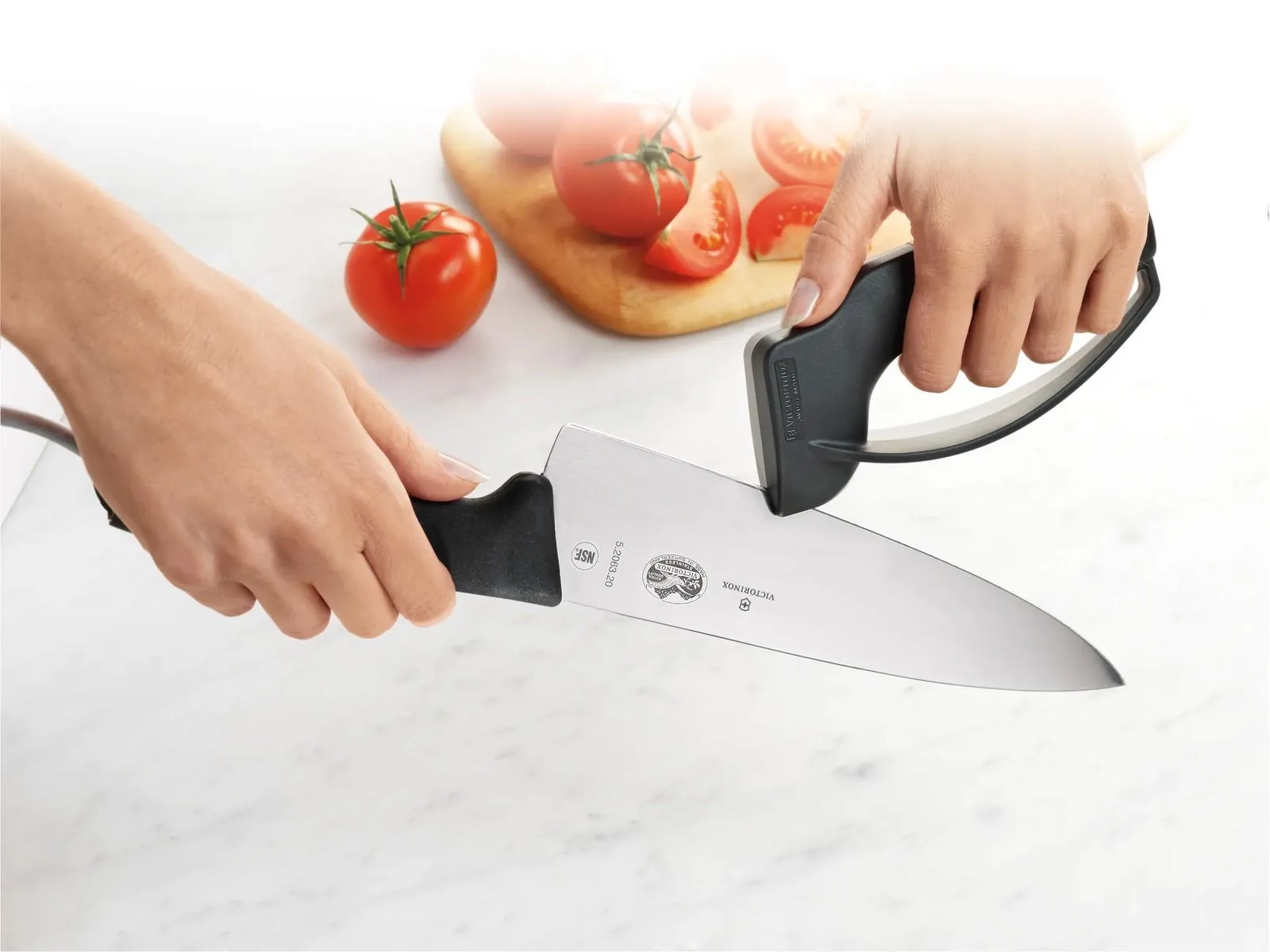
Best overall
1. Victorinox Fibrox Chef's Knife, 8 inch
Best for: A first knife, a student kitchen or a gift that will actually be used
Light, sharp and easy to sharpen, with a handle that does not slip when wet.
See it at AmazonCheck the current price at the store.
The Victorinox Fibrox Chef's Knife ($67 list) has a 7.9-inch stamped stainless steel blade, extra wide for scooping chopped food, and a textured thermoplastic handle. It weighs 6.4 ounces and is made in Switzerland. America's Test Kitchen names it the best chef's knife for most people in its July 2026 review: comfortable for hands of all sizes, durable and easy to sharpen. Wirecutter puts its steel at 56 on the Rockwell hardness scale, softer than the MAC, which means the edge needs touching up more often but is unlikely to chip.
Who it's for: almost everyone starting out, and experienced cooks who want a knife they do not have to baby. Keep in mind: the Victorinox Fibrox looks like restaurant equipment, not like a present, and although Victorinox calls it dishwasher safe, hand washing keeps any edge sharp longer.
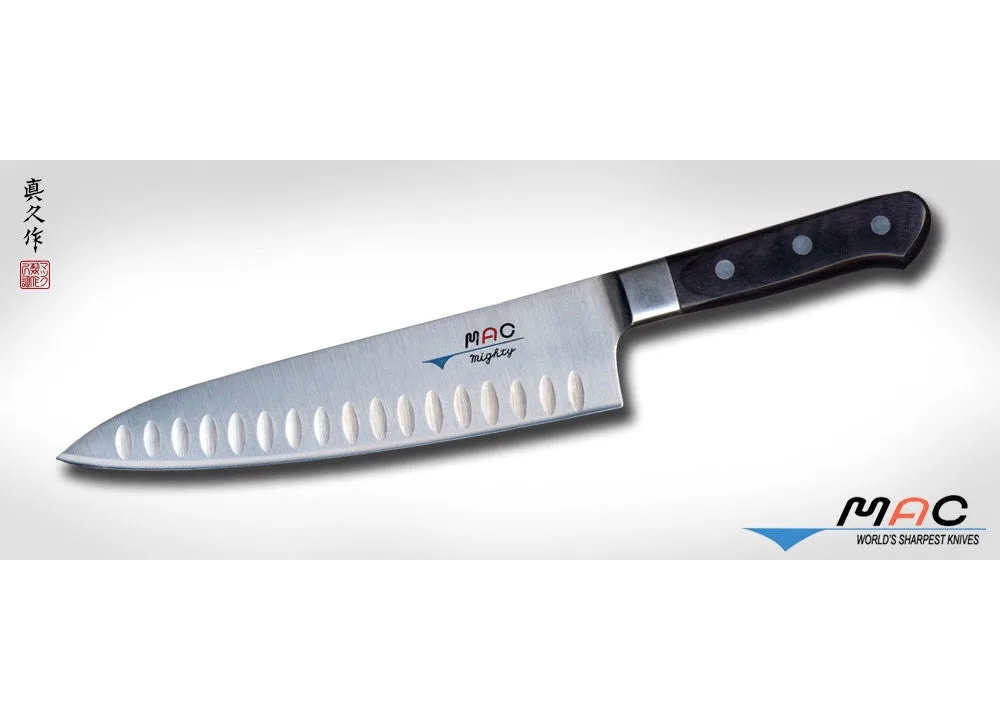
Best upgrade
2. MAC Professional MTH-80, 8 inch
Best for: A keen cook who wants a thin, very sharp blade
A light Japanese knife with a Western handle that glides through vegetables.
See it at AmazonCheck the current price at the store.
The MAC Professional MTH-80 ($195 list) is the Japanese maker's most popular knife. Its blade is 7.88 inches long and only 2.5 mm thick, with dimples along the side that help slices fall away, and it weighs 6.5 ounces. Wirecutter has recommended the MAC MTH-80 as the best chef's knife since 2012, after chopping more than 70 pounds of produce with 23 knives, and praises its comfortable handle and agile blade.
Who it's for: someone who cooks most days and enjoys precise knife work. Keep in mind: the MAC MTH-80's thin, hard edge is not for bones, frozen food or twisting through squash, and it should never go in a dishwasher. It is made in Japan and is hard to find in stores, so most people buy it online.
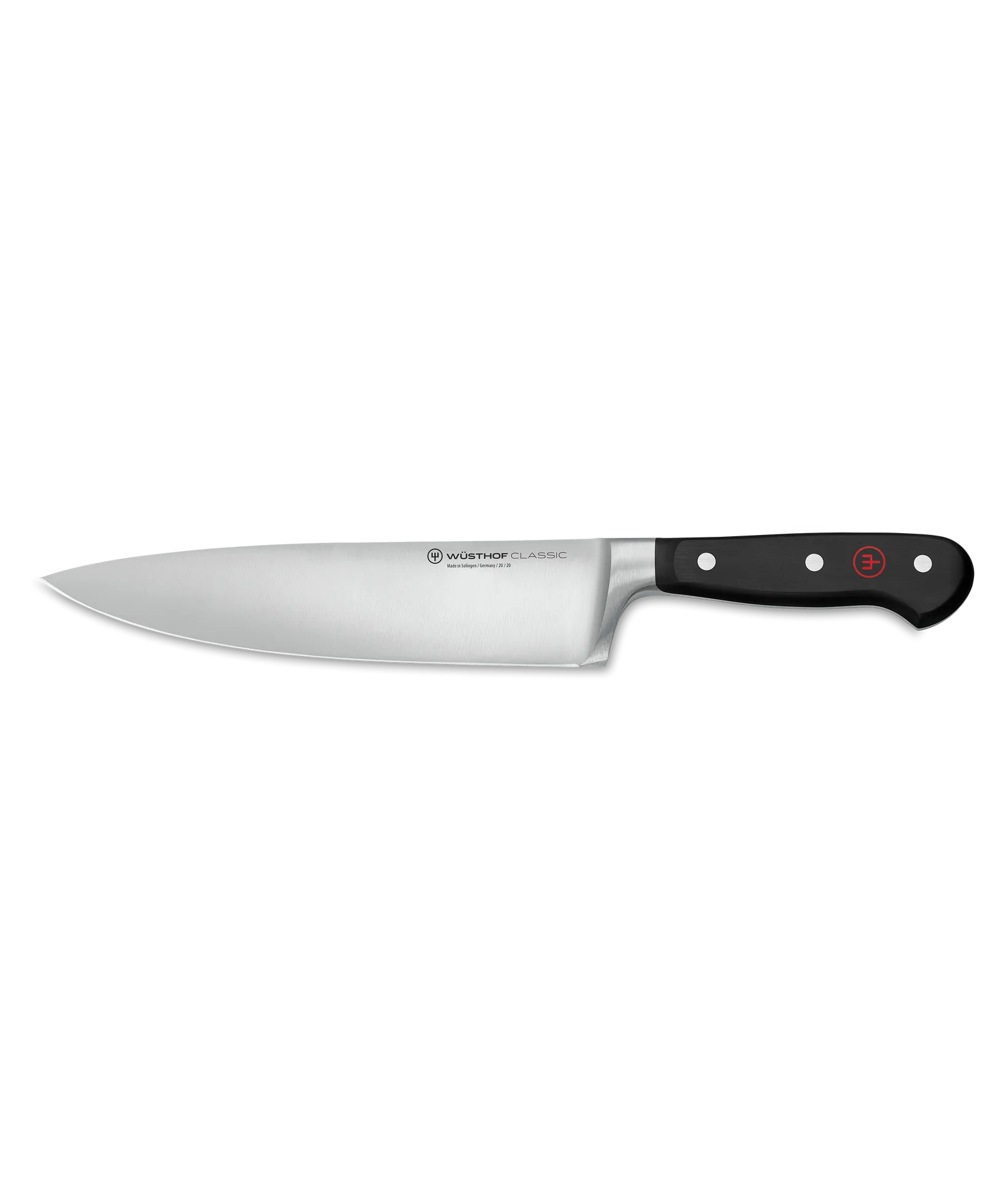
Best to give
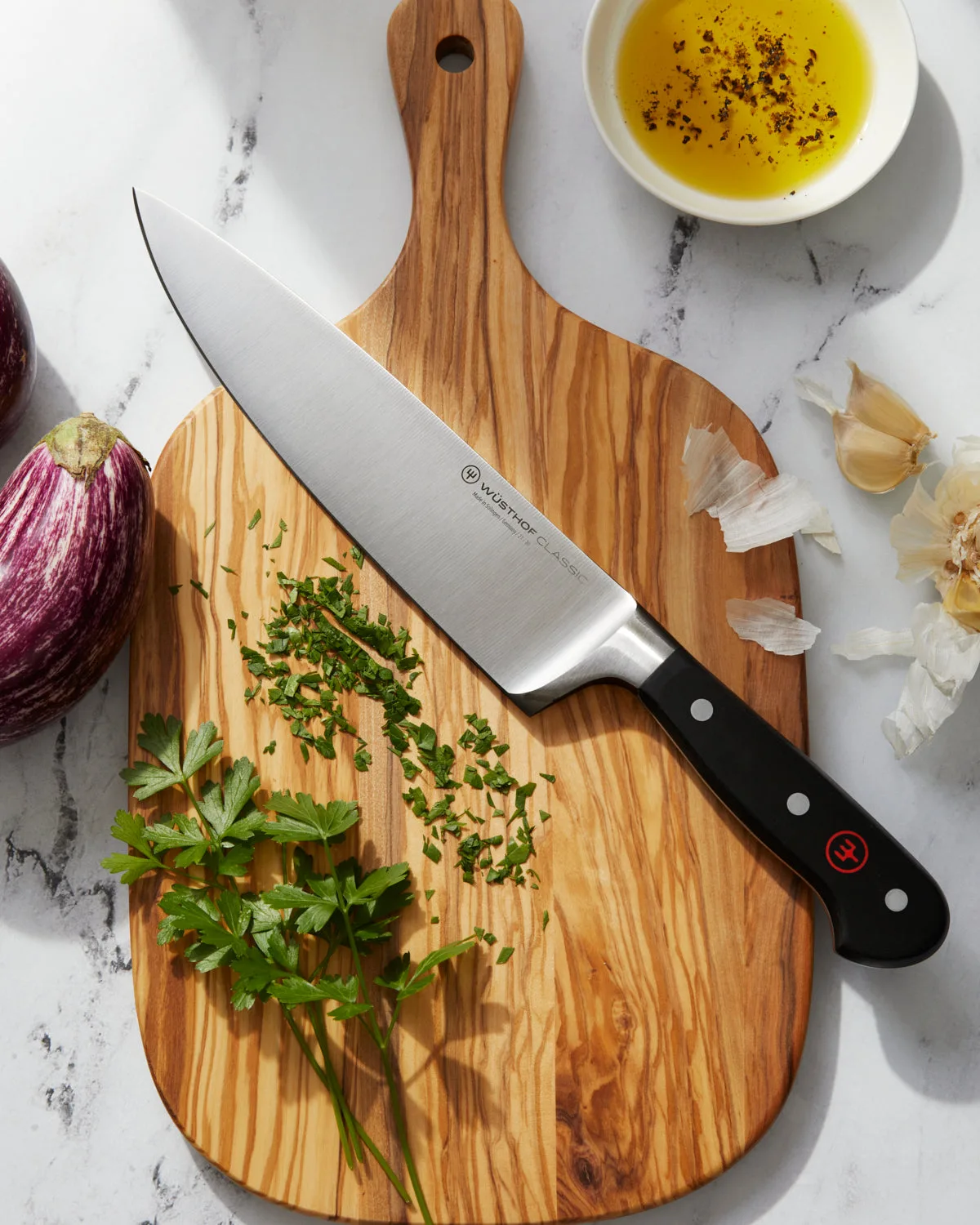
3. Wüsthof Classic Chef's Knife, 8 inch
Best for: A wedding or housewarming gift, and cooks who like a solid, heavy knife
The forged German classic, made in Solingen, with a lifetime warranty.
See it at AmazonCheck the current price at the store.
The Wüsthof Classic 8-inch chef's knife ($170 list) is forged in Solingen, Germany, where the family company has made knives since 1814. The steel is hardened to 58 Rockwell, the handle has three rivets and a full bolster, and Wüsthof gives a limited lifetime warranty. Serious Eats calls the Wüsthof Classic the best Western-style chef's knife: powerful and sharp, but still refined. It comes in black and in several colors.
Who it's for: people who rock the knife through herbs and onions and like to feel its weight, and anyone giving a knife as a present. Keep in mind: the full bolster of the Wüsthof Classic makes the heel of the blade harder to sharpen at home, and the knife is heavier than the Japanese ones, which tires some hands.
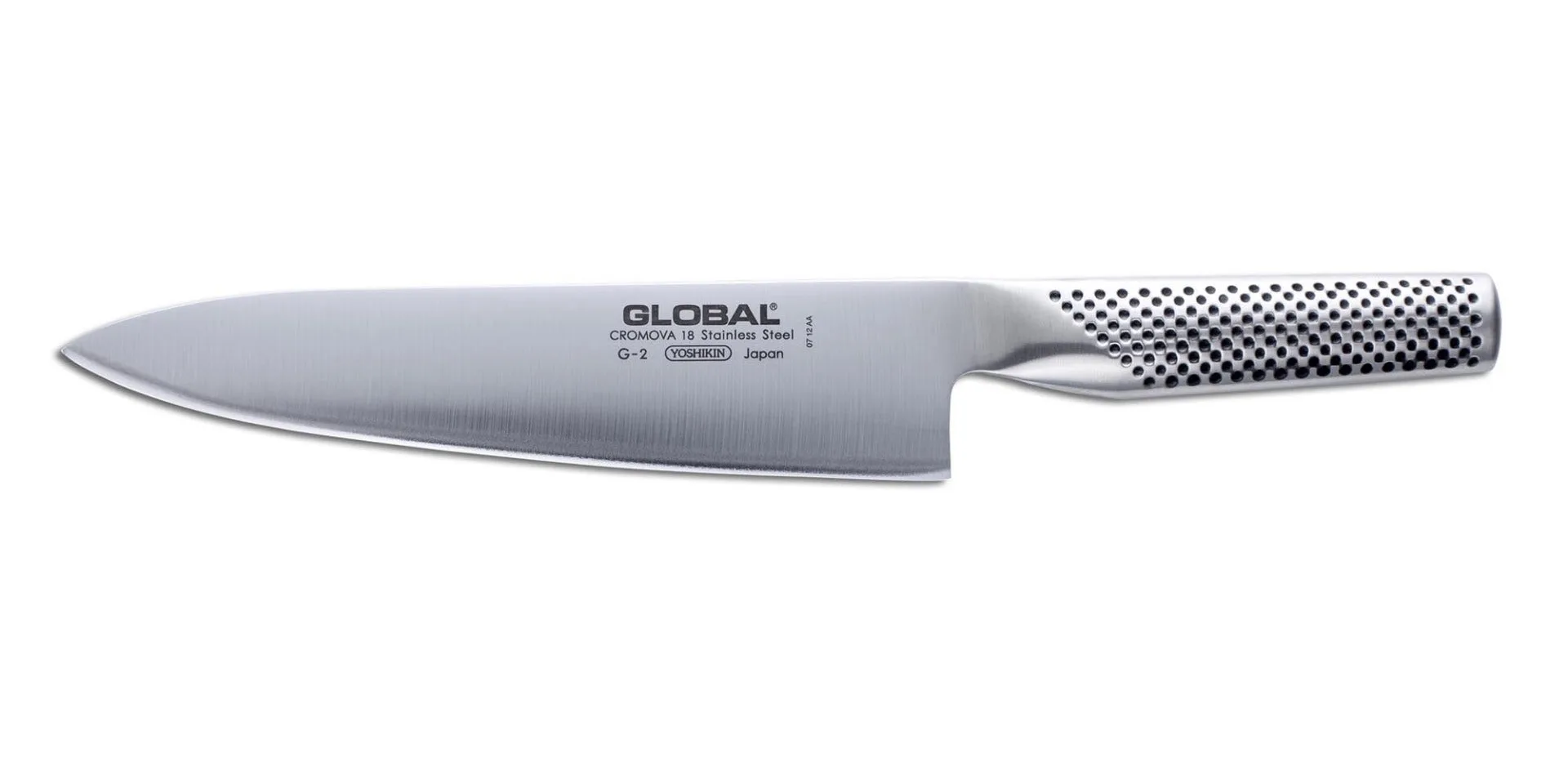
4. Global G-2 Classic Chef's Knife, 8 inch
Best for: Cooks who want a light knife and a striking design
One seamless piece of steel, light in the hand, made in Japan since 1985.
See it at AmazonCheck the current price at the store.
The Global G-2 ($149.95 list) is the knife that made the Japanese brand famous when it appeared in 1985. Designed by Komin Yamada and made in Niigata, it has a steel handle with a dimpled pattern for grip, joined to the blade with no seams or rivets where food could collect. It is thin and light, in the Japanese manner, and Global describes it as precisely balanced.
Who it's for: people who find German knives heavy and like the look of an all-steel knife. Keep in mind: the metal handle of the Global G-2 divides opinion; some cooks find it slippery with wet or oily hands, so it is worth holding one in a store before buying.
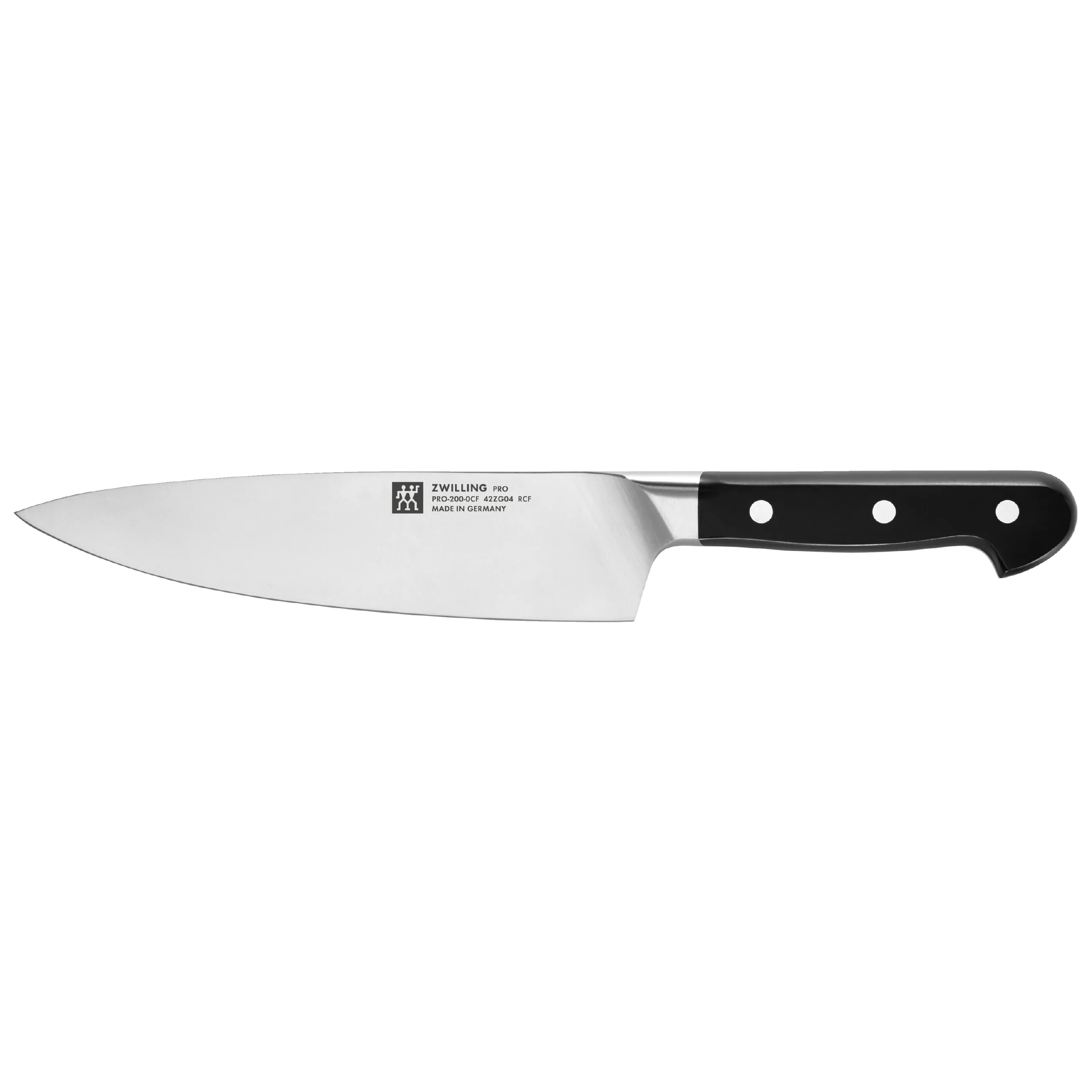
5. Zwilling Pro Traditional Chef's Knife, 8 inch
Best for: Cooks who hold the knife by the blade, in a pinch grip
A forged German knife with a curved bolster shaped for the thumb.
See it at AmazonCheck the current price at the store.
The Zwilling Pro Traditional 8-inch chef's knife ($169.99 list) is the German rival to the Wüsthof. It is made in Germany from Zwilling's own steel formula, with a triple-riveted handle and a lifetime warranty. Its distinguishing feature is a curved half bolster that supports the professional pinch grip, with thumb and forefinger on the blade, and leaves the whole edge free to sharpen. Zwilling calls the Pro its most user-friendly line.
Who it's for: cooks who want German weight and durability with an easier grip and easier sharpening. Keep in mind: Zwilling sells several lines with similar names (Pro, Professional S, Four Star) and a cheaper sister brand, Henckels; check that the listing says Zwilling Pro and shows the curved bolster.
Best budget
6. Mercer Culinary Millennia Chef's Knife, 8 inch
Best for: The lowest price that still gets a real knife
The culinary-school standard, with a grippy handle, for the price of a pizza or two.
See it at AmazonCheck the current price at the store.
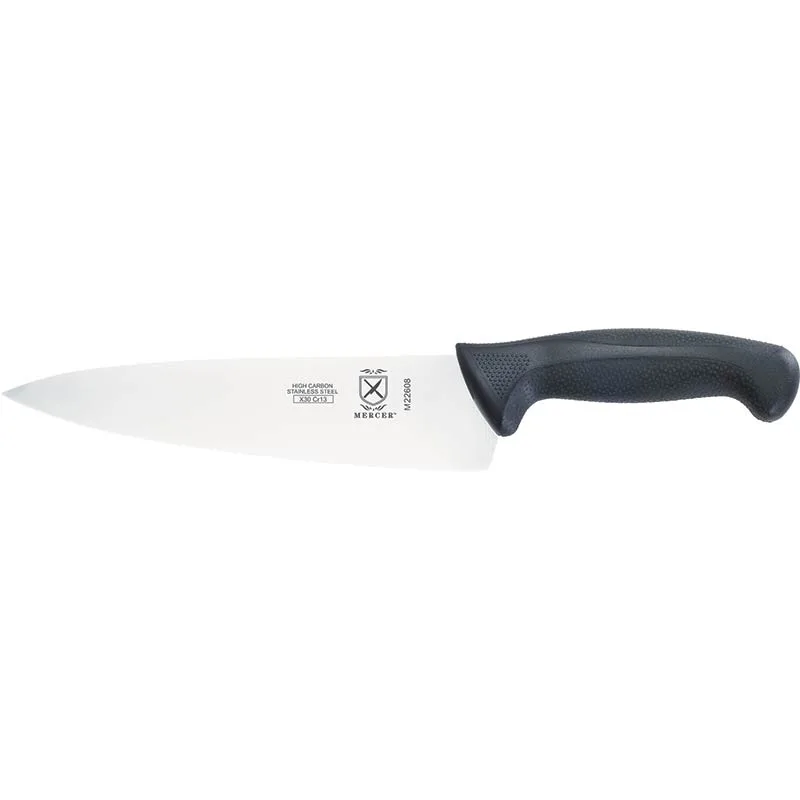
The Mercer Culinary Millennia 8-inch chef's knife (model M22608) is the cheapest knife here: Serious Eats recommends it as its budget pick at under $40, and it often sells for much less. The blade is one piece of high-carbon Japanese steel that Mercer says is easy to keep sharp, and the handle is textured Santoprene and polypropylene for grip. Mercer's knives are common in culinary schools and restaurant kitchens.
Who it's for: a first apartment, a vacation house or a spare knife. Keep in mind: the Mercer Millennia will need sharpening sooner than the others, and its bulky handle suits large hands better than small ones.
German or Japanese: which style of chef's knife suits you?
If you chop with a rocking motion, cut through chicken joints and hard squash and want a knife that forgives rough treatment, choose a German-style knife: the Wüsthof Classic or the Zwilling Pro. If you mostly slice vegetables, fish and boneless meat and enjoy a blade that feels effortless, choose a Japanese-style one: the MAC MTH-80 or the Global G-2. The Victorinox Fibrox sits between the two: a Western shape with a thin, light blade.
How do you keep a chef's knife sharp?
Hone often, sharpen rarely. A honing steel does not remove metal; it straightens the edge, and a few strokes before cooking keep a knife cutting well. Sharpening, which grinds a new edge, is needed only once or twice a year in most homes, with a whetstone, a pull-through sharpener made for your knife's angle, or a professional service.
Use a wooden or plastic board. Glass, marble and ceramic boards dull an edge quickly.
Wash by hand and dry at once. Dishwashers knock edges against other items and are hard on handles.
Store it protected. A magnetic strip, a knife block or a plastic edge guard; a knife loose in a drawer gets dull and is dangerous to reach for.
What else do you need besides a chef's knife?
Very little: a small paring knife for work in the hand, a serrated bread knife, and a honing steel. That trio plus a chef's knife covers nearly everything, and buying them one at a time usually gets better knives than a boxed set at the same price. If you bake bread, our guide to the best Dutch oven for sourdough is the next step.
Which chef's knife fits your budget?
Under $40: the Mercer Culinary Millennia, the budget pick of Serious Eats.
Around $70: the Victorinox Fibrox, $67, the best knife for most people according to America's Test Kitchen.
Around $150: the Global G-2, $149.95, light and all steel.
Around $170: the Wüsthof Classic, $170, or the Zwilling Pro Traditional, $169.99, the forged German knives.
Around $195: the MAC MTH-80, $195, Wirecutter's top pick.
Before you order
Check who sells the listing: the Victorinox, Wüsthof and Mercer links here go to listings sold by Amazon.com, while the MAC, Global and Zwilling are sold on Amazon by cutlery dealers, so we link to a search. Check the blade length in the title, since most lines also come in 6 and 10 inches. If the knife is a gift, some people add a coin to the box: in many countries the recipient 'pays' it back so the knife does not cut the friendship. Amazon US usually extends its return window for gifts bought during the holidays; check the exact dates on the listing.
How to get it right
For most cooks, the Victorinox Fibrox; as an upgrade, the MAC MTH-80; as a gift, the Wüsthof Classic; for a light all-steel knife, the Global G-2; for a pinch grip, the Zwilling Pro; and on the tightest budget, the Mercer Millennia.