The best first fountain pen to give in 2026
Lamy's Safari, TWSBI's piston-filling Eco and a few pocketable alternatives: fountain pens under $45 that write smoothly from the first page, and the ink to give with them.
Culturera may earn a commission if you buy through the links on this page. As an Amazon Associate I earn from qualifying purchases. The selection is ours alone.
At a glance
- Best overallLamy SafariAmazon
- Best for bottled inkTWSBI EcoAmazon
For someone who has never used a fountain pen, the one to give is Lamy's Safari: a tough, light pen with a molded grip that guides the fingers, a steel nib that writes smoothly from the first line, and cheap, easy cartridges, for $37. For someone who likes to tinker with bottled ink, give the TWSBI Eco, a piston filler with a clear barrel that shows the ink sloshing inside. We have not tested these pens; this guide compares what the makers publish.
Prices are the makers' list prices on November 22, 2026, or typical store prices where the maker does not publish one. On Amazon US, most fountain pens are sold by third-party stationery shops, so the links open searches; choose a seller with good reviews or buy from a pen shop.
What should you check before buying a first fountain pen?
Nib size. Fine (F) suits small handwriting and cheap paper; medium (M) is smoother and shows ink color better. Japanese nibs run a size finer than European ones, so a Japanese medium is close to a European fine.
Cartridge or bottle. Cartridges are clean and easy. A converter or a piston lets you fill from a bottle, which opens up thousands of ink colors.
Left-handed writers. Quick-drying inks and fine nibs reduce smudging; Lamy also sells a nib made for left-handers.
Cartridge format. Lamy and Pilot pens take only their own brand's cartridges (Lamy's is called the T10). The Kaweco Sport takes short international standard cartridges, which many ink brands make. Check the format before adding spare cartridges to the gift.
Weight and size. A plastic pen like the Lamy Safari weighs about 17 grams and suits long writing sessions; a brass pen like the Pilot Metropolitan weighs about 26 grams and feels more substantial (both as measured by the pen retailer Goulet Pens). A pocket pen is short until you post the cap on the back.
Which one is for you?
Best overall
1. Lamy Safari
Best for: Anyone trying a fountain pen for the first time
A durable, design-classic pen with a guiding grip and a smooth steel nib.
See it at AmazonCheck the current price at the store.
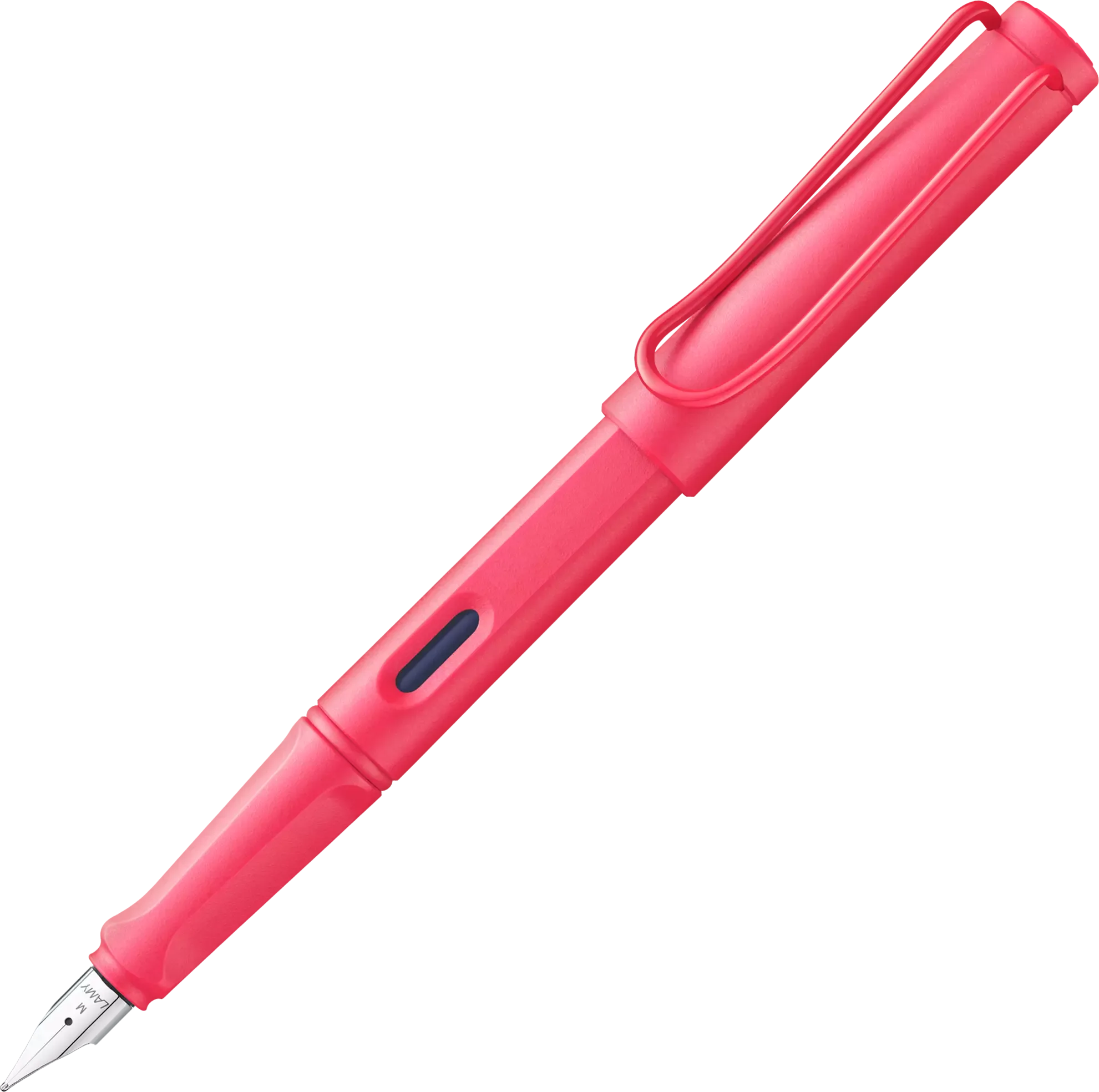
The Lamy Safari ($37 list), designed in Germany in 1980, has a matte ABS body that survives backpacks, a molded triangular grip that places the fingers correctly, a sturdy wire clip and an ink window to see when to refill. It comes with a blue T10 cartridge and takes Lamy's Z28 converter for bottled ink. Steel nibs come in several widths and are easy to swap. Lamy releases new colors every year; the pen in the photo is a 2025 special edition.
The Lamy Safari is sold with extra fine (EF), fine (F), medium (M), broad (B) and left-handed (LH) steel nibs. The nib slides off the feed and a replacement Lamy nib slides on, so a writer who finds the first choice too broad or too fine can change the nib alone instead of the whole pen. The Lamy Safari measures 139.5 mm capped, by Goulet Pens' measurement, which is a standard full-size pen, and its cap snaps on and off rather than unscrewing, which suits quick notes in a class or a meeting.
Who it's for: students, journal writers and anyone curious. Keep in mind: the triangular grip does not suit everyone who holds a pen unusually.
Best for bottled ink
2. TWSBI Eco
Best for: Someone who wants to explore ink colors
A clear piston-filling pen that holds a lot of ink and shows it off.
See it at AmazonCheck the current price at the store.
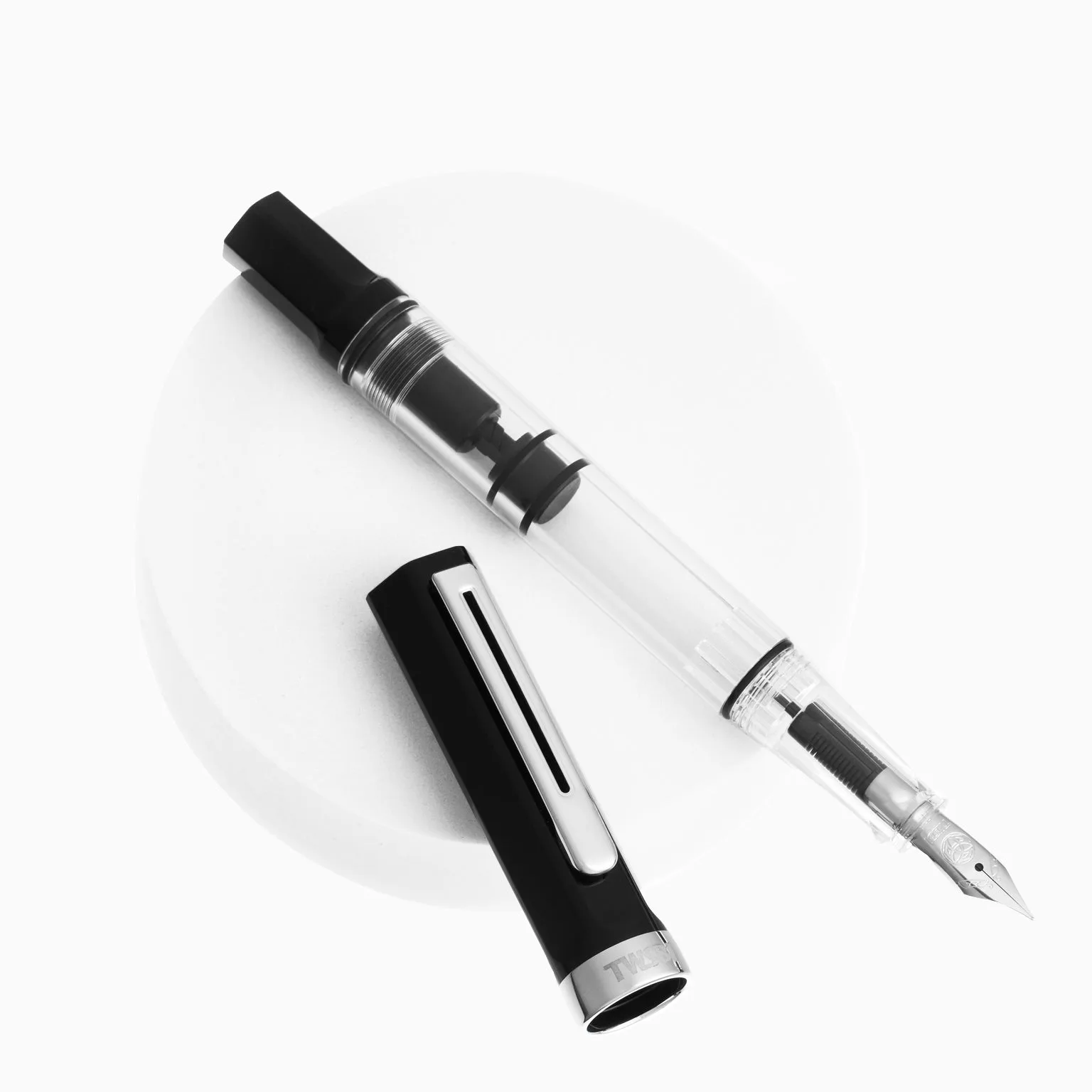
The TWSBI Eco ($36.99 list) is filled by twisting a piston at the end of the clear barrel while the nib sits in a bottle of ink, so it holds far more than a cartridge and shows the color inside. It comes with extra fine to bold nibs and a 1.1 mm stub for calligraphy-style lines, and the cap posts on the back for writing.
The TWSBI Eco holds up to 1.76 ml of ink, according to Goulet Pens, so it needs refilling far less often than a cartridge pen. It takes no cartridges at all: it fills only from a bottle. The screw-on cap has an inner cap that seals the nib so it does not dry out between uses. TWSBI designs its pens to be taken apart for cleaning, and includes a small wrench and silicone grease in the box for maintaining the piston.
Who it's for: someone who already likes stationery and wants to try bottled inks. Keep in mind: ink is not included, so give a bottle with it.
What about other first pens?
The Pilot Metropolitan has a brass body, a snap-on cap and a smooth Japanese steel nib in fine, medium or a 1.0 mm stub. It comes with a black Pilot cartridge and a converter for bottled ink, so nothing else is needed to start, and it has been a favorite starter pen for years. The Pilot Metropolitan weighs about 26 grams, heavier than the plastic pens in this guide, and its fine nib writes a thinner line than a Lamy fine.
The Kaweco Classic Sport (about $34 at pen shops) is a pocket pen: about 10.5 cm long closed and about 13 cm with the cap posted on the back, a comfortable length to write with. The Kaweco Classic Sport comes with nibs from extra fine to double broad (EF, F, M, B, BB) and takes short international standard cartridges. Its barrel is too short for a full-size converter, so treat it as a cartridge pen.
The Pilot Kakuno is a light, inexpensive resin pen that Pilot launched in Japan in 2013 for children and first-time users. The Pilot Kakuno has a hexagonal body that does not roll off a desk, a triangular grip and a smiling face on the steel nib that shows which side faces up. Nibs come in extra fine, fine and medium, and it takes Pilot cartridges or Pilot's CON-40 converter. It typically costs $15 to $20 at US pen shops.
Cheaper still, the Platinum Preppy costs about $7 at pen shops and has a cap designed to keep the ink from drying out for months. The Platinum Preppy is a good way to find out whether someone likes fountain pens at all before giving a nicer one.
What ink should you give with it?
A bottle of a well-behaved, easy-to-clean ink, such as a classic blue-black, pairs with any pen with a converter or piston. For the Lamy Safari, a box of extra T10 cartridges is the simplest gift.
The Lamy Safari does not include a converter, so anyone who wants to use bottled ink with it needs Lamy's Z28 converter, sold separately. The Pilot Metropolitan includes one. The TWSBI Eco needs only the bottle.
Fine or medium: which nib should you give?
If you cannot ask, a European fine (Lamy, Kaweco, TWSBI) or a Japanese medium (Pilot) is the safe middle: thin enough for small handwriting and ordinary paper, wide enough to feel smooth.
Extra fine nibs give the thinnest line and suit tiny handwriting, planners and thin paper, but they feel scratchier because less metal touches the page. Broad nibs feel the smoothest and show off the color and shading of an ink, but they use more ink, dry more slowly and need better paper. A stub nib, such as the TWSBI Eco's 1.1 mm or the Pilot Metropolitan's 1.0 mm, is cut flat: it makes wide downstrokes and thin cross strokes, which gives everyday handwriting a calligraphy look.
How do you fill and clean a fountain pen?
With a cartridge: unscrew the barrel, push the cartridge firmly onto the back of the grip section until it punctures, put the pen back together and wait a minute or two for the ink to reach the nib. A gentle squeeze of the cartridge speeds it up.
From a bottle: with a converter, or a piston pen like the TWSBI Eco, dip the whole nib into the ink, twist the knob to draw the ink up, and wipe the nib and grip with a paper towel.
Cleaning: flush the pen with cool tap water every time you change ink color, and every month or two otherwise. Fill and empty it with water until the water runs clear, then let it dry. Do not use hot water or alcohol, which can damage plastic parts. A pen that stopped writing after weeks in a drawer usually only needs this rinse.
Which paper works best with fountain pen ink?
Fountain pen ink is water-based, so on absorbent paper it spreads into the fibers, which is called feathering, and shows through on the other side. Smooth, coated papers hold the ink on the surface. Rhodia and Clairefontaine pads and notebooks are the usual recommendation, and Leuchtturm1917 and Midori MD notebooks are also made with fountain pens in mind. On ordinary office paper, a fine nib gives the cleanest result. A small Rhodia pad is an inexpensive addition that lets the person see the pen at its best on the first day.
What mistakes should a beginner avoid?
Pressing down. A fountain pen writes under its own weight; pressing as you would with a ballpoint spreads the two halves of the nib and can bend them. The wrong ink. Use only ink labeled for fountain pens: India ink, drawing ink and calligraphy ink contain binders that dry inside the pen and clog it. Letting it dry out. Cap the pen whenever you stop writing, and rinse it before storing it for months.
Flying. Changes in cabin pressure can push ink out of a half-full pen. Carry it either full or empty, with the nib pointing up, during takeoff and landing. Lending it. A borrower used to ballpoints will press hard, which is why fountain pen owners are reluctant to lend theirs.
Which one at each price?
Under $10: the Platinum Preppy, about $7, to find out if they like fountain pens.
Under $20: the Pilot Kakuno, $15 to $20, for a child or a playful first pen.
Around $35 to $45: the Lamy Safari, $37, the all-round first pen; the TWSBI Eco, $36.99, for bottled ink; the Kaweco Classic Sport, about $34, for a pocket; or the Pilot Metropolitan, for a metal body with a converter included.
Before you order
Choose the nib width for the person's handwriting, and add good paper; fountain pen ink bleeds through thin copier paper. A notebook made for fountain pens makes a better first impression.
Amazon US usually extends its return window for gifts bought during the holidays; check the exact dates on the listing before you buy.
How to get it right
For a first fountain pen, the Lamy Safari with spare cartridges; for an ink explorer, the TWSBI Eco with a bottle of ink; for a pocket, the Kaweco Sport; for a child, the Pilot Kakuno.