A first record player: which turntable to buy in 2026
Audio-Technica's AT-LP60X, AT-LP70X and Bluetooth AT-LP70XBT, the Fluance RT81+, the U-Turn Orbit Plus and the Pro-Ject T1 Evo compared: automatic or manual, built-in preamp, cartridge and what else you need to hear a record.
Culturera may earn a commission if you buy through the links on this page. As an Amazon Associate I earn from qualifying purchases. The selection is ours alone.
At a glance
- Best overallAudio-Technica AT-LP70XAmazon
- Best budgetAudio-Technica AT-LP60XAmazon
- Best wirelessAudio-Technica AT-LP70XBTAmazon
- Best step upFluance RT81+Amazon
The first record player to buy is Audio-Technica's AT-LP70X: it plays a record at the press of a button, has a built-in preamp so it connects to almost any speaker, and its stylus can be replaced or upgraded later, for $249 list. For less, the AT-LP60X does the basics for $179; for someone who wants to learn the ritual of lowering the needle by hand, the Fluance RT81+ and the U-Turn Orbit Plus are the classic steps up. We have not tested these turntables; this guide compares what the makers publish, and independent reviews where we cite them.
Prices are the makers' list prices on November 23, 2026, and several of these are discounted for Black Friday; check the current price on Amazon. A turntable makes no sound by itself: budget for speakers too (see below).
What should you check before buying a first turntable?
A built-in phono preamp. The signal from a record needle is far weaker than the one from a phone or a CD player, so it has to pass through a phono preamp. A turntable with one built in plugs straight into powered speakers, a soundbar's analog input or any amplifier. Without it you need an amplifier with a PHONO input or a separate preamp box. Every Audio-Technica and Fluance model here has one, with a switch to turn it off if you upgrade later.
Automatic or manual. A fully automatic turntable lifts the arm, sets it on the record and returns it at the end when you press Start. A manual one asks you to place the needle with a lever and lift it when the side ends. Automatic is kinder to nervous hands and to records; manual designs put the money into the platter, arm and cartridge instead of the mechanism.
The cartridge and stylus. The stylus (the needle) is the only part that touches the record, and it wears out. Look for one you can replace without tools, and ideally a cartridge family with better styli to move up to. A conical stylus is the basic shape; an elliptical one traces the groove more closely.
Bluetooth. A Bluetooth turntable sends music to wireless speakers or headphones with no cables. It is convenient, but the sound is compressed on the way; every Bluetooth model here also has a wired output.
What to avoid. Suitcase-style players with built-in speakers are cheap and charming, but most use a basic ceramic cartridge that tracks heavily, with no way to adjust or upgrade it. A real entry-level turntable costs little more and treats records better.
Which one is for you?
- A first turntable that will not need replacing in two years
- A gift for a teenager or for the first ten records
- People who already own a Bluetooth speaker or wireless headphones
- Someone who wants to learn how a turntable works, with a safety net
- Design lovers who want a minimal, American-made deck in a color
- A hi-fi first deck to keep for many years
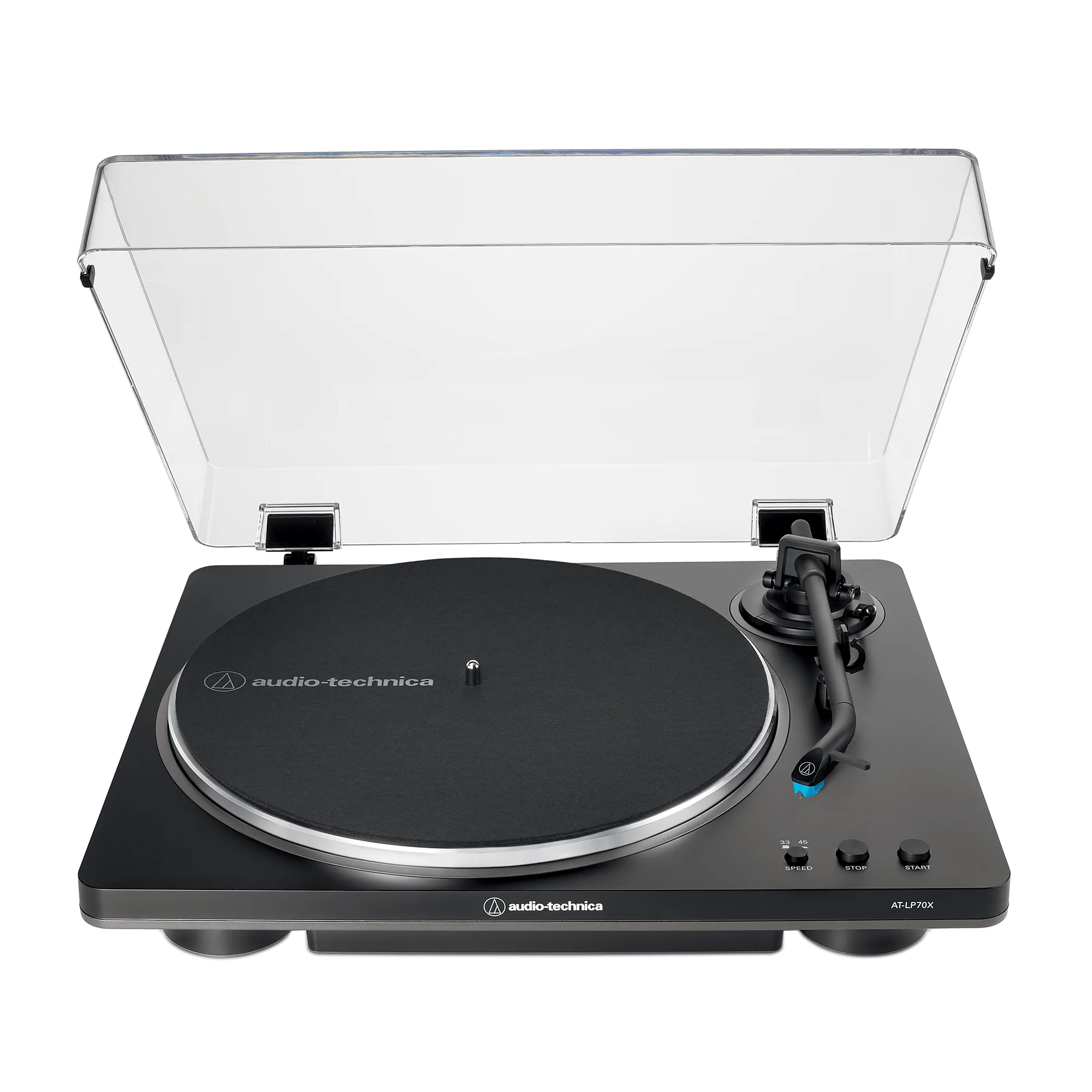
Best overall
1. Audio-Technica AT-LP70X
Best for: A first turntable that will not need replacing in two years
Fully automatic, with a preamp and a cartridge that accepts better styli later.
See it at AmazonCheck the current price at the store.
The Audio-Technica AT-LP70X ($249 list) is a fully automatic belt-drive turntable that plays 33⅓ and 45 RPM records. Its AT-VM95C cartridge is built into a J-shaped tonearm, so there is nothing to mount or balance, and it accepts any stylus from Audio-Technica's VM95 series: when the conical stylus wears out, you can fit the same one or step up to an elliptical. The preamp is switchable between phono and line output, the chassis is a three-piece design meant to damp vibration, and the power supply is an external adapter, which keeps electrical noise out of the case. A hinged dust cover is included. The audio site AudioReputation calls the AT-LP70X one of the strongest values for beginners.
Who it's for: anyone starting a collection who wants to press a button and listen. Keep in mind: the AT-LP70X has no Bluetooth (that is the next pick) and does not play 78 RPM records. On Amazon US it is sold by authorized dealers rather than by Amazon itself, so check the seller on the listing.
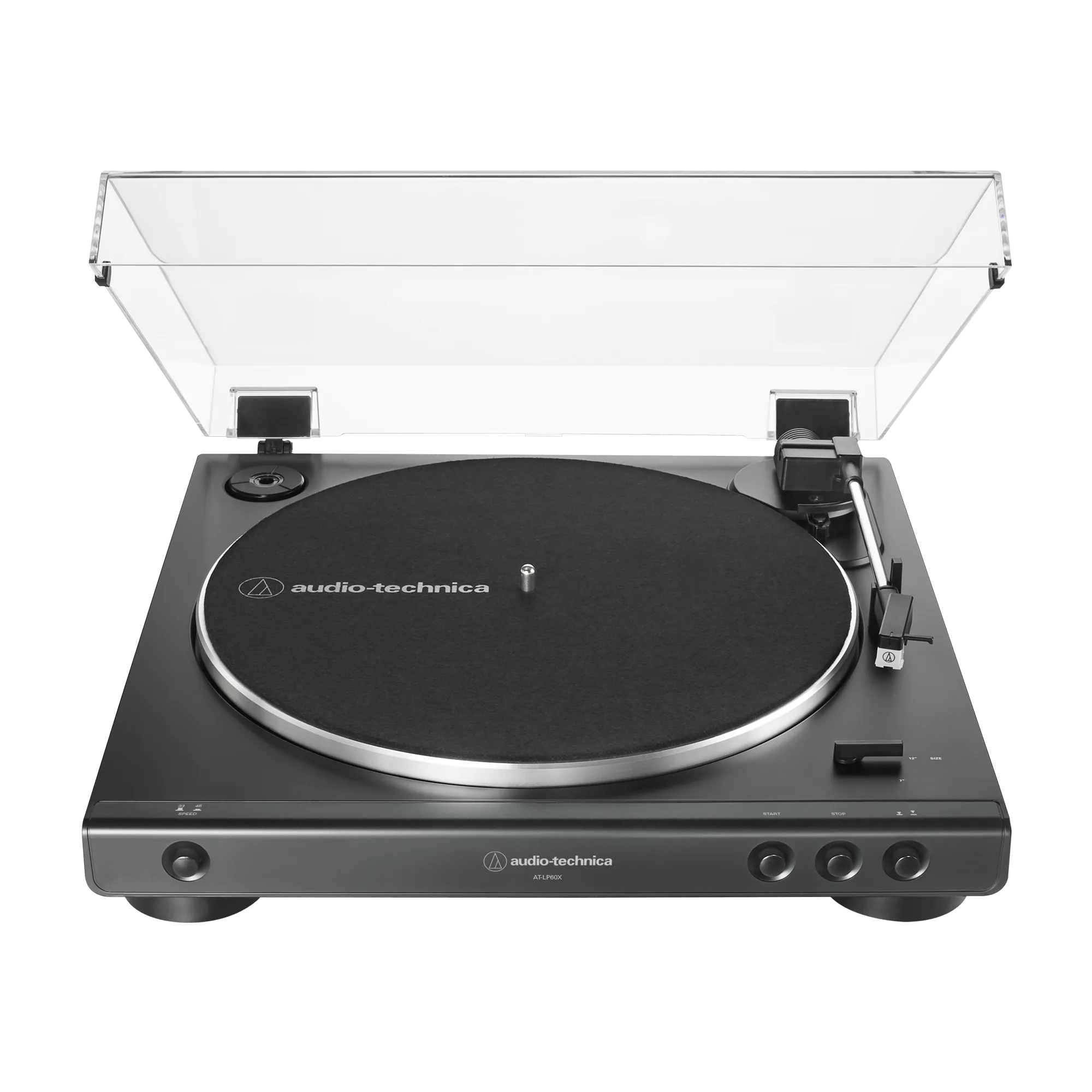
Best budget
2. Audio-Technica AT-LP60X
Best for: A gift for a teenager or for the first ten records
The simplest proper turntable: automatic, with a preamp and a replaceable stylus.
See it at AmazonCheck the current price at the store.
The Audio-Technica AT-LP60X ($179 list) is the fully automatic belt-drive turntable that Audio-Technica recommends for people who are just getting into records. It plays 33⅓ and 45 RPM, has a switchable phono preamp, and comes with a Dual Magnet cartridge whose stylus (model ATN3600L) can be pulled off and replaced. Like the AT-LP70X, it moves the AC adapter outside the chassis to reduce noise. Setup is a matter of fitting the platter and the belt.
Who it's for: a first player on a tight budget, or a second one for a bedroom. Keep in mind: the cartridge of the AT-LP60X is fixed to the arm, so the only upgrade is a new stylus of the same type, and the arm's tracking force cannot be adjusted. A Bluetooth version, the AT-LP60XBT, costs $259.
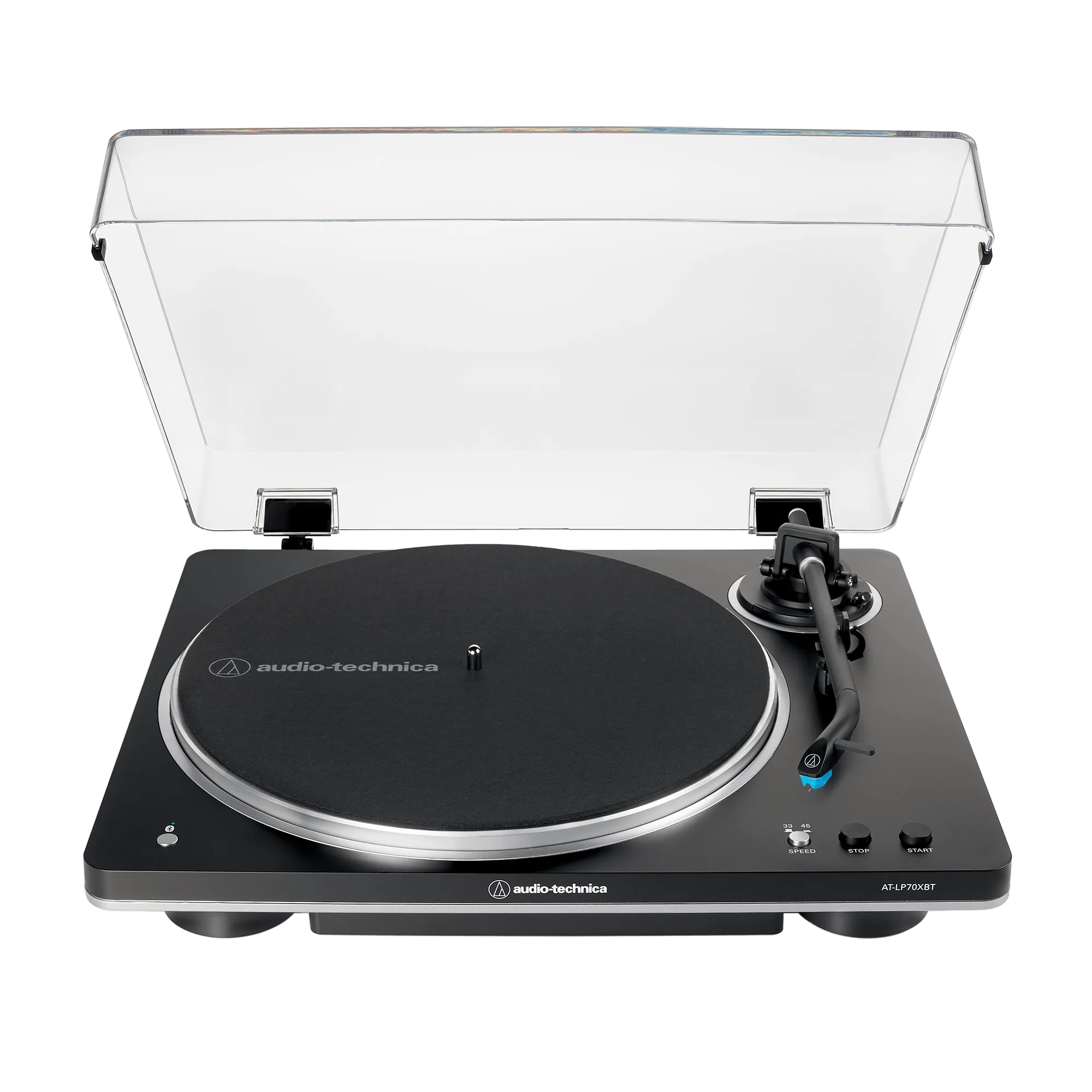
Best wireless
3. Audio-Technica AT-LP70XBT
Best for: People who already own a Bluetooth speaker or wireless headphones
The AT-LP70X with Bluetooth added, including the higher-quality aptX Adaptive codec.
See it at AmazonCheck the current price at the store.
The Audio-Technica AT-LP70XBT ($299 list) is the same automatic turntable as the AT-LP70X, with the same AT-VM95C cartridge and switchable preamp, plus a Bluetooth transmitter. It pairs with Bluetooth speakers, soundbars and headphones, and supports Qualcomm's aptX Adaptive codec for better sound with devices that also have it. It keeps the wired output, so it can move to a proper stereo later. The listing we link is sold by Amazon.com.
Who it's for: small apartments, shared rooms and late-night listening on headphones. Keep in mind: the AT-LP70XBT costs $50 more than the wired model for a feature you may stop using once you buy wired speakers, and Bluetooth adds a slight delay and compression.
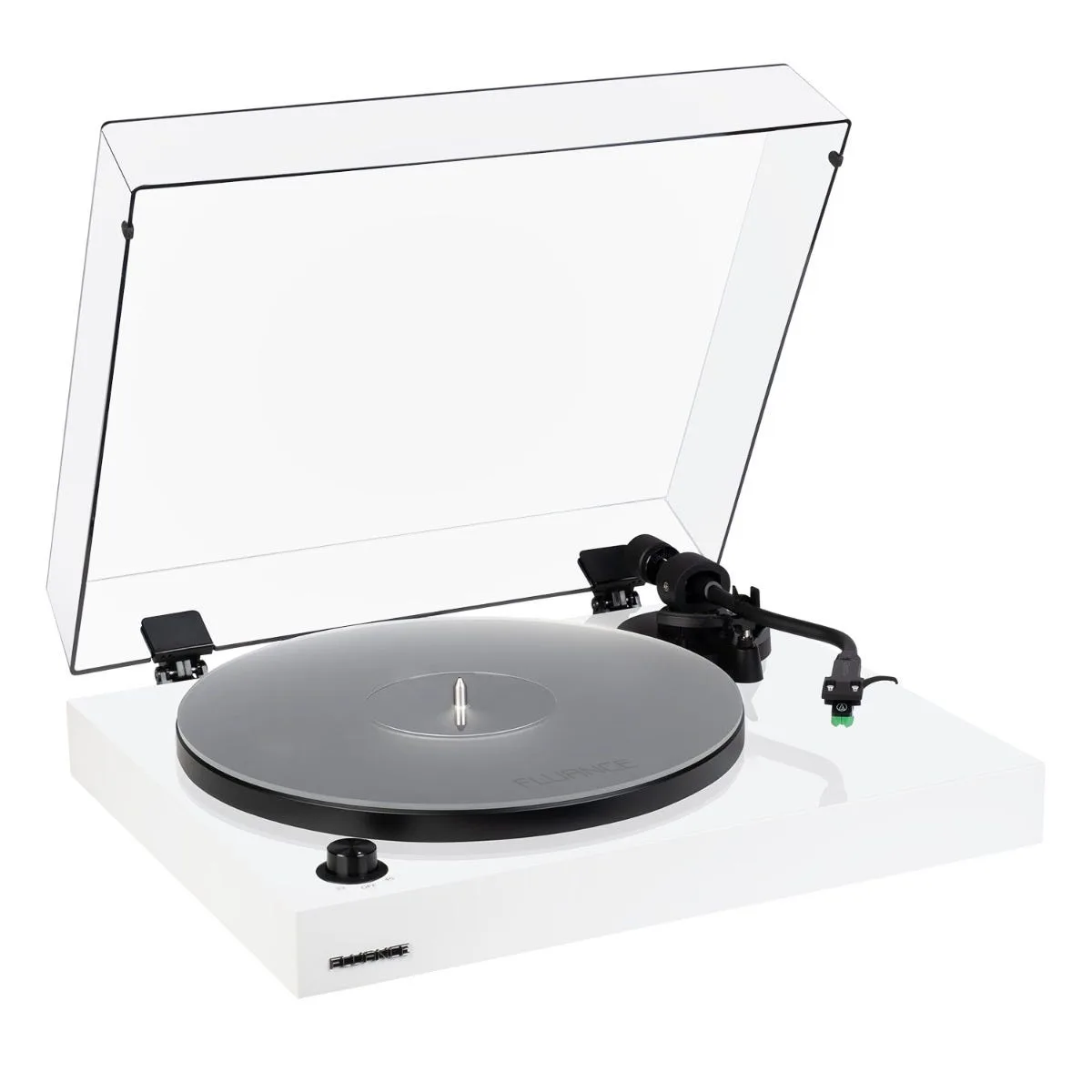
Best step up
4. Fluance RT81+
Best for: Someone who wants to learn how a turntable works, with a safety net
A wood plinth, an elliptical stylus and a built-in preamp in a manual design.
See it at AmazonCheck the current price at the store.
The Fluance RT81+ ($349.99 list) is a manual belt-drive turntable with a heavy MDF wood plinth. Its Audio-Technica VM95E cartridge has an elliptical diamond stylus and sits on a removable headshell, which makes swapping cartridges easy and keeps the VM95 upgrade path open. The platter is damped aluminum with an acrylic mat, three adjustable feet level the deck and isolate it from vibration, and a Texas Instruments phono preamp is built in, with gold-plated RCA outputs and a ground terminal. The listing we link is sold by Fluance on Amazon.
Who it's for: a listener who has outgrown an automatic deck, or a beginner who likes setting things up. Keep in mind: the Fluance RT81+ needs its counterweight balanced when you unpack it, a ten-minute job with the manual, and you lower the needle yourself with the cue lever.
5. U-Turn Orbit Plus (Gen 2)
Best for: Design lovers who want a minimal, American-made deck in a color
An acrylic platter, an Ortofon cartridge and a magnesium arm with nothing extra.
See it at AmazonCheck the current price at the store.
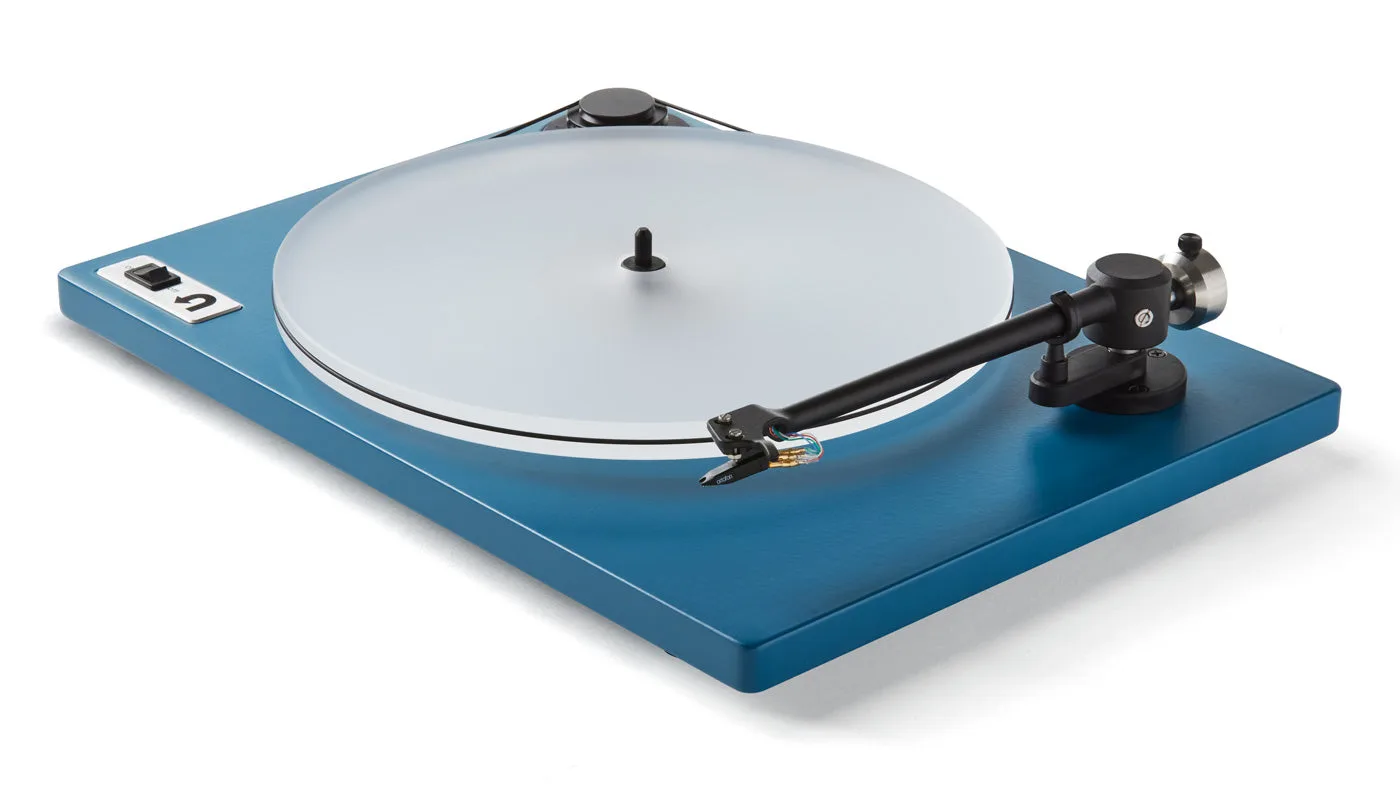
The U-Turn Orbit Plus ($399 list without a preamp) is a manual turntable from a small Massachusetts company. It has a grooved acrylic platter, an Ortofon OM5E cartridge with an elliptical stylus, and U-Turn's OA3 tonearm with a one-piece magnesium tube, internal anti-skate and an adjustable counterweight. The motor sits outside the platter and drives it with a silicone belt; you change between 33 and 45 RPM by moving the belt by hand. A version with U-Turn's built-in Pluto preamp, with a bypass switch, costs more; the cheaper Orbit Basic starts at $249 with a simpler platter and cartridge.
Who it's for: people who care how the turntable looks on the shelf and want a simple machine they can understand. Keep in mind: the U-Turn Orbit Plus has no automatic functions at all, and on Amazon US it is sold by audio dealers in limited colors; U-Turn's own site has the full range of options.
6. Pro-Ject T1 Evo
Best for: A hi-fi first deck to keep for many years
A glass platter, a wooden plinth with no plastic and push-button speed change.
See it at AmazonCheck the current price at the store.
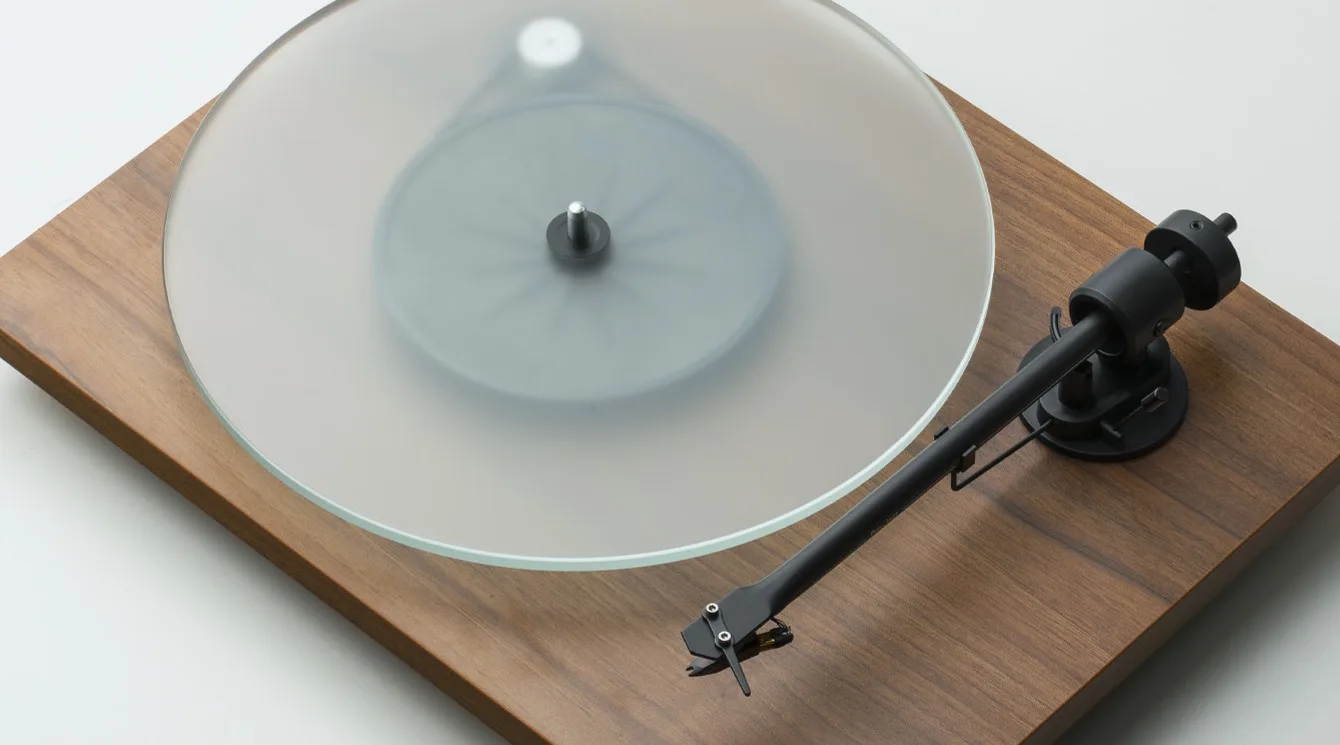
The Pro-Ject T1 Evo is the entry-level turntable from the Austrian maker, built in Europe. Pro-Ject lists it at €399 in Europe; we did not find an official US list price, so check the current one on Amazon. It has a CNC-machined wooden plinth with no plastic parts, a heavy 8 mm glass platter, an 8.6-inch aluminum tonearm and an Ortofon OM10 cartridge that arrives already adjusted. Unlike most manual decks at this price, it changes speed electronically, with a button. It comes in three versions: Standard, Phono (with a switchable preamp) and BT (with Bluetooth aptX HD).
Who it's for: someone who already has an amplifier and wants a serious turntable to start with. Keep in mind: the standard Pro-Ject T1 Evo has no preamp; if you will plug into powered speakers, choose the T1 Evo Phono. It is fully manual.
What else do you need to play a record?
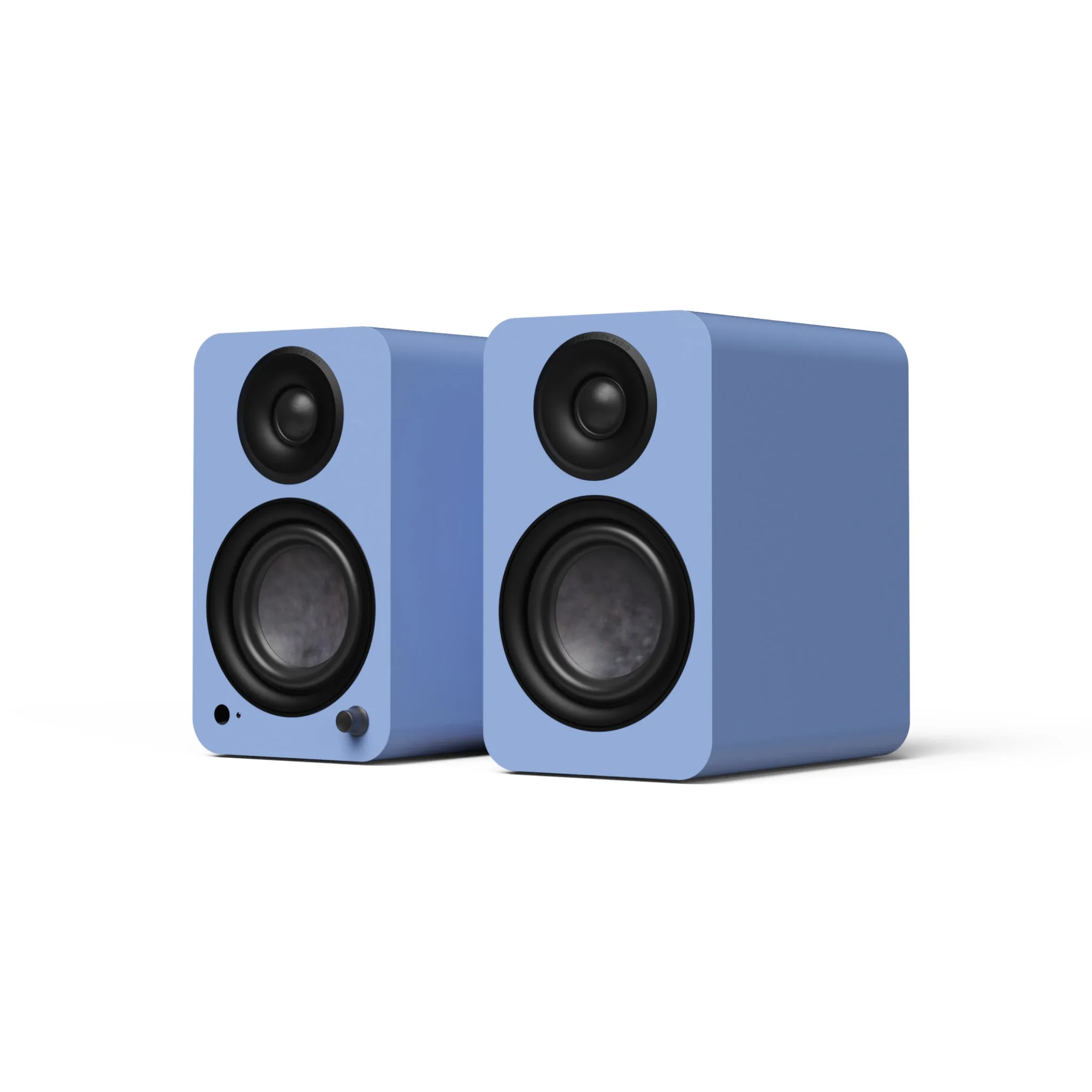
Speakers with their own amplifier are the shortest route: a pair of powered speakers connects to the turntable's RCA output with the included cable. Our guide to the best powered speakers for a turntable covers them. If you already have a stereo receiver, use its PHONO input with the turntable's preamp switched off, or any other input with the preamp on. Using both at once sounds loud and distorted; using neither sounds faint and thin.
Beyond that, a carbon-fiber record brush, and somewhere to store records upright. Records stacked flat warp over time.
How do you set up a turntable so it sounds right?
Put it on something solid and level. A turntable reads vibrations, including footsteps and the bass from its own speakers. A sturdy shelf or sideboard is better than a wobbly table, and the speakers should not sit on the same surface if you can avoid it.
Fit the belt and remove the guards. Belt-drive turntables ship with the belt off the motor pulley and a plastic guard on the stylus. Follow the quick-start sheet; skipping a step is the usual reason a new turntable seems broken.
Check the preamp switch. If the sound is very quiet, the switch on the back is set to PHONO and your speakers expected LINE.
Keep the lid down and the records clean. Dust is what you hear as crackle. Brush each side before playing, and hold records by the edges.
Which record player fits your budget?
Under $200: the Audio-Technica AT-LP60X, $179, the simplest automatic.
Around $250: the Audio-Technica AT-LP70X, $249, for the upgradable stylus.
Around $300: the Audio-Technica AT-LP70XBT, $299, for Bluetooth.
Around $350 to $400: the Fluance RT81+, $349.99, with a preamp and an elliptical stylus, or the U-Turn Orbit Plus, $399, for the acrylic platter.
Above that: the Pro-Ject T1 Evo, listed at €399 in Europe; check the US price.
Before you order
Check who sells the listing: several of these are sold on Amazon by authorized audio dealers, and warranty service goes through the maker. Keep the box and its foam for a few weeks, because a turntable is awkward to return without them. Amazon US usually extends its return window for gifts bought during the holidays; check the exact dates on the listing. For more ideas, see our gifts for music lovers.
How to get it right
For most beginners, the Audio-Technica AT-LP70X; on a budget, the AT-LP60X; with wireless speakers or headphones, the AT-LP70XBT; to learn the craft, the Fluance RT81+; for design, the U-Turn Orbit Plus; and to start with real hi-fi, the Pro-Ject T1 Evo.