The best first telescope to give in 2026
Four beginner telescopes from $199.95, three of them with a phone app that shows you where to point, and what a first telescope can and cannot show.
Culturera may earn a commission if you buy through the links on this page. As an Amazon Associate I earn from qualifying purchases. The selection is ours alone.
At a glance
- Best overallCelestron StarSense Explorer LT 114AZAmazon
- Best viewsCelestron StarSense Explorer DX 130AZAmazon
- Most apertureCelestron StarSense Explorer 150mm Tabletop DobsonianAmazon
- Best for the MoonCelestron AstroMaster 70AZAmazon
For most beginners, the telescope to give this year is the Celestron StarSense Explorer LT 114AZ: at $259.95 it has a 114 mm mirror, and its phone dock and app show you, with arrows on the screen, exactly where to push the telescope to find a planet or a galaxy. That solves the problem that makes most first telescopes end up in a closet: not knowing where to look. We have not tested these telescopes; this guide compares what the maker publishes and what each one suits.
Prices are the makers' list prices on November 22, 2026. Telescopes sell out before Christmas, so order early.
What should you know before buying a first telescope?
Aperture matters most. The width of the main mirror or lens decides how much light the telescope collects, and therefore how much you see. Ignore claims about magnification on the box; a 130 mm telescope shows far more than a 70 mm one at any magnification.
Set expectations. Through a beginner telescope, the Moon's craters are stunning, Saturn's rings and Jupiter's moons are clearly visible but small, and galaxies look like faint gray smudges. The colorful pictures online are long-exposure photographs.
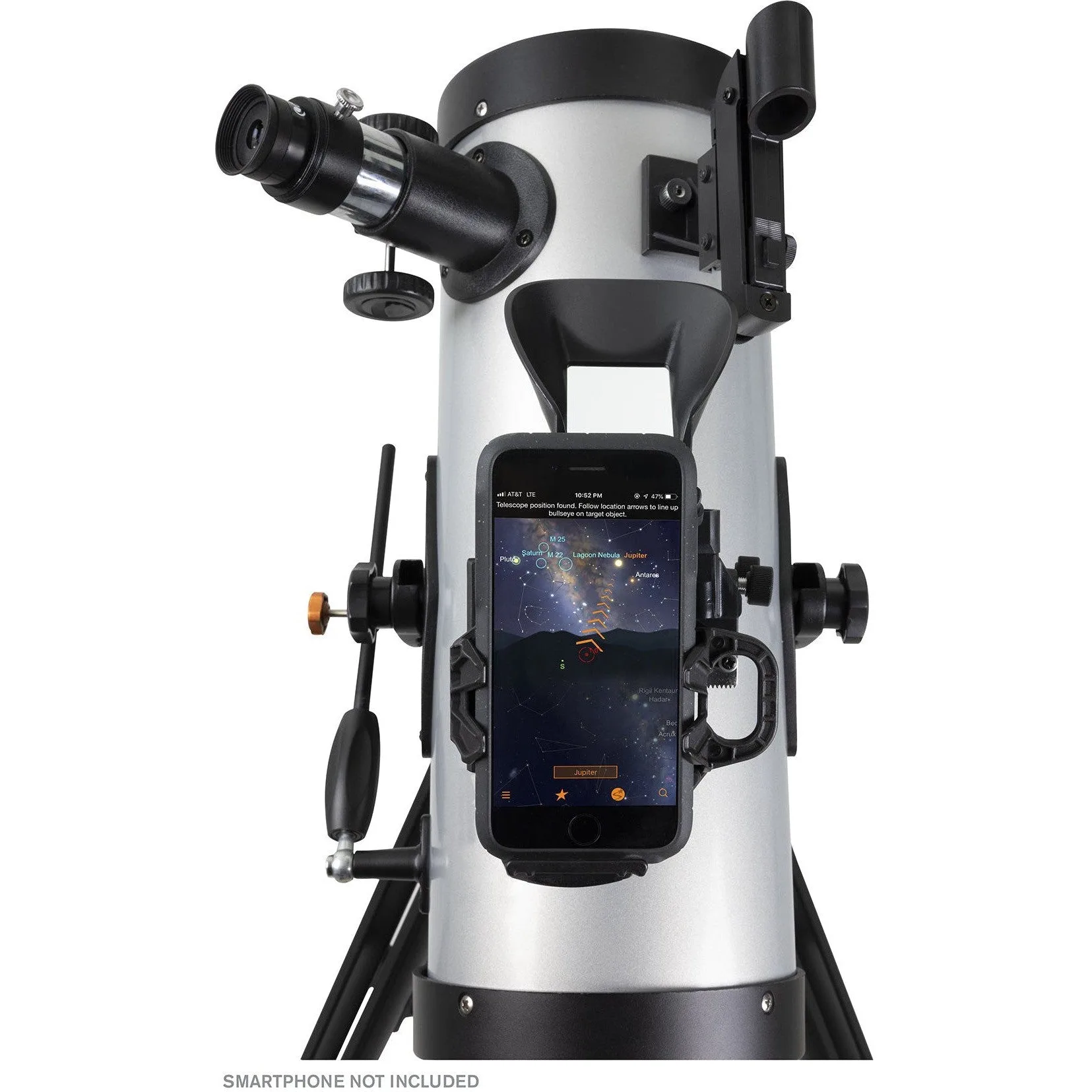
Finding things is the hard part. Celestron's StarSense Explorer telescopes have a dock for your phone. The app recognizes the stars the phone sees, works out where the telescope is pointing and guides you to the object with arrows. You still move the telescope by hand; there are no motors to break or batteries to charge, beyond your phone.
Size and weight. A telescope that is easy to carry outside gets used. Check the weight and where it will be stored.
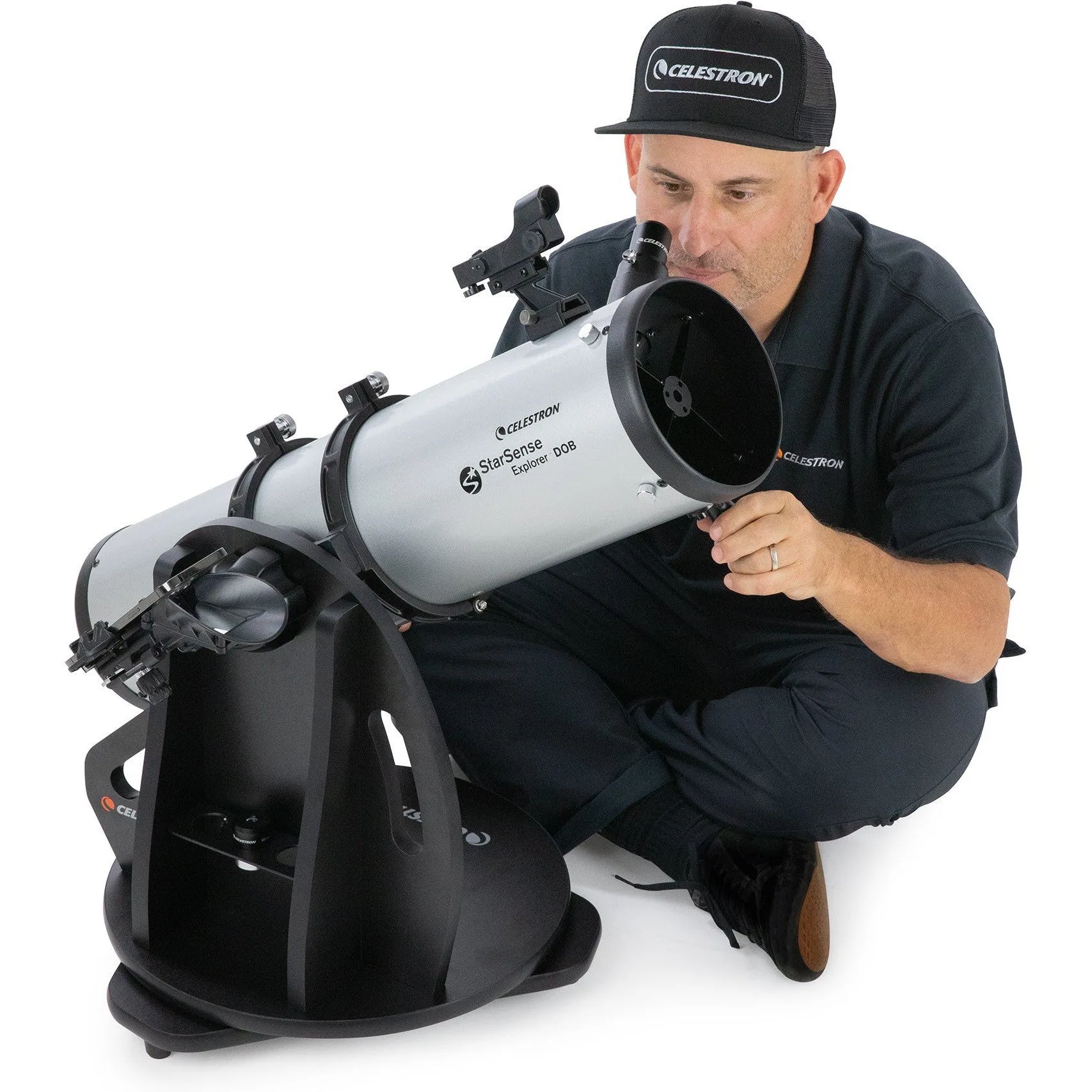
The three types. A refractor uses a lens at the front of a closed tube; it is simple and needs no adjustment, but large lenses are expensive. A reflector uses a mirror at the bottom of an open tube and gives more aperture for the money; you look in from the side, near the top. A Dobsonian is a reflector on a simple swiveling base in place of a tripod, the cheapest way to get a large mirror.
Which one is for you?
Best overall
1. Celestron StarSense Explorer LT 114AZ
Best for: Families and adults starting out
A 114 mm reflector with the phone guidance that makes finding planets easy, at an entry price.
See it at AmazonCheck the current price at the store.
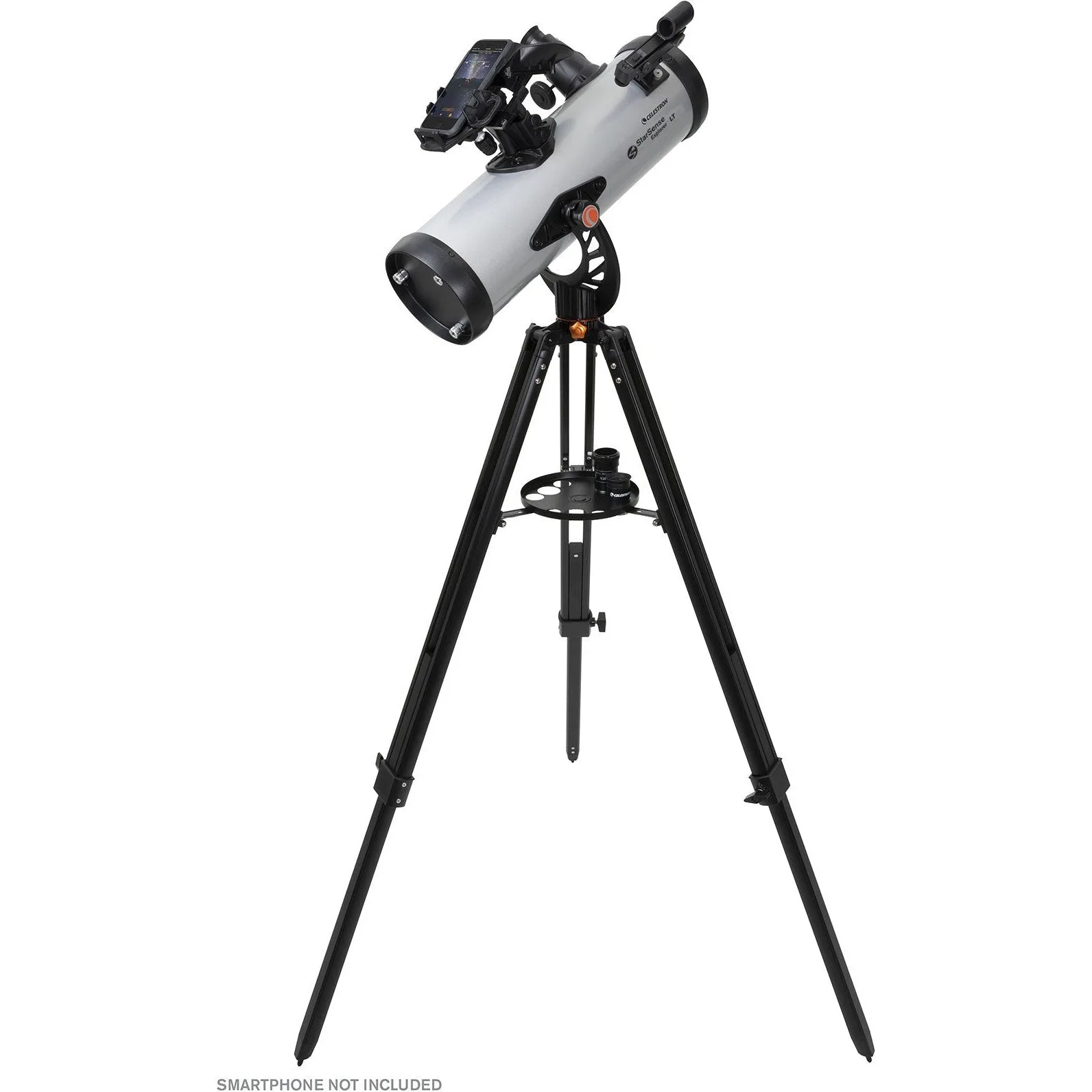
The StarSense Explorer LT 114AZ ($259.95 list) is a 114 mm reflector with a 1,000 mm focal length. It comes with 25 mm and 10 mm eyepieces for 40x and 100x, plus a 2x Barlow lens that doubles each, a red-dot finder and the StarSense phone dock. The whole kit weighs 4.7 kg, and the tripod and mount come preassembled.
The magazine Sky & Telescope gives a rule of thumb for the highest useful magnification: about twice the aperture in millimeters, so about 228x for the StarSense Explorer LT 114AZ, on a night of steady air. Its 100x eyepiece is enough to show Saturn's rings and the main cloud bands of Jupiter, and the Barlow lens takes it to 200x for the Moon. Most observing happens at the lower power, where the image is brighter and easier to keep in view.
Who it's for: anyone who wants to see the Moon, planets and bright star clusters without learning the sky first. Keep in mind: the light tripod shakes at high magnification, so give it a second to settle after each touch. On Amazon US it is sold by Amazon itself.
Best views
2. Celestron StarSense Explorer DX 130AZ
Best for: Someone sure they will stick with it
More aperture, a better mirror and a steadier tripod than the LT, with the same phone guidance.
See it at AmazonCheck the current price at the store.
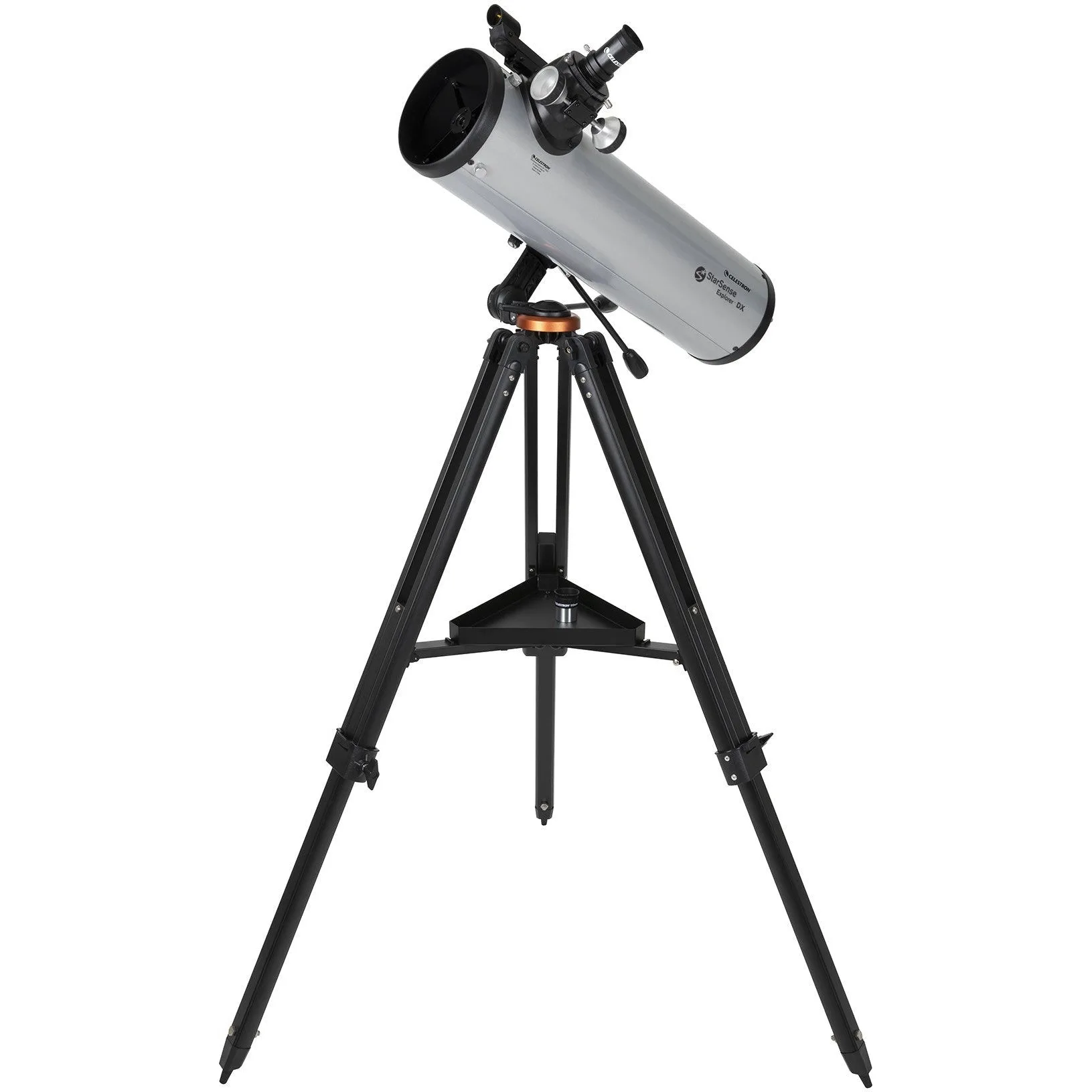
The StarSense Explorer DX 130AZ ($499.95 list) has a 130 mm parabolic mirror with a 650 mm focal length, which gathers more light and gives sharper, wider views of star clusters and nebulae. The mount has slow-motion controls on both axes for fine tracking, and the aluminum tripod is heavier and steadier. The eyepieces give 26x and 65x; there is no Barlow in the box. The kit weighs 8.2 kg.
A parabolic mirror, like the one in the StarSense Explorer DX 130AZ, has a curve that brings all the light to the same point, which gives a sharper image than the spherical mirrors of cheaper reflectors. The short 650 mm focal length gives a wide field of view: large objects like the Pleiades cluster or the Orion Nebula fit in the eyepiece whole. Adding a shorter eyepiece or a Barlow lens later raises the magnification for planets.
Who it's for: an adult or teenager already interested in astronomy. Keep in mind: it is bulkier to carry and store than the LT. On Amazon US it is sold by Amazon itself.
Most aperture
3. Celestron StarSense Explorer 150mm Tabletop Dobsonian
Best for: Deep-sky objects and quick setup
A 150 mm mirror on a simple tabletop base, the most light-gathering here, with phone guidance.
See it at AmazonCheck the current price at the store.
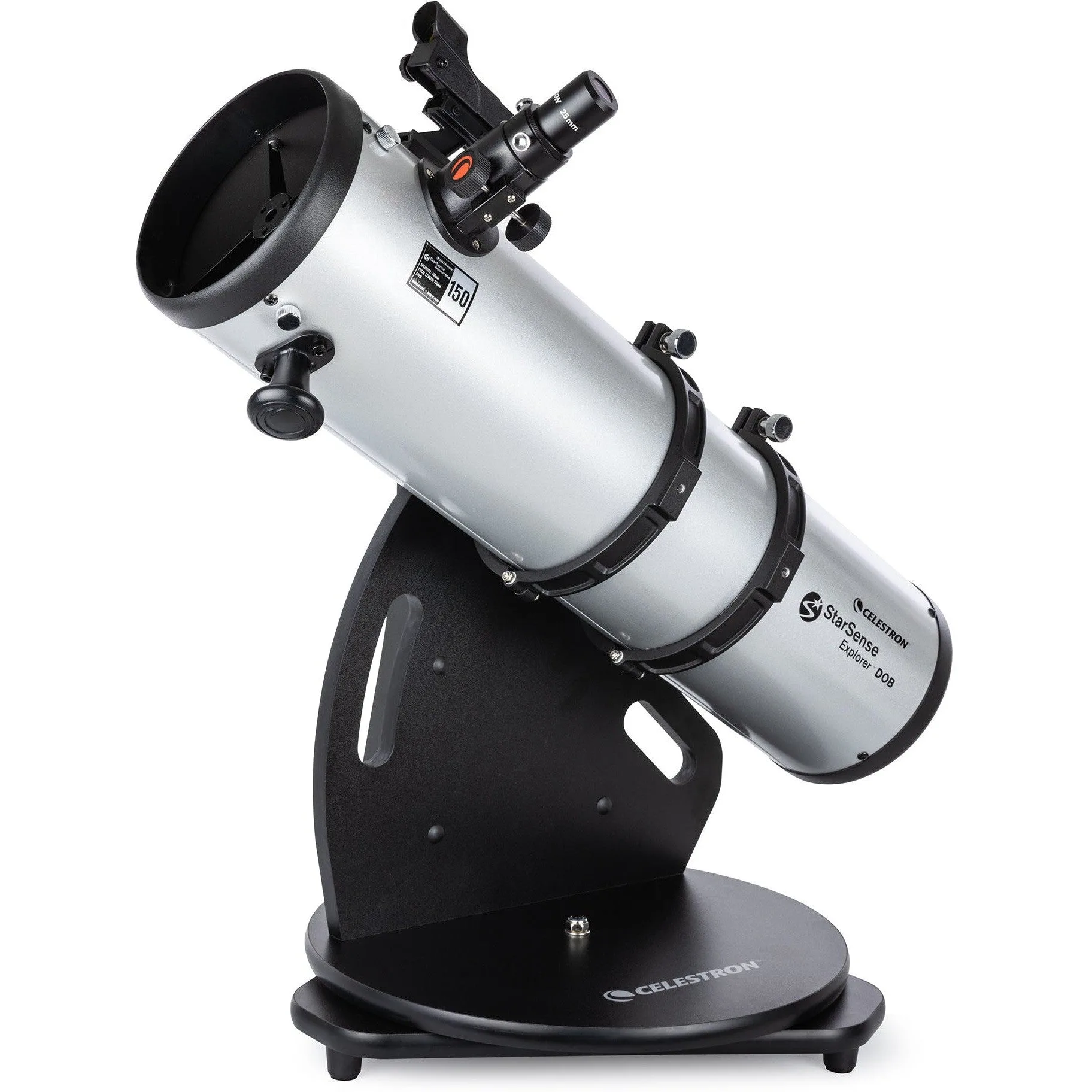
The StarSense Explorer 150mm Tabletop Dobsonian ($599.95 list) puts a 150 mm parabolic mirror with a 750 mm focal length on a swiveling wooden-style base instead of a tripod. You set it on a sturdy table, a wall or a stool and push it to aim. Its extra aperture makes the biggest difference on galaxies and nebulae. It includes eyepieces for 30x and 75x, and it weighs 11.3 kg in total.
The height matters with a tabletop telescope like the StarSense Explorer 150mm Tabletop Dobsonian, because the eyepiece is near the top of the tube and the tube points up. A solid garden table or a low wall works for adults standing; a sturdy stool or crate works for sitting. A folding camping table is too wobbly. At 11.3 kg it is still a one-person carry, in one piece, and setting up takes less than a minute.
Who it's for: someone with a garden or terrace who wants the most to see for the money. Keep in mind: it needs a stable surface at the right height, which takes some planning. On Amazon US it is sold by Amazon itself.
Best for the Moon
4. Celestron AstroMaster 70AZ
Best for: Children and a first look at the Moon
A simple 70 mm refractor that shows the Moon and the brightest planets, with an upright image for daytime use too.
See it at AmazonCheck the current price at the store.
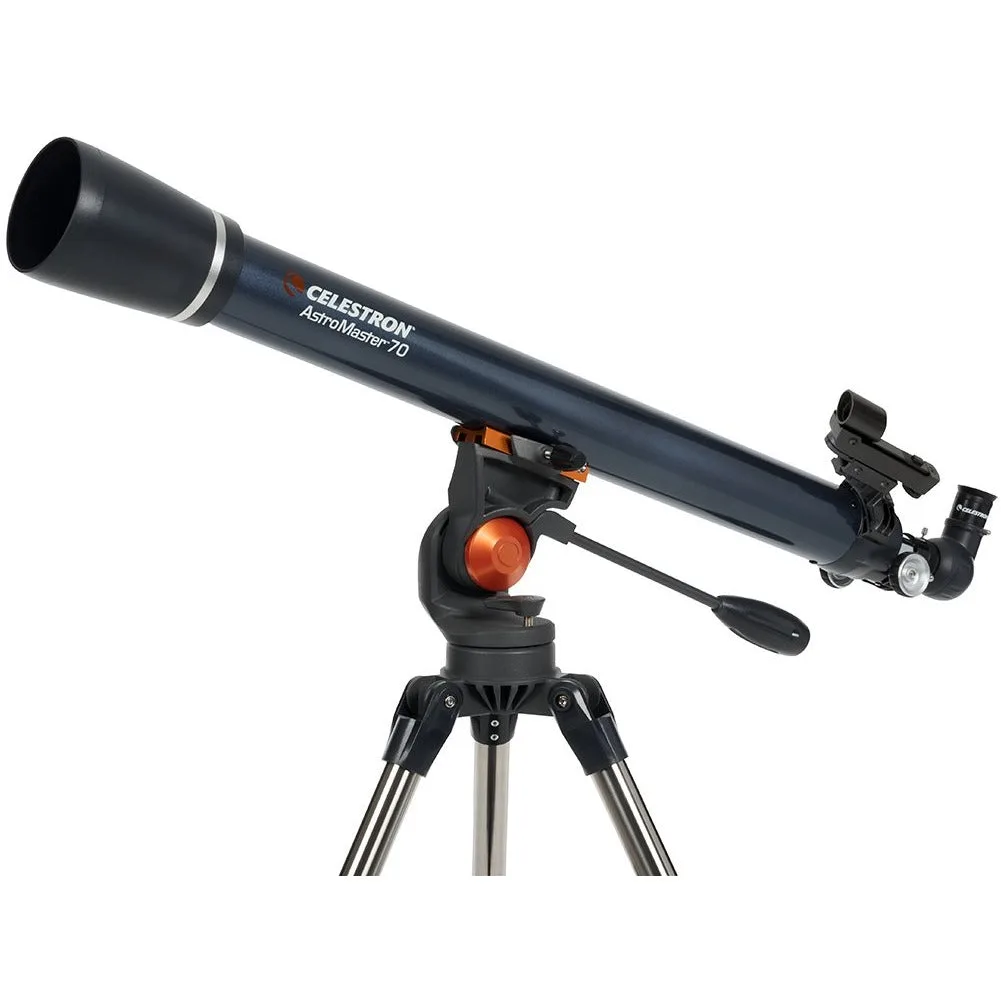
The AstroMaster 70AZ ($199.95 list) is a 70 mm lens telescope, or refractor, with a 900 mm focal length. Refractors need no adjustment and show an upright image, so the same telescope works for birds and landscapes during the day. It comes with 20 mm and 10 mm eyepieces for 45x and 90x and weighs 4.9 kg.
Who it's for: a child or a casual stargazer mostly interested in the Moon. Keep in mind: with 70 mm, Saturn and Jupiter look small and galaxies are out of reach, and it has no phone guidance. For a few dollars more, the LT 114AZ shows much more. On Amazon US it is sold by Amazon itself.
What about smart telescopes?
Smart telescopes such as ZWO's Seestar range do not have an eyepiece. They point themselves, take long exposures and show color photos of galaxies and nebulae on your phone. They are a different hobby, closer to photography; for someone who wants to look with their own eyes, a regular telescope is the better first gift.
What can you see this winter?
The Moon is the best first target, and it is best when it is not full: around first quarter, the shadows along the line between day and night make the craters and mountains stand out. Saturn is the evening planet in December 2026 and January 2027, in the south after sunset, according to the sky guide of the Flandrau planetarium in Arizona; Jupiter rises late in the evening by January, and Mars is a before-dawn object. The StarSense app lists what is up tonight from your location.
Winter is also the season of the Orion Nebula, a gray-green cloud of gas visible in any of these telescopes just below Orion's belt, and of the Pleiades, a bright cluster of blue stars. From a city, stick to the Moon, the planets, double stars and bright clusters. Galaxies need a dark sky far from town, and even there they are faint.
How do you set up for a first night?
1. Assemble the telescope indoors in daylight and read the manual once. 2. Align the finder and the phone dock on a distant object, such as a chimney or an antenna, also in daylight; it is much harder in the dark. 3. Take the telescope outside 30 minutes before observing, so the mirror reaches the outside temperature. Warm optics give a blurry, shimmering image.
4. Give your eyes time: they need 20 to 30 minutes in the dark to reach full sensitivity, and one look at a white phone screen undoes it. The StarSense app has a red night mode for this reason. 5. Start with the lowest-power eyepiece, the one with the largest number in millimeters, find and center the object, and only then change to a higher power. 6. Dress warmer than seems necessary; observing means standing still.
Do reflector telescopes need maintenance?
A little. The two mirrors of a reflector must stay aligned with each other, an adjustment called collimation, done with screws at the back of the tube. A new telescope usually arrives close enough, and the manual explains how to check it by looking at a defocused star. Keep the caps on when the telescope is stored, in a dry room, and do not wipe the mirror: a little dust does not affect the view, and rubbing scratches the coating.
Can you look at the Sun with a telescope?
Never without a certified solar filter that covers the front of the telescope. Pointing an unfiltered telescope at the Sun causes immediate, permanent eye damage, and the small finder is dangerous too. Filters that screw into the eyepiece are unsafe and can crack from the heat. With children, keep the telescope stored during the day or supervise it.
Which phones work with StarSense?
Celestron says the StarSense Explorer app runs on Android 12 or later and on iOS 18 or later. The app is free and unlocks with a code included with the telescope. The dock holds the phone above a small mirror, so remove thick cases if the phone does not sit flat. Any recent phone works; an old phone kept in a drawer for this purpose may not.
Which one at each price?
Around $200: the Celestron AstroMaster 70AZ, $199.95, for the Moon and a child.
Around $260: the Celestron StarSense Explorer LT 114AZ, $259.95, the best start for most people.
$500 to $600: the StarSense Explorer DX 130AZ, $499.95, for a steadier tripod; or the StarSense Explorer 150mm Tabletop Dobsonian, $599.95, for the most aperture.
Before you order
Check that the giftee's phone works with the StarSense Explorer app before you buy, and plan the first night: a clear evening, a dark spot away from streetlights and the Moon or a bright planet as the first target. A red flashlight keeps your eyes adjusted to the dark.
Amazon US usually extends its return window for gifts bought during the holidays; check the exact dates on the listing before you buy.
How to get it right
Buy the most aperture the person will actually carry outside. For most beginners, that is the StarSense Explorer LT 114AZ; for a committed teenager or adult, the DX 130AZ or the 150mm Dobsonian; for a child and the Moon, the AstroMaster 70AZ.