The best pour-over coffee kit to give in 2026
A Hario V60 kit, Fellow's Stagg EKG kettle, a Baratza Encore grinder and a Chemex: the pieces that make pour-over coffee at home worth it, and which to give first.
Culturera may earn a commission if you buy through the links on this page. As an Amazon Associate I earn from qualifying purchases. The selection is ours alone.
At a glance
- Best overallHario V60 Pour-Over KitAmazon
- Best upgradeFellow Stagg EKG ProAmazon
- Best grinderBaratza EncoreAmazon
For someone starting with pour-over coffee, the gift to give is Hario's V60 kit: a ceramic dripper, a glass server and a pack of filters, everything needed except coffee and hot water. For someone who already brews this way, the upgrade that changes the most is a gooseneck kettle with temperature control, like Fellow's Stagg EKG, or a burr grinder. We have not tested these products; this guide compares what the makers publish.
Prices are the makers' list prices on November 22, 2026.
What does a pour-over setup need?
A dripper and filters. The cone holds a paper filter and the coffee. The V60's spiral ribs and large hole let water flow fast, which rewards a steady pour; a Chemex makes a cleaner, lighter cup through thicker filters.
A gooseneck kettle. Its thin spout lets you pour slowly and exactly where you want, which is most of the technique. Temperature control helps: lighter roasts like water around 94 to 96 °C (200 to 205 °F).
A burr grinder and a scale. Fresh, even grounds and a 0.1-gram scale make each cup repeatable. Of everything here, the grinder improves taste the most.
Good water and fresh beans. Brewed coffee is almost all water, so filtered water helps if the tap water tastes of chlorine. Whole beans with a roast date on the bag, used within about a month of that date, matter more than any piece of equipment.
Which one is for you?
Best overall
1. Hario V60 Pour-Over Kit
Best for: A first pour-over setup
The classic Japanese dripper with a glass server and 100 filters, ready to brew.
See it at AmazonCheck the current price at the store.
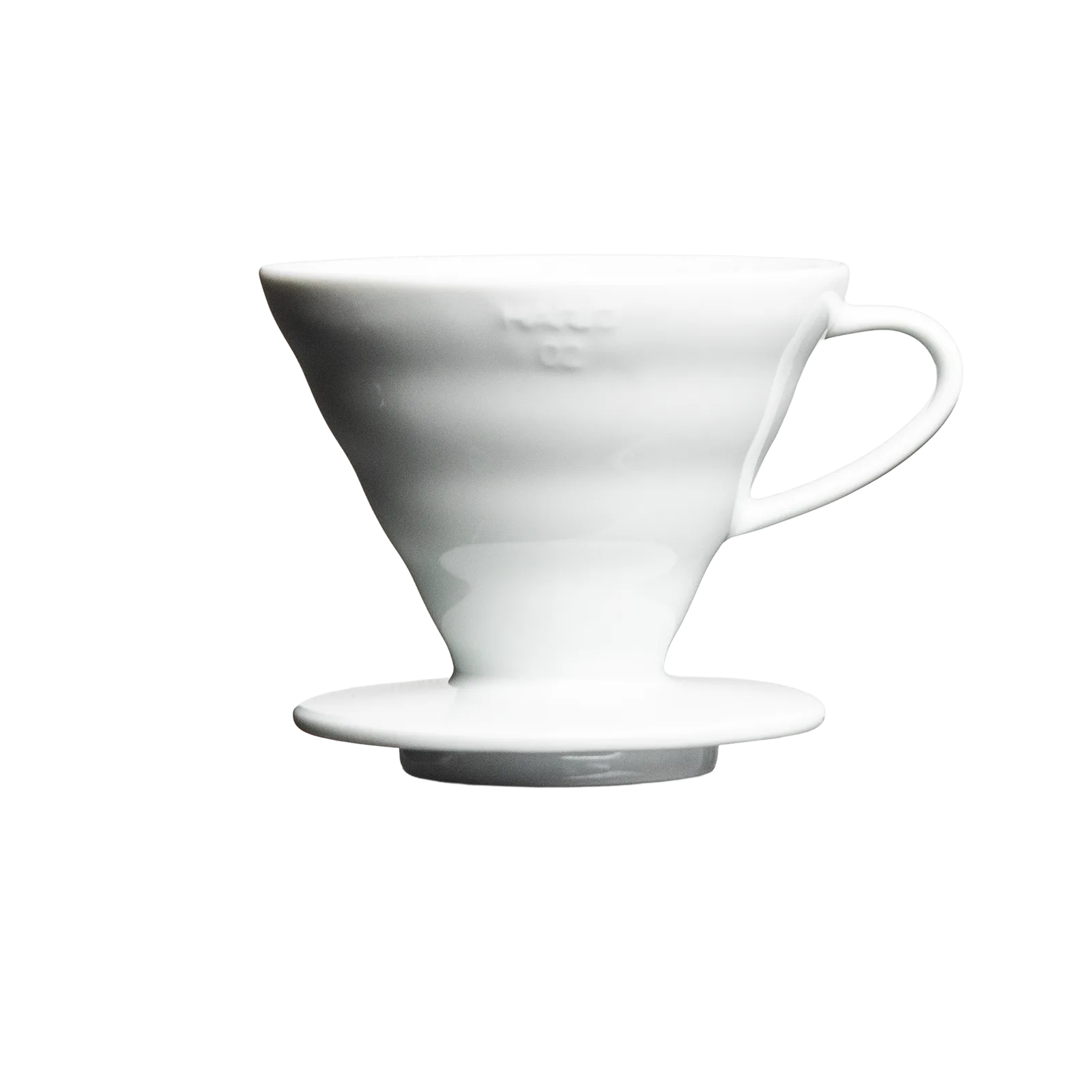
Hario's V60 is the dripper most specialty cafés use. The 02 size brews one to four cups, and the ceramic version ($30.50 list for the dripper alone at Hario USA) holds heat well. The Amazon link is Hario's pour-over kit with the 02 ceramic dripper, a glass server to brew into and 100 paper filters, so the gift is complete.
The Hario V60 takes its name from its shape: a V-shaped cone with a 60-degree angle. Hario, a Japanese glass maker, launched it in 2005. The Hario V60 comes in three sizes: 01 for one to two cups, 02 for one to four and 03 for one to six. The 02 is the one to give, because it brews a single cup as well as a small pot. It is made in ceramic, glass, metal and plastic; all of them brew the same way, and the plastic version is the cheapest and nearly unbreakable. Each size takes its own cone-shaped filters.
Who it's for: anyone curious about pour-over. Keep in mind: the V60 is sensitive to pouring speed and grind; expect a few mediocre cups while learning. On Amazon US the kit is sold by Amazon itself.
Best upgrade
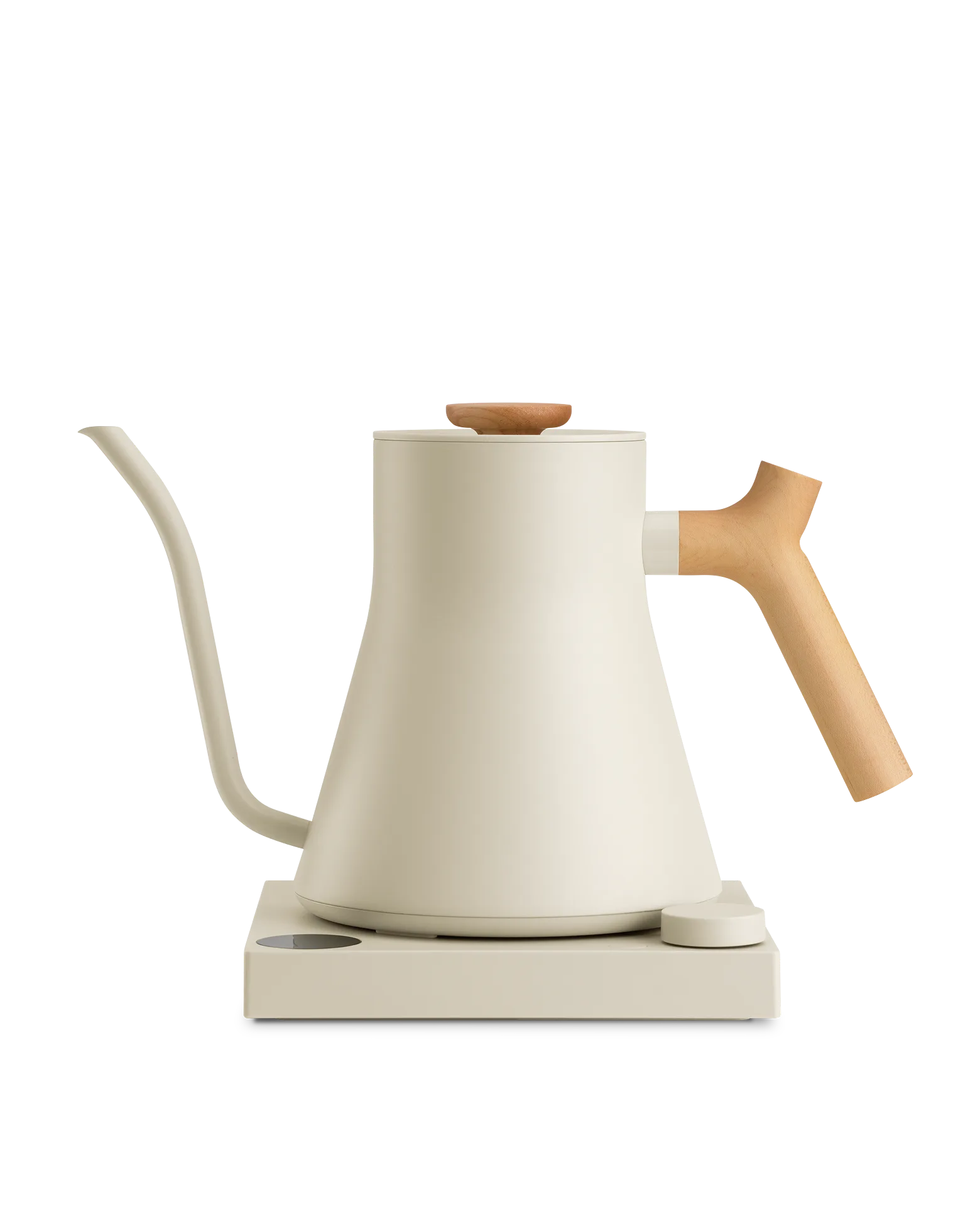
2. Fellow Stagg EKG Pro
Best for: Someone who already brews pour-over
A precise gooseneck kettle that heats to the exact degree and holds it.
See it at AmazonCheck the current price at the store.
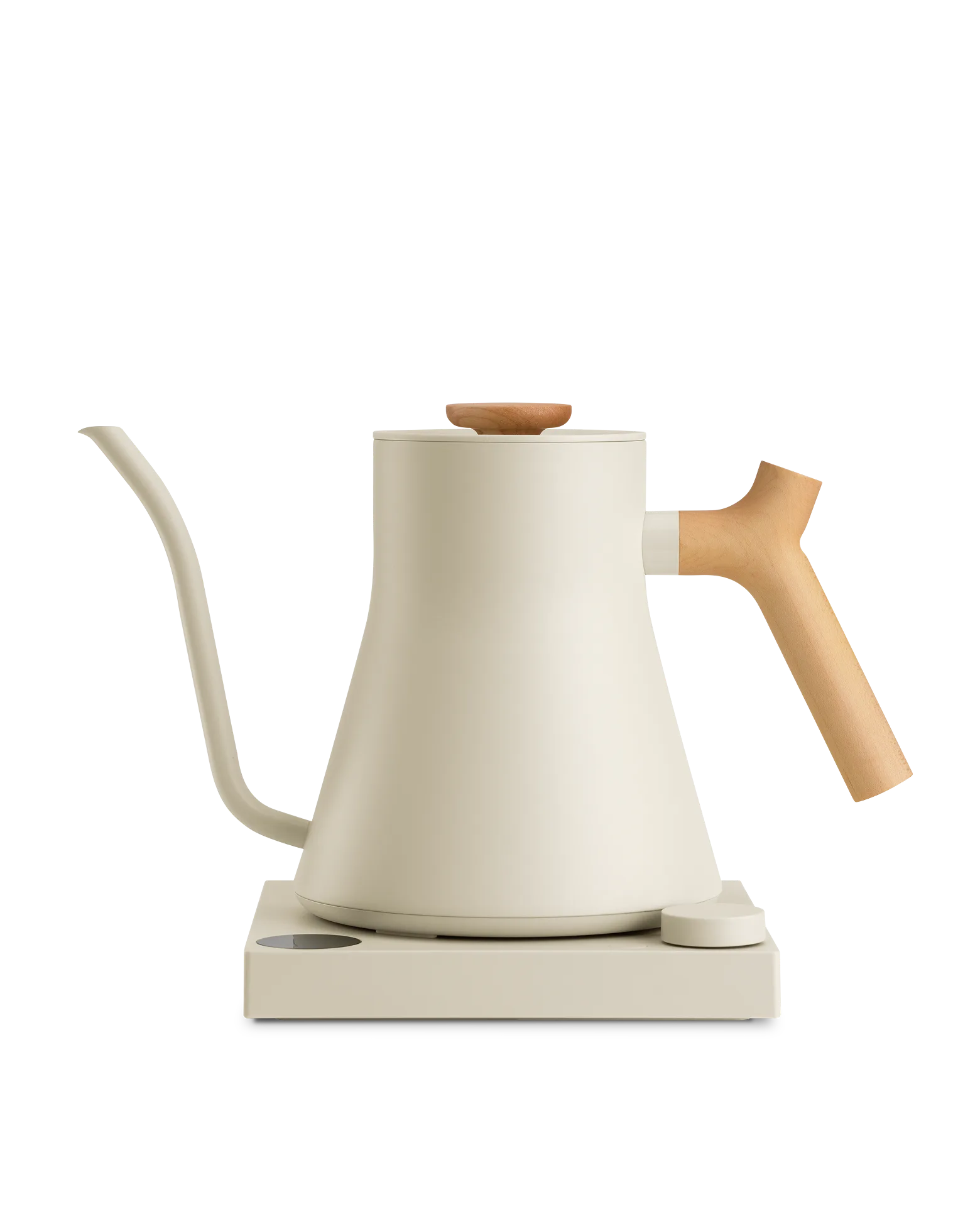
Fellow's Stagg EKG Pro ($199.95 list) holds 0.9 liters, heats to any temperature from 40 to 100 °C in half-degree steps and can hold it for up to an hour. The counterweighted handle and fine gooseneck spout give a slow, steady pour, and it has a built-in brew timer. It is also excellent for tea.
A gooseneck matters because pour-over depends on where and how fast the water lands. An ordinary kettle pours a thick stream that digs a hole in the coffee bed, so some grounds are over-extracted and others barely get wet. The narrow spout of the Fellow Stagg EKG Pro pours a thin stream that the brewer can move in slow circles. Holding a set temperature also means the second cup is brewed with water as hot as the first.
Who it's for: a pour-over or tea enthusiast who wants control. Keep in mind: it is expensive for a kettle, and the US version runs on 120 volts. On Amazon US it is sold by Fellow itself.
Best grinder
3. Baratza Encore
Best for: Anyone still using pre-ground coffee
The standard entry burr grinder for filter coffee, with repairable parts.
See it at AmazonCheck the current price at the store.
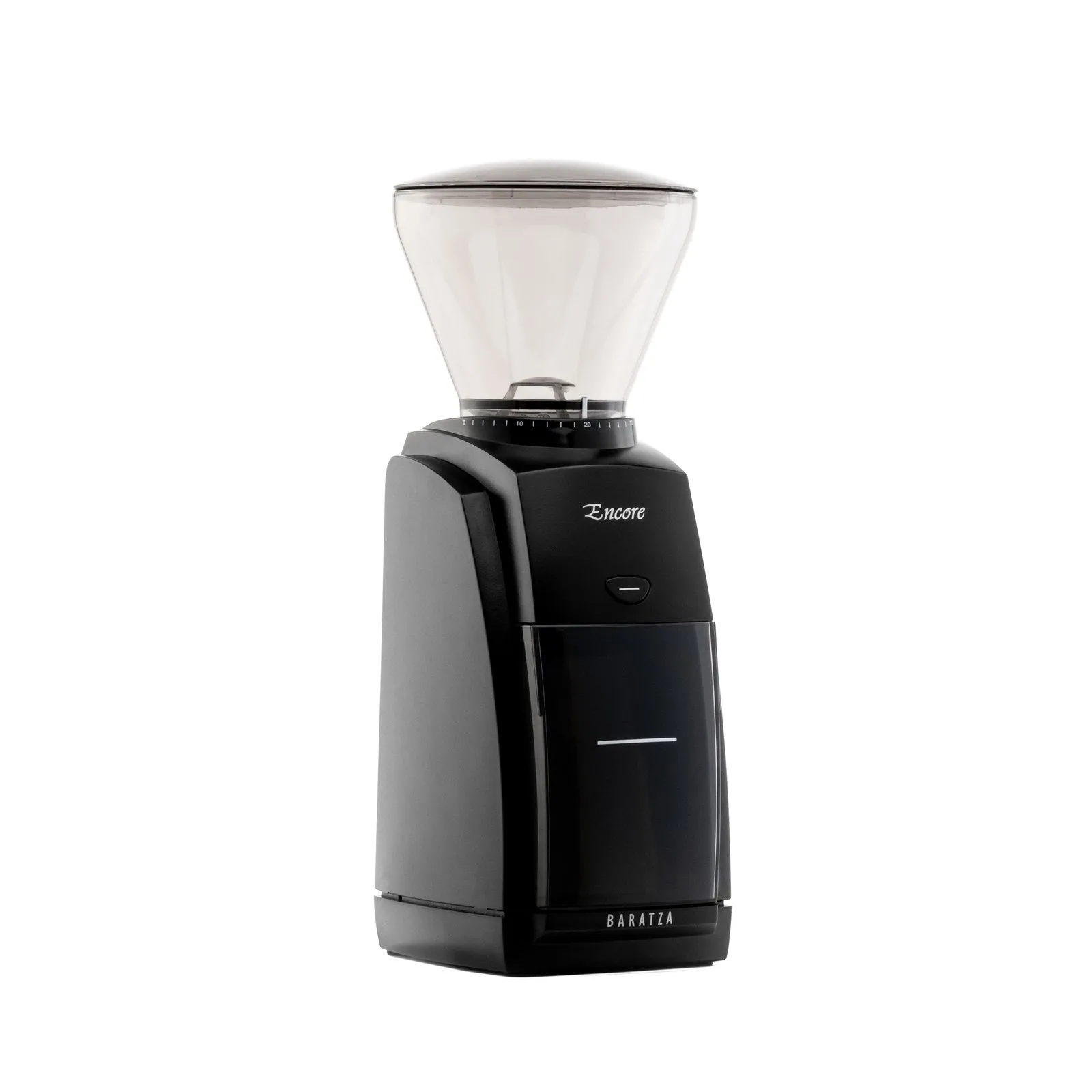
The Baratza Encore ($149.95 list) uses 40 mm conical steel burrs and grinds evenly across the range from fine pour-over to coarse French press. The hopper holds 300 grams of beans, and Baratza sells replacement parts so it can be repaired instead of thrown away. For espresso, choose the Encore ESP instead.
The Baratza Encore has 40 grind settings, chosen by turning the hopper. Baratza's starting chart suggests about setting 15 for a Hario V60 and about 20 for a Chemex, then adjusting by taste. A burr grinder crushes beans between two cutting surfaces set a fixed distance apart, so the particles come out a similar size; a blade grinder chops at random and produces dust and chunks together, which taste bitter and sour in the same cup.
Who it's for: anyone who wants better filter coffee. Keep in mind: it is loud, and it does not grind fine enough for espresso. On Amazon US it is sold by Amazon itself.
What about a Chemex?
The Chemex Six Cup Classic ($49.50 list) is the hourglass glass brewer with a wood collar that has been in design museums since the 1940s. Its thick bonded filters make a very clean, light-bodied cup, and it brews up to 30 ounces, so it suits households that share a pot. On Amazon US it is sold by Chemex itself.
A scale. Any kitchen scale with 0.1-gram precision and a timer works; a ratio of about 1 gram of coffee to 16 grams of water is a good start.
V60 or Chemex: which should you choose?
Choose the Hario V60 for one or two cups at a time and for a brewer who enjoys adjusting technique: its thin filter and large opening let more of the coffee's oils and body through, and small changes in the pour change the cup. Choose the Chemex Six Cup for three or four cups at once and for the cleanest, lightest cup: Chemex says its bonded filters are 20 to 30 percent heavier than other filters, and they hold back more oil and fine particles. The Chemex is also the server, so there is nothing else to wash. Its inventor, the chemist Peter Schlumbohm, patented it in 1941.
How do you make a first pour-over?
1. Weigh 15 grams of coffee and grind it medium-fine, about the texture of table salt. 2. Put the filter in the dripper and rinse it with hot water, which removes any paper taste and warms the dripper; throw that water away. 3. Add the coffee, put everything on the scale and set it to zero.
4. Start a timer and pour about 45 grams of water just off the boil, enough to wet all the grounds. Wait 30 to 45 seconds while the coffee swells and bubbles; this is called the bloom. 5. Pour the rest slowly in small circles until the scale reads 250 grams. 6. The water should finish dripping through between 2 minutes 30 seconds and 3 minutes 30 seconds after you started.
Why does pour-over coffee taste sour or bitter?
A sour, thin cup that finishes too fast is under-extracted: grind finer, or use hotter water. A bitter, harsh cup that takes too long to drip is over-extracted: grind coarser. Change one thing at a time, and keep the dose and the water weight the same while you adjust the grind. This is why the scale and the grinder matter: without them, there is no way to repeat a good cup or fix a bad one.
Which piece should you buy first?
For someone who has nothing: the Hario V60 kit, a scale and a bag of freshly roasted beans, ground by the roaster for pour-over if there is no grinder at home. The next purchase should be the grinder, because coffee starts to go stale within minutes of being ground. The gooseneck kettle comes third; until then, an ordinary kettle poured slowly is workable.
What coffee should you give with it?
Pour-over suits light and medium roasts, where fruit and floral flavors are clearest; very dark roasts taste smoky and bitter with this method. Look for whole beans from a local or specialty roaster with the roast date printed on the bag, not just a best-before date. A 12-ounce (340-gram) bag makes about 22 cups at 15 grams each.
Which one at each price?
Under $50: the Hario V60 kit, to start with one or two cups, or the Chemex Six Cup Classic, $49.50, for a shared pot.
Around $150: the Baratza Encore grinder, $149.95, the upgrade that improves taste the most.
Around $200: the Fellow Stagg EKG Pro kettle, $199.95, for control over temperature and pouring.
Before you order
Add a bag of freshly roasted beans with a roast date, and the right filters: V60 02 filters for the V60, Chemex bonded filters for the Chemex.
Amazon US usually extends its return window for gifts bought during the holidays; check the exact dates on the listing before you buy.
How to get it right
For a beginner, the Hario V60 kit; for someone who already brews pour-over, a Baratza Encore or a Fellow kettle; for a household that shares a pot, a Chemex.