The best espresso machine for beginners in 2026
Breville's Bambino, Bambino Plus and Barista Express compared, plus the grinder that makes or breaks home espresso and a budget option under $150.
Culturera may earn a commission if you buy through the links on this page. As an Amazon Associate I earn from qualifying purchases. The selection is ours alone.
At a glance
- Best overallBreville BambinoAmazon
- Best for lattesBreville Bambino PlusAmazon
- Best all-in-oneBreville Barista ExpressAmazon
- The grinder to addBaratza Encore ESPAmazon
For most people starting with espresso, the machine to give is the Breville Bambino: it is ready in about three seconds, takes up little counter space and makes real espresso and steamed milk for $299.95. Add a good burr grinder, because the grinder matters as much as the machine. Choose the Bambino Plus for someone who mostly drinks lattes, and the Barista Express for an all-in-one with the grinder built in. We have not tested these machines; this guide compares what the makers publish and what a beginner needs.
Prices are the makers' list prices on November 22, 2026. Espresso machines are heavily discounted around Black Friday, so check the listing before you buy.
What does a beginner need for espresso at home?
A grinder, not just a machine. Espresso needs coffee ground fresh and very fine, and adjusted in small steps until the shot runs right. Pre-ground coffee from the supermarket works with the pressurized baskets included with most machines, but the taste only gets good with a burr grinder made for espresso.
Single or double-wall baskets. Double-wall (pressurized) baskets forgive coarse or old coffee and are fine to start. Single-wall baskets give better espresso but need a proper grinder. The Breville machines here come with both.
Milk or no milk. If the person drinks lattes and cappuccinos, the steam wand matters more than anything else. A manual wand takes practice; an automatic one does the work.
Space and heat-up time. A machine that is ready in seconds gets used every morning. One that takes 20 minutes to heat often ends up in a cupboard.
Which one is for you?
Best overall
1. Breville Bambino
Best for: A first espresso machine in a small kitchen
Real espresso and microfoam from a machine that heats in three seconds and fits anywhere.
See it at AmazonCheck the current price at the store.
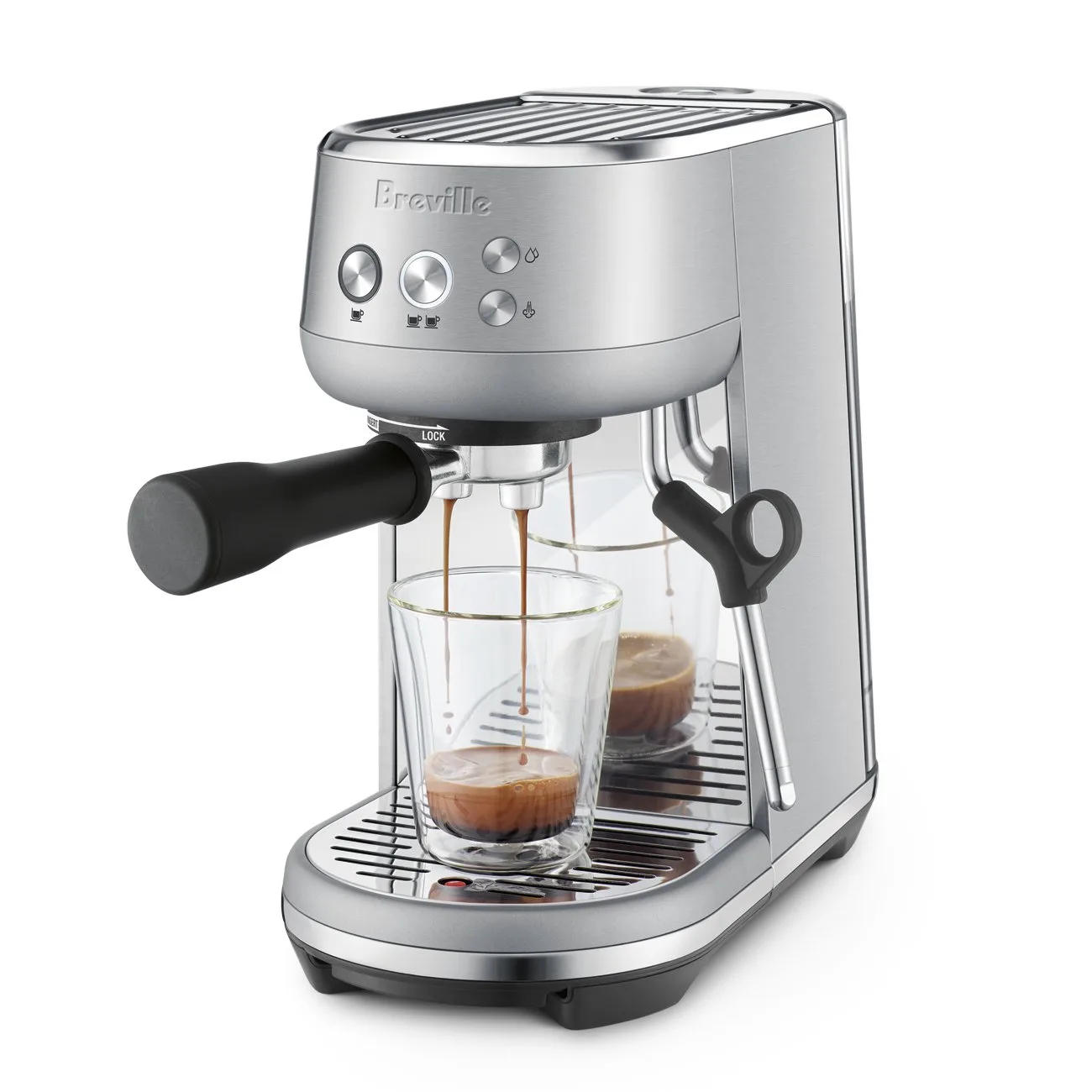
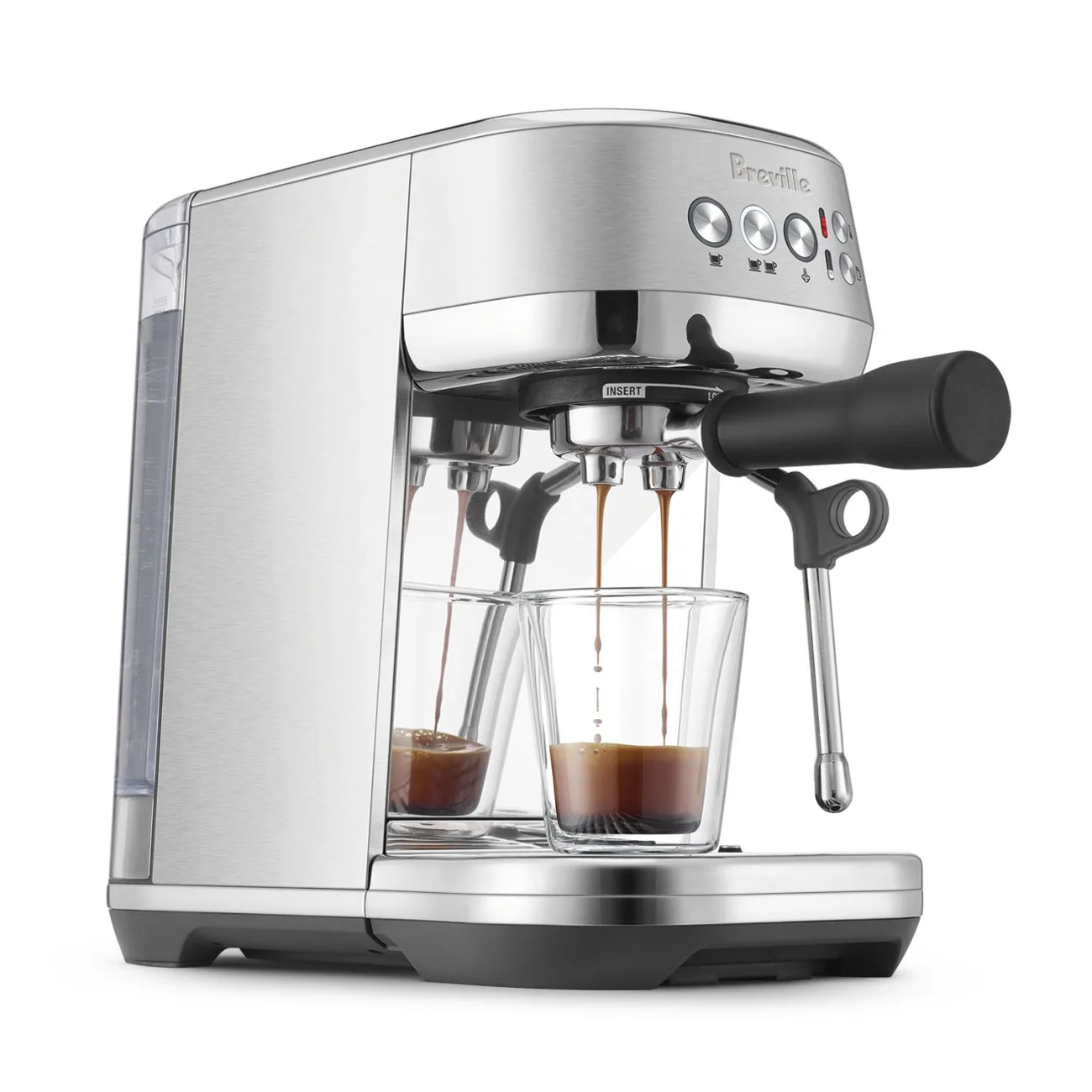
The Breville Bambino ($299.95 list) uses Breville's ThermoJet heater, which is ready in about three seconds, and a 54 mm portafilter for an 18-gram dose, the same size as Breville's bigger machines. One-touch buttons pour a single or double shot, and the manual steam wand can make microfoam for latte art. It is about 30 cm wide, and it comes with single and double-wall baskets, a tamper and a milk jug.
The Breville Bambino has a removable 47-ounce (1.4-liter) water tank at the back, according to Breville's manual, and four buttons: one cup, two cups, hot water and steam. Before the full pressure arrives, it wets the coffee at low pressure for a few seconds, a step called pre-infusion that helps the water pass evenly through the coffee. The portafilter, the handle that holds the coffee, is aluminum and must be washed by hand.
Who it's for: someone who wants to learn espresso without a big machine or a big budget. Keep in mind: you need a grinder to get the most out of it, and the manual wand takes a few tries. On Amazon US this listing is sold by Amazon itself.
Best for lattes
2. Breville Bambino Plus
Best for: Latte and cappuccino drinkers
The Bambino with an automatic steam wand that textures the milk for you.
See it at AmazonCheck the current price at the store.
The Breville Bambino Plus ($499.95 list) is the same compact machine with one big difference: an automatic steam wand. You put the jug under it, choose the milk temperature and texture, and it steams and stops on its own, so a beginner gets silky milk from the first day.
The automatic wand on the Breville Bambino Plus has three milk temperatures and three levels of foam, and it can also be used by hand like the wand on the Bambino. The portafilter is stainless steel. For someone who drinks two lattes a day, the wand is what decides whether the machine is still in use after a month: steaming milk by hand is the skill that takes beginners longest to learn.
Who it's for: people who mostly drink milk drinks and do not want to learn to steam. Keep in mind: it costs $200 more than the Bambino for that one feature, and it still needs a grinder. On Amazon US the stainless model we found was sold by a third-party seller, so the link opens a search; choose a listing sold by Amazon or Breville.
Best all-in-one
3. Breville Barista Express
Best for: Someone who wants one box with the grinder included
A built-in burr grinder, a pressure gauge and a steam wand in one machine.
See it at AmazonCheck the current price at the store.
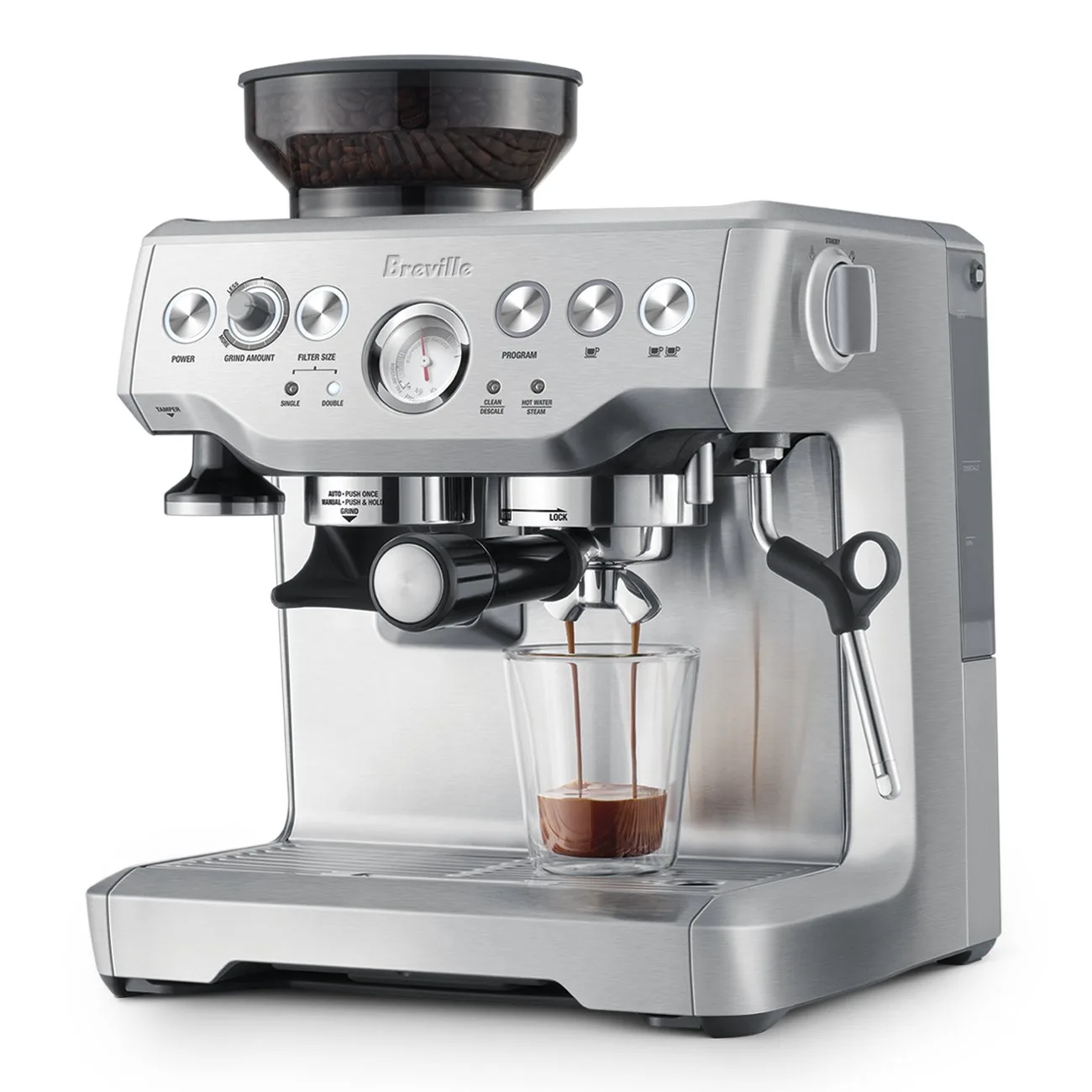
The Breville Barista Express ($699.95 list) has been one of the best-selling home espresso machines for years because it puts a conical burr grinder on top of the machine: beans go in the hopper, ground coffee goes straight into the portafilter. A pressure gauge on the front shows whether the shot is running right, which helps a beginner learn, and it has a manual steam wand.
The Breville Barista Express heats with a Thermocoil, an older system than the ThermoJet in the two Bambino machines, which is why it needs longer to warm up. Its grinder has a dial on the side for grind size and a second dial for the amount of coffee, and it grinds directly into the portafilter when you push the portafilter against a switch. One box means one plug and one footprint, but also that if the grinder fails, the whole machine goes to the repair shop.
Who it's for: someone who wants a single purchase that does everything and has the counter space. Keep in mind: it is much bigger than the Bambino, takes longer to heat up, and the built-in grinder is good, not great; serious enthusiasts eventually buy a separate grinder.
The grinder to add
4. Baratza Encore ESP
Best for: Pairing with a Bambino or Bambino Plus
An affordable burr grinder with fine steps for espresso that also grinds for filter coffee.
See it at AmazonCheck the current price at the store.
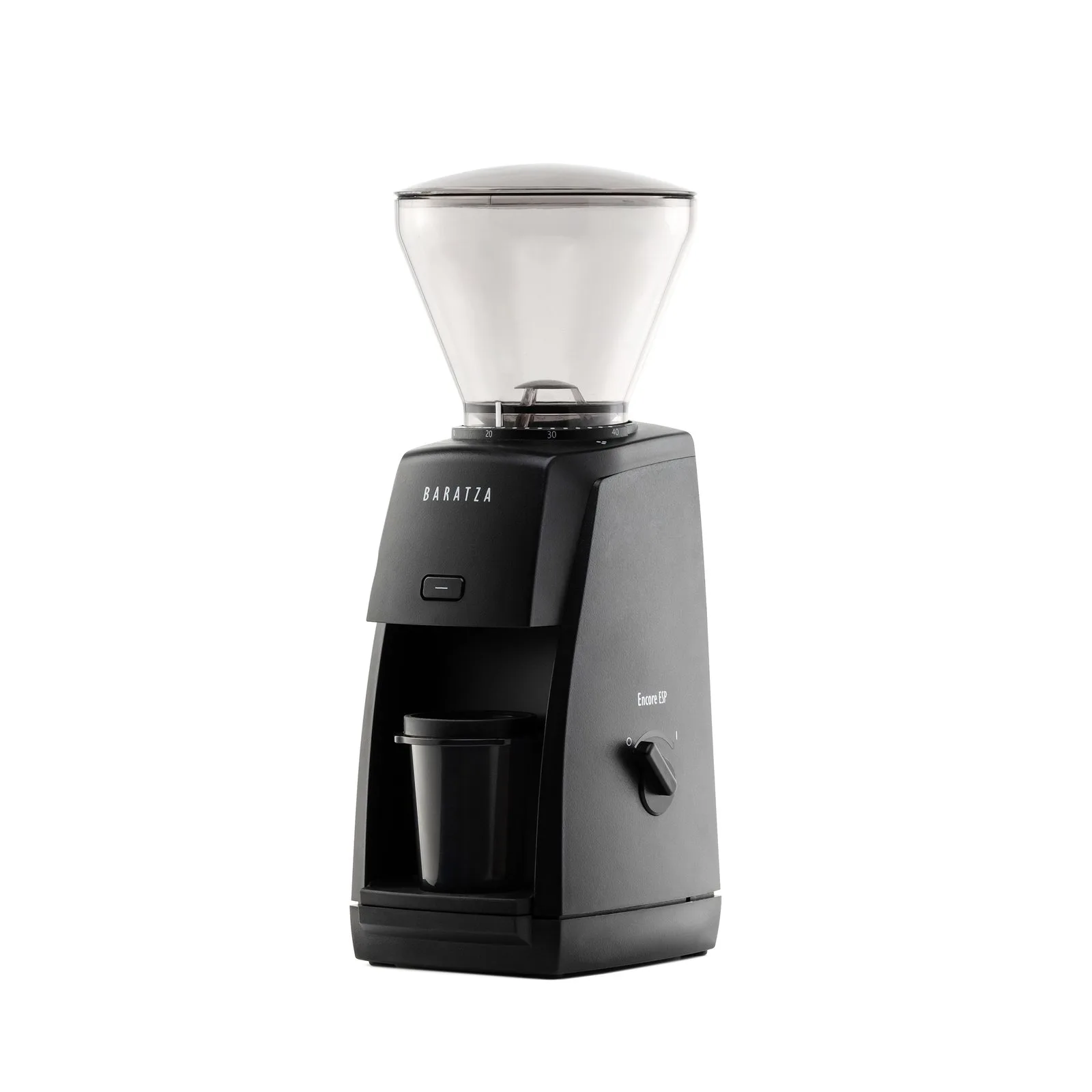
The Baratza Encore ESP ($199.95 list) is the grinder most often recommended to new home baristas. It uses 40 mm conical steel burrs, with small adjustment steps in the espresso range and bigger ones for filter coffee, so it also works for a pour-over or a French press. It comes with a dosing cup that fits under the chute, and Baratza sells replacement parts for repairs.
The dial of the Baratza Encore ESP has 40 positions in two ranges, according to Baratza: fine micro-steps from 1 to 20 for espresso, and bigger steps from 21 to 40 for filter coffee. The fine steps are what make it an espresso grinder; with a general-purpose grinder, one click is often the difference between a shot that gushes and one that barely drips, with nothing in between.
Who it's for: anyone buying a Bambino or Bambino Plus, and anyone whose espresso tastes sour or bitter with pre-ground coffee. Keep in mind: it is loud for a few seconds per shot. On Amazon US the link opens a search; choose a listing sold by Amazon or Baratza.
Is there a good option under $150?
The De'Longhi Stilosa ($149.95 list) is a simple machine with a 15-bar pump, a stainless steel boiler and a manual milk frother. It works best with pre-ground coffee and its pressurized baskets, and it is a fair way to find out whether someone enjoys espresso before spending more. Do not expect café-level shots or microfoam from it. On Amazon US it is sold by Amazon itself.
How do you pull a first shot of espresso?
The usual starting recipe is 18 grams of ground coffee in, 36 grams of espresso out, in 25 to 30 seconds. 1. Weigh 18 grams of beans and grind them fine. 2. Put the grounds in the single-wall double basket, level them and press down firmly with the tamper, keeping it flat. 3. Lock the portafilter in, put a cup on a scale under it and start the shot. 4. Stop when the scale reads 36 grams and note the time.
Then taste, and change only the grind. If the shot ran in under 20 seconds and tastes sour and thin, grind finer. If it took more than 35 seconds and tastes bitter and harsh, grind coarser. Keep the 18 grams in and 36 grams out fixed while you adjust. Finding the right setting for a new bag of beans is called dialing in, and it normally takes three or four shots, so the first ones are for learning, not for drinking.
How do you steam milk for a latte?
Fill the jug to just below the start of the spout with cold milk. Put the tip of the wand just under the surface, near the side of the jug, and open the steam: a gentle tearing sound means air is going in. After a few seconds, lower the tip slightly so the milk spins in a whirlpool, and stop when the jug is too hot to hold for more than a second, about 60 to 65 °C (140 to 150 °F). Tap the jug on the counter, swirl it and pour. Wipe the wand and release a short burst of steam straight away, before the milk dries on it.
What else does a home espresso setup need?
A scale with 0.1-gram precision that fits under the cup: it is how you measure both the coffee in and the espresso out. A knock box, a small bin with a bar for emptying the used coffee puck. A cloth kept only for the steam wand. Filtered water, if the tap water is hard: scale is what kills most home espresso machines. None of these costs much, and together they make a good second gift for someone who already has the machine.
How do you keep an espresso machine working?
Every day: rinse the portafilter and basket, run a little water through the group head, the part the portafilter locks into, and wipe the steam wand. Every week: empty and wash the drip tray and the water tank. Every few months: descale the machine with the maker's descaling product, following the manual. Breville's manuals recommend replacing the tank's water filter every three months, which reduces how often the machine needs descaling.
Is a capsule machine a better gift?
For someone who wants coffee at the press of a button and nothing to learn, yes: a capsule machine is cheaper, cleaner and consistent. The machines in this guide are for a person who enjoys the process and wants to choose their own beans. Fresh beans cost less per cup than capsules, and the milk drinks are much closer to a café's, but the first week involves wasted shots and a messy counter. If you are not sure which kind of person they are, ask before you buy.
Which one at each price?
Under $150: the De'Longhi Stilosa, $149.95, as a trial with pre-ground coffee.
Around $500: the Breville Bambino, $299.95, with a Baratza Encore ESP, $199.95: the best-value setup for a beginner.
Around $700: the Breville Barista Express, $699.95, in one box; or the Bambino Plus, $499.95, with an Encore ESP, $199.95, for latte drinkers.
Before you order
Buy fresh beans with a roast date to go with the gift; espresso from stale beans disappoints on any machine. A digital scale with 0.1-gram precision is the cheapest upgrade after the grinder.
Amazon US usually extends its return window for gifts bought during the holidays; check the exact dates on the listing before you buy.
How to get it right
For a beginner, the Breville Bambino and a burr grinder; for latte drinkers, the Bambino Plus; for one box that does it all, the Barista Express; to test the waters cheaply, the De'Longhi Stilosa.