Which KitchenAid stand mixer to give in 2026: Artisan, Artisan Plus or Classic
The Artisan is still the KitchenAid to give; the new Artisan Plus adds a bowl light, finer speed control and better beaters. How they compare with the Classic, the Mini and the bowl-lift models, and which attachments are worth adding.
Culturera may earn a commission if you buy through the links on this page. As an Amazon Associate I earn from qualifying purchases. The selection is ours alone.
At a glance
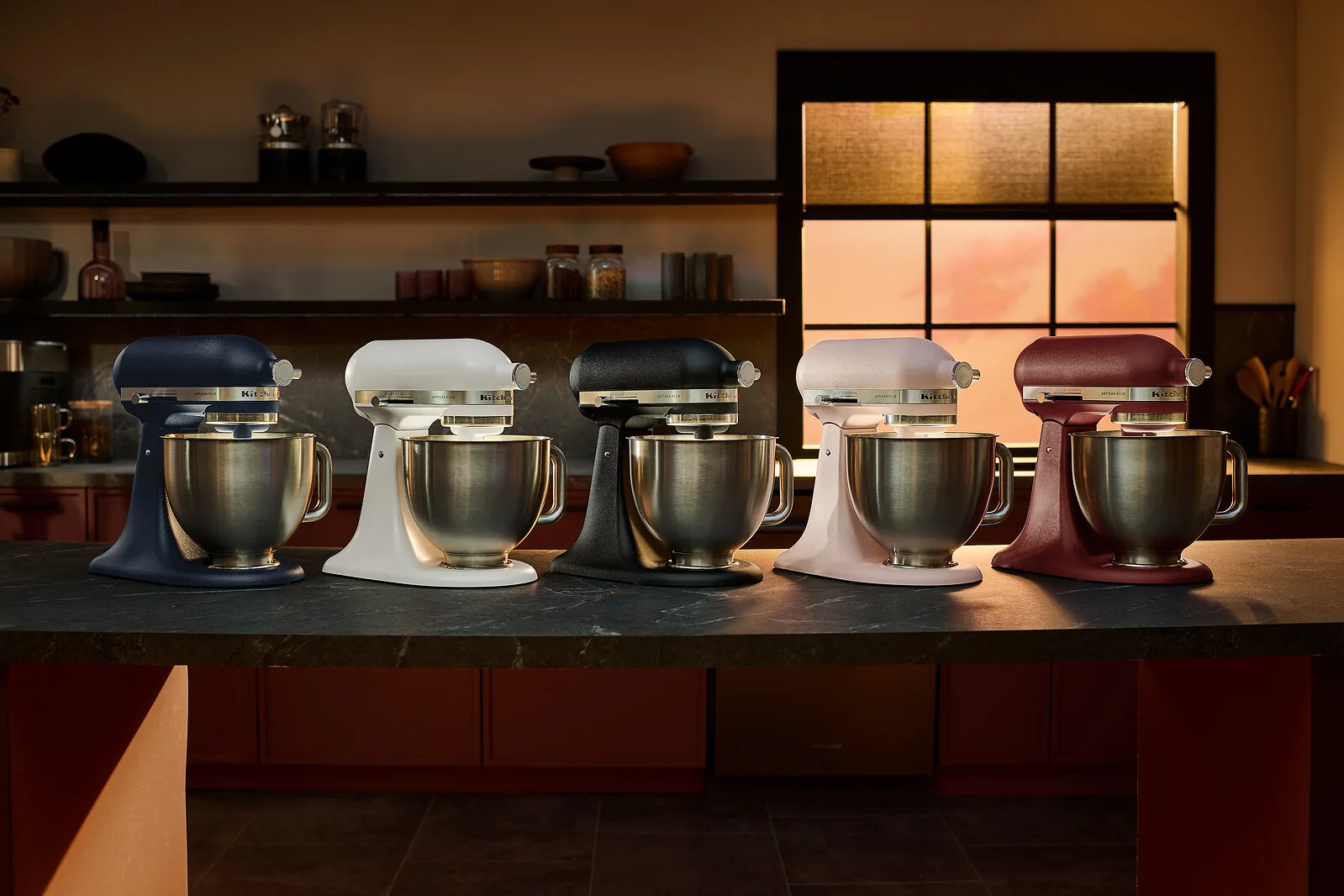
The KitchenAid to give this year is still the Artisan: the 5-quart tilt-head mixer that has defined home baking for decades, with enough room for nine dozen cookies or two loaves of bread, more than 20 colors and a hub that powers pasta rollers and grinders, for $499.99 list. For a keen baker, the new Artisan Plus, launched in March 2026 at $599.99, adds a light over the bowl, a gentler start, a half-speed for folding and stainless-steel beaters. We have not tested these mixers; this guide compares what KitchenAid publishes.
Prices are KitchenAid's list prices on November 23, 2026; every model is discounted for Black Friday, often by $120 to $170. The direct links go to listings sold by Amazon.com; the Artisan Plus and the Artisan Mini open a search, because we could not confirm an Amazon-sold listing. KitchenAid's own site sells every model and color.
What should you check before buying a stand mixer?
Tilt-head or bowl-lift. On a tilt-head mixer, the head tips back to add ingredients and change beaters; it is easier to use and fits under most kitchen cabinets. On a bowl-lift mixer, the bowl rises to the beater on two arms and locks at three points, which is steadier with heavy bread dough, but it is taller and heavier.
Bowl size. A 4.5- or 5-quart bowl suits most households; 3.5 quarts is for small batches and small kitchens; 5.5 to 7 quarts is for big families, holiday baking and frequent bread.
Color. It matters more than it sounds. A stand mixer lives on the counter for years, and KitchenAid sells the Artisan in more than 20 colors. If you can, ask, or choose a neutral that matches the kitchen.
Space. The Artisan is about 14 inches tall and weighs about 22 pounds, so it is a counter appliance, not something to lift out of a cupboard every time.
Which one is for you?
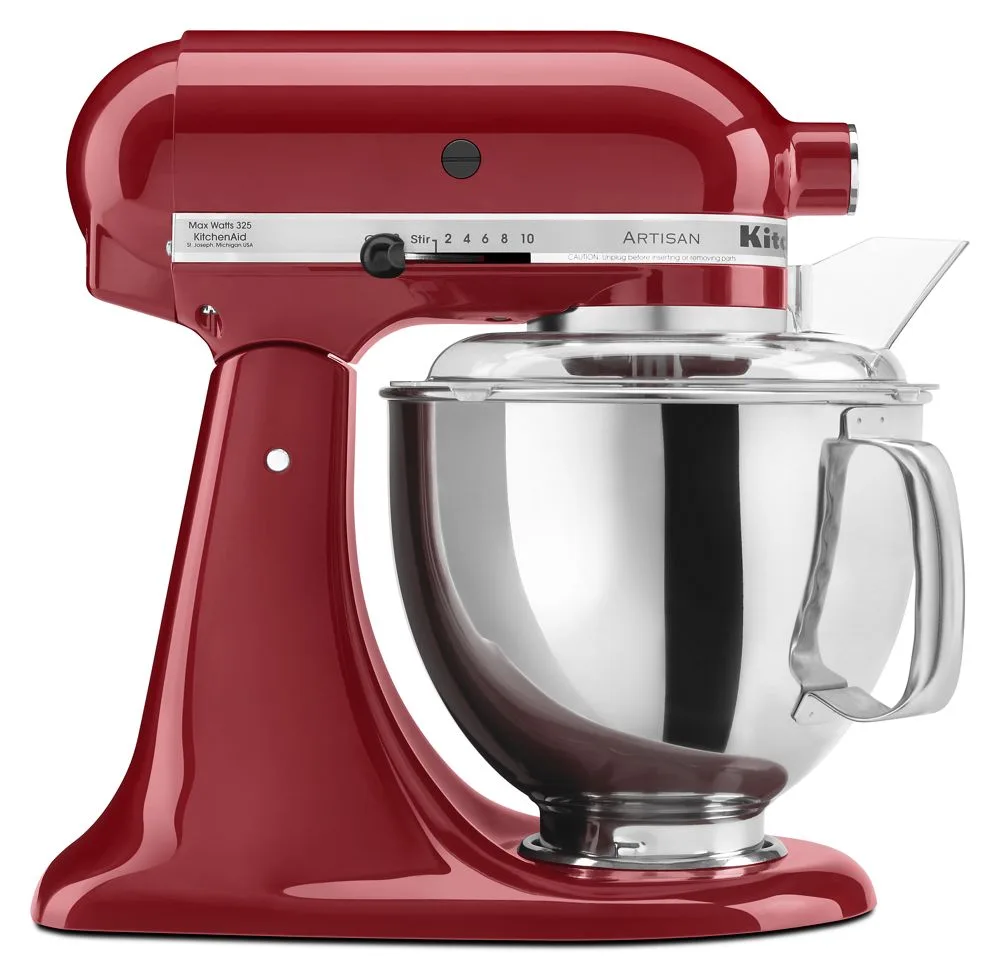
Best overall
1. KitchenAid Artisan Series 5-Quart Tilt-Head Stand Mixer (KSM150)
Best for: Almost any home baker, from cookies to bread
The classic 5-quart KitchenAid, with 10 speeds, a pouring shield and more than 20 colors.
See it at AmazonCheck the current price at the store.
The Artisan Series 5-quart ($499.99 list) has a 325-watt motor, 10 speeds and a polished stainless bowl with a handle, and KitchenAid says it can mix nine dozen cookies or 4.5 pounds of bread dough in one batch. It comes with a coated flat beater, a coated dough hook, a six-wire whip and a pouring shield. Its front hub takes more than ten KitchenAid attachments, sold separately, from pasta rollers to food grinders and ice cream bowls. The listing linked here, in Empire Red, is sold by Amazon.com; other colors are listed separately.
Who it's for: someone who bakes regularly, or wants to start. Keep in mind: it weighs about 23 pounds, and the warranty is one year.
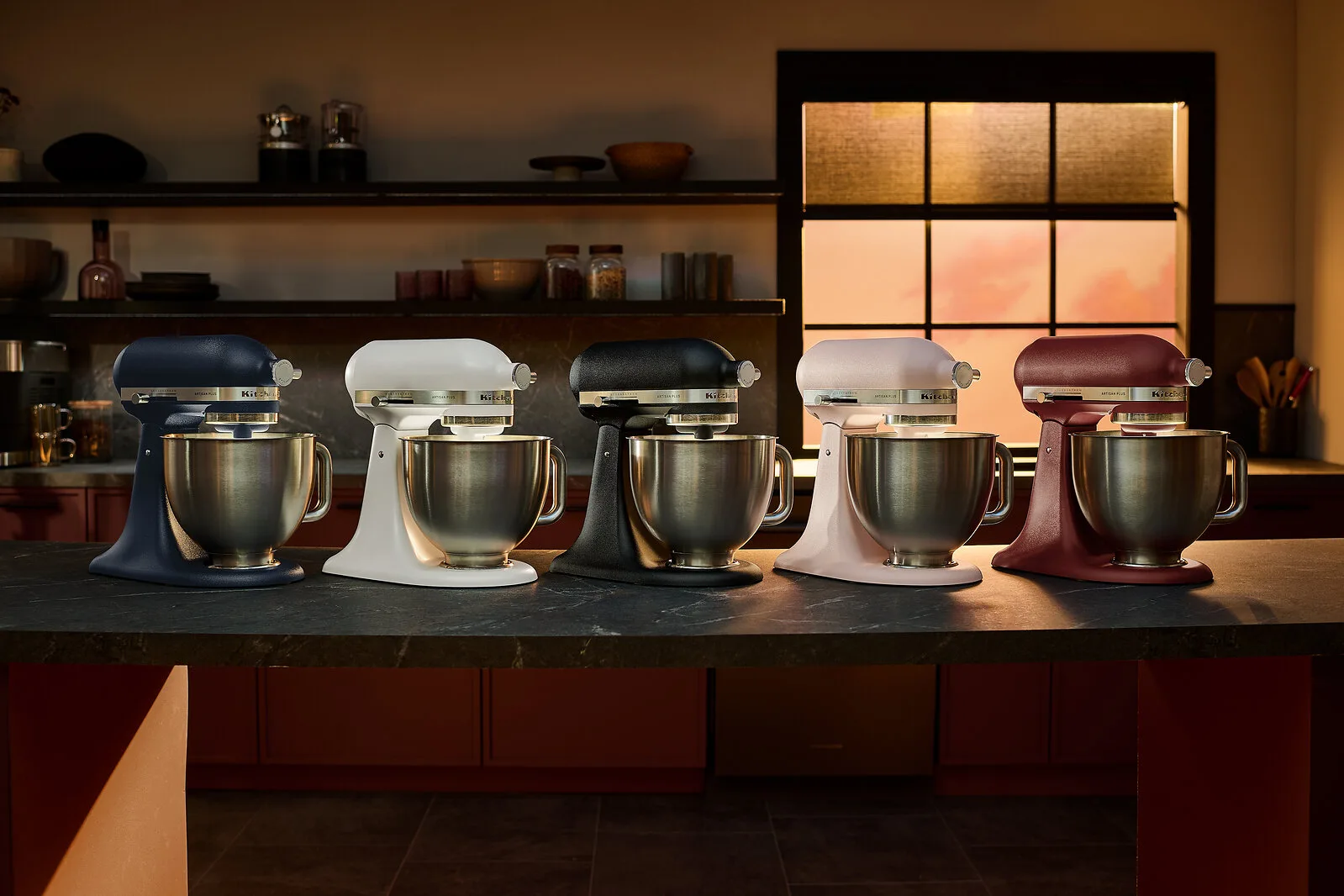
Best upgrade
2. KitchenAid Artisan Plus 5-Quart Tilt-Head Stand Mixer
Best for: A serious baker who wants finer control and better beaters
KitchenAid's biggest tilt-head update in decades: 11 speeds, soft start, a bowl light and stainless accessories.
See it at AmazonCheck the current price at the store.
The Artisan Plus ($599.99 list), launched on March 30, 2026, keeps the Artisan's 5-quart size and capacity but adds a 350-watt motor with redirected cooling airflow, 11 speeds including a half-speed for folding, a Precision mode for fine speed control, a soft start that keeps flour in the bowl, and a light that switches on over the bowl when the head is lowered. It comes with stainless steel accessories, including a double flex edge beater that scrapes the bowl as it mixes, and a brushed bowl with a welded handle. It is sold in exclusive colors such as Wild Blueberry, Mint Julep and Oat.
Who it's for: someone who bakes weekly and would notice the difference. Keep in mind: for occasional cookies and cakes, the regular Artisan does the same work for $100 less; the double flex edge beater doesn't fit the older Artisan.
What about the Classic, the Mini and the bowl-lift mixers?
The Classic 4.5-quart ($399.99 list, sold by Amazon.com) is the entry model: the same tilt-head design and 10 speeds, a bowl without a handle, eight dozen cookies per batch and no pouring shield, in black or white. It is the best choice when the budget matters more than color.
The Artisan Mini ($449.99 list) has a 3.5-quart bowl, up to five dozen cookies and a smaller footprint, a good fit for apartments and couples. KitchenAid says it is as powerful as the Classic.
For bread bakers and big families, the 5.5-quart bowl-lift ($499.99 list) and the 7-quart bowl-lift ($649.99 list), both sold by Amazon.com, hold the bowl at three points for stability. The 7-quart model mixes up to 13 dozen cookies or more than 8.5 pounds of bread dough and comes with a double flex edge beater, a spiral dough hook, an 11-wire whip and a pouring shield.
Which attachments are worth adding?
The three-piece pasta roller and cutter set, sold by Amazon.com, is the most popular addition and turns the mixer into a pasta machine for fresh sheets, fettuccine and spaghetti. A food grinder suits someone who makes sausages or burgers, and an ice cream bowl attachment churns small batches. All of them run off the same hub on every KitchenAid tilt-head and bowl-lift mixer.
Is a stand mixer worth it over a hand mixer?
For bread, brioche, meringue and big batches, yes: a stand mixer kneads for ten minutes without tiring anyone and leaves both hands free. For someone who makes a cake twice a year, a hand mixer is cheaper and takes no counter space. A stand mixer is the right gift for someone already baking regularly, or someone who has said they want to start making bread.
How long does a KitchenAid last?
KitchenAid's tilt-head design has changed little since the 1930s, and many families pass mixers down. The official warranty is one year, so durability depends on use: avoid running stiff bread dough at high speed, follow the speed guide in the manual for kneading, and don't overload the bowl. Parts such as beaters, bowls and the hub cover are sold separately and easy to replace.
What should a new owner bake first?
Start with recipes that show what a stand mixer does better than a spoon: a sponge or genoise, where the whip incorporates air for several minutes; chocolate chip cookies, creamed butter and sugar in two minutes; and a simple enriched bread or pizza dough, kneaded by the hook while you clean up. Meringue and whipped cream are where the machine feels like a revelation. A good first gift pairing is one trusted baking book or a family recipe card tucked into the box.
How do you choose the color?
If you can't ask, look at the kitchen: stainless and white kitchens suit silver, white or a soft pastel; wood and warm tones suit reds, greens and creams; a bold color works when the rest of the counter is plain. KitchenAid names a color of the year (Spearmint for 2026), but classic shades like Empire Red, Contour Silver, Onyx Black and white are easiest to live with for a decade. Matte finishes hide fingerprints better than glossy ones.
How do you clean and care for it?
The stainless bowls go in the dishwasher; the coated beaters and dough hooks can too on most models, while the wire whip and the burnished or stainless beaters are best washed by hand to keep their finish. Wipe the body with a damp cloth, never put it in water, and keep the hub cover on when no attachment is fitted. Every so often, check that the beater sits at the right height: a dime-sized clearance at the bottom of the bowl is KitchenAid's well-known test, and the height can be adjusted with a screw.
Does it work in Europe or Latin America?
US mixers run on 120 volts. They work in Mexico and other countries with similar voltage, but Spain and the rest of Europe, at 230 volts, need a local model, such as the European 5KSM series. If the gift is for someone abroad, check the voltage, or buy it from a store in their country so the warranty applies there too.
Which one at each price?
Around $400: the Classic, $399.99.
Around $450 to $500: the Artisan Mini, $449.99, the Artisan, $499.99, or the 5.5-quart bowl-lift, $499.99.
Around $600 to $650: the Artisan Plus, $599.99, or the 7-quart bowl-lift, $649.99.
Before you order
Measure the space under the kitchen cabinets: the tilt-head models need room to tip back, and the bowl-lift models are taller. Check the color in daylight photos, since screens shift tones. The box is heavy, so plan the delivery. Amazon US usually extends its return window for gifts bought during the holidays; check the exact dates on the listing before you buy.
How to get it right
For most bakers, the Artisan; for a serious baker who wants the newest model, the Artisan Plus; on a budget, the Classic; for a small kitchen, the Artisan Mini; and for bread and big batches, a bowl-lift model.