eSIM or portable hotspot: how to stay online abroad, with six options from Roamless and TravlFi
Roaming charges are optional now. A travel eSIM works on your own phone in most countries; a hotspot shares one connection with a whole family. How to choose, and six options.
Culturera may earn a commission if you buy through the links on this page. As an Amazon Associate I earn from qualifying purchases. The selection is ours alone.
International roaming on a home phone plan is often the most expensive way to get online abroad. Two cheaper ways to stay connected on a trip have replaced it for most travelers. A travel eSIM is a digital SIM card you download to your own phone; you keep your number for calls and texts and use the eSIM for data. A portable hotspot is a small device with its own data plan that creates a Wi-Fi network for several phones and laptops. Roamless sells a single eSIM that works in more than 200 destinations, and TravlFi sells hotspots built for road trips in North America. We have not tested these services. The six options below are chosen from the prices and specifications each company publishes.
Prices are each company's prices in Nov 2026 and vary by country. Roamless prices are in US dollars on its website and app.
Before you buy: which one fits your trip
Your phone. An eSIM only works on a phone that supports eSIM and is unlocked, meaning not tied to one carrier. Most iPhones from the XS onward and many recent Android phones qualify; check your settings for an option to add an eSIM, or ask your carrier to unlock the phone before you leave.
How many devices. One eSIM serves one phone, which can share its connection as a hotspot. A family with tablets and laptops, or anyone working remotely from a rental, may be better served by a dedicated hotspot.
Where you are going. A global eSIM covers Europe, Asia and Latin America with one install. TravlFi's hotspots run on networks in the United States, Canada and Mexico only.
How much data. Maps, messages and email use little data. Video calls and streaming use much more; that is where unlimited plans earn their price.
1. Best for multi-country trips: Roamless pay-as-you-go
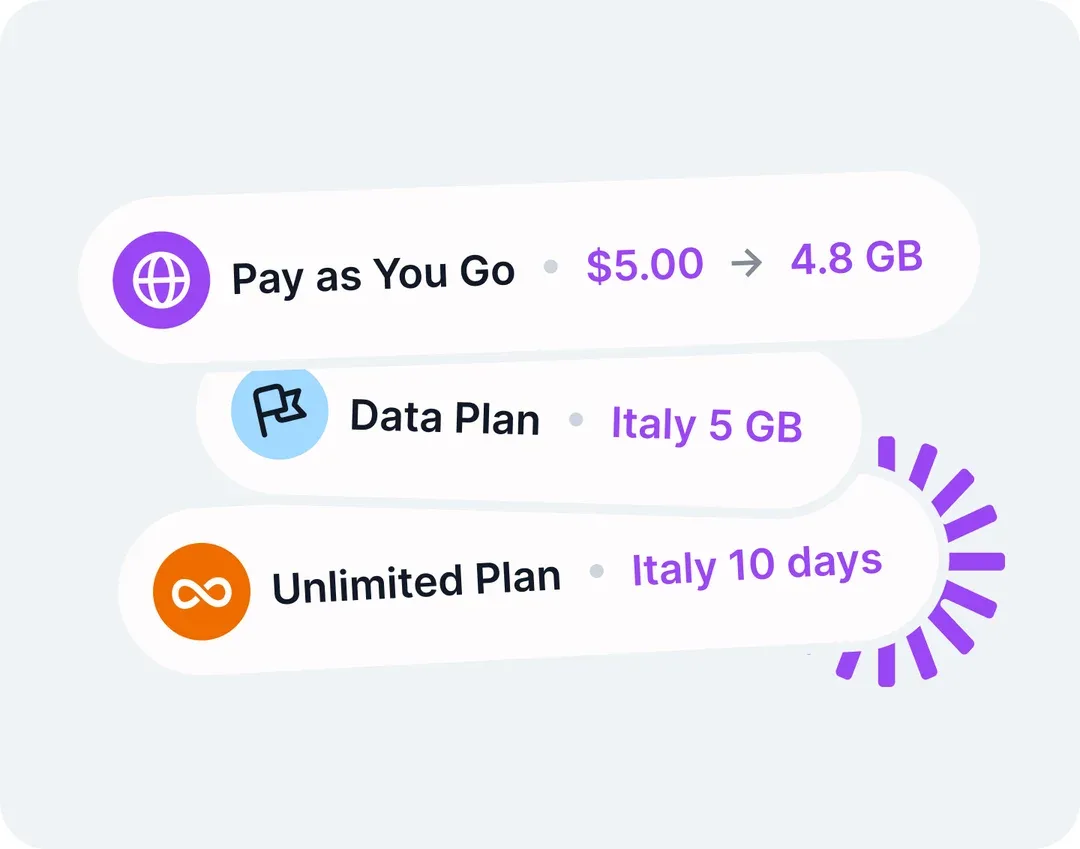
The Roamless eSIM is free to install and works as a prepaid wallet: you add credit and it is spent per megabyte at each country's rate, from $1.95 per GB according to Roamless. The credit never expires, so what you do not use on one trip carries over to the next, and the same balance pays for in-app calls from $0.04 a minute. New users get $1.25 of credit, about 500 MB, to test it.
Who it's for: trips that cross several countries, and occasional travelers who hate losing unused data. Keep in mind: per-GB rates vary widely by country; check the rate for each stop in the app before you go.
2. Best for a long stay in one place: Roamless data plans

Roamless data plans buy a fixed amount of data for one country or region, valid for 30 days from first use. In Nov 2026, Mexico cost $3.95 for 1 GB, $18.45 for 10 GB and $67.45 for 50 GB; a Europe plan, which also covers the UK, cost $4.95 for 1 GB and $30.95 for 10 GB. Hotspot sharing is included.
Who it's for: two to four weeks in one country, or a region such as Europe. Keep in mind: data plans expire after 30 days, and they cannot be paid for with pay-as-you-go credit.
3. Best for heavy users: Roamless Unlimited
Roamless Unlimited plans charge by the day, from 1 to 90 days depending on the destination. You get 3 GB a day at full speed, then 1 Mbps until the allowance resets 24 hours later, with no extra charge. A week cost $23.73 in Mexico and $25.62 in Europe in Nov 2026. The plan starts with your first use, so you can buy it before you leave.
Who it's for: people who stream, video-call or work on the road. Keep in mind: 1 Mbps after the daily 3 GB is enough for messages and maps, not for video; plans are data-only and do not auto-renew.
4. Best hotspot for a group: TravlFi JourneyGo 5G
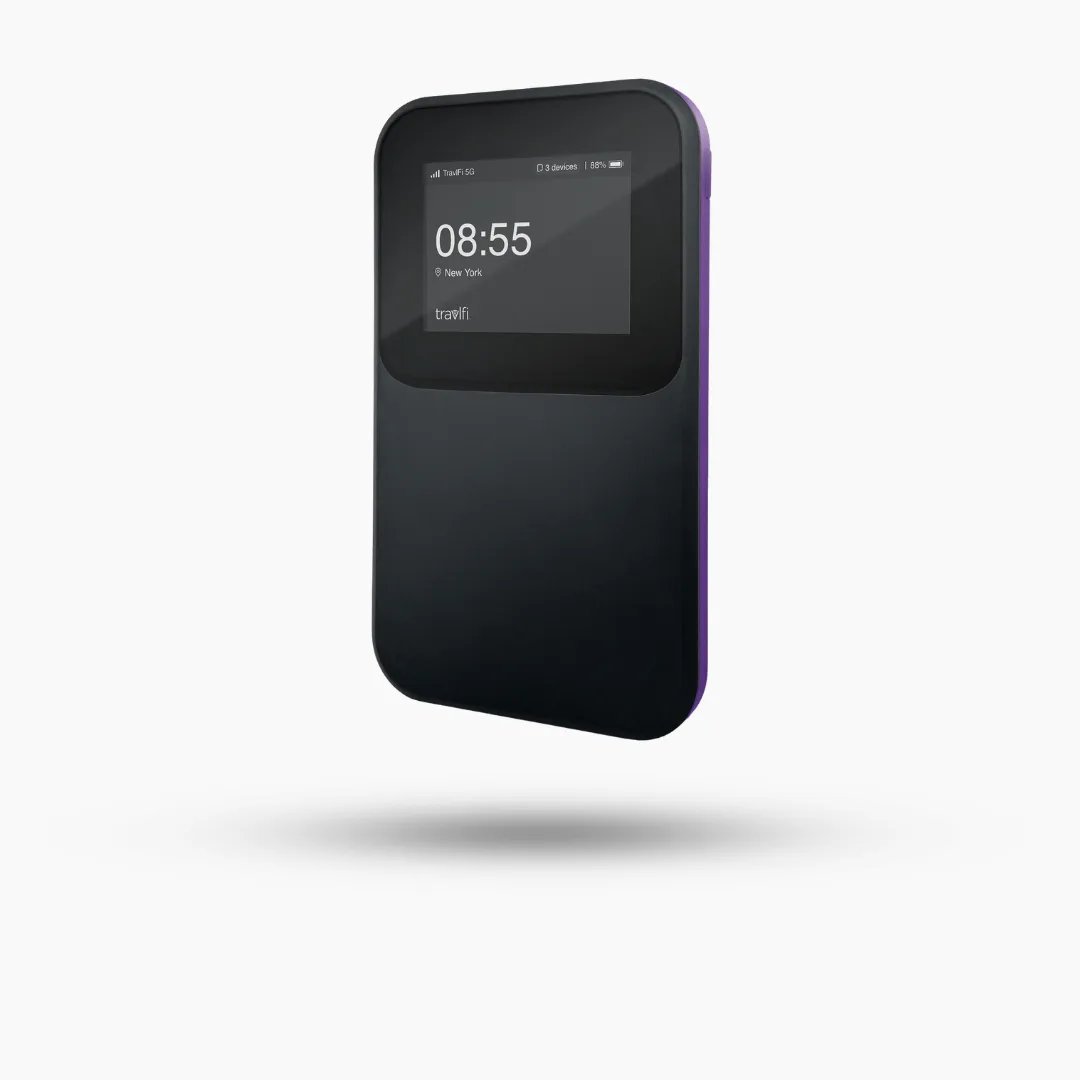
The TravlFi JourneyGo 5G costs $259 (list $299). It connects up to 16 devices, lasts up to 24 hours on a charge and switches automatically among several major networks to find the strongest signal, falling back to 4G where there is no 5G. A touchscreen shows connected devices and data use. TravlFi's month-to-month plans run from $19 for 2 GB to $129 for unlimited data, with no contract.
Who it's for: families and remote workers on road trips across the US, with trips into Canada or Mexico. Keep in mind: it does not work outside North America, and the plan is an ongoing monthly cost on top of the device.

5. Best budget hotspot: TravlFi JourneyGo 4G
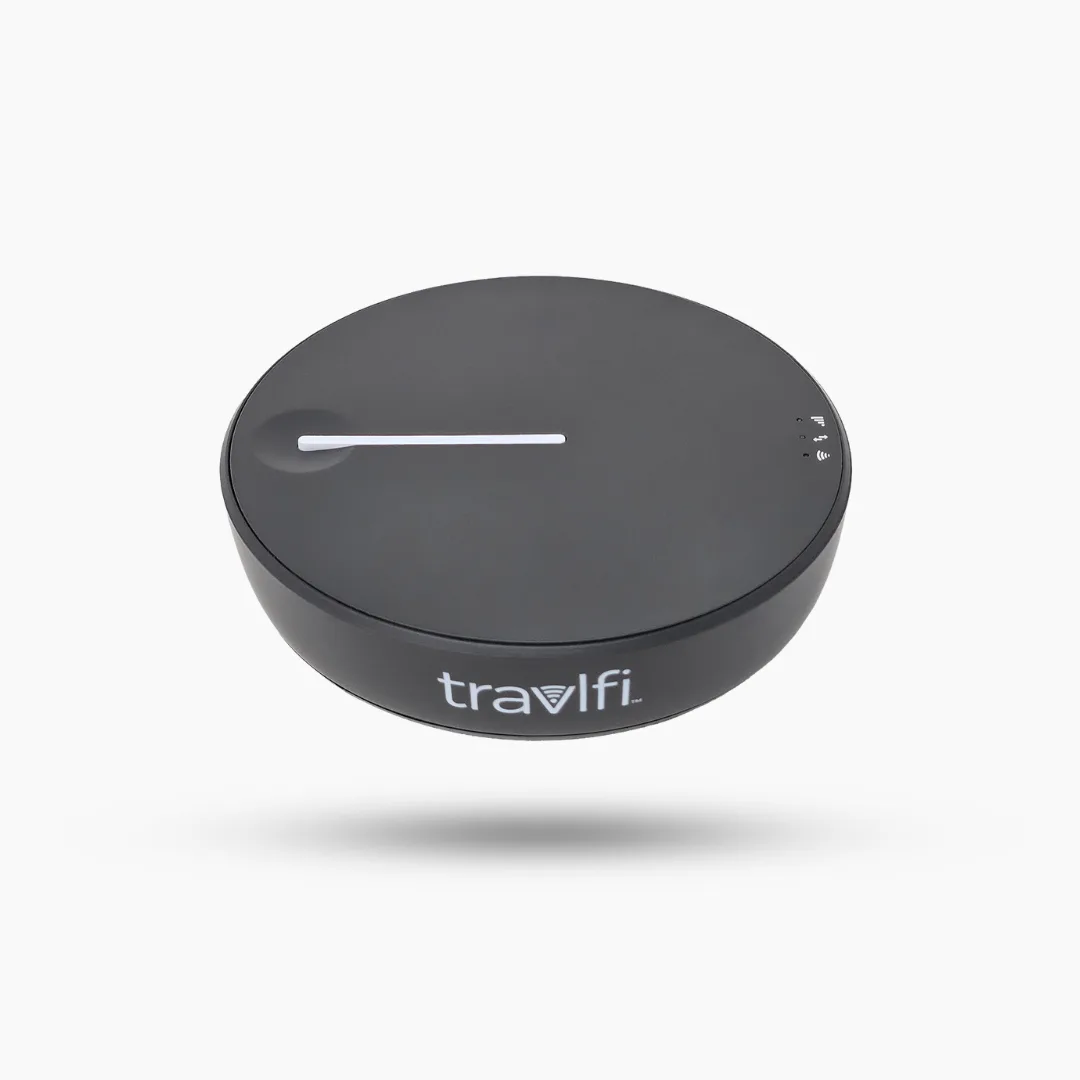
The TravlFi JourneyGo 4G costs $159 (list $199). It connects up to 10 devices, runs up to 16 hours, shows its battery level and can charge a phone like a power bank. It uses the same multi-network service and plans as the 5G model.
Who it's for: occasional road trips and campgrounds where 4G is enough. Keep in mind: 4G is slower in busy areas; for video calls every day, the 5G model is the safer buy.
6. For people who already own a router: TravlSIM
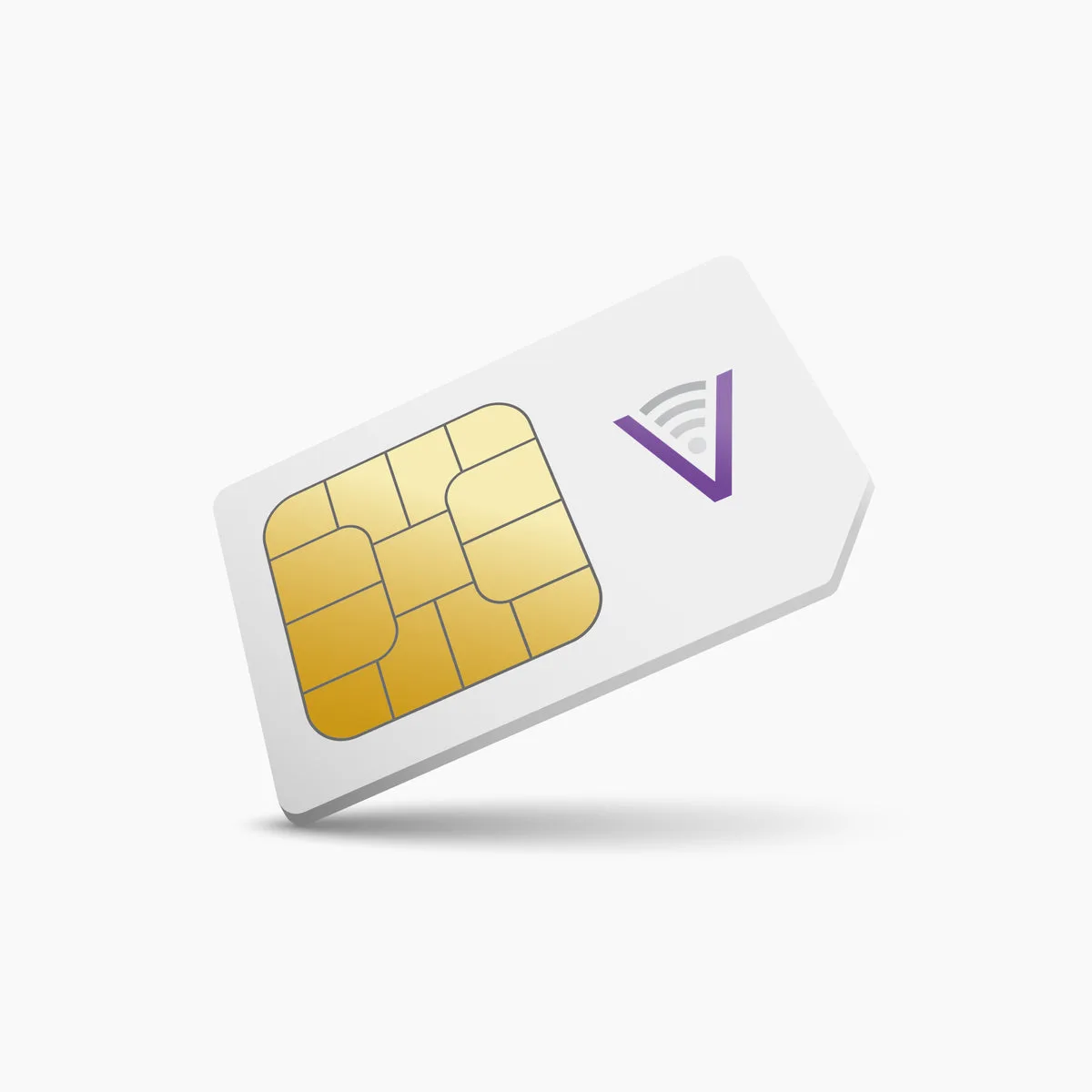
The TravlSIM ($19) is a physical, data-only SIM card that brings TravlFi's service to unlocked hotspots and RV routers from brands such as Peplink, Netgear and Winegard. It works with the unlimited monthly plan.
Who it's for: RV owners with a built-in router. Keep in mind: it is not for phones, and some devices need manual network settings.
By budget
Under $25 for a week: a Roamless data plan or pay-as-you-go for light use. About $25 a week: Roamless Unlimited in Mexico or Europe. For North American road trips: the JourneyGo 4G at $159 or 5G at $259, plus a monthly plan.
Before you buy
Roamless is bought and installed through its app or website, so it is available wherever you live, as long as your phone supports eSIM. It refunds purchases if your phone turns out not to support eSIM or is carrier-locked, but not for credit or data you have already started using.
TravlFi sells to US customers and does not ship to Alaska or Hawaii. Devices can be returned within 30 days in like-new condition, at your expense, and data plans are not refundable.
How to get it right
Check that your phone is unlocked and eSIM-ready a week before you fly. If it is, install the eSIM at home and switch on data roaming for it only when you land.