Which electric toothbrush to buy: Oral-B or Philips Sonicare
Oral-B Pro 1000 and iO Series 2, Philips Sonicare 4100 and DiamondClean 9000 compared: round heads or sonic, which features are worth paying for, and what the brush heads cost you every year.

Culturera may earn a commission if you buy through the links on this page. As an Amazon Associate I earn from qualifying purchases. The selection is ours alone.
At a glance
- Best overallOral-B Pro 1000Amazon
- Best sonicPhilips Sonicare 4100Amazon
- Best step upOral-B iO Series 2Amazon
- Best premiumPhilips Sonicare DiamondClean 9000Amazon
The electric toothbrush to buy for most people is a basic model with two features, a two-minute timer and a pressure sensor: the Oral-B Pro 1000 ($49.99 on Oral-B's site) if you like a small round head, or the Philips Sonicare 4100 ($49.96 list on Philips' site) if you prefer the gentler buzz of a sonic brush. Everything above that price adds modes, apps, travel cases and nicer chargers, not a fundamentally different clean. If you want those extras, the Oral-B iO Series 2 ($64.99) is the cheapest entry to Oral-B's quieter iO line, and the Philips Sonicare DiamondClean 9000 ($199.96) is the premium pick. We have not tested these toothbrushes; we chose them from the makers' published specifications.
Prices are the makers' list prices on November 25, 2026. Toothbrushes are among the most discounted products around Black Friday, often by a third or more, so check the current price on Amazon before you decide. This guide is about choosing a product, not dental advice: if you have gum disease, sensitive teeth, implants or braces, ask your dentist or hygienist which brush and head suit you.
Do you need an electric toothbrush at all?
No. A manual brush used well, for two minutes twice a day with fluoride toothpaste, does the job. What an electric brush adds is help with the 'used well' part: the motion is done for you, a timer makes sure you brush for the full two minutes, and a pressure sensor warns you when you press too hard, a common cause of worn gums and enamel. That is why many dentists suggest one, especially for people who rush, brush too hard or find a manual brush awkward to hold.
Oral-B or Sonicare: what is the difference?
Oral-B uses a small round head that oscillates and rotates, cleaning one tooth at a time. You guide it slowly from tooth to tooth. The feeling is strong and noticeable. Its iO line uses a quieter magnetic motor.
Philips Sonicare uses an oval head, like a manual brush, that vibrates side to side at high speed. You glide it along the teeth in small movements. The feeling is a buzz, and many people find it gentler on the gums, although the first few days can tickle.
Both work well when used as directed. The best choice is the one you will use for two minutes every time, so personal preference matters more than any lab claim.
What should you check before buying?
Timer and pressure sensor. These are the two features that change how you brush. Every pick in this guide has both.
Brush head cost. Heads should be replaced about every three months, so over a few years they cost more than the handle. Look at the price of a multipack of the heads your brush uses before choosing, and buy heads from the maker or a trusted seller: counterfeit heads are common online.
Battery and charger. Basic models last about two weeks per charge, which covers most trips. Check the charger plug if you travel abroad.
Modes and apps. Extra modes for whitening or sensitive gums are nice to have; apps that track your brushing are useful for some people for a few weeks and ignored by most after that.
Which one is for you?
Best overall
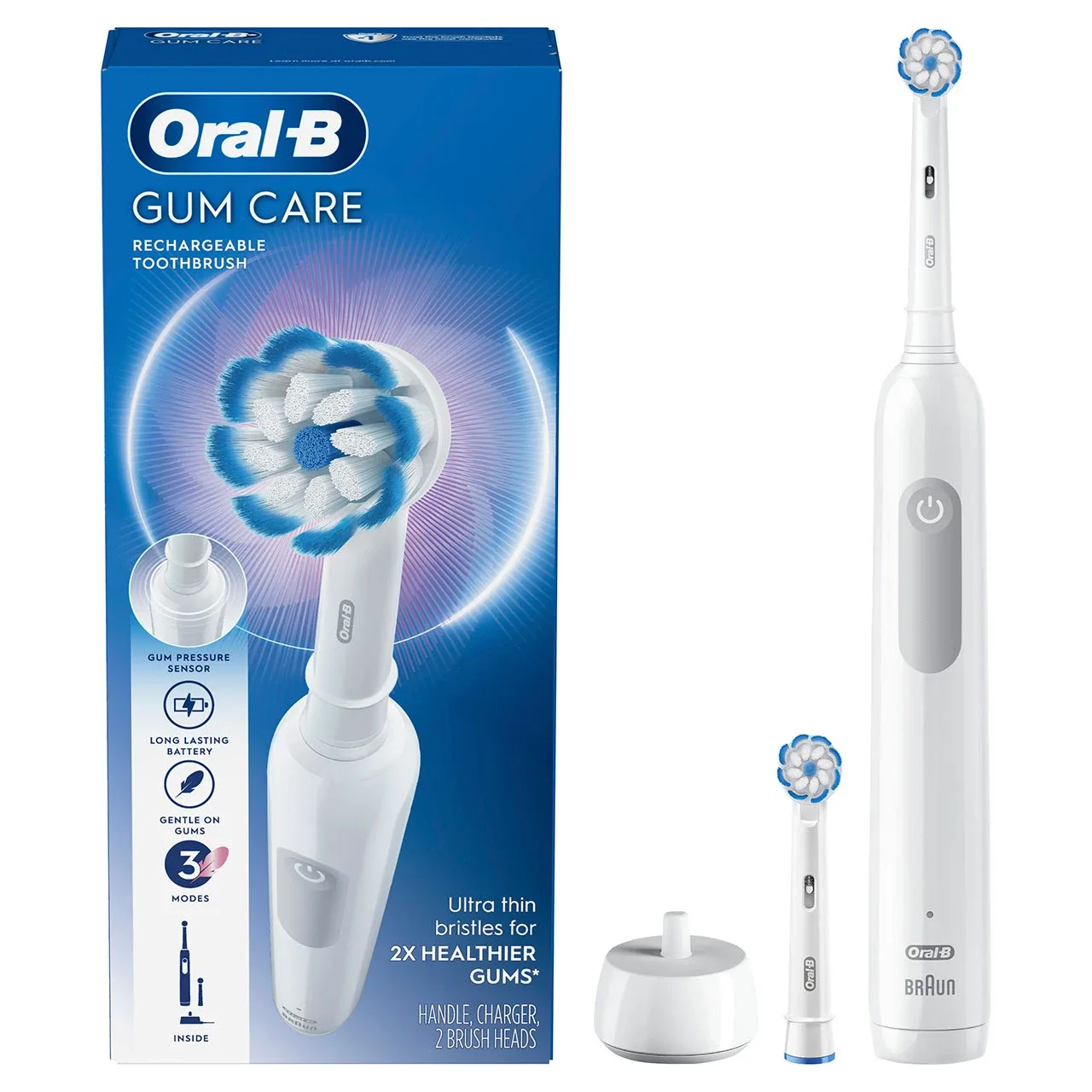
1. Oral-B Pro 1000
Best for: Anyone switching from a manual brush who likes a small round head
A round oscillating head, a pressure sensor and a timer that pulses every 30 seconds, for about $50.
See it at AmazonCheck the current price at the store.
The Oral-B Pro 1000 ($49.99 for the Gum Care version on oralb.com) has the two features that matter and very little else. Oral-B lists one brushing mode, a pressure sensor, and an in-handle timer that pulses every 30 seconds to tell you to move to the next quarter of your mouth. Oral-B claims the Gum Care version removes 300 percent more plaque along the gum line than a manual brush. The Amazon listing we link is the white Pro 1000, sold by Amazon.com.
Who it's for: most people moving from a manual brush, and anyone buying a second brush for a partner or for travel. Keep in mind: the Oral-B Pro 1000 is louder than the sonic and iO brushes, and its charging base is a basic stand with no travel case.
Best sonic
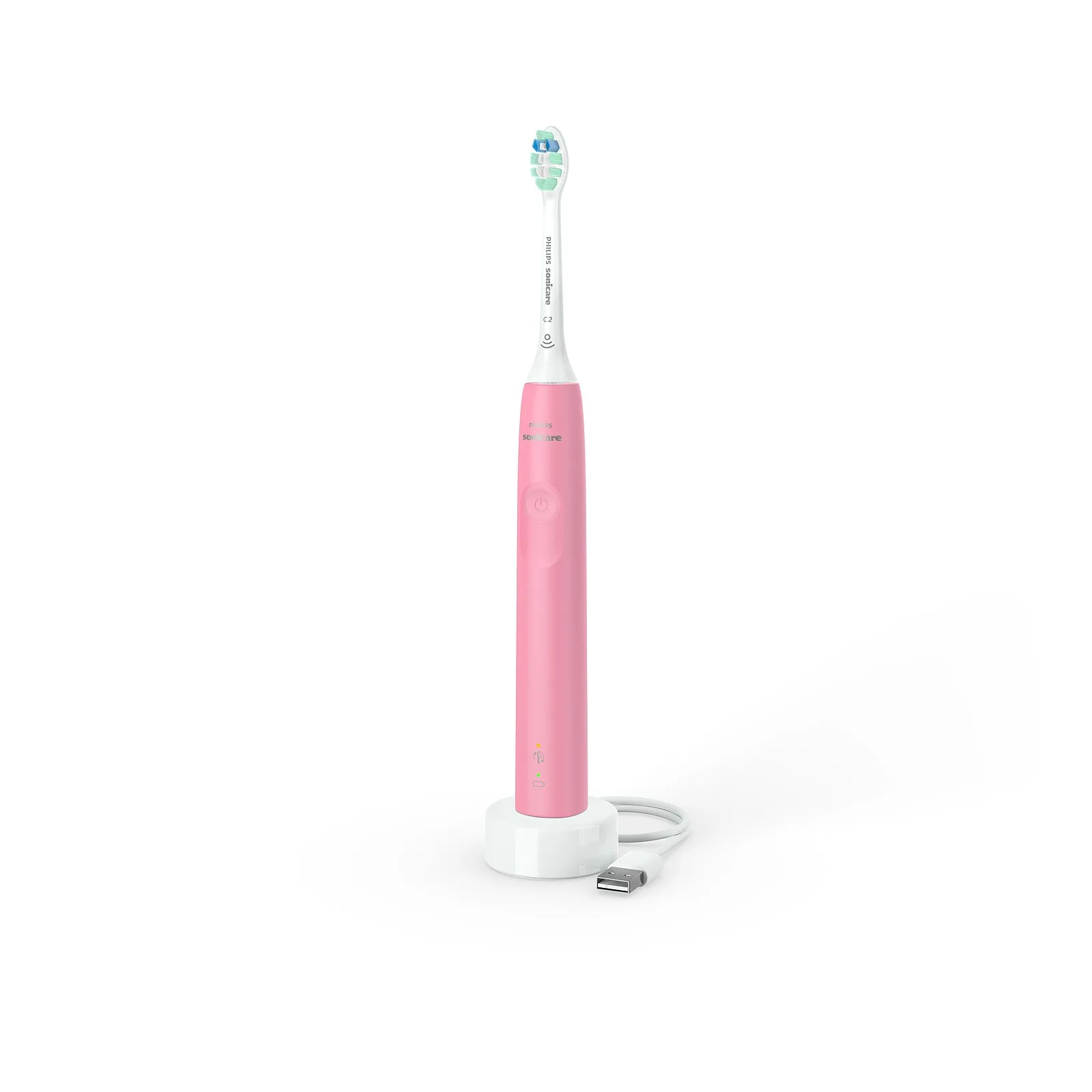
2. Philips Sonicare 4100
Best for: People who find round-head brushes too harsh
A slim sonic brush with a pressure sensor, a two-minute timer with 30-second prompts and about 14 days per charge.
See it at AmazonCheck the current price at the store.
The Philips Sonicare 4100 ($49.96 list on usa.philips.com, $39.96 there this week) is the sonic equivalent. Philips lists a pressure sensor that warns you when you press too hard, a two-minute SmarTimer with QuadPacer prompts every 30 seconds, a slim handle and a 14-day battery. Philips claims up to seven times better plaque removal than a manual brush. It comes in several colors. The Amazon listing we link is the white 4100, sold by Amazon.com.
Who it's for: people with sensitive gums, and anyone who already likes the oval shape of a manual brush. Keep in mind: the Philips Sonicare 4100 has a single cleaning mode and no travel case, and Sonicare heads cost about as much as Oral-B's, so price a pack of replacement heads before you buy.
Best step up
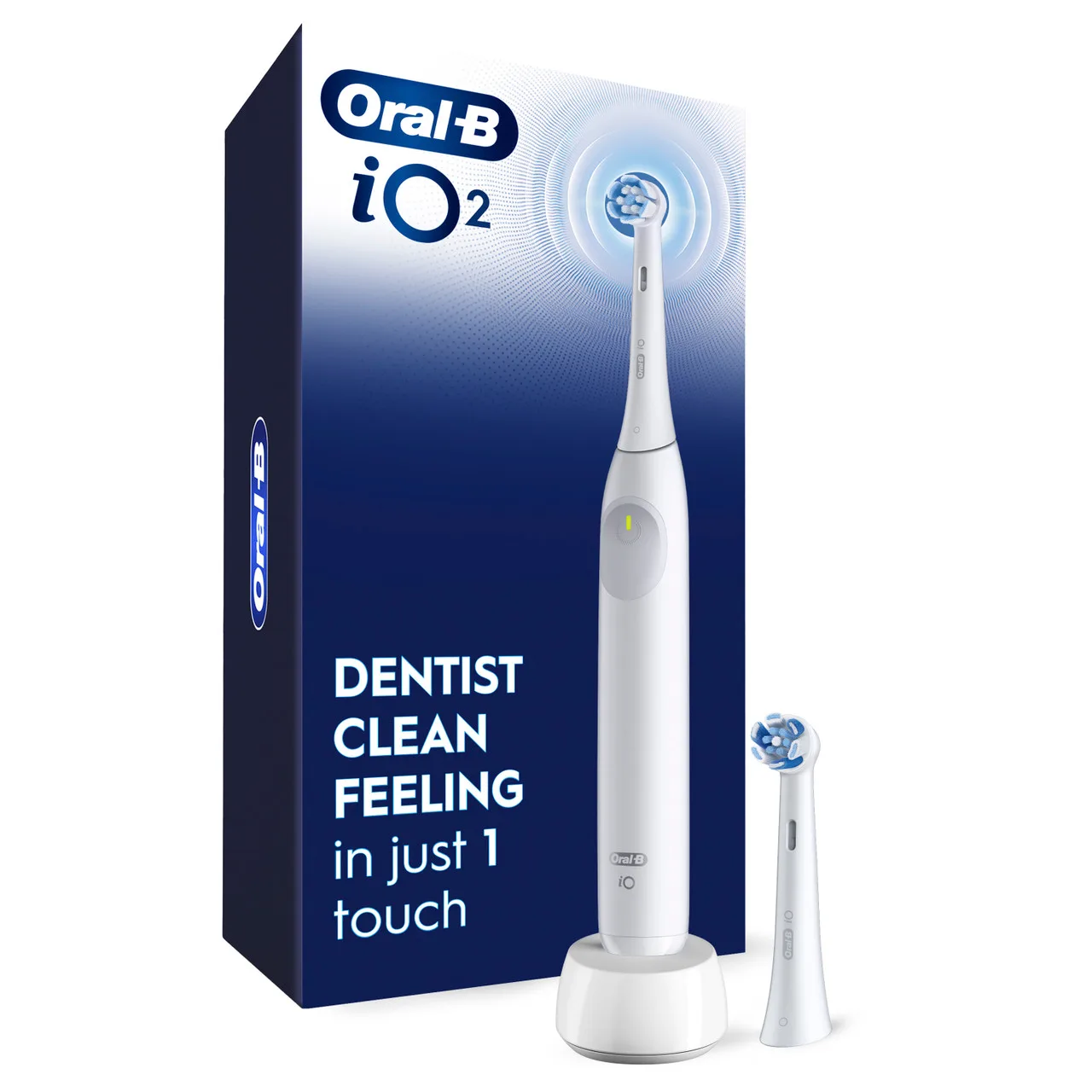
3. Oral-B iO Series 2
Best for: Oral-B fans who want a quieter, smoother brush
The cheapest model in Oral-B's iO line, with three modes, a smart pressure sensor and a quadrant timer.
See it at AmazonCheck the current price at the store.
The Oral-B iO Series 2 ($64.99 list on oralb.com, $44.99 there this week) brings the iO line's magnetic motor down to a basic price. Oral-B lists three smart brushing modes, a smart pressure sensor, a two-minute quadrant timer, a charging station and a long-lasting battery with a low-charge indicator. Oral-B claims it removes 100 percent more plaque than a regular manual toothbrush. iO handles take iO brush heads only, which cost more than the classic round heads. The Amazon listing we link is the iO Series 2 Limited in black, sold by Amazon.com.
Who it's for: people who like Oral-B's round head but find the Pro 1000 too loud or rough. Keep in mind: the Oral-B iO Series 2's heads are not compatible with older Oral-B handles, so a household that mixes models needs two kinds of heads.
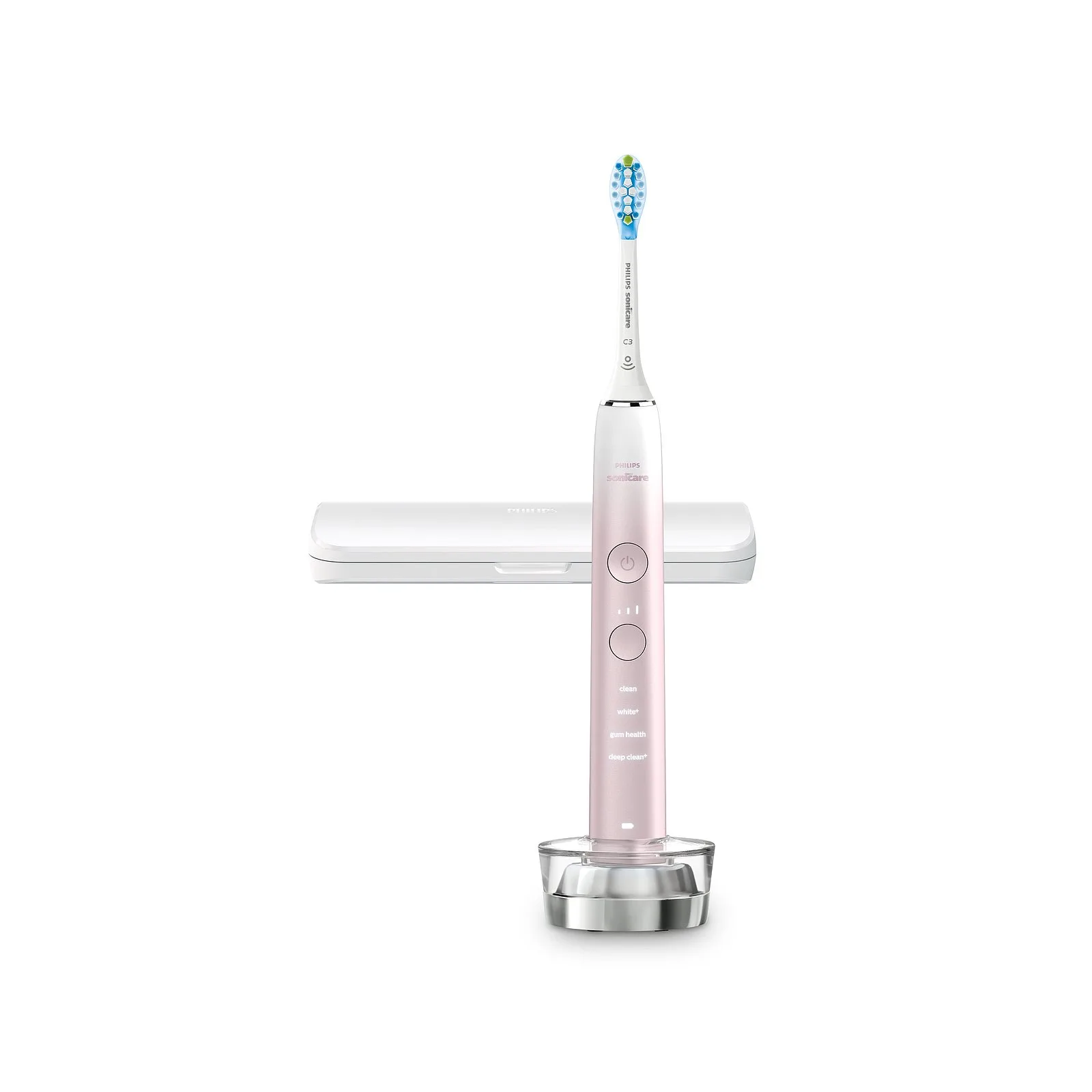
Best premium
4. Philips Sonicare DiamondClean 9000
Best for: A gift, or someone who wants every feature and a travel case
Four modes at three intensities, an app, a head-replacement reminder, a glass charging cup and a travel case.
See it at AmazonCheck the current price at the store.
The Philips Sonicare DiamondClean 9000 ($199.96 on usa.philips.com) is the brush to give, or to buy if the extras matter to you. Philips' listing describes up to 62,000 bristle movements per minute, a pressure sensor, four modes (Clean, White+, Gum Health and Deep Clean+) at three intensity levels, an app with guided brushing, a reminder that tracks how often and how hard you brush and tells you when to change the head, up to 14 days per charge, and a travel case. It comes with a C3 Premium Plaque Control head and a charging stand. The Amazon listing we link is the Aqua color, sold by Amazon.com.
Who it's for: someone who travels often, likes gadgets or wants a bathroom counter that looks tidy. Keep in mind: the Philips Sonicare DiamondClean 9000 costs four times as much as the 4100, and its premium heads cost more too; the teeth-cleaning part is the same sonic idea.
How much do brush heads cost over a year?
With a change every three months, one person uses four heads a year, and a couple eight. Prices vary widely by head type and pack size, and both makers sell cheaper basic heads alongside premium ones. Most Oral-B and Sonicare heads fit across their brands' ranges (except iO, which has its own), so you can usually choose a basic head for a premium handle. Replace a head sooner if the bristles splay, or after an illness if your dentist suggests it.
How do you brush with an electric toothbrush?
Put a pea-sized amount of toothpaste on the head, place it against your teeth before switching on to avoid splashing, and let the brush do the work. With a round head, hold it on each tooth for a moment and move slowly from tooth to tooth. With a sonic brush, glide it in small movements along the teeth, angled toward the gum line. Follow the 30-second prompts to cover each quarter of the mouth, ease off when the pressure sensor warns you, spit rather than rinse, and rinse the head and let it dry afterwards. Children's mouths need children's heads and supervision; both makers sell kids' models.
Which toothbrush fits your budget?
Oral-B Pro 1000, $49.99: a round head with the two features that matter.
Philips Sonicare 4100, $49.96: the sonic equivalent.
Oral-B iO Series 2, $64.99: a quieter, smoother Oral-B.
Philips Sonicare DiamondClean 9000, $199.96: every extra, and a travel case.
How to get it right
For most people, the Oral-B Pro 1000 or the Philips Sonicare 4100, chosen by whether you prefer a round head or a sonic buzz; for a quieter Oral-B, the iO Series 2; and as a gift, the Sonicare DiamondClean 9000. Whatever you choose, budget for replacement heads, and use the brush for two full minutes twice a day: that matters more than anything printed on the box.