The best adjustable roller skates for kids in 2026
Five adjustable skates that grow with a child, from $39.99 Roller Derby quads to the Rollerblade Microblade, plus the safety gear to buy with them.
Culturera may earn a commission if you buy through the links on this page. As an Amazon Associate I earn from qualifying purchases. The selection is ours alone.
At a glance
- Best for little kidsRoller Derby Fun RollAmazon
- Best valueRoller Derby Trac StarAmazon
- Best 2-in-1Roller Derby SwitchAmazon
- Best lookingCandi GRL LucyAmazon
- Best inlineRollerblade MicrobladeAmazon
Adjustable roller skates were one of the fastest-rising gift searches on Google this year, and they make sense: a skate that expands three or four sizes lasts two or three years instead of one. For a young beginner, the skate to give is the Roller Derby Fun Roll, built low and wide so it is hard to fall over. For a child who already skates, choose the Rollerblade Microblade. We have not tested these skates; this guide compares what the makers publish.
Prices are the makers' list prices on November 22, 2026. Popular colors and sizes sell out before Christmas, so order early and check the size chart on each listing.
What should you know before buying kids' skates?
Quad or inline. Quad skates have two wheels in front and two behind, and are steadier standing still, which helps young beginners. Inline skates have the wheels in a row; they are faster and smoother on rough pavement, and better for children who will skate longer distances.
How the adjustment works. Most adjustable skates have a button or a lever that slides the toe forward. Buy the size range that covers the child's shoe size now at the small end, so the skate has room to grow.
Safety gear is not optional. A helmet, wrist guards, and knee and elbow pads prevent most beginner injuries, especially wrist fractures from falling forward. Budget $25 to $40 for a set, and buy it with the skates.
Where the child will skate. Sidewalks and parks need soft wheels, which absorb bumps and grip rough ground; indoor rinks suit harder wheels, which roll faster. Wheel hardness is given as a number followed by the letter A: about 78A to 85A is soft, for outdoors, and 88A and above is hard, for rinks. Children's adjustable skates usually come with wheels that work for both, so this matters more when you replace wheels later.
Closures. Buckles and straps are quick, and a child can manage them alone from about age 6. Laces give a closer fit and take longer. For a young child, choose buckles; you will be the one putting the skates on.
Which one is for you?
Best for little kids
1. Roller Derby Fun Roll
Best for: Ages about 3 to 6, first time on wheels
A low, wide tractor-style skate that makes standing and rolling easier for the youngest skaters.
See it at AmazonCheck the current price at the store.
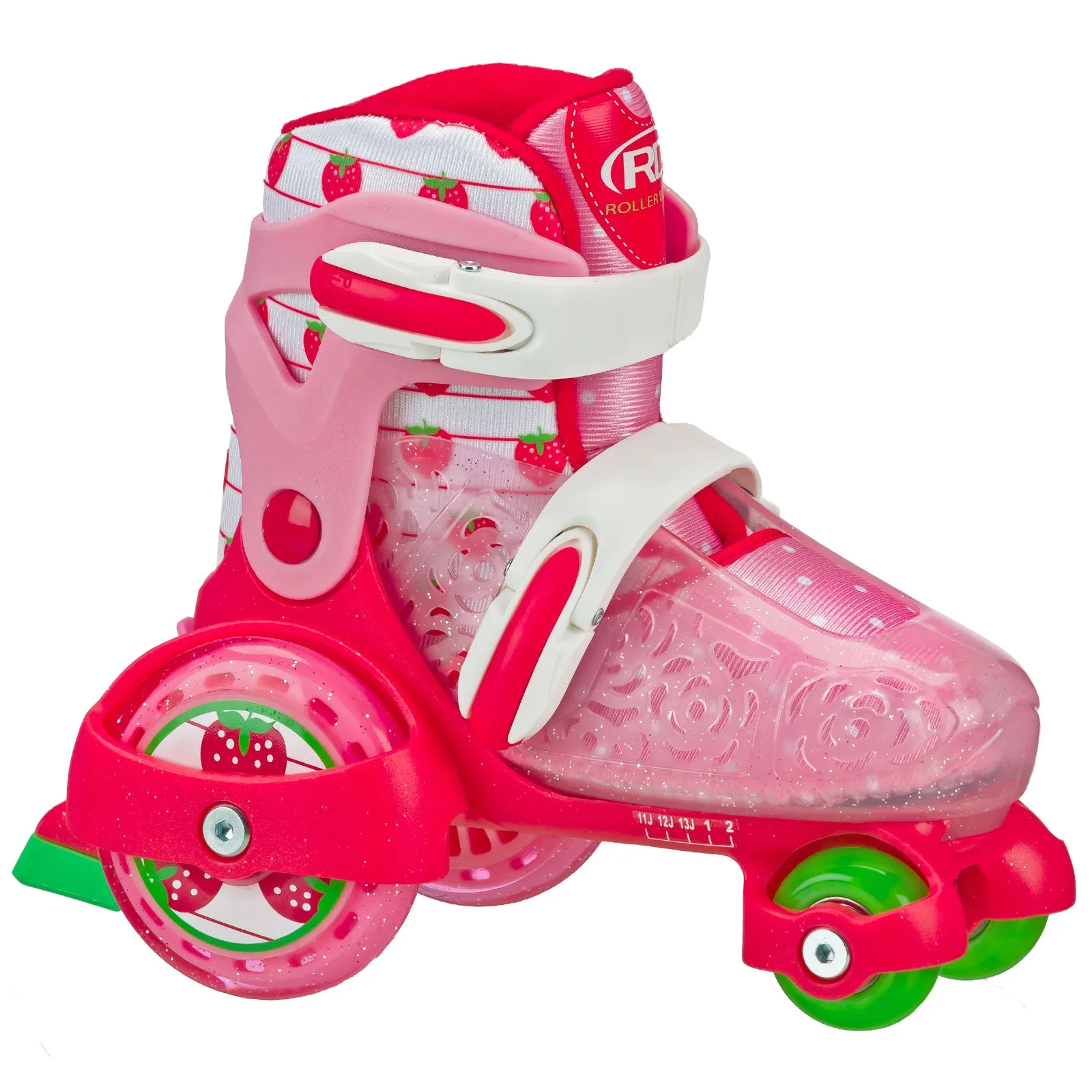
The Roller Derby Fun Roll ($44.99 list) is built for children taking their first steps on wheels: a low, wide base with oversized wheels, a soft shell with a strap and buckle, and an adjustment of up to four sizes. It comes in a small size for youth shoe sizes 7 to 11 and a medium for 11 to 2.
Who it's for: preschoolers and young children who have never skated. Keep in mind: it is a learning skate; a child who gets confident will want a faster skate within a year or two. On Amazon US this listing is sold by Amazon itself.
Skates like the Roller Derby Fun Roll are sometimes called tractor skates: the wide base and wide wheels make it hard to tip sideways, and the skate rolls slowly on purpose. A child of 3 or 4 mostly walks in them at first, and that is the point; walking on wheels is the first skill. Health organizations such as Seattle Children's hospital note that readiness varies, and that many children have the balance for real skating at around 4 or 5.
Best value
2. Roller Derby Trac Star
Best for: Kids ready for a real quad skate
A classic adjustable quad skate with a toe stop, at the lowest price here.
See it at AmazonCheck the current price at the store.
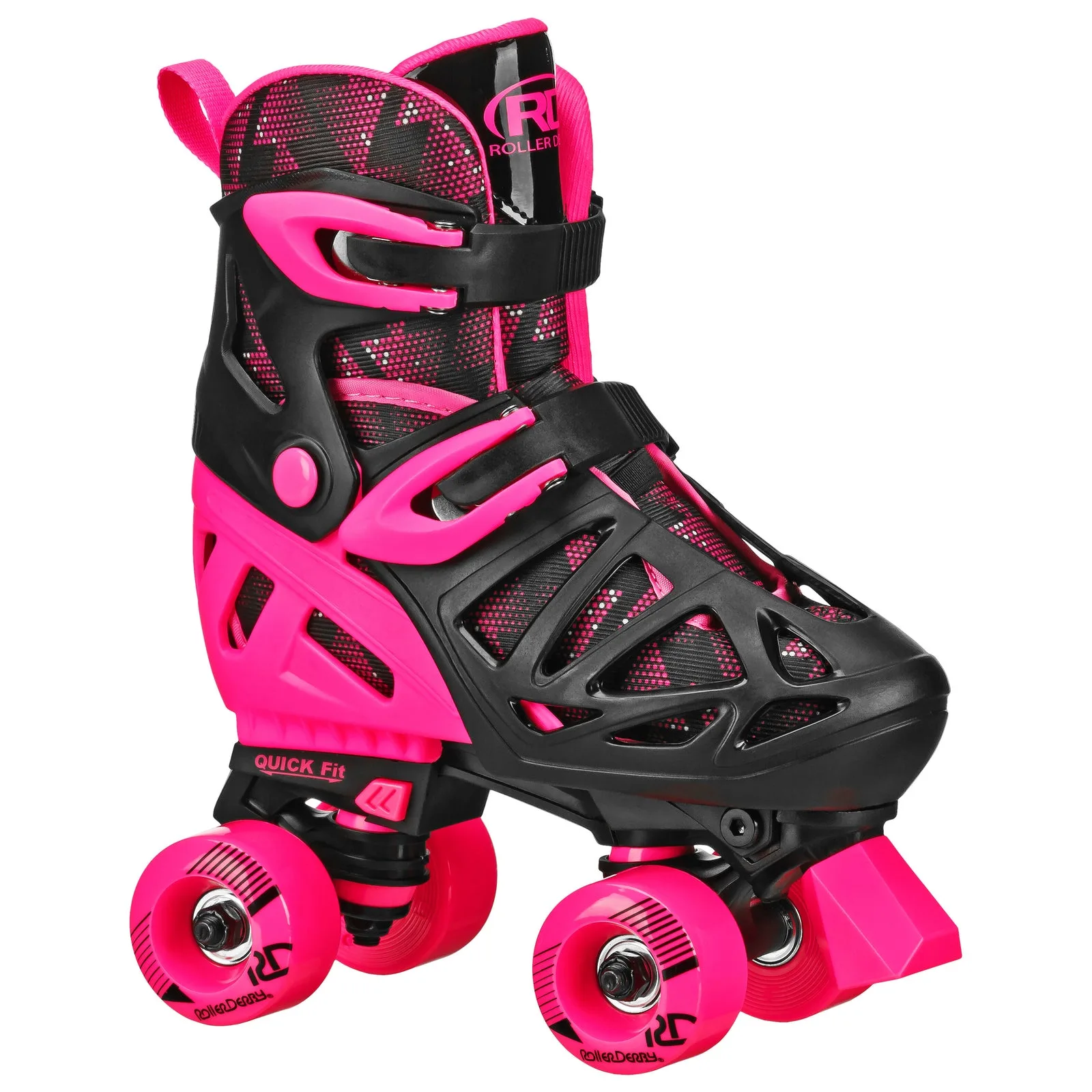
The Roller Derby Trac Star ($39.99 list) is a traditional adjustable quad skate with a molded shell, a ratchet buckle, straps and a front toe stop for braking. It is the next step after the Fun Roll, for children who can already balance and want to roll around the block or at a rink.
Who it's for: school-age beginners on a budget. Keep in mind: the hard shell is less padded than a boot-style skate, so wear thick socks. On Amazon US it is sold by Amazon itself.
The toe stop on the Roller Derby Trac Star is the rubber block at the front of each skate. To brake, the child drags one toe stop on the ground behind them, or leans forward onto both. It is also what lets a skater stand still and push off, so check now and then that it is screwed in tight; it wears down and can be replaced.
Best 2-in-1
3. Roller Derby Switch
Best for: Kids who cannot decide between quad and inline
A skate that converts from a steady learning setup to inline as the child improves.
See it at AmazonCheck the current price at the store.
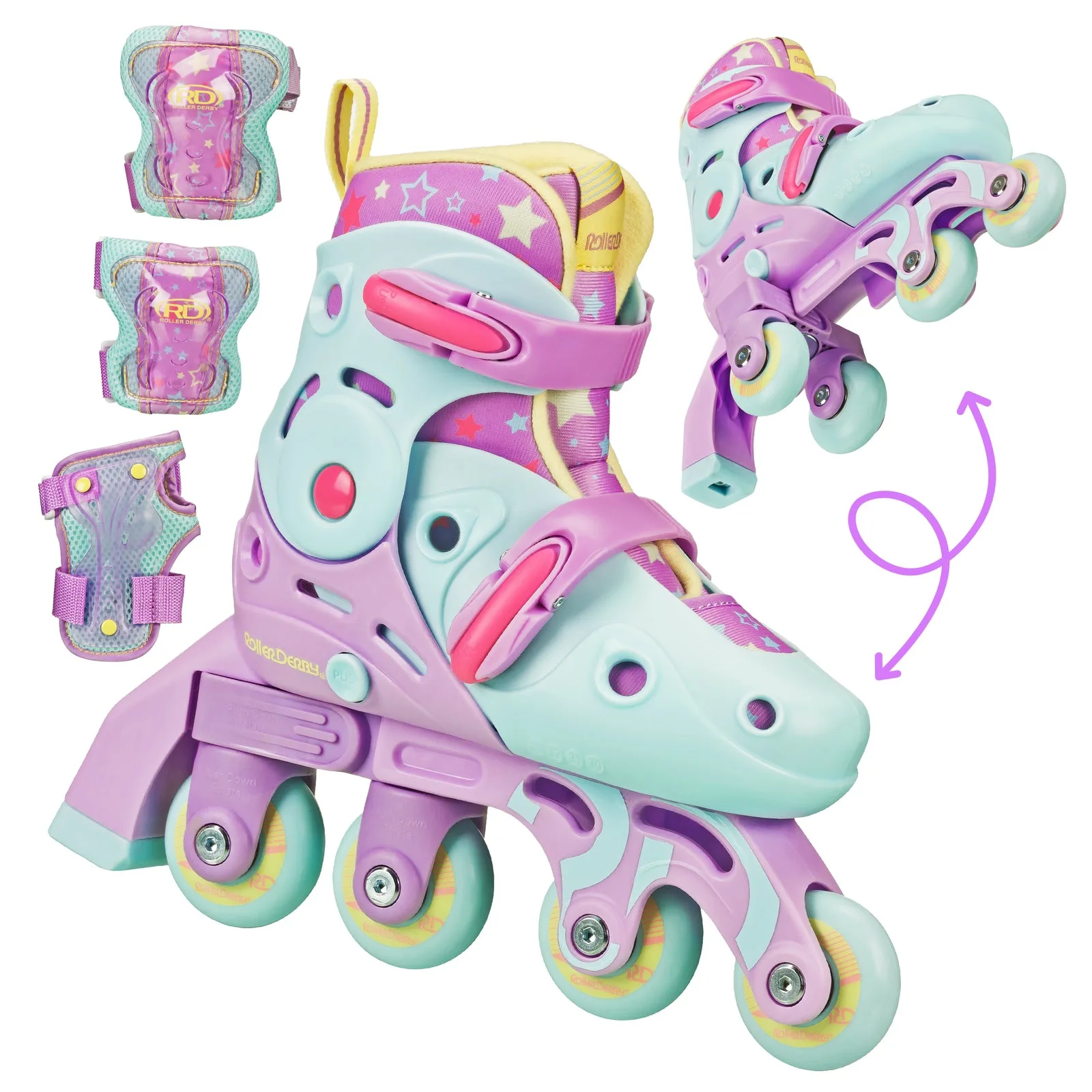
The Roller Derby Switch ($54.99 list) starts in a learn mode with the wheels arranged for stability and converts to an inline skate when the child is ready. Roller Derby also sells a combo version with knee, elbow and wrist pads, so check which one the listing is before you buy.
Who it's for: a beginner who might want inline skates later, and parents who want one skate for two stages. Keep in mind: converting the wheels takes a few minutes. On Amazon US it is sold by Amazon itself.
Best looking
4. Candi GRL Lucy
Best for: Kids who want a retro boot skate
A high-top retro quad skate in bold prints that still adjusts as feet grow.
See it at AmazonCheck the current price at the store.
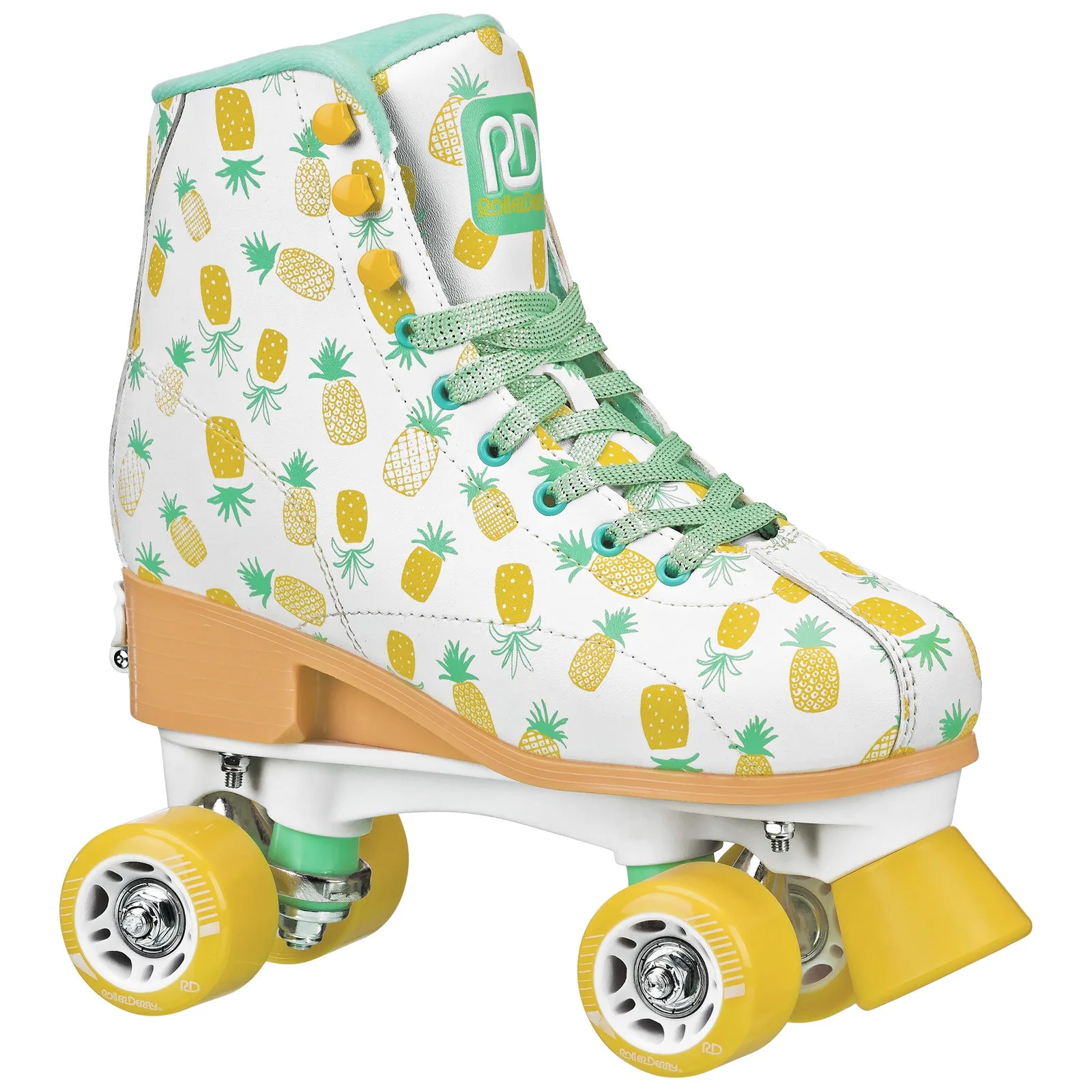
The Candi GRL Lucy ($64.99 list), from Roller Derby's Candi GRL line, is a high-top, lace-up boot skate in the style of the roller-rink revival, with bold prints such as pineapples, plus an adjustable length. It looks like an adult retro skate scaled down for kids.
Who it's for: an older child who cares how the skates look and wants something like what they see online. Keep in mind: lace-up boots take longer to put on than buckles. On Amazon US it is sold by Amazon itself.
Best inline
5. Rollerblade Microblade
Best for: Kids who already skate or want speed
A real inline skate from Rollerblade that expands four sizes and takes bigger wheels as the child grows.
See it at AmazonCheck the current price at the store.
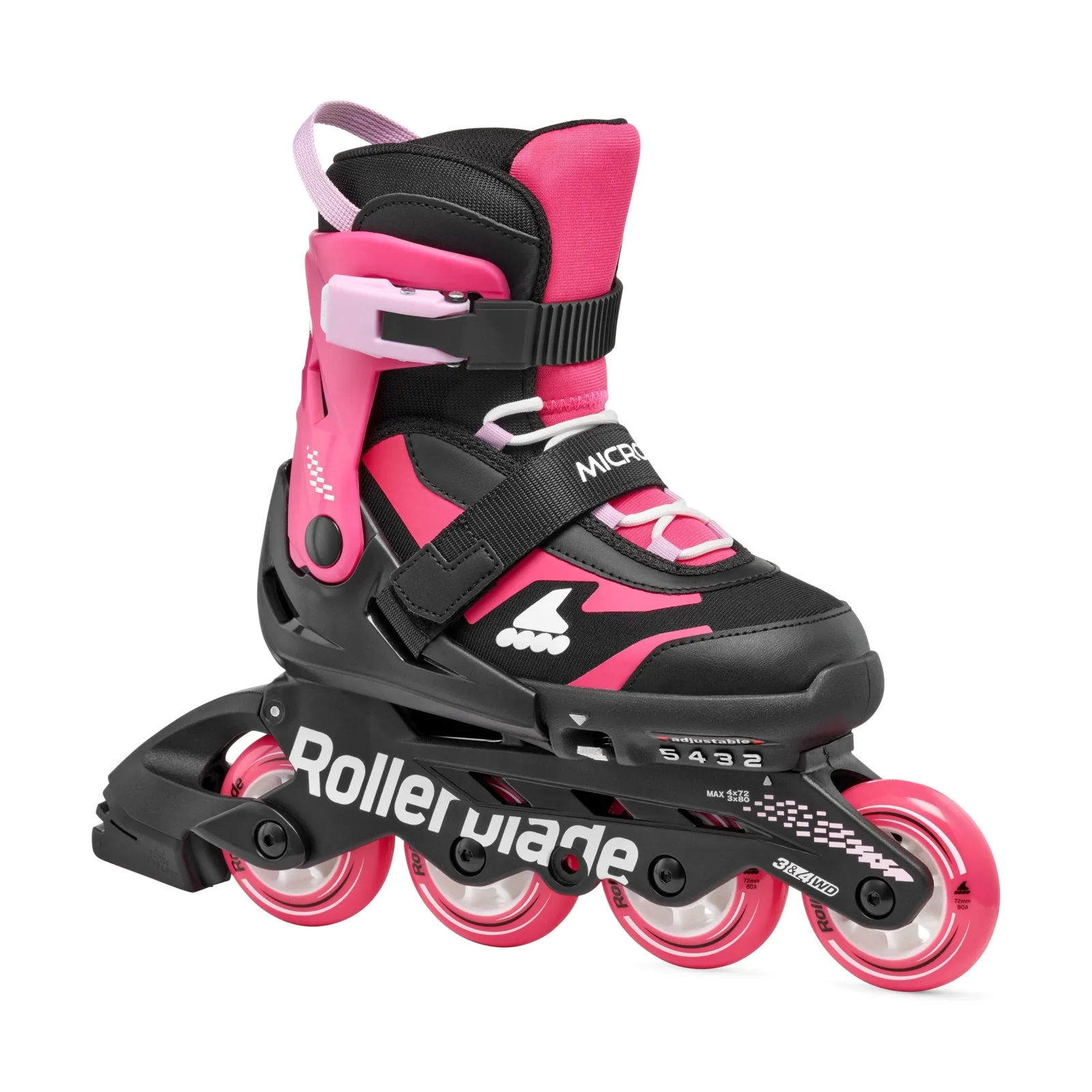
The Rollerblade Microblade ($119.99 list) is a performance inline skate in junior sizes. A push button expands it four full sizes, with markers in the toe to line it up, and the liner adjusts too. It rolls on four 72 mm wheels with a heel brake, and the frame can later take three larger 80 mm wheels for more speed.
Who it's for: children from about 6 who skate regularly or are moving up from quads. Keep in mind: it costs about three times as much as the Roller Derby skates, but it is built to last through several years of growth. On Amazon US this color is sold by Amazon itself.
Rollerblade sells the Microblade in three size ranges that together cover feet from about 17.5 to 26 cm, roughly from a small child to a young teenager, according to Rollerblade's US site. Inline skates like the Rollerblade Microblade brake with a rubber pad behind the heel of one skate: the child slides that foot forward and lifts the toes. It takes practice, so teach it on flat ground before any slope.
At what age can a child start skating?
Around 3 to 5, depending on the child. At 3, keep it short and playful, on a carpet or a patch of grass, in a learning skate like the Fun Roll. By 5 or 6, most children can learn to glide, stop and turn in a few sessions. A child who is afraid is not ready; put the skates away and try again in a few months. The age on the box matters less than whether the child's shoe size is inside the skate's range.
How do you teach a child to skate?
1. Put on the helmet and pads first, sitting down, then the skates, tightened so the heel does not lift. 2. Start on carpet or grass, where wheels barely roll. Have the child stand with feet apart, knees bent and hands forward, and then march in place. 3. Practice falling: bend the knees, lean forward and land on the knee pads and then the wrist guards. A child who knows how to fall is less afraid of it.
4. Move to smooth, flat ground, such as an empty tennis court or a quiet path. March with the toes pointing slightly outward, in a V, and let the marching turn into short glides. 5. Teach stopping before speed: the toe stop on quads, the heel brake on inlines. 6. Keep sessions to 20 or 30 minutes; tired legs fall more. Walk beside the child and offer a hand to hold, but do not pull them along.
What safety gear does a child need?
The American Academy of Pediatrics recommends a helmet, wrist guards, knee pads and elbow pads for skating. Wrist guards matter most after the helmet, because children put their hands out when they fall. For the helmet, the US Consumer Product Safety Commission's guide says a bicycle helmet that meets its standard is suitable for recreational roller and inline skating, and that helmets meeting the ASTM F1492 skate standard are designed for trick skating and can take more than one moderate impact.
The helmet should sit level, low on the forehead, with the strap snug under the chin. Pads go on over thin clothes or bare skin, not over thick sleeves, so they do not slide. Replace a helmet after a hard hit, even if it looks fine.
How do you look after kids' skates?
Before each outing, spin the wheels and check that the nuts on the axles and the toe stop or brake are tight. Keep skates out of puddles and sand: water rusts the bearings, the steel rings inside each wheel that let it spin, and grit grinds them down. If skates get wet, dry them with a cloth and let them air out. When wheels wear more on one edge, swap them between left and right skates so they wear evenly. Each time the child's foot grows, move the adjustment one step and check that the toes have about a finger's width of room.
Which one at each price?
Under $50: the Roller Derby Trac Star, $39.99, for a school-age beginner; or the Roller Derby Fun Roll, $44.99, for a child under 6.
$55 to $65: the Roller Derby Switch, $54.99, which converts to inline; or the Candi GRL Lucy, $64.99, for style.
Around $120: the Rollerblade Microblade, $119.99, for a child who skates every week.
Before you order
Measure the child's foot in centimeters or check their current shoe size, and compare it with each skate's size chart; sizes vary by brand. Add a helmet and pad set that fits, and plan the first sessions on smooth, flat ground away from traffic.
Amazon US usually extends its return window for gifts bought during the holidays; check the exact dates on the listing before you buy.
How to get it right
Match the skate to the child's age and experience. For a first-timer under 6, the Fun Roll; for a school-age beginner, the Trac Star or the Switch; for style, the Lucy; for a confident skater, the Rollerblade Microblade. And always buy the safety gear.