The best digital piano for beginners in 2026
Three 88-key digital pianos with weighted keys, from Roland's $499.99 FP-10 to the new FP-40 with Wi-Fi and lessons, and what to check before buying a first piano.
Culturera may earn a commission if you buy through the links on this page. As an Amazon Associate I earn from qualifying purchases. The selection is ours alone.
At a glance
- Best overallRoland FP-10Amazon
- Best soundYamaha P-225Amazon
- Best for learnersRoland FP-40Amazon
For most beginners, the digital piano to give this year is the Roland FP-10: for $499.99 it has 88 full-size keys with a weighted hammer action that feels close to an acoustic piano, and it connects to learning apps over Bluetooth. Choose the Yamaha P-225 for a richer piano sound, or Roland's new FP-40 for a learner who wants lessons built in. We have not tested these pianos; this guide compares what the makers publish and what a beginner needs.
Prices are the makers' list prices on November 22, 2026, or typical store prices where the maker does not publish one. Music stores discount pianos heavily around Black Friday.
What should you check before buying a first digital piano?
88 weighted keys. A piano teacher will ask for this first. Weighted, or hammer-action, keys are heavier in the bass and lighter in the treble, like an acoustic piano, and they build the finger strength that lessons expect. Lighter 61-key keyboards are cheaper but are a different instrument.
A stand, a bench and a proper pedal. The pianos here are sold without a stand, and most come with a small pedal switch. A matching stand, an adjustable bench and a piano-style sustain pedal add $100 to $250, and they make practice far more comfortable.
Headphones. A digital piano's best feature for a household is that you can practice at night without disturbing anyone. Any wired headphones work.
Apps. All three connect to a phone or tablet for lessons, sheet music and recording. Check which apps the person wants to use.
Polyphony. The number of notes the piano can sound at once, counting the notes held by the pedal. 64 is enough to start; 96 or more leaves room for pieces with a lot of pedal. All the pianos in this guide have at least 96.
Which one is for you?
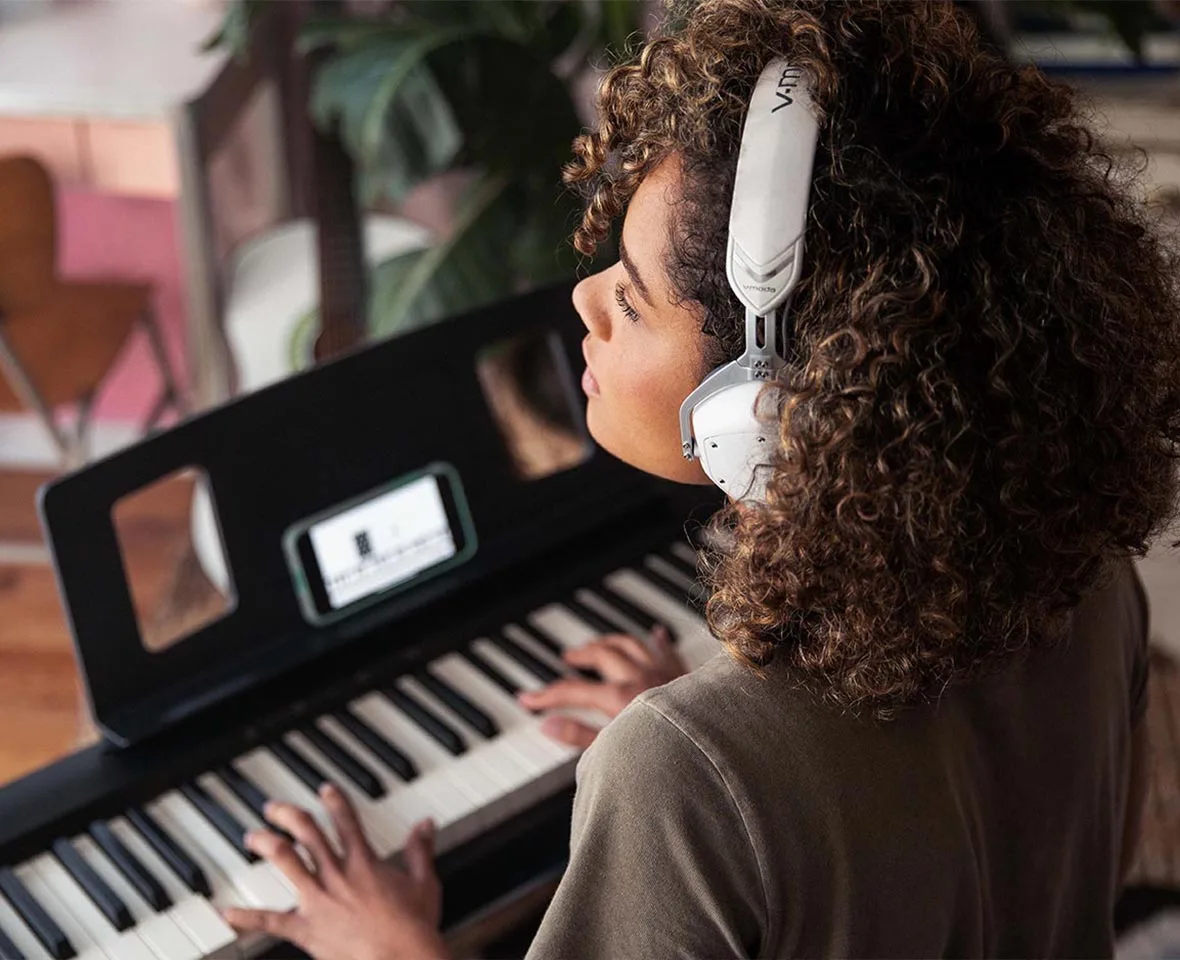
Best overall
1. Roland FP-10
Best for: A first piano on a budget
The best key action at this price, with Bluetooth MIDI for learning apps.
See it at AmazonCheck the current price at the store.
The Roland FP-10 ($499.99 list) uses Roland's PHA-4 Standard key action, with escapement and ivory-feel keys, the same action as Roland's more expensive FP models. It has 96-note polyphony, two 6 W speakers and Bluetooth MIDI, so it connects wirelessly to apps like Roland Piano Every Day or third-party lesson apps. It weighs 12.6 kg without a stand and comes with a pedal switch.
The Roland FP-10 measures 1,284 × 258 × 140 mm (about 50.6 × 10.2 × 5.6 inches) without a stand, which Roland describes as its most compact 88-key piano. Its sound engine is Roland's SuperNATURAL Piano. The included pedal is a simple on-off switch; Roland's optional DP-10 pedal has the shape of a real piano pedal and supports half-pedaling, where pressing the pedal partway gives a shorter sustain. Roland's matching stand for the FP-10 is the KSCFP10.
Who it's for: anyone starting lessons who wants the right feel without spending more than necessary. Keep in mind: the built-in speakers are modest, and it does not stream audio over Bluetooth, only MIDI. On Amazon US it is sold by Amazon itself.
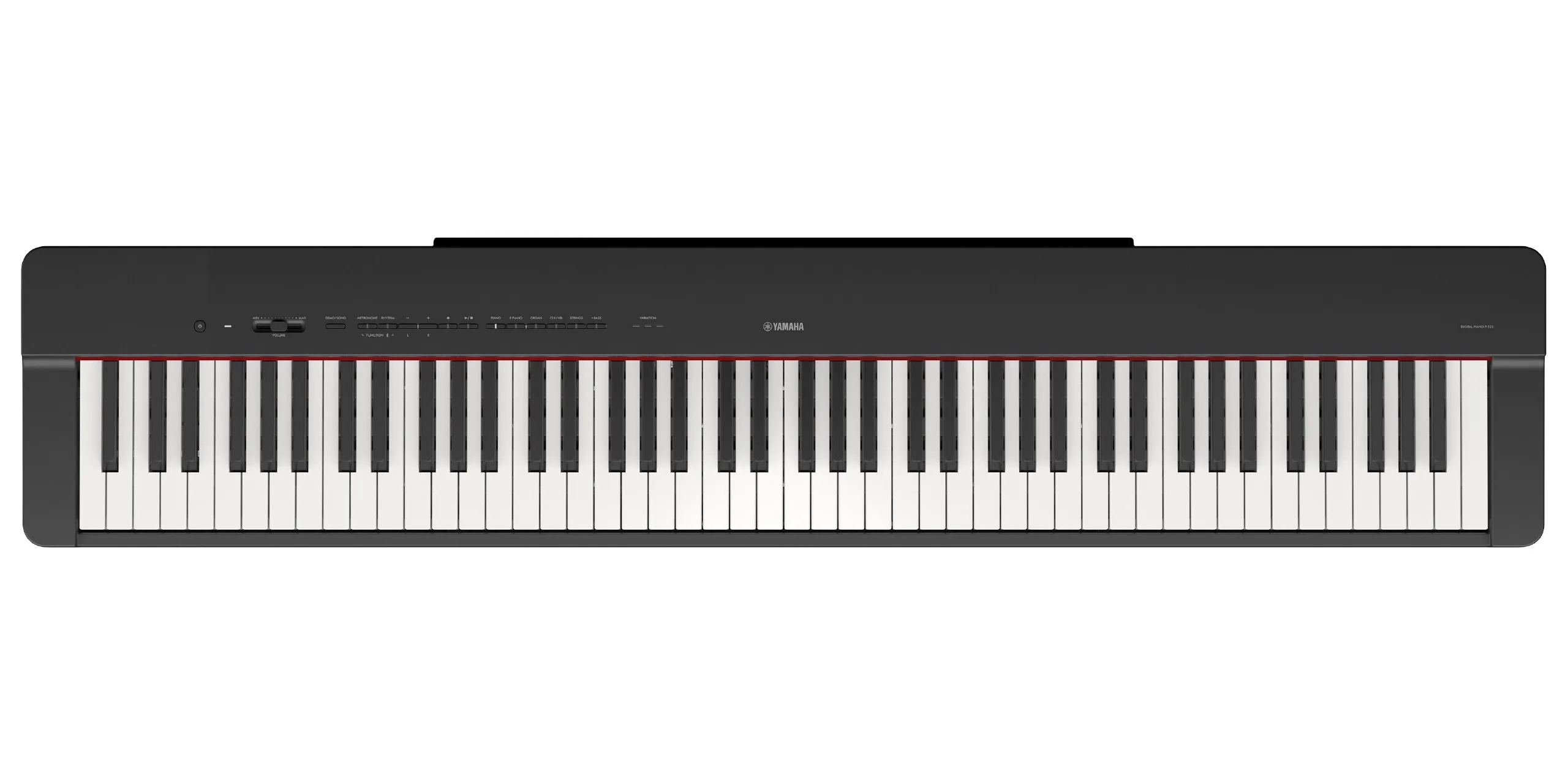
Best sound
2. Yamaha P-225
Best for: Players who care most about tone
Yamaha's CFX concert grand sound in a slim portable piano.
See it at AmazonCheck the current price at the store.
The Yamaha P-225 (about $770 at music stores; Yamaha does not publish a list price) uses Yamaha's GHC, Graded Hammer Compact, action and the sampled sound of the company's CFX concert grand, with 24 instrument voices in total. It works with Yamaha's Smart Pianist and Rec'n'Share apps, and comes with a music rest, a sustain foot switch and a power adapter.
The Yamaha P-225 replaced the Yamaha P-125 in 2023. It has 192-note polyphony and a two-way speaker system, with speakers facing both up and down to imitate the way sound leaves a grand piano. A feature Yamaha calls VRM Lite models the resonance of the strings and soundboard, which gives held chords a fuller sound. Yamaha's matching wooden stand is the L-200, and the optional LP-1 unit adds the three pedals of an acoustic piano. The Yamaha P-225 is sold in black or white.
Who it's for: someone who plays already or wants the most piano-like sound in a portable instrument. Keep in mind: the GHC action is lighter than Roland's PHA-4, which some teachers prefer for beginners and others do not. On Amazon US this listing is sold by Sweetwater, a large music retailer.
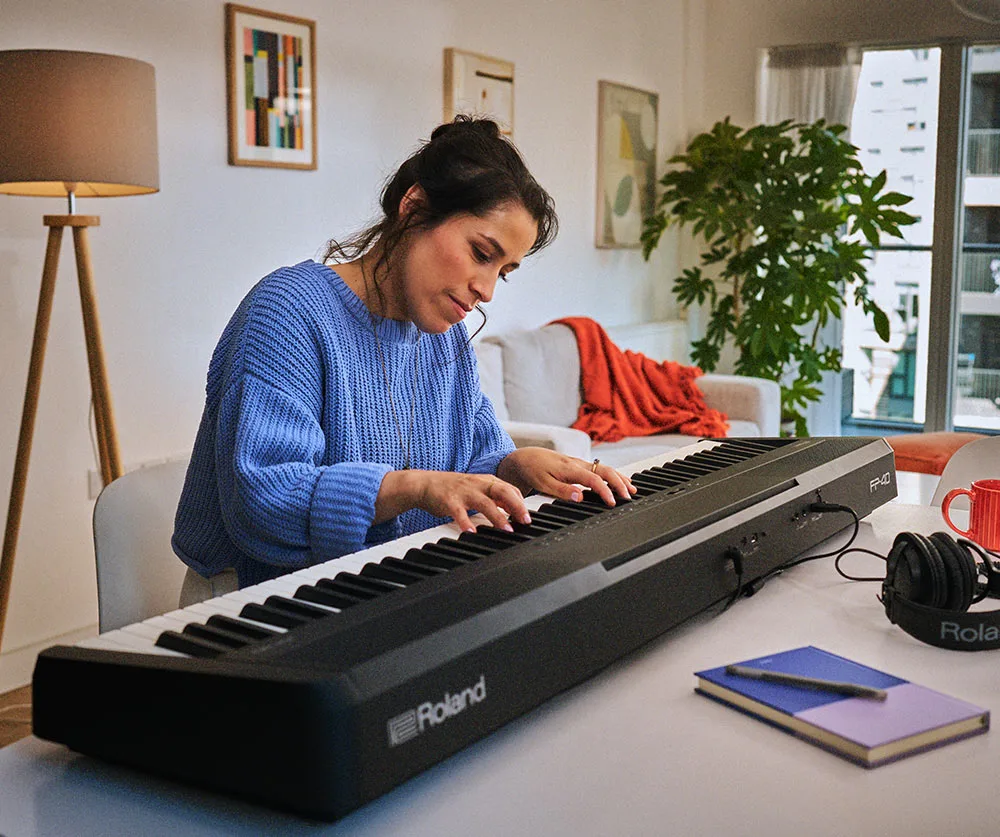
Best for learners
3. Roland FP-40
Best for: Adults and kids learning on their own
Roland's first piano with Wi-Fi, a better sound engine and a lessons app with 100 free songs.
See it at AmazonCheck the current price at the store.
The Roland FP-40 ($749 list) is new this year and sits between the FP-10 and FP-60X. It keeps the PHA-4 Standard action but adds Roland's Piano Reality sound engine, 256-note polyphony, two 12 W speakers, Bluetooth audio and MIDI, and built-in Wi-Fi. It launches with Piano Sphere, a free app developed with Skoove that gives real-time feedback and lesson plans with 100 songs included and more available by upgrade. It weighs 14 kg.
Who it's for: someone learning without a teacher, or a family that wants lessons and better speakers in one instrument. Keep in mind: it costs $250 more than the FP-10, and the extra songs and courses in Piano Sphere cost extra. On Amazon US the link opens a search; choose a listing sold by Amazon or Roland.
Is there a slimmer option?
The Casio Privia PX-S1100 ($729.99 list) is one of the slimmest 88-key pianos with a weighted action, weighs 11.2 kg and can run on batteries, which suits a small apartment or a piano that moves between rooms. On Amazon US the listings we found were from third-party sellers, so the link opens a search.
The Casio Privia PX-S1100 has 192-note polyphony and 18 built-in tones, and its keys respond at five levels of touch sensitivity. Six AA batteries power it for up to four hours, according to Casio. Casio's optional SP-34 unit adds three pedals.
What is the difference between a digital piano and a keyboard?
A digital piano has 88 keys of full size and a hammer action that gives each key weight, and it concentrates on a few good piano sounds. A portable keyboard usually has 61 or 76 light, spring-loaded keys and hundreds of sounds and rhythms. A keyboard is fine for trying out music or for a small child, but piano lessons use the full range within the first two or three years, and fingers trained on light keys have to relearn on a real piano. For someone who says they want to learn piano, buy a digital piano.
Is a portable piano or a console piano better?
The pianos in this guide are portable, or slab, pianos: a keyboard about 1.3 meters wide that sits on a stand or a table and can be put away. A console piano has a fixed wooden cabinet, three pedals and larger speakers, looks like furniture and costs more. A portable piano on its maker's matching wooden stand is a middle solution: it is as stable as a console and can still be moved. Folding X-shaped stands are cheap, but they wobble and leave less room for the knees.
How do you set up a digital piano at home?
The tops of the white keys should be about 71 to 76 cm (28 to 30 inches) from the floor, the height of an acoustic piano. Adjust the bench so the player's shoulders are relaxed and the forearms are roughly level with the keys; an adjustable bench matters most for children, who need it higher. Put the pedal under the right foot and stop it from sliding with a mat or a strip of non-slip tape.
Place the piano away from radiators and direct sun. Most digital pianos have two headphone outputs, so a teacher or a parent can listen along. Check the plug size: the Roland FP-10 has a 3.5 mm mini-jack, and other models use the larger 6.35 mm plug, for which an adapter costs a few dollars.
How much should a beginner practice?
Piano teachers generally recommend short, regular sessions over long, occasional ones: 15 to 30 minutes on most days is a sensible target for an adult beginner, and less for a young child. A teacher, in person or online, corrects hand position and posture, which no app can see. Lesson apps are useful for motivation and for learning to read notes, and they work better as a complement to a teacher than as a replacement.
Does a digital piano need maintenance?
Almost none, which is one of the reasons to choose it. A digital piano never needs tuning; an acoustic piano needs a tuner once or twice a year. Keep dust and liquids off the keys, wipe them with a slightly damp cloth, and cover the keyboard when it is not used. Check the maker's site now and then for firmware and app updates.
Which one at each price?
Around $500: the Roland FP-10, $499.99, plus a stand and a pedal: the right key action for the least money.
Around $750: the Yamaha P-225, about $770, for the sound; the Roland FP-40, $749, for lessons and Wi-Fi; or the Casio PX-S1100, $729.99, where space is tight.
Before you order
Measure the space: these pianos are about 1.3 meters wide. Order the matching stand and a sustain pedal with half-pedal support at the same time, and add headphones. Digital pianos are heavy to ship back, so check the return terms on the listing.
Amazon US usually extends its return window for gifts bought during the holidays; check the exact dates on the listing before you buy.
How to get it right
Buy 88 weighted keys and budget for a stand, a bench and a pedal. For most beginners, the Roland FP-10; for the best sound, the Yamaha P-225; for learning alone with an app, the Roland FP-40.