The best first guitar or ukulele to give in 2026
A Yamaha FG800 acoustic, a Kala ukulele, Squier's electric starter pack and a classical guitar for small hands: how to choose a first instrument someone will keep playing.
Culturera may earn a commission if you buy through the links on this page. As an Amazon Associate I earn from qualifying purchases. The selection is ours alone.
At a glance
- Best acousticYamaha FG800Amazon
- Best ukuleleKala KA-15SAmazon
- Best electricSquier Sonic Stratocaster PackAmazon
For a teenager or adult who wants to learn guitar, the instrument to give is Yamaha's FG800: a solid-top steel-string acoustic that sounds better than its price and is easy to play once it is set up well. For a child, a younger beginner or someone who wants to play songs within a week, give a ukulele like the Kala KA-15S. For someone who dreams of rock, Squier's electric pack has everything in one box. We have not tested these instruments; this guide compares what the makers publish.
Prices are the makers' list prices on November 22, 2026, or typical store prices where the maker does not publish one.
What should you decide before buying a first guitar?
Acoustic, classical, electric or ukulele. A steel-string acoustic is the most versatile for songs and strumming. A classical guitar has nylon strings, which are much gentler on fingertips and the standard for children and for classical and flamenco lessons. An electric guitar has thin strings that are easy to press but needs an amplifier. A ukulele has four nylon strings and is the fastest way to play real songs.
Size. Guitars are sized by the player's height more than by age. As a rough guide: a 1/4 size for ages 4 to 6, a 1/2 size for ages 6 to 8, a 3/4 size for ages 8 to 11, and a full size (4/4) from about 12. Adults with small hands may prefer a smaller body, such as a concert shape.
Playability. Cheap guitars often have strings set too high above the neck, which hurts and discourages beginners. Buy from a known maker and ask a music shop for a setup if it feels hard to press.
Lessons. If the person will take lessons, ask the teacher first. Classical and flamenco teachers expect a nylon-string classical guitar; most others are happy with whatever the student wants to play.
Which one is for you?
Best acoustic
1. Yamaha FG800
Best for: Teenagers and adults learning songs
A solid spruce top and Yamaha's build quality at a beginner price.
See it at AmazonCheck the current price at the store.
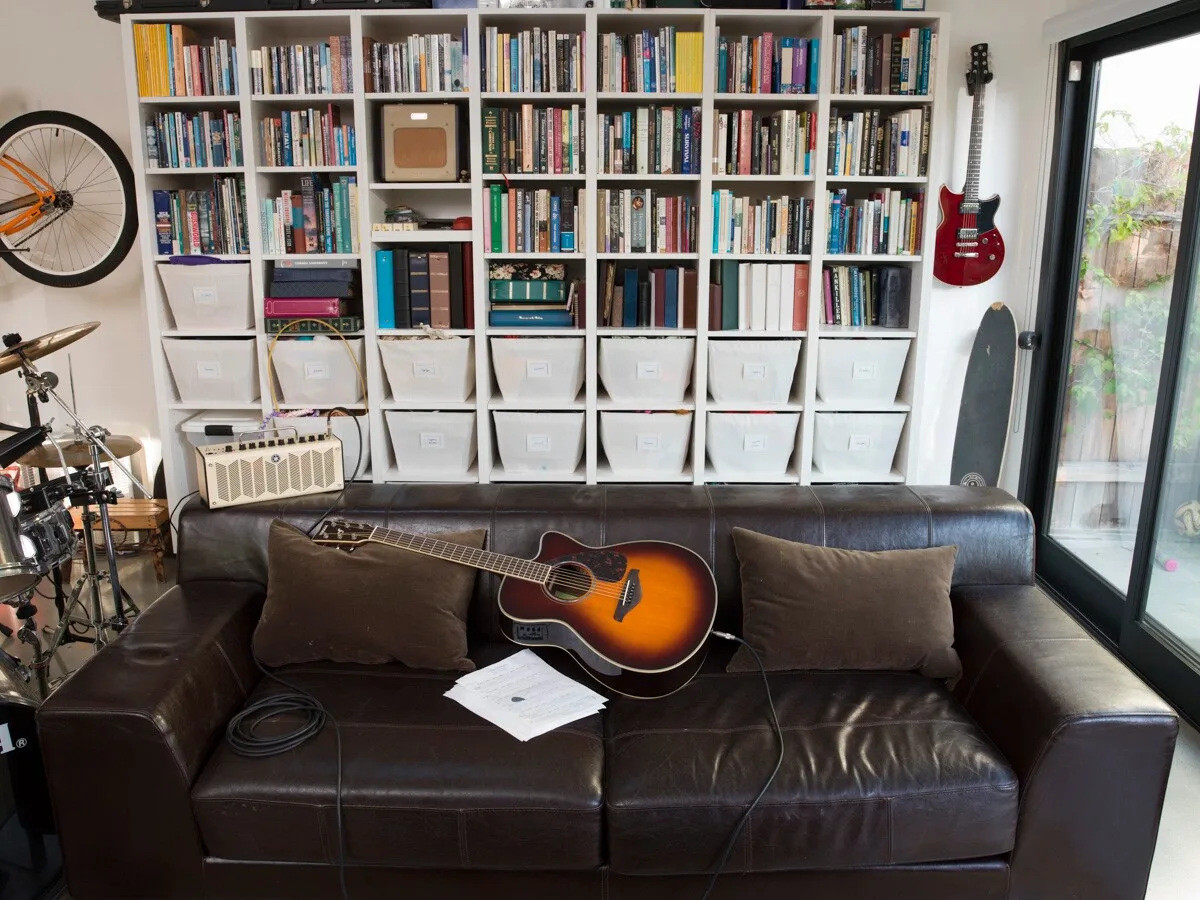
The Yamaha FG800 (about $280 at music stores; Yamaha does not publish a list price) is a full-size dreadnought with a solid spruce top, which sounds richer and improves with age compared with the laminated tops of most beginner guitars. Yamaha's scalloped bracing gives it strong lows and mids, and the FS800 version has a smaller concert body for smaller players.
The Yamaha FG800 has a 650 mm (25 9/16-inch) scale, which is the vibrating length of the strings, nato or okoume back and sides and a total length of 1,038 mm (40 7/8 inches). The Yamaha FS800 ($279.99 at Yamaha's US store) has the same solid spruce top on a smaller concert body with a shorter 634 mm (25-inch) scale, which shortens the stretch between frets. Choose the Yamaha FS800 for a smaller teenager or an adult who finds a dreadnought bulky.
Who it's for: anyone 12 and older who wants to strum and sing. Keep in mind: steel strings hurt fingertips for the first few weeks. On Amazon US this listing is sold by Sweetwater, a large music retailer.
Best ukulele
2. Kala KA-15S
Best for: Kids, quick learners and travelers
A well-made mahogany soprano ukulele from the brand many teachers recommend.
See it at AmazonCheck the current price at the store.
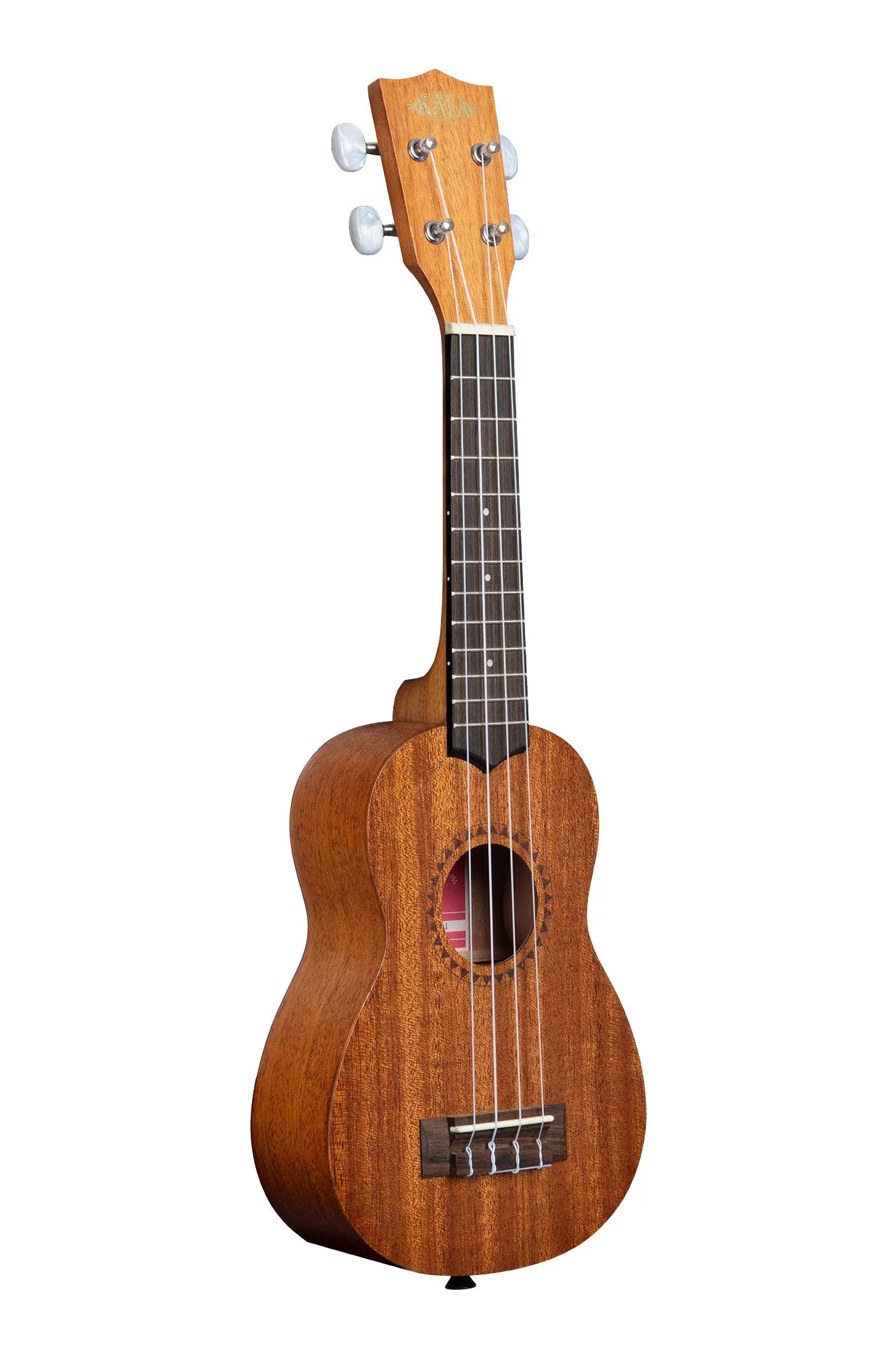
The Kala KA-15S ($69 list) is a soprano ukulele in satin mahogany with Aquila Nylgut strings and a 13.6-inch scale. Its four soft strings and small frets let beginners play chords within days, which keeps motivation high. It is light enough for a child and small enough for a suitcase.
The Kala KA-15S is 21 inches long overall, has 12 frets and a Graph Tech NuBone nut and saddle, and is tuned G-C-E-A. Ukuleles come in four main sizes: soprano, the smallest, with the classic bright sound; concert, a little longer with more room for the fingers; tenor, larger again with a fuller sound; and baritone, tuned like the top four strings of a guitar.
Who it's for: children from about 6, and adults who want an easy, happy instrument. Keep in mind: sopranos are small for big hands; Kala's concert size is roomier. On Amazon US the listings we found were from music retailers, so the link opens a search.
Best electric
3. Squier Sonic Stratocaster Pack
Best for: Rock, pop and blues fans
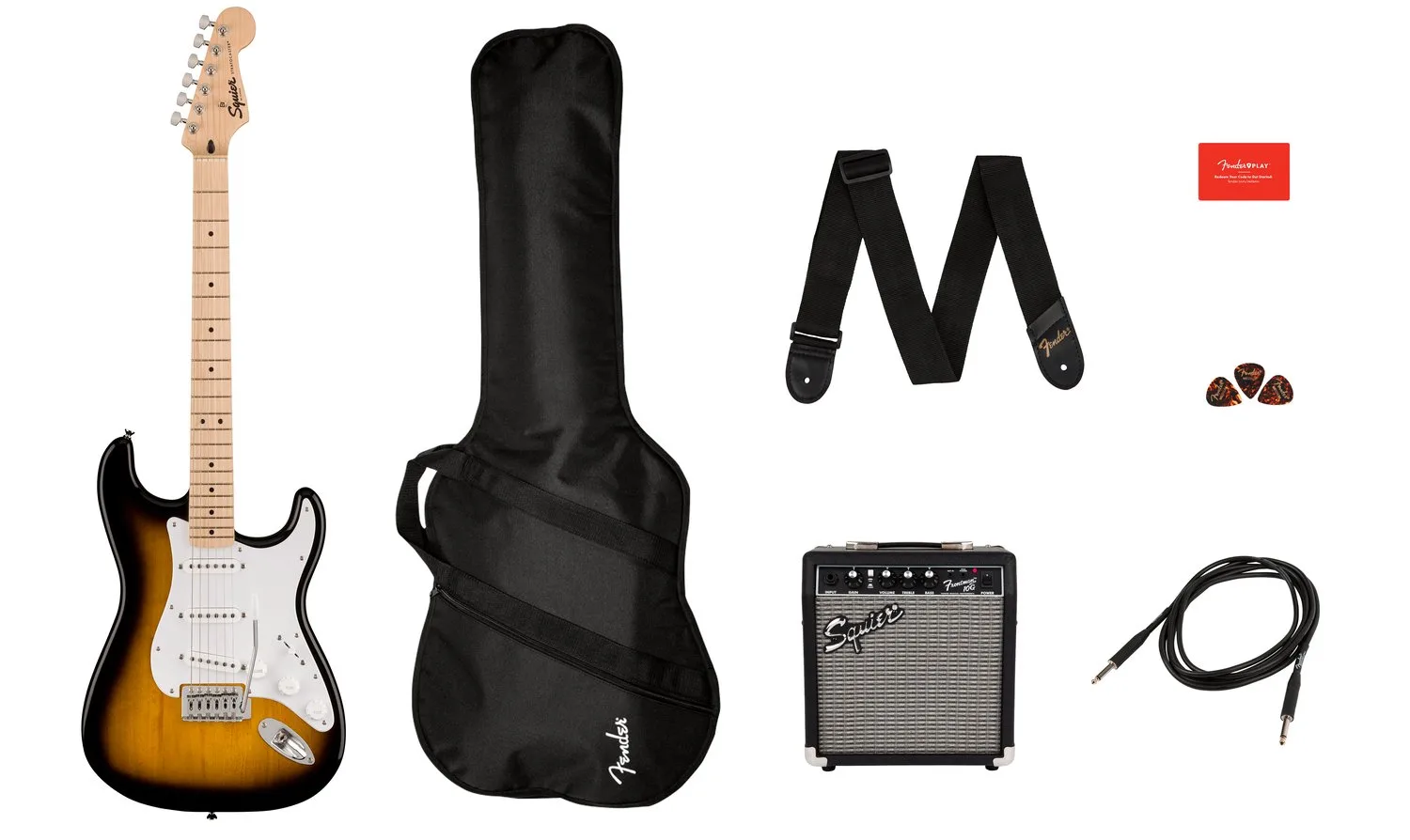
A Stratocaster-style electric with an amp, bag, strap, cable and lessons, all in one box.
See it at AmazonCheck the current price at the store.
Fender's Squier Sonic Stratocaster Pack ($369.99 list) includes a Stratocaster-style guitar with three single-coil pickups and a slim maple neck, a Frontman 10G practice amplifier, a padded gig bag, a cable, a strap, picks and three months of Fender Play online lessons. Electric strings are thin and easy to press, which suits beginners.
The Squier Sonic Stratocaster has a poplar body, a maple neck with a C-shaped profile, a 25.5-inch (648 mm) scale, 21 frets and a tremolo bridge. The Frontman 10G amplifier has a headphone output for silent practice and an auxiliary input for playing along with songs from a phone.
Who it's for: a teenager who wants to play the music they listen to. Keep in mind: the 10-watt amp is for practice only; add headphones for quiet playing. The Amazon listings we found were bundles from third-party sellers, so the link opens a search.
What about classical guitars and small hands?
For a child, or for classical lessons, Yamaha's C40II classical guitar is one of the most common first instruments in music schools, with soft nylon strings. For a child under 10 who wants steel strings, Yamaha's JR1 3/4-size guitar is small and light. Fender's CD-60S ($229.99 list) is another solid-top dreadnought alternative to the FG800.
Yamaha also makes school classical guitars in smaller sizes: the CGS102AII is a 1/2 size with a 535 mm scale and the CGS103AII is a 3/4 size with a 580 mm scale, against 650 mm on the full-size Yamaha C40II. The steel-string Yamaha JR1 has a 540 mm (21 1/4-inch) scale.
Is acoustic or electric guitar easier to learn on?
Electric guitars are physically the easiest: the strings are thinner and sit closer to the neck, so chords take less finger strength. Classical guitars come second, because nylon strings are soft, although the neck is wider. Steel-string acoustics are the hardest on fingertips at first, but they need no amplifier or cable: you pick one up and play.
None of this matters as much as motivation. A beginner practices more on the instrument that sounds like the music they love, so that is the one to give. What they learn transfers: chords, scales and rhythm are the same on acoustic, classical and electric guitars, so starting on one does not lock anyone in. A ukulele teaches fretting, strumming and rhythm too, which makes it a real first step toward guitar for a young child.
How long does it take to play a first song?
On a ukulele, many beginners play a simple three-chord song in the first week. On guitar, expect a few weeks before chord changes are smooth enough to keep up with a song. Fingertips are sore at first and toughen into calluses after a few weeks of regular playing.
Short daily practice, 15 to 20 minutes, works better than one long session a week. Keeping the guitar on a stand in sight, rather than zipped in its bag, makes that practice more likely.
Should a first guitar be new or used?
A used guitar from a known maker can be good value, but only if someone who plays checks it: a warped neck, worn frets or a lifting bridge are expensive to fix and hard for a beginner to spot. For a gift, new is safer, because it has a warranty and can be exchanged for another size. Avoid unbranded guitars sold as toys; many cannot be tuned properly or will not stay in tune.
What should you buy with it?
A clip-on tuner. It reads the vibration of the headstock and shows when each string is in tune, and a guitar that is out of tune sounds bad no matter how well it is played. Standard guitar tuning is E-A-D-G-B-E from the lowest string to the highest.
A gig bag, a strap and picks. The Squier pack includes all three; for the Yamaha FG800, add them. Medium picks are a good start for strumming.
Spare strings and a capo. Beginners often snap the thinnest string while tuning, so a spare set saves a trip to the shop. A capo clamps across the neck to raise the pitch, which lets a beginner play more songs with the same few chords.
Lessons. The Squier pack includes three months of Fender Play online lessons. A few lessons with a local teacher at the start prevent bad habits in posture and hand position.
How do you look after a first guitar?
Keep it away from radiators, direct sun and hot cars. Solid wood tops like the Yamaha FG800's can crack when the air is very dry, so during the heating season keep the guitar in its bag or case with a small humidifier pack. Wipe the strings after playing and change them when they sound dull or feel rough, every few months for someone who plays regularly. Tune every time you play: new strings stretch and go flat during the first days.
Which one at each price?
Under $100: the Kala KA-15S ukulele, $69, for a child or a quick start.
Around $230 to $280: the Fender CD-60S, $229.99, or the Yamaha FG800, about $280, both solid-top acoustics; the Yamaha FS800, $279.99, for a smaller body.
Around $370: the Squier Sonic Stratocaster Pack, $369.99, with the amplifier and accessories included.
Before you order
Check the size for a child, and plan a visit to a music shop for a setup if the strings feel hard to press; it is often inexpensive and makes a big difference.
Amazon US usually extends its return window for gifts bought during the holidays; check the exact dates on the listing before you buy.
How to get it right
Match the instrument to the music the person loves. For songs and strumming, the Yamaha FG800; for a child or a quick start, the Kala ukulele; for rock, the Squier pack; for classical lessons or small hands, a nylon-string guitar.