The best sunrise alarm clock to give in 2026
Hatch Restore 3, Philips SmartSleep and Lumie Bodyclock compared: which wake-up light makes dark winter mornings easier, which need an app or a subscription, and which one suits a light sleeper.
Culturera may earn a commission if you buy through the links on this page. As an Amazon Associate I earn from qualifying purchases. The selection is ours alone.
At a glance
- Best overallHatch Restore 3Amazon
- Best without an appLumie Bodyclock Shine 300Amazon
- BrightestPhilips SmartSleep Sleep and Wake-Up Light HF3650Amazon
- Best Philips valuePhilips SmartSleep Wake-up Light HF3520Amazon
- Best budgetPhilips Wake-up Light HF3506Amazon
The sunrise alarm clock to give this winter is the Hatch Restore 3: a soft fabric bedside clock that fades in light before the alarm, plays wind-down sounds at night and looks good in a bedroom, for $169.99. For someone who wants a brighter light and no app at all, the Lumie Bodyclock Shine 300 ($169) and Philips's SmartSleep lights do the job with buttons on the device; Philips's HF3506 is the budget pick at $89.99. We have not tested these lights; this guide compares what the makers publish, and independent reviews where we cite them.
Prices are the makers' list prices on November 23, 2026; most are discounted for Black Friday. Links to the Hatch Restore 3, the Philips HF3650 and the Lumie go to listings sold by Amazon.com or by the brand's own store and shipped by Amazon; where only other sellers list a model, the link opens a search. In January, when mornings are darkest and resolutions about sleep are freshest, these lights are among the most useful gifts in our guides; our piece on sleeping better covers the habits that go with them.
What should you check before buying a sunrise alarm?
Brightness. The light is what wakes you. Makers list maximum brightness in lux, measured close to the lamp: Philips's lights reach 200 to 310 lux. A brighter lamp also works as a reading light.
Sunrise length and colors. Most lights brighten over 20 to 40 minutes, some up to 90, and the better ones shift from red through orange to yellow, like a real dawn. A sunset mode does the reverse at bedtime.
Buttons or app. Philips and Lumie lights are set with buttons on the device. The Hatch needs its app and Wi-Fi to set up routines, and then works without the phone.
Sounds and subscriptions. Wake-up sounds, white noise and sleep sounds vary widely. Hatch sells an optional Hatch+ library; Philips, Lumie and Loftie charge nothing extra.
Which one is for you?
- Someone who wants a calm bedtime routine as well as a gentle wake-up
- Someone who wants a long, adjustable sunrise and simple buttons
- Someone who struggles to wake in the dark and wants guided breathing at night
- Someone who wants a colored sunrise, radio and a reading lamp
- A first sunrise alarm, a student or a guest room
Best overall
1. Hatch Restore 3
Best for: Someone who wants a calm bedtime routine as well as a gentle wake-up
A handsome fabric clock with a sunrise light, sleep sounds and phone-free controls once set up.
See it at AmazonCheck the current price at the store.
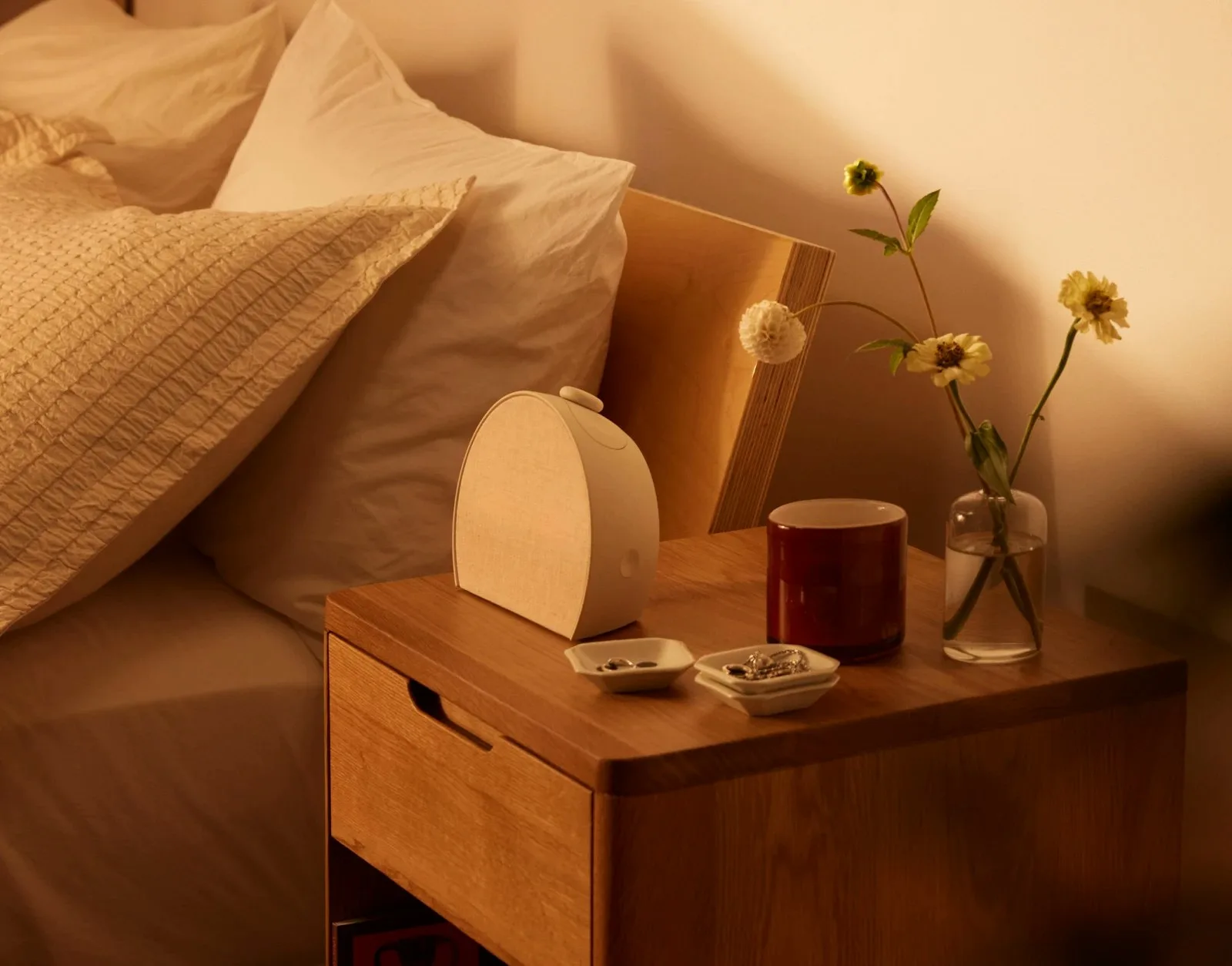
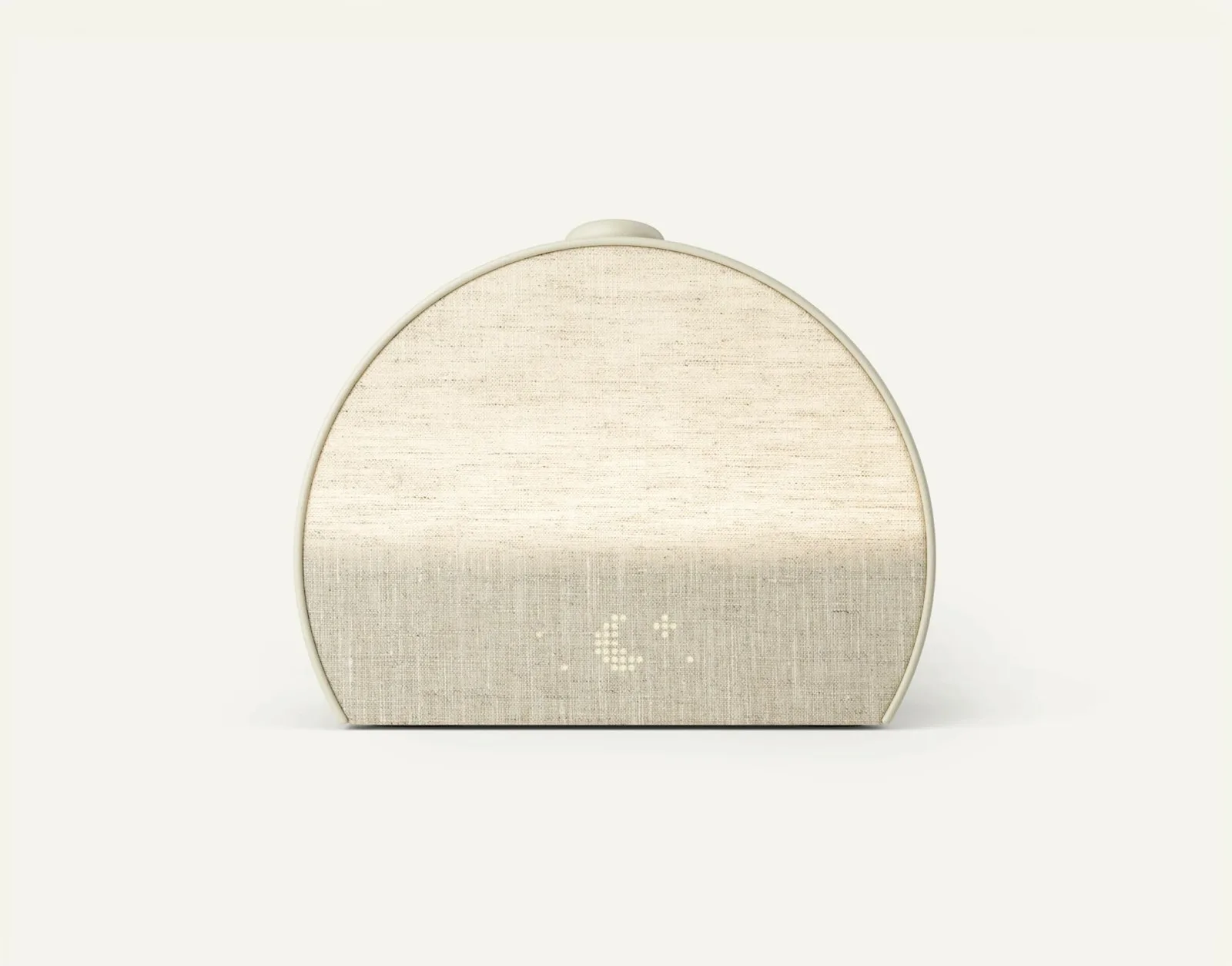
The Hatch Restore 3 ($169.99 list) combines a sunrise wake-up light, a sound machine and a dimmable clock in a fabric-covered body about 7.5 inches wide, in Putty, Greige or Cocoa. You build routines in the free Hatch Sleep app, for example dimming light and a sound at bedtime and a slow sunrise with chimes in the morning, and then run them from buttons on the clock, without picking up a phone. Sleep Foundation named it the best sunrise alarm clock of 2026. On Amazon it is sold by Hatch and shipped by Amazon.
Who it's for: someone who scrolls in bed and wants a reason to leave the phone in another room. Keep in mind: setup needs the app and a 2.4 GHz Wi-Fi network, and some sound libraries require Hatch+, at $5.99 a month or $59.99 a year; the sunrise alarm and basic sounds don't. Some reviewers find the app confusing at first.
Best without an app
2. Lumie Bodyclock Shine 300
Best for: Someone who wants a long, adjustable sunrise and simple buttons
A British wake-up light with sunrises up to 90 minutes, 15 sounds and a reading light.
See it at AmazonCheck the current price at the store.
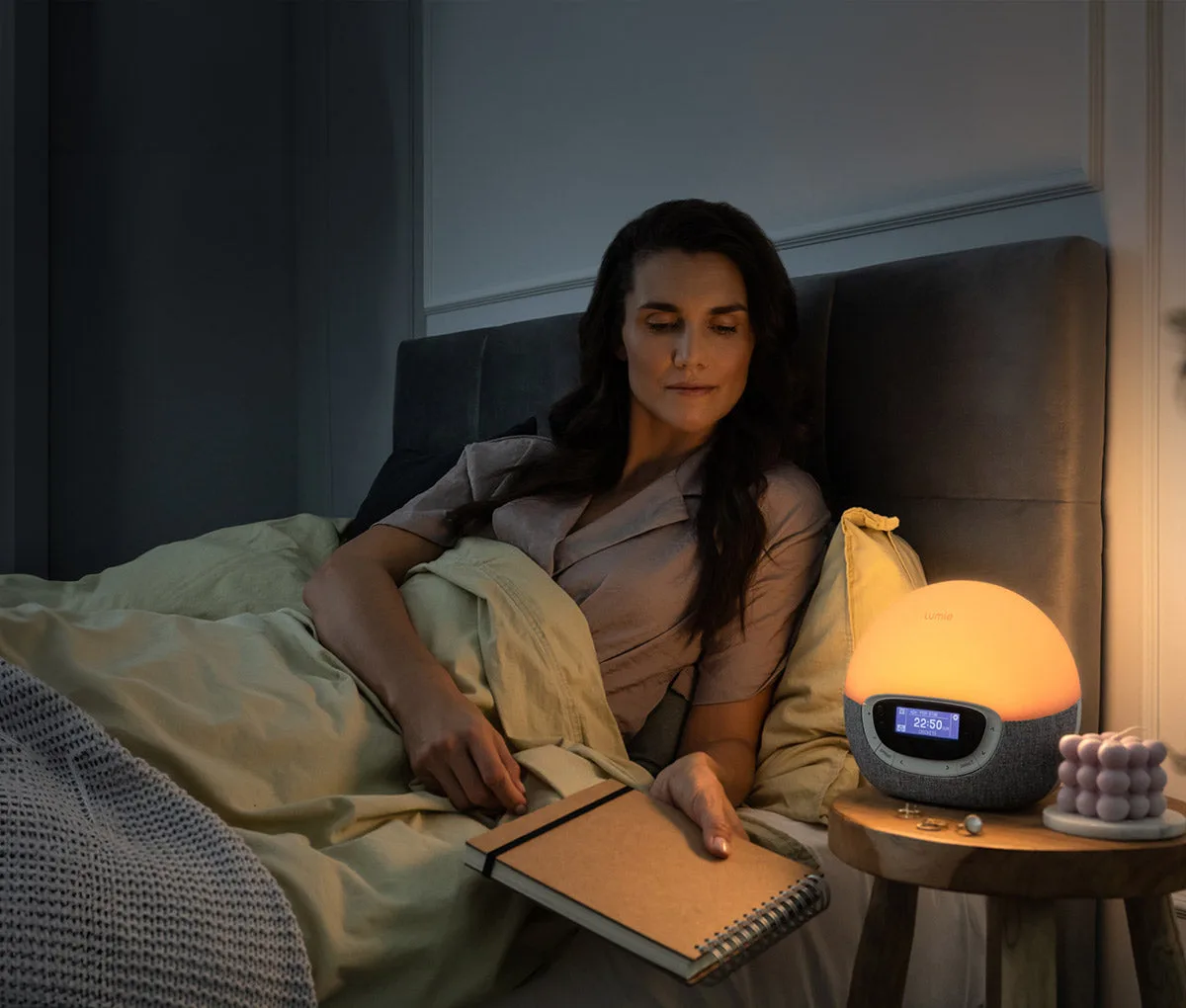
The Lumie Bodyclock Shine 300 ($169 on Lumie's US site) brightens with warm white, orange and red LEDs over 15 to 90 minutes, fades out at night with an optional sunset, and offers 15 sounds, from blackbirds and waves to white noise, plus FM radio. The display dims automatically or turns off, snooze is a tap on the top, and there's a 3-year warranty. It needs no app or Wi-Fi. On Amazon it is sold by Lumie and shipped by Amazon.
Who it's for: someone who dislikes apps, or a light sleeper who wants the longest, gentlest sunrise. Keep in mind: it is larger than the Hatch, about 21 cm wide, and some of the sounds, such as goats and a steam train, are more fun than restful.
Brightest
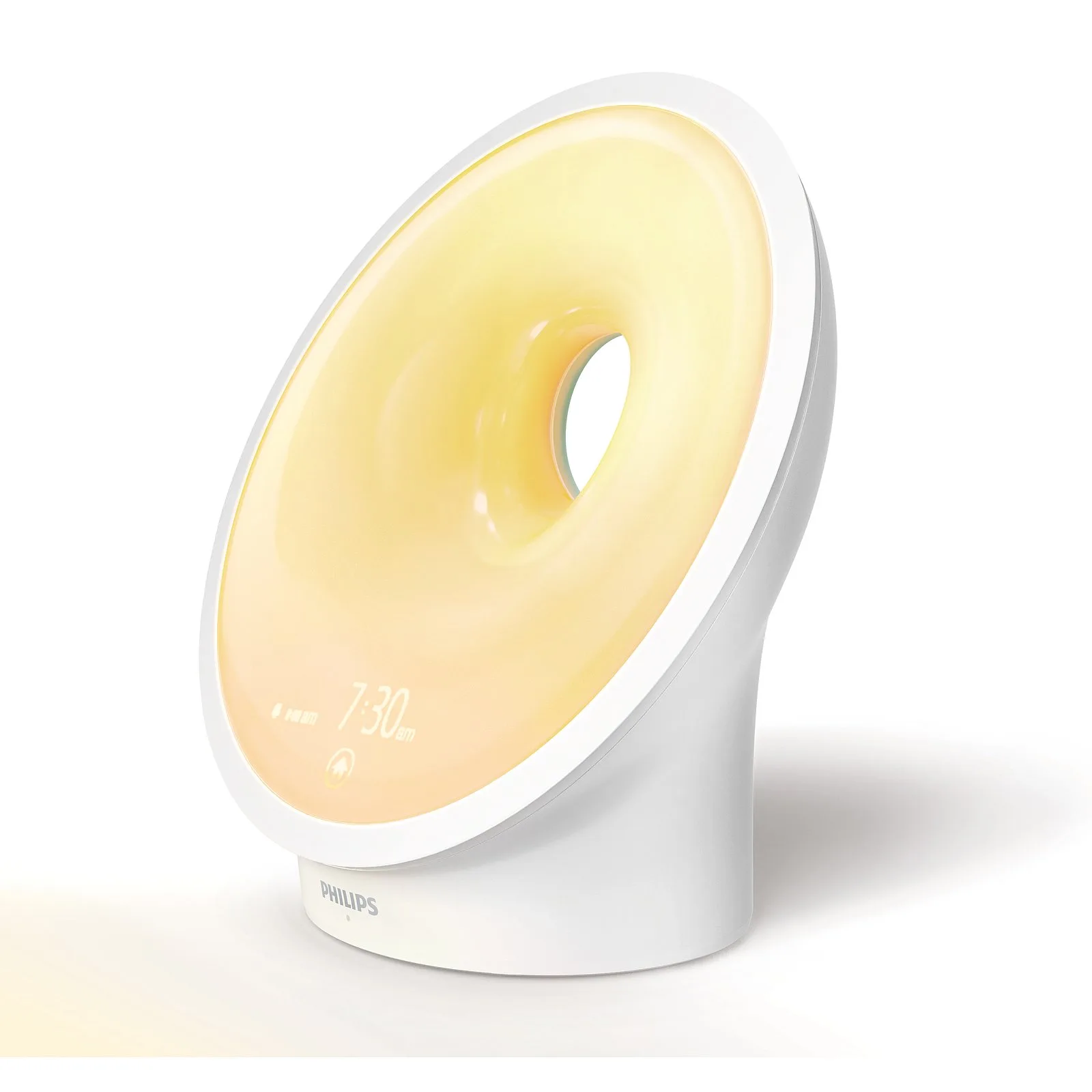
3. Philips SmartSleep Sleep and Wake-Up Light HF3650
Best for: Someone who struggles to wake in the dark and wants guided breathing at night
Philips's most complete wake-up light, with 310 lux, sunset and light-guided breathing.
See it at AmazonCheck the current price at the store.
The Philips SmartSleep HF3650 ($179.99 list) has a ring-shaped lamp that reaches 310 lux, a sunrise that by default lasts 30 minutes, a sunset with optional sound, and RelaxBreathe, a light that rises and falls to pace slow breathing at bedtime. It includes relaxation sounds and wake-up sounds and is sold by Amazon.com.
Who it's for: a heavy sleeper or someone who wakes before sunrise for work. Keep in mind: it is the biggest and most expensive Philips here, and its design is more clinical than cozy.
Best Philips value
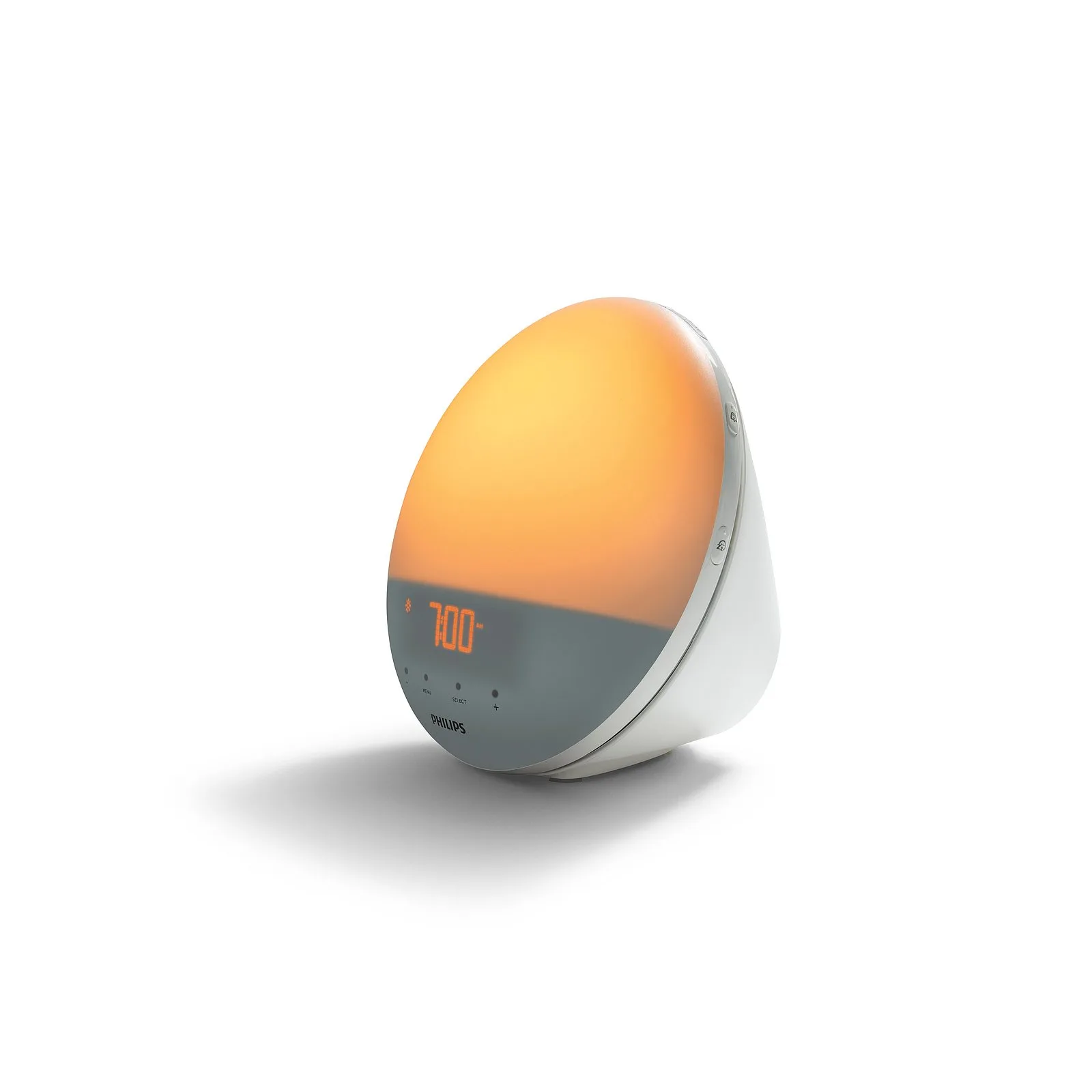
4. Philips SmartSleep Wake-up Light HF3520
Best for: Someone who wants a colored sunrise, radio and a reading lamp
A colored sunrise from red to yellow, 20 brightness levels, five sounds and FM radio.
See it at AmazonCheck the current price at the store.
The Philips HF3520 ($124.99 list) reaches 300 lux with 20 brightness levels, runs a sunrise of 20 to 40 minutes that moves from red through orange to yellow, has a sunset mode, five natural wake-up sounds, FM radio and tap snooze, and doubles as a reading lamp. On Amazon US it is currently sold by another seller, so the link opens a search; check the seller.
Who it's for: most people who want a proven wake-up light without an app. Keep in mind: the radio and sounds are basic; it is a light first.
Best budget
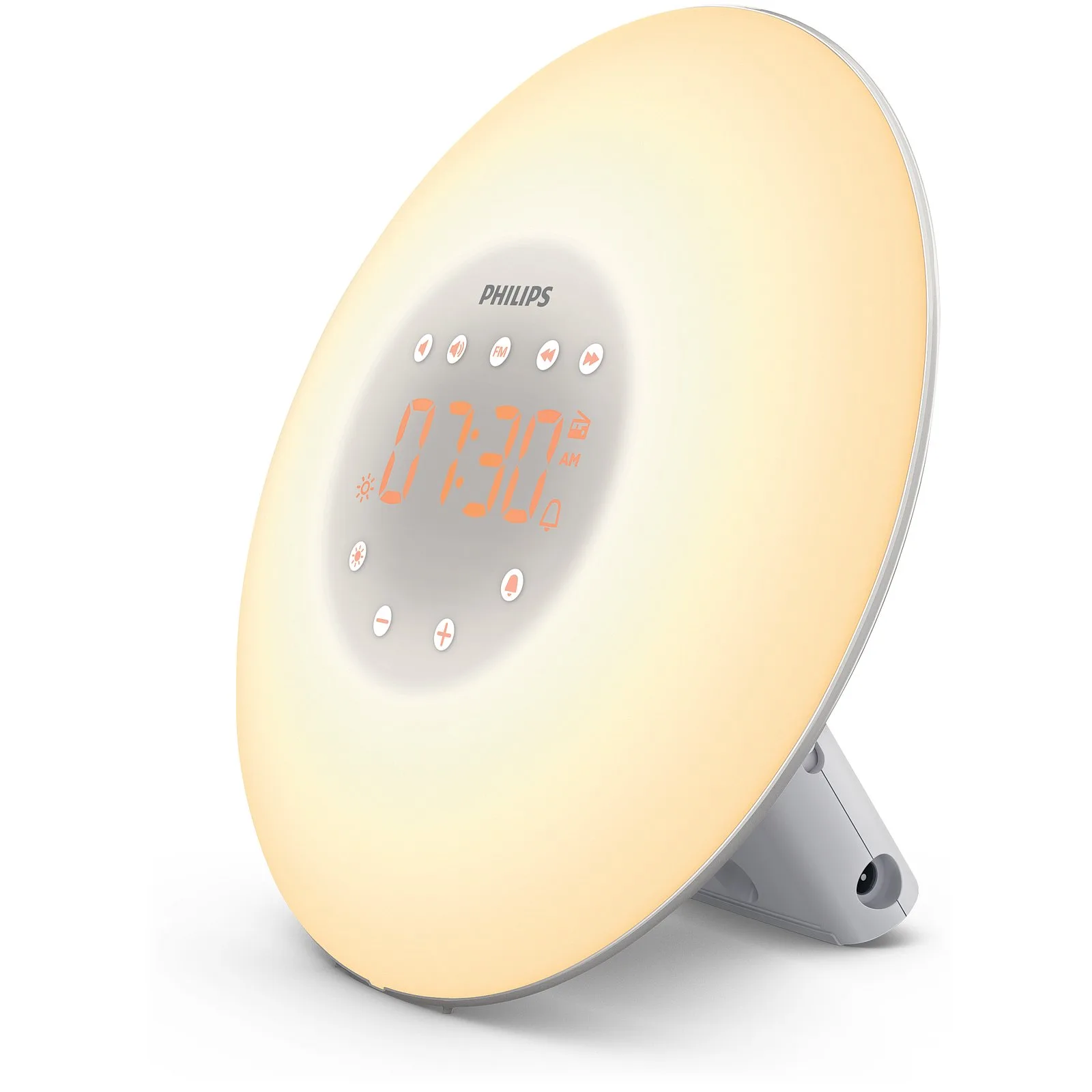
5. Philips Wake-up Light HF3506
Best for: A first sunrise alarm, a student or a guest room
Philips's entry wake-up light, with a 30-minute sunrise, two sounds and FM radio.
See it at AmazonCheck the current price at the store.
The Philips HF3506 ($89.99 list) brightens over 30 minutes to 200 lux, with 10 brightness settings, two natural wake-up sounds and FM radio. It lacks the colored sunrise and sunset of the pricier models but keeps the essential idea: waking to light rather than to a buzzer. It can be hard to find on Amazon US, where we found no current listing, so the link opens a search; Philips also sells it on its own site.
Who it's for: someone who wants to try a wake-up light without spending much. Keep in mind: 200 lux is the dimmest here, so in a bright bedroom the effect is subtler.
What about sleep tracking or a clock without light?
Hatch's Sleep Clock ($249.99) adds contactless sleep tracking to the Restore 3's features, and Hatch says sleep data doesn't need a subscription. The Loftie Clock ($199.99) is popular as a phone replacement at the bedside, with more than 100 sounds and a two-phase alarm, but Loftie itself says it is not a sunrise alarm; its Loftie Lamp is.
Do sunrise alarms actually work?
Light is the strongest signal to the body's clock, and a gradual rise in light before the alarm makes waking feel less abrupt for many people, especially in winter when it is still dark at seven. They are not a treatment for insomnia or seasonal depression; a light therapy lamp at 10,000 lux, used after waking, is a different device. The best results come from a fixed wake-up time every day, weekends included.
Where should it go in the room?
Put it on the nightstand at head height, about 40 to 50 cm from the pillow, facing you. Blackout curtains help at night, but leave the light unobstructed; for more on that, see our guide to blackout or light-filtering curtains. If two people share a bed and wake at different times, a light on the earlier riser's side, set to a lower brightness, works best.
A sunrise alarm or smart bulbs?
Smart bulbs from Philips Hue and others can also be scheduled to brighten in the morning, and they light the whole room. But they depend on an app and a hub or Wi-Fi, they don't replace the alarm sound, and a ceiling light shining down is less pleasant than a lamp at the bedside. A dedicated wake-up light is simpler to give and to use: plug it in, set the time, done. Bulbs make more sense for someone who already has a smart home.
Is it a good gift for a teenager?
Often, yes. Teenagers' body clocks naturally run late, and school mornings in winter start in the dark. A wake-up light won't change that biology, but it makes the first minutes easier and gives a reason to charge the phone outside the bedroom, especially with a model like the Hatch that also plays sounds at night. For a teenager, a simple model with buttons, such as the Philips HF3520, avoids another app to manage.
Which one at each price?
Under $100: the Philips HF3506, $89.99.
Around $125: the Philips HF3520, $124.99.
Around $170 to $180: the Hatch Restore 3, $169.99, the Lumie Bodyclock Shine 300, $169, or the Philips HF3650, $179.99.
Before you order
Check whether the person is comfortable with an app and has 2.4 GHz Wi-Fi before choosing the Hatch. All of these plug into the wall, so make sure there's an outlet near the bed. Amazon US usually extends its return window for gifts bought during the holidays; check the exact dates on the listing before you buy.
How to get it right
For a calmer bedtime and a gentle wake-up, the Hatch Restore 3; for no app and the longest sunrise, the Lumie Bodyclock Shine 300; for the brightest light, the Philips HF3650; for value, the Philips HF3520; and on a budget, the Philips HF3506.