How a book gets from manuscript to bookshop
Between the last line an author writes and the copy on the shelf there are months of work and a dozen people. A walk through the process.
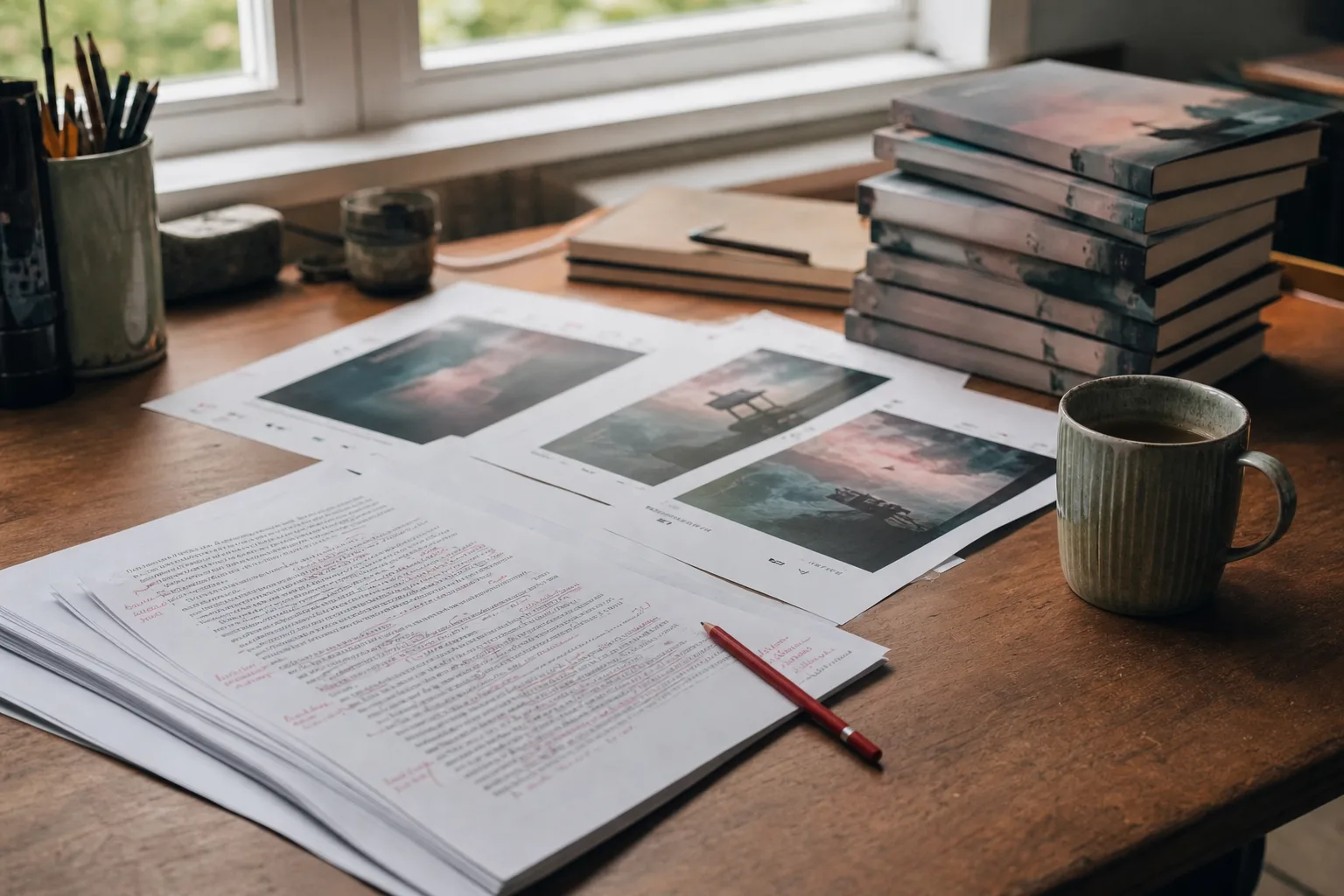
A finished manuscript is not yet a book. Before it reaches a bookshop it will be read, questioned, corrected, designed, printed, stored, shipped and sold, usually over a year or more. Along the way, dozens of people will touch it: agents, editors, designers, printers, sales representatives, booksellers. Most of them never appear on the cover.
This guide follows a book's journey from the author's desk to the shelf, and explains some of the rules and habits of publishing that readers rarely see.
Before the manuscript is finished
Fiction and non-fiction often travel different routes. A first novel is usually sold as a complete manuscript, because publishers want to know that the author can finish a story and sustain it over hundreds of pages. Non-fiction, by contrast, is frequently sold on a proposal: a document describing the book, its audience and its chapters, together with one or two sample chapters. The author then writes the rest after signing a contract, sometimes with the publisher's money supporting the research.
Established authors may sell a book on the strength of a short description or simply their name. But for most writers, the first step is to finish the best version of the book they can manage, then go looking for someone to publish it.
Finding an agent, or a publisher
In the English-speaking world, most authors first need a literary agent. They send a query letter, a short pitch, often with the opening pages. Agents receive hundreds of these, choose the writers they believe in and then pitch their books to publishers, taking a commission, commonly around 15 percent of the author's earnings in their home market. A good agent also negotiates the contract, protects the author's rights and advises on their career.
In Spanish and German publishing, agents exist and are growing in importance, but many authors still submit directly to publishers. Unsolicited manuscripts form what English-speaking editors call the slush pile, and it can take months to get an answer, if one comes at all.
Rejection is the norm. A famous example is the first Harry Potter novel, which was turned down by around a dozen publishers before the small London house Bloomsbury accepted it and published it in 1997. Many celebrated writers have similar stories, which is why persistence is one of the most common pieces of advice given to new authors.
The contract: advances and royalties
When a publisher says yes, it offers a contract. The two key terms are the advance, money paid before publication, and the royalties, a percentage of each copy sold. For printed books, royalty rates are often around ten percent of the cover price or of the publisher's receipts, depending on the country and format, and are usually lower for cheap paperbacks.
The advance is deducted from future royalties, so the author receives nothing more until the book has earned out, meaning it has sold enough copies for the royalties to exceed the advance. Many books never earn out; the advance is the only money their authors see. This is one reason why most writers cannot live from their books alone.
Contracts also deal with subsidiary rights: translations into other languages, audiobook editions, serialisation in newspapers, and film or television adaptations. These rights can be valuable, and agents fight hard over who controls them.
The editor's work
The editor is the author's first professional reader and often their closest ally inside the publishing house. The first round, the structural edit, looks at the big picture: whether the story holds, whether a chapter should go, whether the argument is clear and the pace is right. Editors usually send a long letter with their thoughts, and the author revises, sometimes rewriting large sections.
Then comes the copyedit, line by line, checking grammar, spelling, consistency, facts and style. Did the character's eyes change colour between chapters? Is a date wrong? Does a word appear five times on one page? Finally, the proofreader reads the typeset pages, looking for the errors that slipped through, as well as problems created by the layout itself, such as awkward line breaks.
Some publishers also use sensitivity readers, people with particular knowledge or experience who check how certain communities or topics are portrayed. Books, unlike many magazines, are rarely fact-checked line by line, which makes careful authors and editors all the more important.
A good editor makes a book more like itself, not more like the editor.
Title and cover
The title may change during the process. Publishers think about how it sounds, how it looks on a small screen in an online shop, whether it is easy to remember and whether another book already uses it. Translated editions often receive completely different titles, chosen to work in the new language and market.
A designer creates the cover, often the most debated decision of all, because it has a few seconds to persuade a stranger. Covers follow genre signals that readers recognise instantly: certain fonts and colours suggest romance, others crime or literary fiction. The same book often has very different covers in different countries, reflecting local tastes.
Making the object
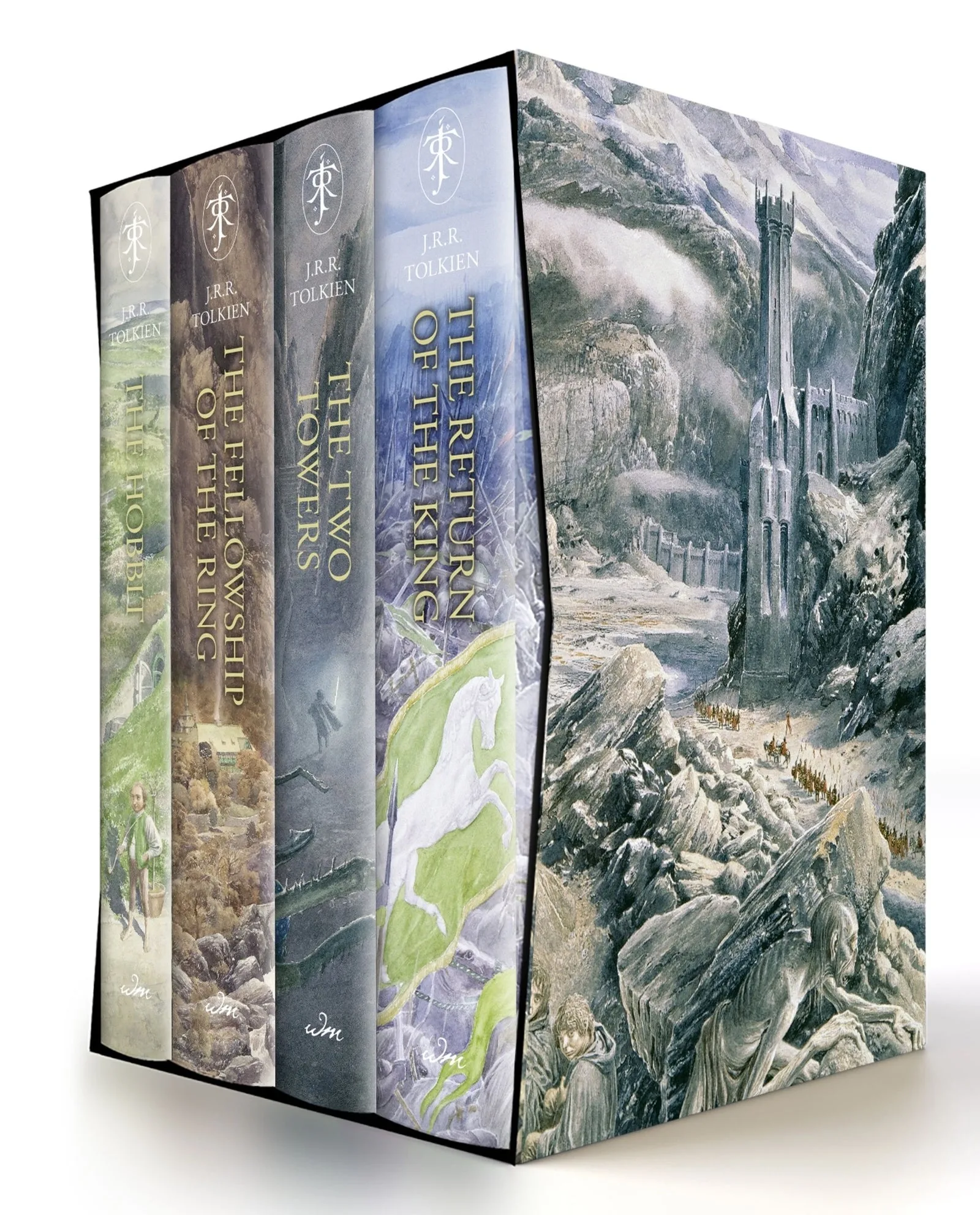
Meanwhile, the book becomes a physical thing. The text is set in a typeface and laid out on pages by a typesetter. Decisions are made about the format, from hardback to paperback, the size of the page, the paper and the binding. Printed books are made in sections called signatures, sheets folded into groups of pages, often sixteen or thirty-two, which is why page counts tend to be multiples of those numbers and why a few blank pages sometimes appear at the end.
The book receives an ISBN, the International Standard Book Number, which identifies each edition and format in shops and libraries around the world. Since 2007 it has had thirteen digits. A hardback, a paperback, an ebook and an audiobook of the same title each have their own ISBN.
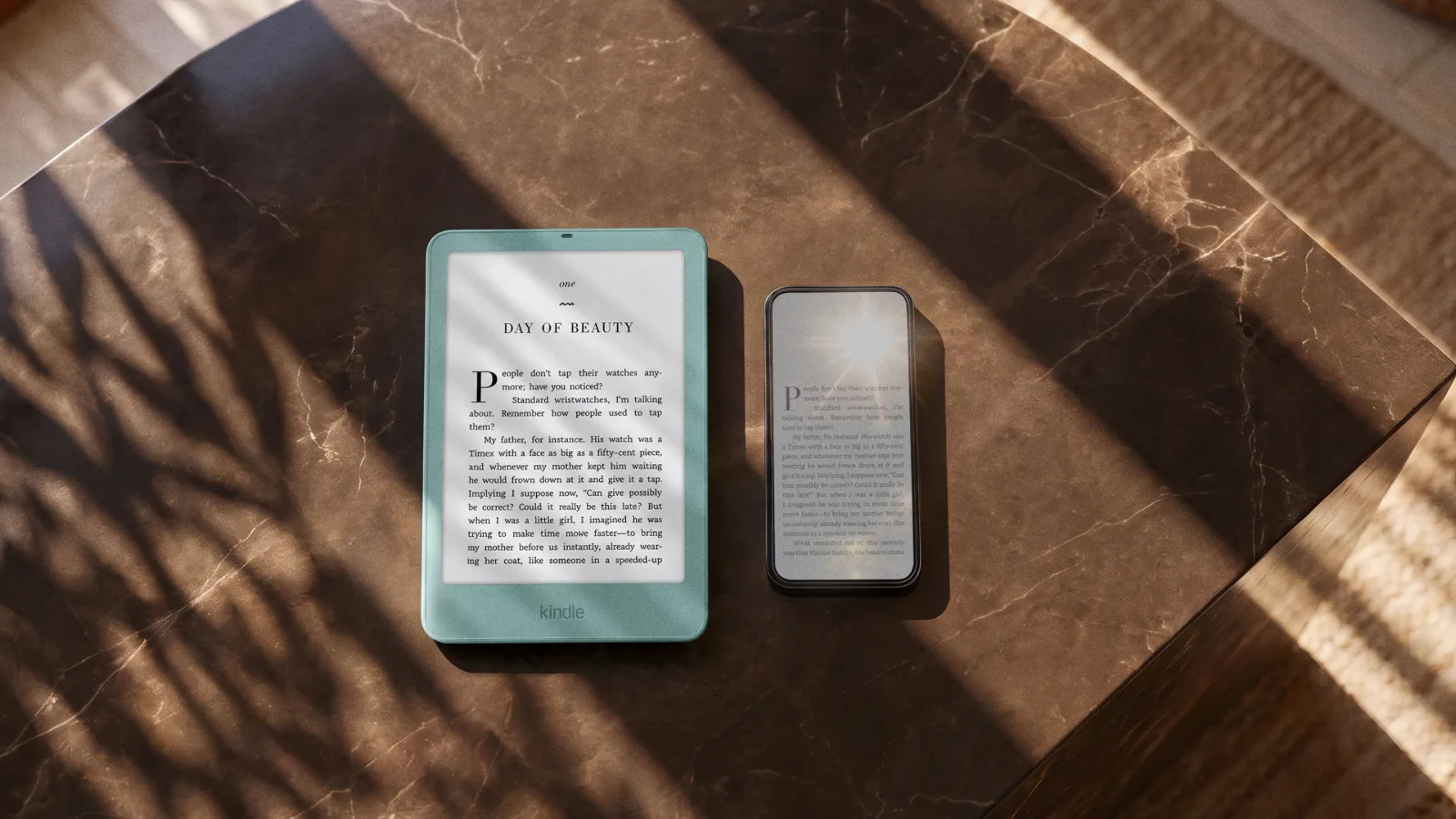
Most new books are now also published as ebooks and often as audiobooks, each with its own production process. Ebooks are usually built in a format called EPUB, which lets the text reflow to fit any screen. In the European Union, the European Accessibility Act, in force since June 2025, requires new ebooks sold to consumers to be accessible, for example to readers using screen readers, which has pushed publishers to add proper structure, image descriptions and navigation to their digital editions.
Selling the book before it exists
Months before publication, the publisher's sales team presents the coming season's books to booksellers, often using catalogues, early proofs and short pitches. The publisher's metadata, the title, description, keywords, categories and price supplied to retailers and databases, is now almost as important as the cover, because it determines how a book appears in online searches.
Early copies, called proofs or advance reading copies, go to reviewers, booksellers, journalists and influencers. A strong response from booksellers can lead them to order more copies and display the book prominently.
Rights are also sold internationally. The Frankfurt Book Fair, held every October, is the largest marketplace in the world for publishing rights, where publishers and agents meet to buy and sell translation deals. In the Spanish-speaking world, the Guadalajara International Book Fair in Mexico, held at the end of each year, is the most important meeting point.
The print run
The publisher then decides the print run: how many copies to print at first. Printing too many fills a warehouse and leads to costly returns; printing too few leaves shops empty just when readers are looking for the book. Most books are printed by offset printing in runs of thousands. For small quantities and older titles, publishers increasingly use print on demand, in which a copy is printed only when someone orders it.
The time from a signed contract to publication is commonly a year or more. Part of the reason is the work described above; part is the publishing calendar, as publishers spread their books across seasons so that each has a chance to be noticed.
The road to the shelf
Distributors and wholesalers store the books and deliver them to shops. In Germany, a highly efficient system of wholesalers means that bookshops can often obtain almost any book in print by the next day.
Bookshops can usually return unsold copies to the publisher for credit, a practice that became widespread in the 20th century to encourage shops to take risks on new titles. That is why a book is not really "sold" until a reader buys it, and why publishers worry about returns as much as about orders.
Fixed book prices
In some countries, the law fixes the price of new books, so the same title costs the same in a small bookshop, a large chain or an online store. The idea is to protect independent bookshops and the diversity of what gets published, by preventing big retailers from using steep discounts on bestsellers to drive smaller shops out of business.
1. **Germany** has a fixed book price law, the Buchpreisbindung, which requires publishers to set a binding retail price.
2. **Spain** has fixed prices too, with limited discounts allowed, usually up to five percent.
3. **Mexico** introduced a single price for new books in its 2008 reading and book law.
4. **France** has had a similar law since 1981, while the **United Kingdom** abandoned its system in the 1990s and the **United States** has never had one.
Economists and publishers still debate the effects, but countries with fixed prices tend to have more independent bookshops.
Launch and after
Publication day is the start, not the end. Publicists arrange interviews, reviews, readings and festival appearances. Bestseller lists, prizes and word of mouth can transform a book's fortunes. In recent years, readers sharing recommendations on social media, especially short videos tagged BookTok, have turned some titles, including older ones, into bestsellers years after their first publication.
A successful hardback is often followed by a cheaper paperback around a year later, and by translations into other languages. Less successful books may be remaindered, sold off cheaply, or eventually pulped. When a book goes out of print, many contracts allow the rights to return to the author, who can then republish it elsewhere.
A second journey: translation
When a foreign publisher buys the translation rights, the book starts its journey again in a new language. A literary translator is hired, usually paid a fee based on the length of the text and sometimes a small share of sales. Translating a novel can take many months, and the translator makes thousands of decisions: how to render jokes, dialects, wordplay, period language and names that mean something in the original.
The translated text then goes through its own editing, copyediting and proofreading, gets a new title and cover, and is launched in a market that may know nothing about the author. Many countries offer translation grants, public funding that helps publishers cover the cost of bringing foreign literature to their readers, and that supports the work of their own writers abroad.
Translators have long campaigned for more visibility. In 2021, the writers and translators Jennifer Croft and Mark Polizzotti launched a campaign asking publishers to print translators' names on book covers, and many have since done so. The International Booker Prize, awarded in Britain for fiction translated into English, has split its prize money equally between author and translator since 2016, a recognition that a translated book has, in a real sense, two authors.
The other road: self-publishing
Some authors skip the traditional system entirely. Self-publishing platforms allow writers to release ebooks, print-on-demand paperbacks and audiobooks themselves, keeping a larger share of each sale but paying for or doing their own editing, design and marketing. Some genres, especially romance and fantasy, have large self-published markets, and a few self-published authors have become bestsellers or later signed with traditional publishers.
What your book has been through
Next time you open a new book, look at the copyright page. Somewhere among the small print are the names of the editors, translators, designers and printers, the ISBN and the date of the edition. Each detail is a step in a long relay that ended in your hands. The acknowledgements at the back, often skipped, usually tell part of the same story: an agent who believed in the book, an editor who saw what it could become, and many people who helped turn a file of words into an object you can hold.