The synthesizer: a short history of the instrument that changed pop
From Robert Moog's cabinets full of cables to Kraftwerk: how we learned to play electricity.
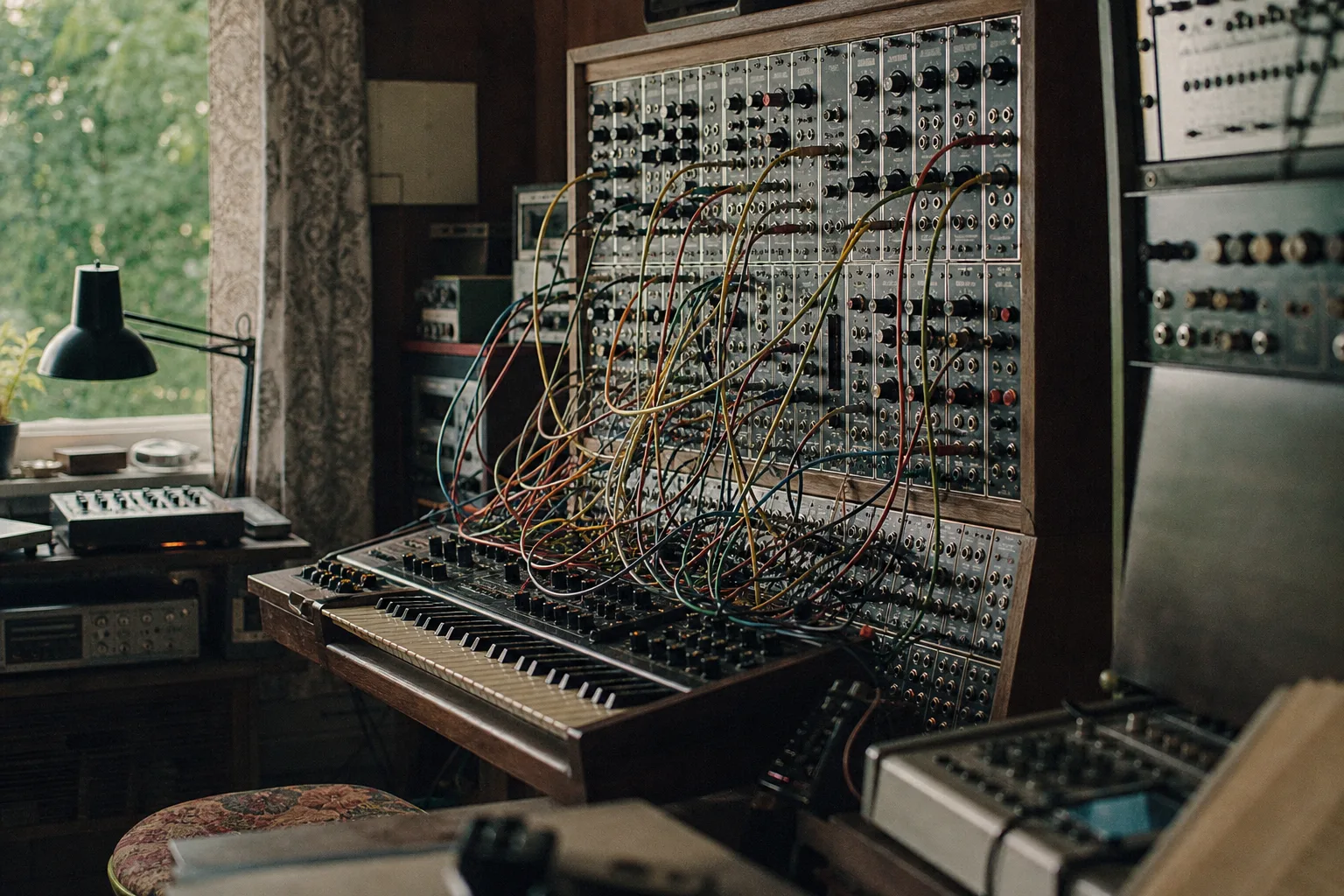
A synthesizer does not imitate sound: it manufactures it. It generates an electrical wave, filters it and shapes it. That idea transformed the music of the second half of the 20th century.
Moog and the keyboard
In 1964, American engineer Robert Moog presented a voltage-controlled modular synthesizer that, above all, could be played with a keyboard. They were huge cabinets full of cables, but for the first time a musician could use one without being an engineer.
The record that changed everything
In 1968, Wendy Carlos released Switched-On Bach: works by Bach performed note by note on a Moog. It was an unexpected hit, won three Grammys and convinced the public that this was a real instrument.
The synthesizer did not replace any instrument: it added sounds that had not existed before.
The portable one
The Minimoog (1970) fit in a suitcase and took the synthesizer onto rock, funk and jazz stages.
Kraftwerk
From Düsseldorf, the German group built a cool, danceable music with machines. Autobahn (1974) and Trans-Europe Express (1977) are at the origin of hip hop, techno and synth-pop.
The digital era
In 1983, the Yamaha DX7 and the MIDI standard made everything cheaper. Since then, almost every pop song has a synthesizer inside.
How it works, briefly
A classic analog synthesizer does three things. An oscillator generates an electrical wave: the raw sound. A filter removes or boosts frequencies, making it darker or brighter. And an envelope decides how each note begins and fades: all at once, like a piano, or little by little, like a violin. Combining those three parts yields almost any timbre.