The white shirt: a user's manual
It works for an interview, a dinner and a Sunday. Which fabric to choose, how it should fit and how to keep it white.
If you had to keep a single garment, many stylists would choose the white shirt. It belongs to no era and no gender, and improves almost everything around it.
A little history
For centuries it was underwear: only the collar and cuffs showed, and keeping them white meant you could afford to wash them often. That is where the expression "white-collar" comes from. In the 20th century, women took it from the men's wardrobe: Katharine Hepburn, Patti Smith on the cover of Horses (1975), Carolina Herrera, who made it her signature.
The fabric
Poplin: smooth, cool, the most versatile. Oxford: thicker and textured, casual. Twill: with a slight sheen and good drape. Linen: for summer, creases included. Always look for 100% cotton.
How it should fit
The shoulder seam right at the edge of the shoulder. Buttons should not pull when you sit. The cuff at the wrist. Everything else — fitted, straight or oversized — is a matter of taste.
A well-ironed white shirt makes old jeans look like a decision.
How to wear it
Tucked in with tailored trousers. Open over a T-shirt. Knotted at the waist. With the sleeves rolled twice.
Keeping it white
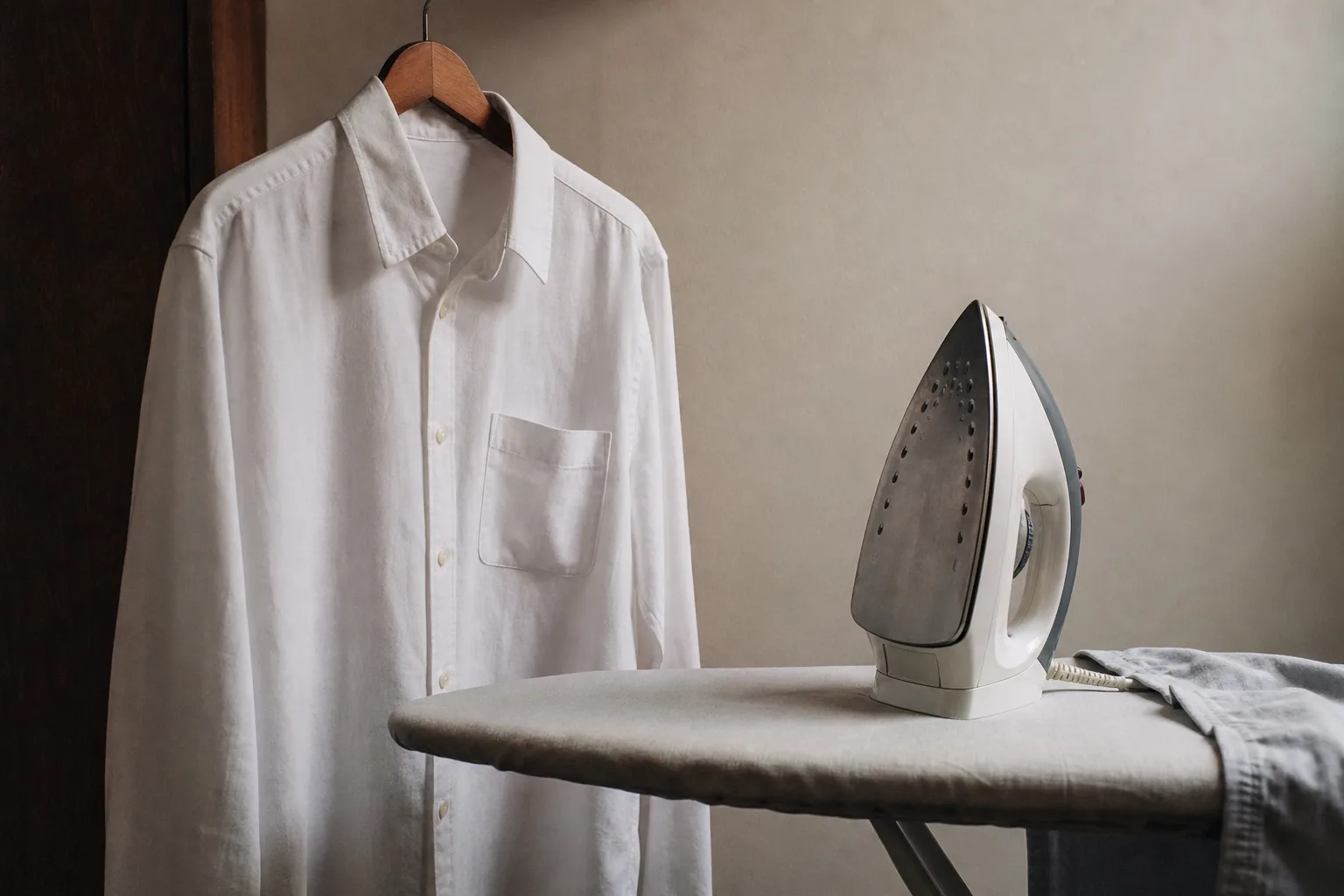
Wash it only with whites. Pre-treat collar and cuffs with soap. Avoid too much bleach, which yellows. And hang it in the sun: it is the best whitener.
Collars
The collar changes a shirt's character. The spread collar, with wide-set points, is the most formal and asks for a tie. The button-down, with its points fastened, was born for polo players and is the most casual. The band collar, with no points at all, looks clean and modern. If you will own only one, choose a classic collar with medium points: it works open and closed.