The little black dress: a hundred years of the perfect basic
In 1926, 'Vogue' published a Chanel sketch and compared it to a car. It has not left the wardrobe since.
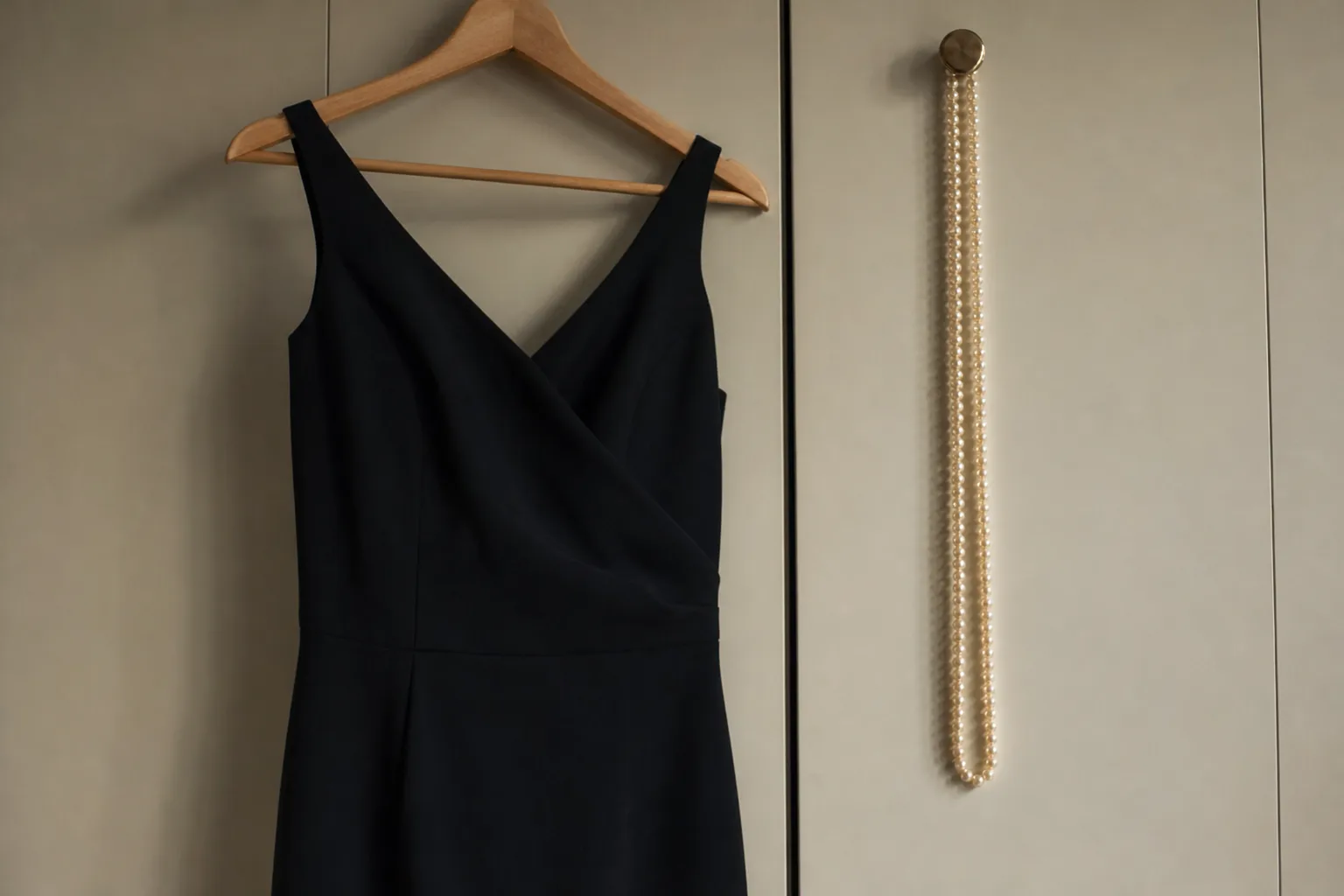
In October 1926, American Vogue published a drawing of a Coco Chanel dress: black, straight, long-sleeved, to the knee. The magazine called it "Chanel's Ford" because, like the Model T, it would be the uniform of every woman of taste. It was right.
A century later, the little black dress is so familiar that it is easy to forget how strange it once looked. Here is how a single sketch became the most durable garment in the modern wardrobe, and how to choose one that will last.
Why it was a revolution
Until then, black was the color of mourning and domestic service. Chanel made it a symbol of elegance. It was also practical: it hid stains, could be worn again and again and, with different accessories, worked for day and night.
The timing helped. After the First World War, many women had worked outside the home, wore shorter hair and needed clothes they could move in. The 1920s silhouette, loose and straight, suited them, and black made it look deliberate rather than plain. The comparison with the Ford was also about mass production: a simple design that could be copied at every price, from the couture salon to the department store.
Key moments
In 1961, Audrey Hepburn had breakfast outside Tiffany's window in a black dress by Hubert de Givenchy, and the image was fixed for good. In 1994, Diana, Princess of Wales, attended a gala in a short black dress by Christina Stambolian on the very night Prince Charles admitted his infidelity on television; the press named it "the revenge dress."
Between those two dates, and after, the list is long. Hollywood loved black because it photographed well, and the singer Édith Piaf made a plain black dress her stage uniform. One of the dresses from Breakfast at Tiffany's sold at auction in London in 2006 for more than £400,000. And in 1994 too, a few weeks before Diana, Elizabeth Hurley turned heads at a film premiere in a black Versace dress held together with gold safety pins. Every decade has reinterpreted it: shorter in the 1960s, minimalist in the 1990s, oversized today.
A black dress says nothing on its own. That is why it lets the wearer speak.
How to choose one
A fabric with some weight, so it hangs well. Length around the knee or midi. A simple cut: decoration dates it. And something you can wash without drama.
Before buying, check three things. First, the black itself: some blacks look gray or brownish in daylight, and the difference shows over time. Second, how it moves when you sit and lift your arms, since a dress you have to keep adjusting will stay in the closet. Third, the neckline: a round or boat neckline works with almost any necklace and with the collar of a coat, while a very marked design limits combinations. If you can only have one, choose sleeves or a shape that works under a jacket, so it serves in every season.
How to wear it
With sneakers and a denim jacket by day; with earrings and little else at night.
The accessories
The beauty of the black dress is that it changes with what surrounds it. With white sneakers and a denim jacket it works by day; with heels, earrings and red lipstick, by night. A string of pearls pulls it toward the classic; a wide belt, toward the current. Chanel championed costume jewelry without apology, mixed with the real thing: what mattered was not the price but the effect.
Taking care of it
Black fades with washing, sunlight and heat. Turn the dress inside out, use a gentle cycle in cold water and a detergent for dark clothes, and dry it in the shade. Brush off lint before an evening out. With these habits, a good black dress can easily last a decade, which may be the best argument for it: in a time of disposable fashion, it is one of the few garments that does not go out of style.