How sneakers conquered the world
From the 19th-century rubber sole to queues outside shops: the story of a shoe that started on the court and ended up at the office.
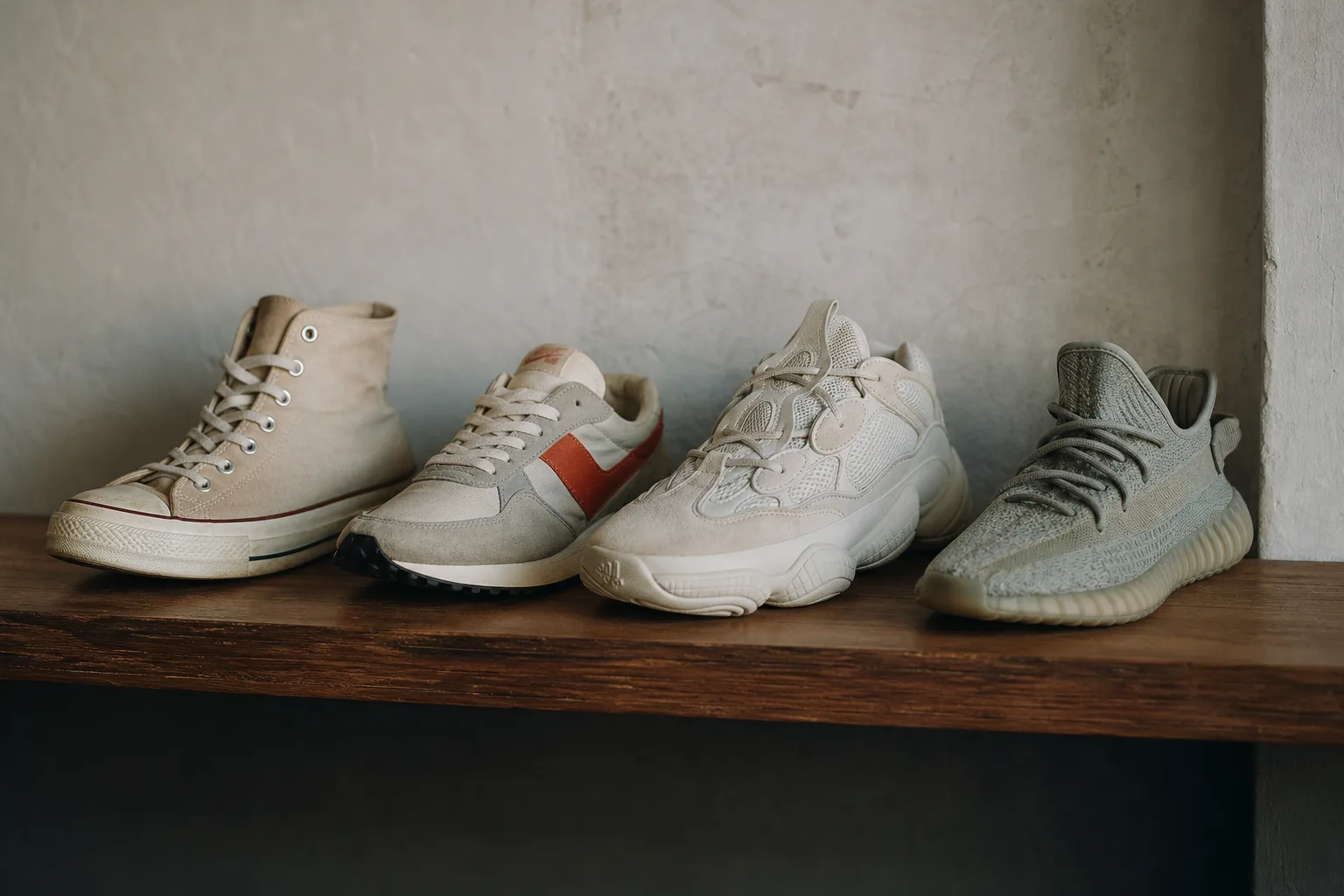
Fifty years ago, going to work in sports shoes was unthinkable. Today they are the best-selling footwear on the planet. The road has several stops.
Rubber
In the mid-19th century, the vulcanization of rubber made flexible soles possible. The first canvas shoes with rubber soles were so quiet that they were called sneakers: from sneak, to move stealthily.
In Britain they were known as plimsolls, because the band where the rubber met the canvas recalled the Plimsoll line painted on ships' hulls. In 1916 the US Rubber Company launched Keds, one of the first canvas sneakers sold on a large scale. They were cheap, light and meant for leisure, not yet for competition.
Basketball
In 1917 the Converse All Star was born. Soon after, player and salesman Chuck Taylor joined the company and his signature ended up on the ankle. It was the basketball shoe for half a century.
Taylor traveled the United States running basketball clinics and selling shoes from the trunk of his car, and in the 1930s his name was added to the ankle patch. Long after professionals moved to leather and cushioning, the canvas Chucks found a second life with musicians, skaters and students, and they are still made with almost the same design.
Two brothers
In the German town of Herzogenaurach, the Dassler brothers made sports shoes together until they fell out. In 1948 and 1949, Rudolf founded Puma and Adolf, Adidas. The town was split in two.
The rivalry pushed both to innovate. At the 1954 World Cup, West Germany won the final in Bern wearing Adidas boots with screw-in studs, which could be adapted to the wet pitch, and the brand's three stripes became famous worldwide. For decades, the town's residents were said to look at people's feet before starting a conversation, to know which side they were on.
Jogging
In the 1970s, running became fashionable. Nike, founded in Oregon, grew with soles inspired, legend has it, by a waffle iron.
The company was born in 1964 as Blue Ribbon Sports, founded by the runner Phil Knight and his former coach Bill Bowerman, and it began by importing Japanese running shoes. The Nike name and the swoosh arrived in 1971. Bowerman is the one who poured rubber into his wife's waffle iron to make a sole with more grip, and the Waffle Trainer, launched in the mid-1970s, rode the jogging boom. At the same time, other brands were taking sneakers in new directions: in the early 1980s, Reebok's Freestyle, designed for aerobics classes, became one of the first sports shoes aimed at women.
In 1985, a pair of red and black shoes for a rookie named Michael Jordan changed the business for good.
Jordan and hip hop
Air Jordans turned the sneaker into an object of desire. A year later, Run-DMC sang "My Adidas" and signed the first big deal between a sports brand and a rap group.
Jordan's line became a brand of its own, with new models each year that fans waited for like album releases. Run-DMC wore their Adidas Superstars without laces, a style that came from the street, and the song showed brands that music could sell as much as sport. From then on, the sneaker was no longer only about performance: it was about identity.
Today
Limited editions, resale and collaborations with luxury houses. And a useful reminder: the best sneakers are the ones that get worn.
Since the 2010s, the boundary between sport and luxury has nearly disappeared. Designers such as the late Virgil Abloh collaborated with Nike, fashion houses launched their own sneakers, and release days produce lines outside shops and online lotteries for the right to buy. A resale market has grown around the rarest pairs. Yet the most common sneakers in the street are still the simplest: white leather, canvas, a clean sole.
How to look after them
A pair of sneakers lasts longer with little effort. Clean them with a soft brush, lukewarm water and mild soap, and avoid the washing machine, which loosens soles and warps the inside. Air-dry them stuffed with paper, never on the radiator. Wash the laces separately. And alternate them with another pair: the foam in the sole needs time to recover its shape between one wear and the next.