Cristóbal Balenciaga: the couturier everyone called the master
The son of a seamstress from Getaria, he dressed half the world from Paris and closed his house when he felt his time had passed.
With the Balenciaga name back in the headlines, it is worth remembering the man. Coco Chanel said he was the only true couturier, because he could design, cut, assemble and sew a dress with his own hands. Christian Dior called him "the master of us all."
From Getaria to Paris
Cristóbal Balenciaga was born in 1895 in Getaria, a fishing village in the Basque province of Gipuzkoa. His mother was a seamstress. At twelve he was already a tailor's apprentice, and in 1917 he opened his first house in San Sebastián. The Civil War pushed him to Paris, where he set up on Avenue George V in 1937.
The often-told story of his beginnings involves a summer visitor to Getaria, the Marquise of Casa Torres, an aristocrat who let the boy copy one of her Paris suits and became his first patron. In San Sebastián, then the summer resort of the Spanish court, he dressed the aristocracy and travelled regularly to Paris to see the collections. In the 1930s he opened houses in Madrid and Barcelona under the name EISA, taken from his mother's surname, Eizaguirre, and kept them running after he moved to France.
What he invented
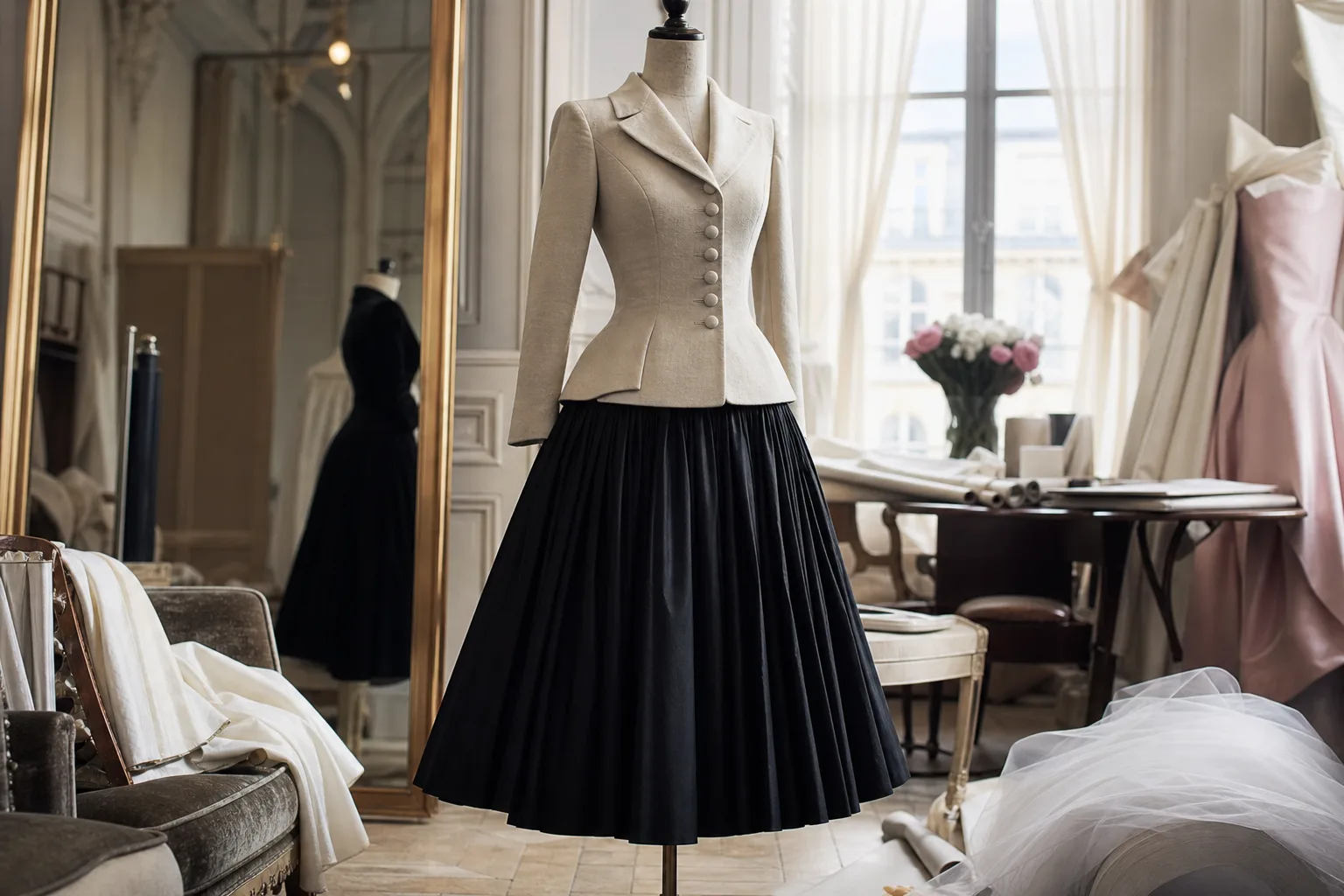
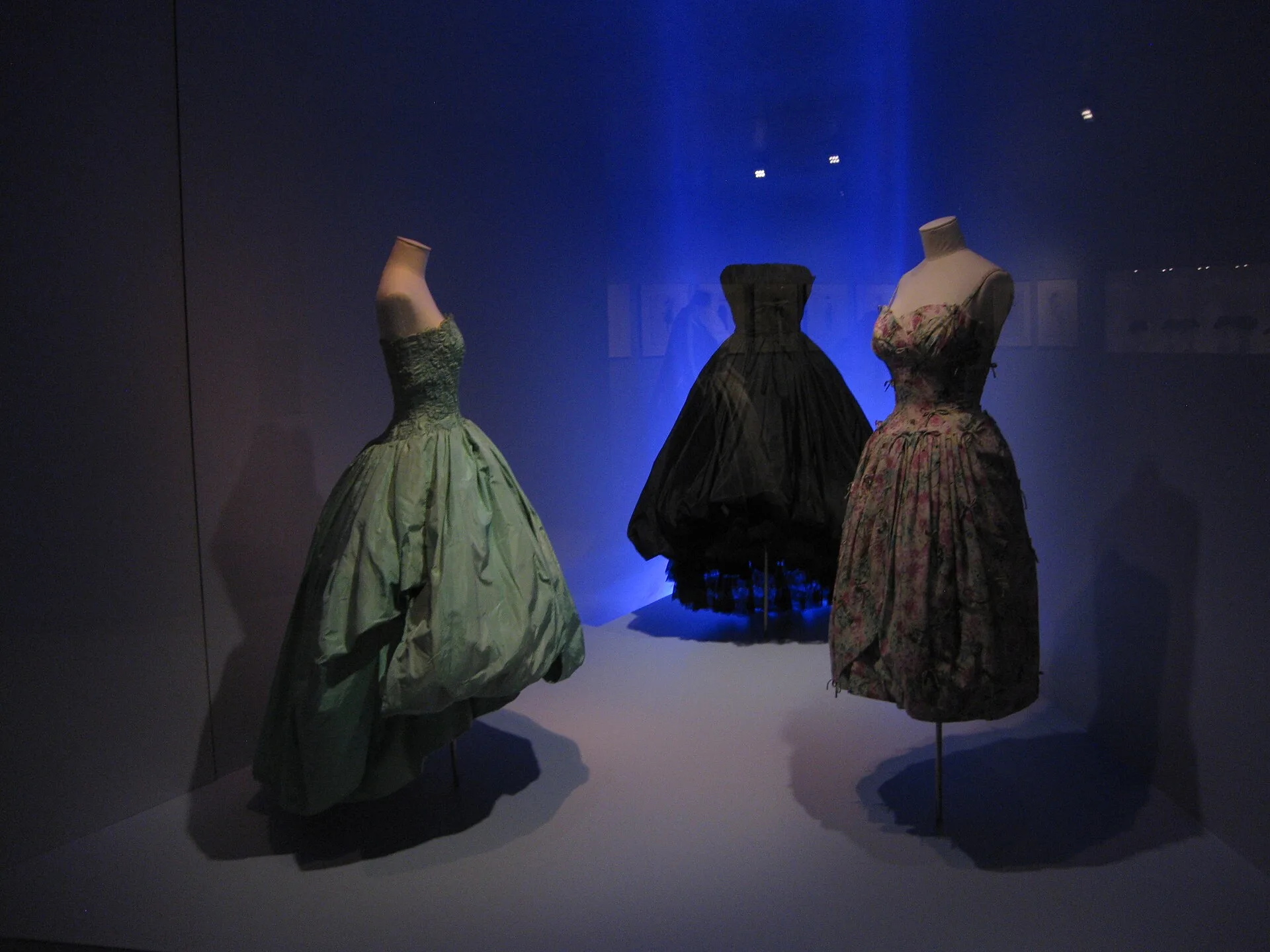
While Dior cinched the waist, Balenciaga freed it. His are the barrel line (1947), the tunic dress (1955), the sack dress (1957) and the baby doll (1958): shapes that stand away from the body and wrap it like a sculpture.
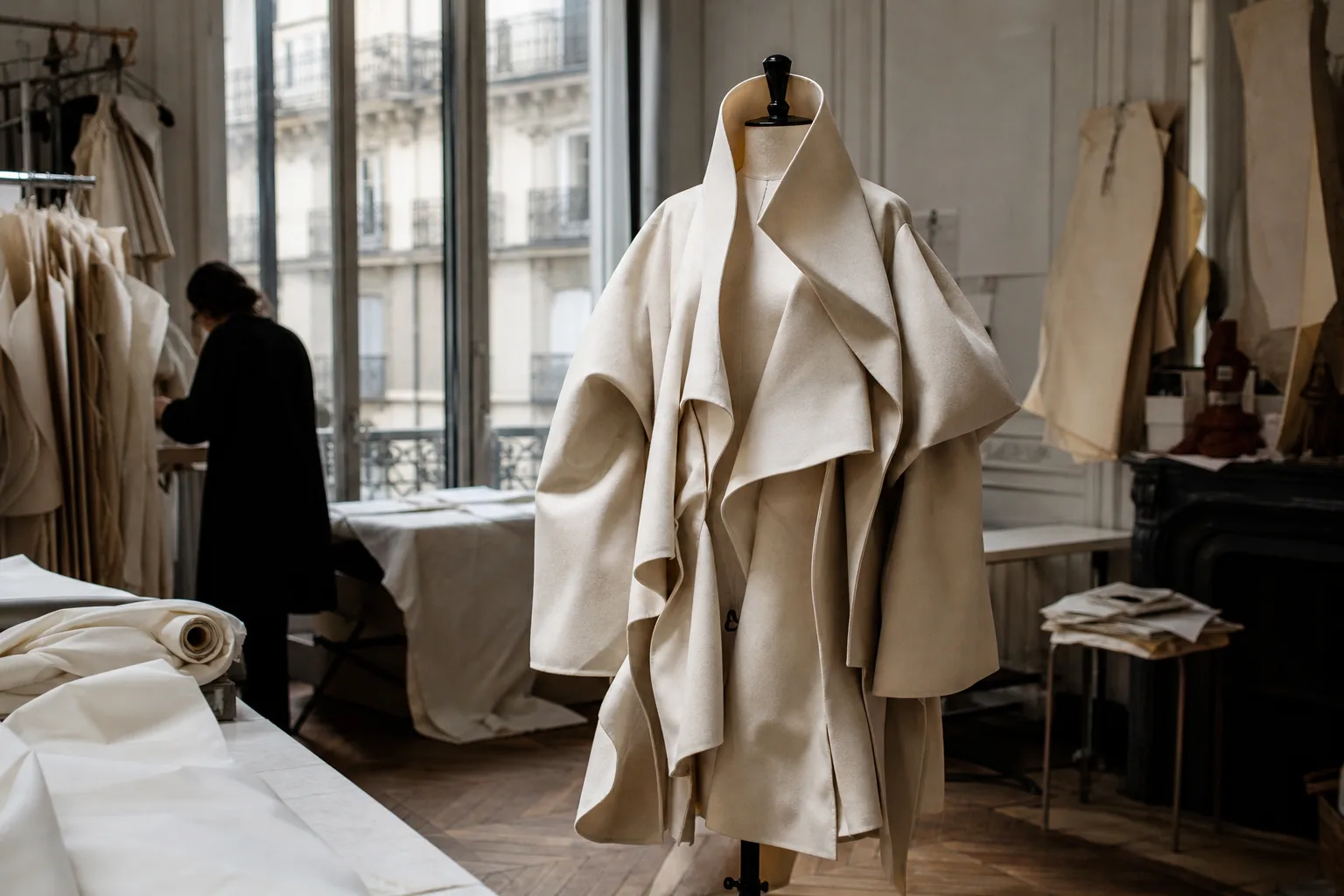
To build those shapes he needed fabrics that held their form. With the Swiss textile company Abraham he developed gazar, a stiff silk that could stand away from the body without collapsing. He was obsessed with sleeves, which he took apart and remade again and again until they moved perfectly with the arm, and with collars set slightly away from the neck to lengthen it. Many of his dresses have a single seam, or almost none visible.
His dresses look simple. Behind them is an engineering of seams almost nobody has managed to repeat.
The roots
Zurbarán's blacks, Goya's lace, the ruffles of flamenco dress: his Spain is in all his collections.
There is also religion, in the capes and volumes borrowed from the habits of priests and nuns, and bullfighting, in the boleros and embroidery of the matador's suit. Balenciaga turned those references into something modern without copying them literally: the black of his evening dresses comes from Spanish painting, but the cut belongs to the 20th century.
The clients
His salon dressed queens, actresses and the richest women in Europe and the Americas. He made the wedding dress of Fabiola, queen of the Belgians, in 1960, and his clients included Mona von Bismarck and Bunny Mellon, who stayed loyal to him for decades. Several of the great names of the next generation trained in his workshops, among them Hubert de Givenchy, André Courrèges, Emanuel Ungaro and Oscar de la Renta.
The end
In 1968, with the rise of ready-to-wear, he closed his houses without warning. He died in 1972.
He saw no point in continuing in a world of clothes made in series, and he did not want to adapt. He came out of retirement only once, to make a wedding dress shortly before his death, and he is buried in Getaria, the village where he was born.
Where to see him
The Cristóbal Balenciaga Museum opened in Getaria in 2011 and holds thousands of pieces.
The museum stands on the hill above the port, next to the palace where the Marquise of Casa Torres spent her summers, and Givenchy was involved in the project from its early days. Its rotating exhibitions show how the master's shapes evolved, and a visit can be combined with a walk through the village and a lunch of grilled fish, Getaria's other great tradition.
What they said about him
Balenciaga gave almost no interviews and never came out to take a bow after his shows, but his peers spoke for him. Christian Dior called him "the master of us all." Coco Chanel said he was the only one capable of designing, cutting, assembling and sewing a dress from start to finish. And Hubert de Givenchy, his friend and disciple, always regarded him as his reference. Rarely has a profession been so much in agreement.