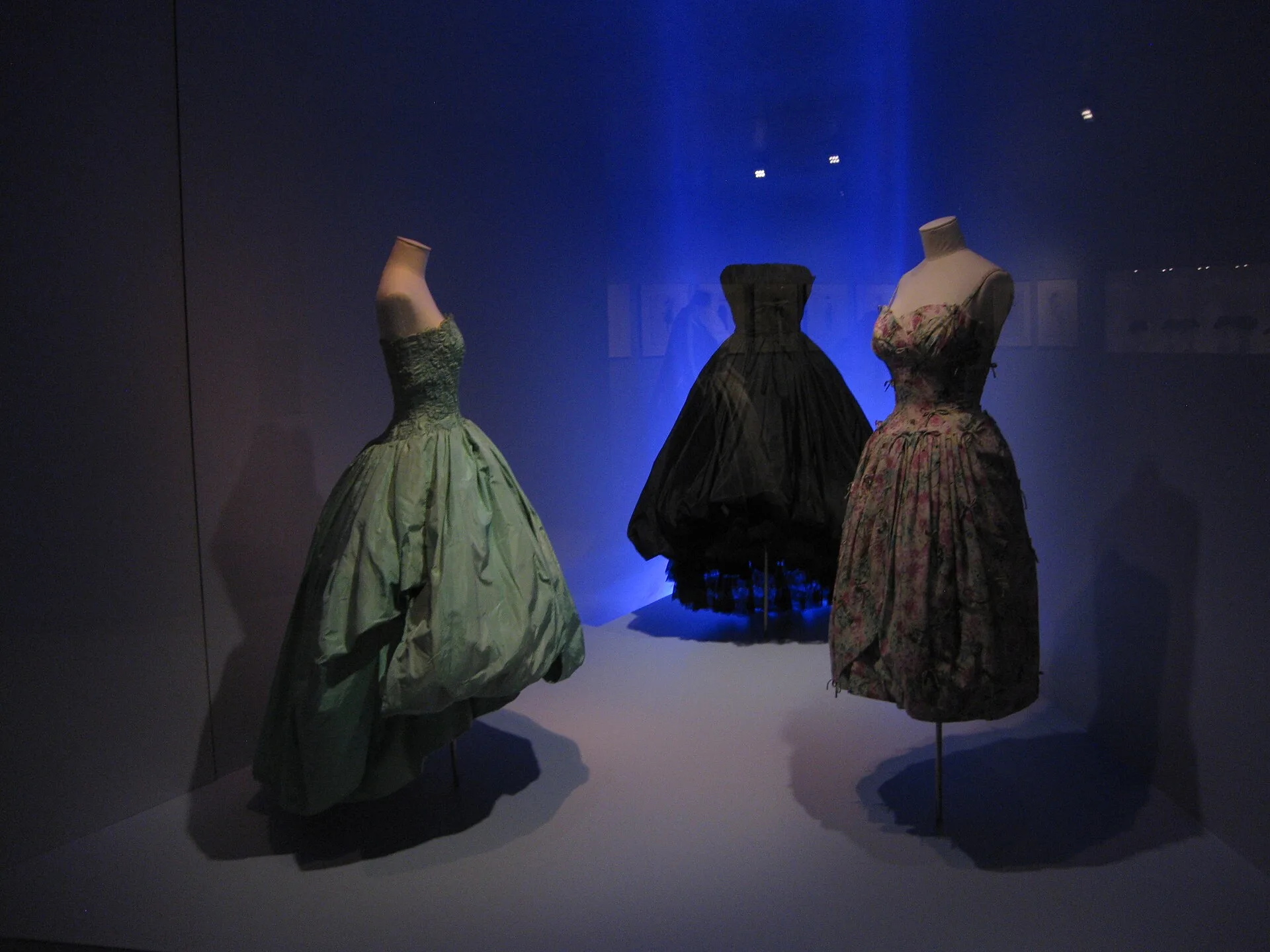
Dior's 'New Look': the skirt that scandalized the postwar years
On February 12, 1947, a first-time couturier used yards and yards of fabric while Europe still had ration books.
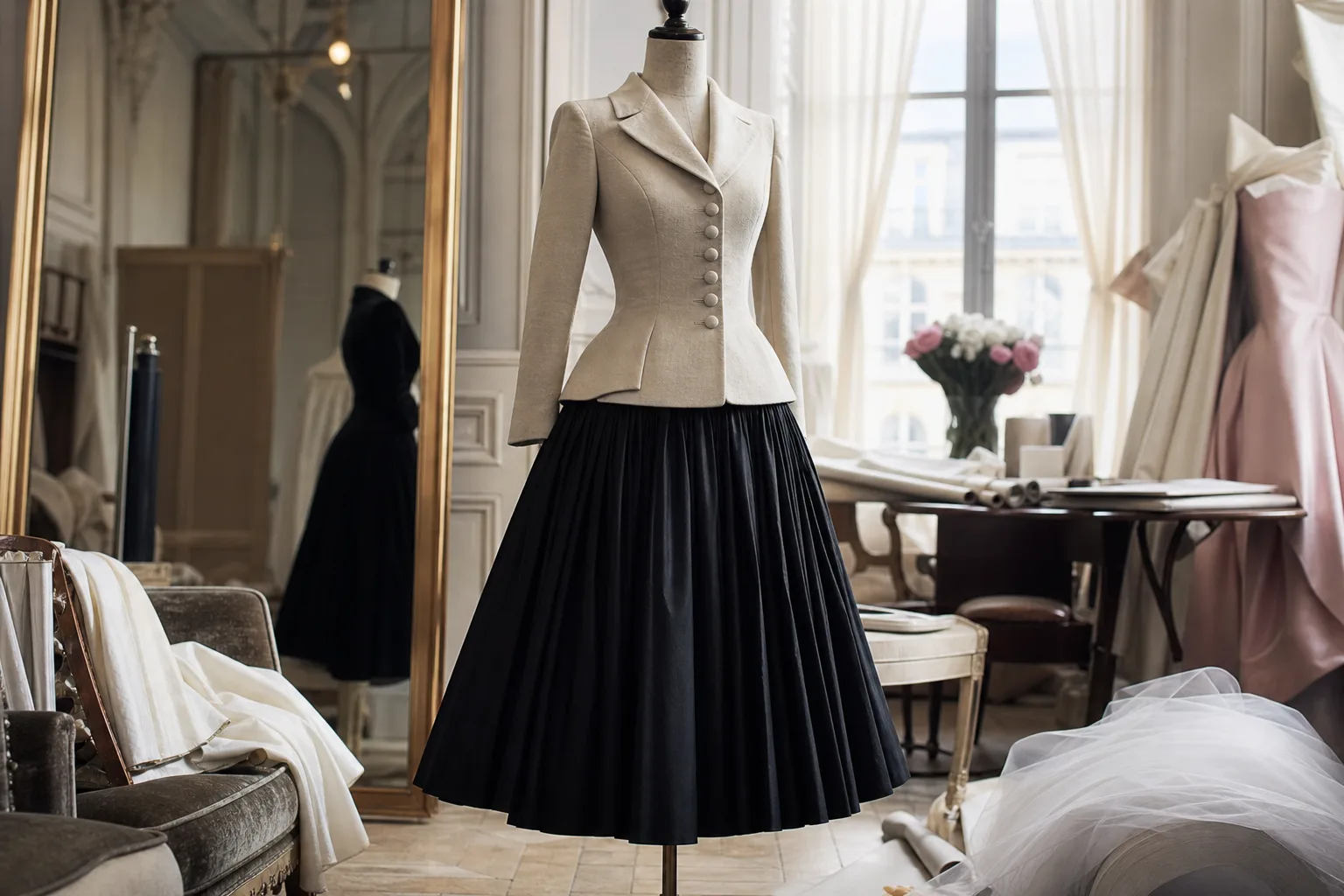
Paris, February 12, 1947. At 30 Avenue Montaigne, Christian Dior, aged 42, presents his first collection. The models walk in with soft shoulders, wasp waists and very full skirts to mid-calf. Afterwards Carmel Snow, editor of Harper's Bazaar, tells him: "It's quite a revolution, dear Christian. Your dresses have such a new look." The name stuck.
The silhouette
The emblematic piece is the Bar suit: a cream shantung jacket, fitted and padded at the hips, over a black pleated skirt. A single skirt could take more than twenty meters of fabric.
Why it scandalized
During the war, clothes had become short, straight and austere out of necessity. In 1947 rationing was still in force in France and Britain. Using so much cloth struck many as a provocation; there were protests and even attacks on models in the street.
Dior said he wanted to give women back the pleasure of dressing. His critics replied that he was giving them back the corset.
Why it won
After years of hardship, there was a hunger for luxury. American clients queued up. Within a few years the house of Dior accounted for a huge share of French couture exports, and Paris regained its throne.
The debate it left
Chanel, who returned in 1954 with her comfortable suits, detested it. That tension between fantasy and freedom of movement is alive every season.
The end
Dior died in 1957. He was succeeded by a 21-year-old assistant: Yves Saint Laurent.
Where to see it
The original Bar suit, with its raw silk jacket and pleated black skirt, has been preserved and shown in major museums. In Paris, La Galerie Dior, next to the historic headquarters on Avenue Montaigne, traces the history of the house. And in Granville, in Normandy, the designer's childhood home is now the Christian Dior Museum, with a garden above the sea that inspired several of his perfumes.