The capsule wardrobe: fewer clothes, more combinations
About thirty garments that go together can dress you for a whole season. How to start without throwing out half your closet.
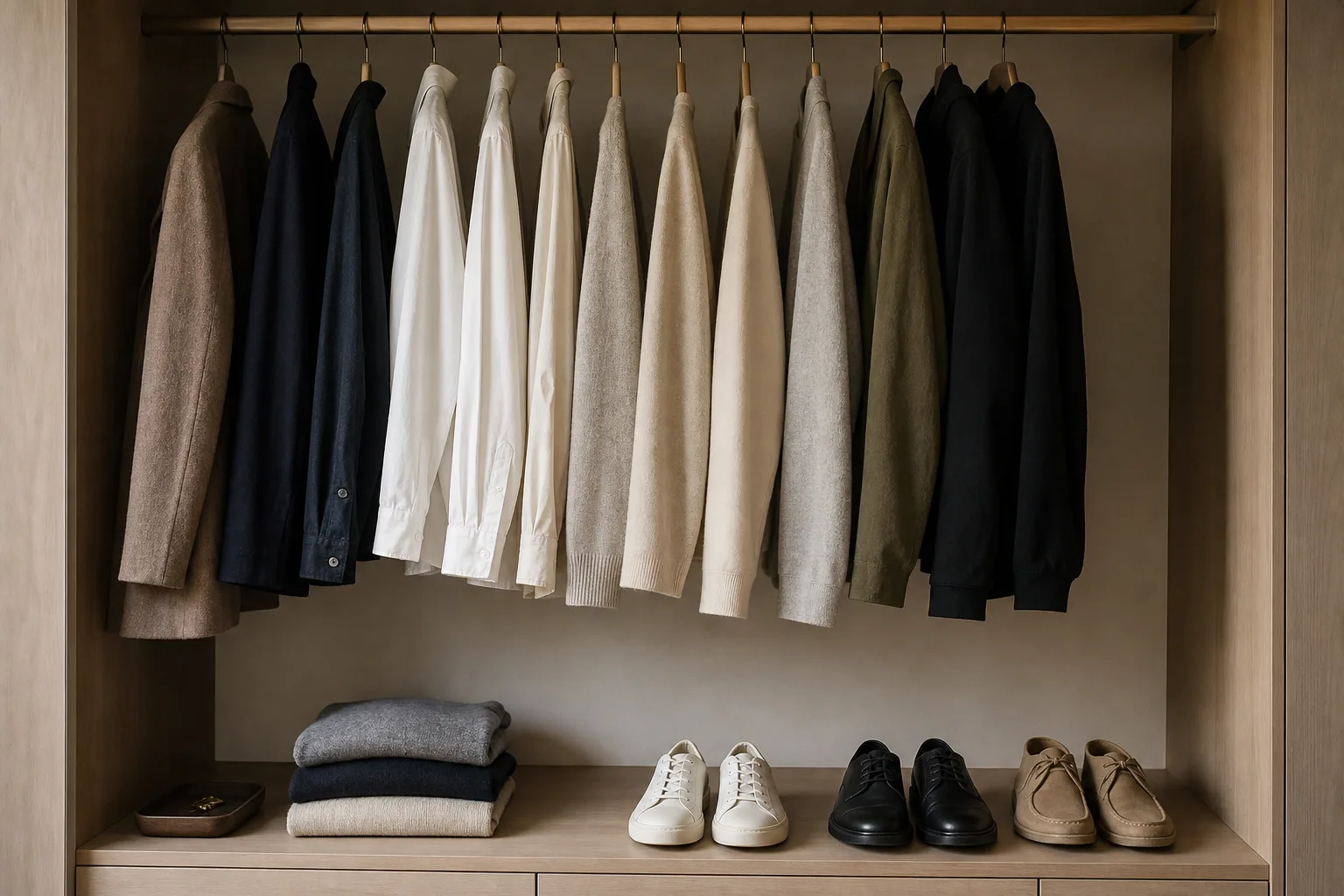
Most people regularly wear a small part of their clothes. The capsule wardrobe starts from that fact: keep a few good pieces that go together, and stop deciding every morning.
It is not a fashion trend so much as a method, and it has gained new supporters as people become more aware of how much clothing is produced and thrown away. According to a 2017 report by the Ellen MacArthur Foundation, the average number of times a garment is worn before it is discarded fell by about a third in fifteen years. A capsule wardrobe is a way of reversing that, one closet at a time.
Where it comes from
The term was popularized in the 1970s by Susie Faux, owner of a London boutique. In 1985, designer Donna Karan took it to the runway with her "seven easy pieces," designed for the working woman.
Faux's idea was to build a small set of essential, well-made garments and add a few seasonal pieces each year. Karan's collection was built around a bodysuit, a skirt, trousers, a jacket and a cashmere sweater, all interchangeable. In 2010, the American blogger Courtney Carver launched Project 333, a challenge to dress for three months with 33 items, which brought the idea to a new generation online.
How to start
1. Empty and look. Take everything out. Separate what you actually wear from what you keep "just in case."
2. Choose a base. Two or three neutral colors that go together — black, navy, gray, beige, white — and one or two accents.
3. Count. A common benchmark is 30 to 40 items per season, shoes and coats included, not counting underwear or sportswear.
4. Try it for a season. Put everything else away in a box for three months, out of sight. At the end, see what you missed and what you never thought about. That test usually teaches more than any list.
The point is not to own little, but for everything you own to be useful.
The usual pieces
White shirt, striped top, knit sweater, jeans, dark trousers, blazer, a coat, a trench, white sneakers and one smarter shoe.
Adapt the list to your climate and your life. In a hot city, linen and light cotton replace wool; in a cold one, a good coat and boots matter more than anything else. Someone who works from home may need comfortable knitwear more than tailoring. The logic is always the same: versatile pieces in compatible colors.
The rules
Each garment should go with at least three others. Before buying something, think what you will wear it with. And what leaves is not thrown away: sell it, donate it or store it for a season to see if you miss it.
A useful tool is the cost per wear: divide the price of a garment by the number of times you expect to wear it. A good coat worn a hundred times can cost less per wear than a cheap one worn five. Thinking that way makes it easier to invest in quality and to resist bargains you do not need.
The real advantage
Less spending, fewer washes and five more minutes every morning.
There is also a less obvious benefit: when everything goes together, getting dressed stops being a decision and becomes a habit. Many people find that they develop a recognizable personal style precisely because they have fewer options, not more.
Common mistakes
The most common is to start by shopping. A capsule wardrobe is built first from what you already own; only then do you fill the gaps. The second mistake is copying someone else's list: if you do not work in an office, you do not need a blazer. And the third is going too plain: one or two pieces in color or a print keep you from getting bored after three weeks and giving up.
A fourth, less frequent, is being too rigid. The number is a guide, not a rule. If a piece makes you happy and you wear it often, it has earned its place, even if it breaks the count.