Fast fashion: what a five-euro T-shirt really costs
We produce twice as many clothes as twenty years ago and wear them half as much. Figures, causes and what is in our hands.
With Black Friday around the corner, clothing deals multiply. Before filling the cart, it helps to know what lies behind the price.
What it is
Fast fashion is the model that takes runway trends to shops in a few weeks, at very low prices and with collections that never stop changing. The latest version, ultra-fast, posts thousands of new styles online every day.
The model took off in the 1990s and 2000s with chains that replaced the traditional two seasons a year with a constant flow of new products, produced in small batches and restocked according to what sold. The ultra-fast version goes further: online platforms test designs in tiny quantities, watch the clicks and produce more only of what works. The result is an almost infinite catalog at prices that make clothing feel disposable.
The figures
World clothing production has roughly doubled since 2000, while the number of times we wear each garment has fallen markedly. According to estimates cited by the United Nations, the textile sector generates between 2% and 8% of global greenhouse gas emissions. Making a single cotton T-shirt can take about 2,700 liters of water.
Most of that water goes into growing the cotton, often in dry regions. Synthetic fibers such as polyester, now the most widely used, avoid that problem but are made from oil and shed microplastics with each wash. And at the end of the cycle, only a tiny fraction of clothing is recycled into new clothing: most is burned, buried or exported.
Every second, the equivalent of a garbage truck full of clothes is burned or buried, according to the Ellen MacArthur Foundation.
The people
On April 24, 2013, the collapse of the Rana Plaza building in Bangladesh killed more than 1,100 garment workers. Some safety controls have improved since then, but wages remain very low.
The building housed several factories that made clothes for well-known Western brands, and workers had been ordered back inside the day after cracks appeared in its walls. After the disaster, more than two hundred companies signed a legally binding agreement on building and fire safety in Bangladesh, the Accord, which led to thousands of inspections. But the pressure to produce fast and cheap remains, and it falls mostly on women, who make up the majority of the sector's workforce.
Where what we discard goes
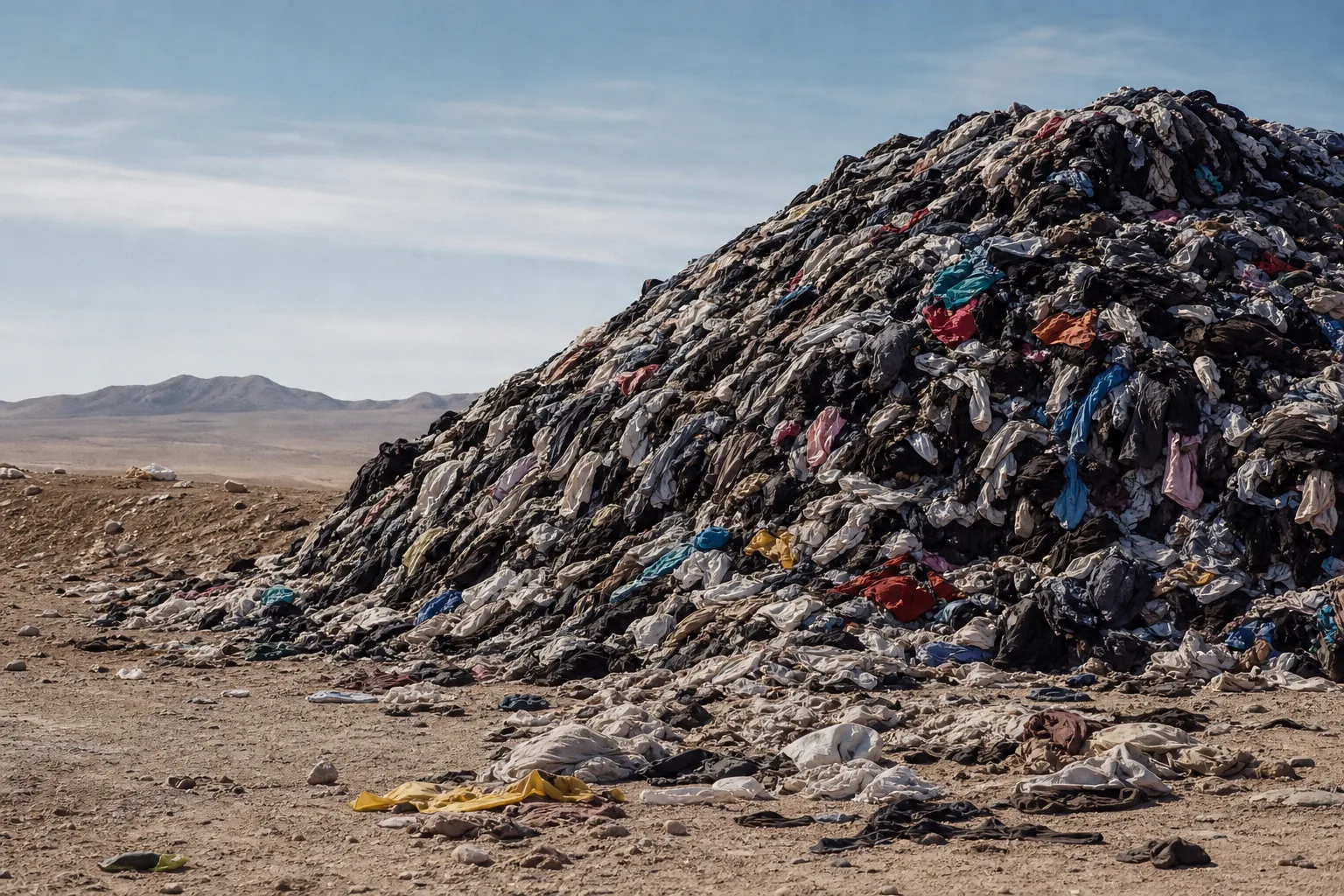
Much donated clothing ends up exported. In Chile's Atacama Desert and in the markets of Accra, Ghana, mountains of unsellable garments pile up.
Second-hand bales arrive by the millions at markets such as Kantamanto, in Accra, where traders buy them without knowing what is inside. A large share is too damaged or too cheap to resell and ends up in landfills, rivers and beaches. In northern Chile, clothing that enters through the free-trade zone of Iquique and cannot be sold is dumped in the desert.
What to do
Buy less and better. Wear what you have more. Repair. Choose secondhand. And be suspicious of what seems too cheap.
Some practical habits help. Check the fiber label: garments made from a single material are easier to recycle than blends. Look at seams and finishes before the price. Learn two or three basic repairs, such as sewing on a button or fixing a hem. And when you clear out your closet, give clothes directly to people who will wear them, or to organizations that sort them locally, rather than leaving them in any bin.
What is changing
The rules are starting to move. The European Union has approved measures to make brands responsible for the textile waste they generate and to limit the destruction of unsold clothing, and France has legislated specifically against ultra-fast fashion. Much remains to be enforced. In the meantime, the most direct tool is still in the buyer's hands: asking, before paying, how many times that garment will be worn.
Some of those rules are already in force. Since July 19, 2026, large companies in the EU may no longer destroy unsold clothes, accessories and footwear; medium-sized companies will follow in 2030. The revised EU waste directive, in force since October 2025, requires member states to set up schemes in which producers pay for the collection and treatment of textile waste. And France's law of July 8, 2026, targets ultra-fast fashion platforms with higher environmental fees and limits on advertising.