Buying secondhand clothes: a guide to not wasting the afternoon
What to check on a garment, which sections to look at first and why old sizes mean nothing.
Secondhand clothing is no longer just for flea markets: it is one of fashion's fastest-growing sectors. Buying well takes a little method.
Before you go
Bring a short list: "wool coat," "striped shirt." Without a goal, big shops wear you out. Wear clothes that are easy to take off; not all shops have fitting rooms.
Where to start
Go first to the sections where quality shows most and new prices are high: coats, blazers, wool knits, leather and silk. Check the men's section too, whatever your gender: the blazers and shirts are often better.
Read the label
Composition tells you almost everything. Wool, cotton, linen, silk and leather age well; acrylic and cheap polyester do not.
Ignore the size on the label. A 1985 medium is not today's medium: try it on or measure.
Check in good light
Underarms and collar: yellow stains that won't come out. Seams: pull gently. Zippers and buttons: that they work and are all there. Elbows and crotch: wear. Smell: damp is hard to remove.
What can be fixed
A hem, a button, sleeves that are too long. Add the cost of the alteration to the price before deciding.
Online
Ask for measurements in centimeters and compare them with a garment of yours that fits.
When you get home
Wash or air everything before putting it away.
Sizes
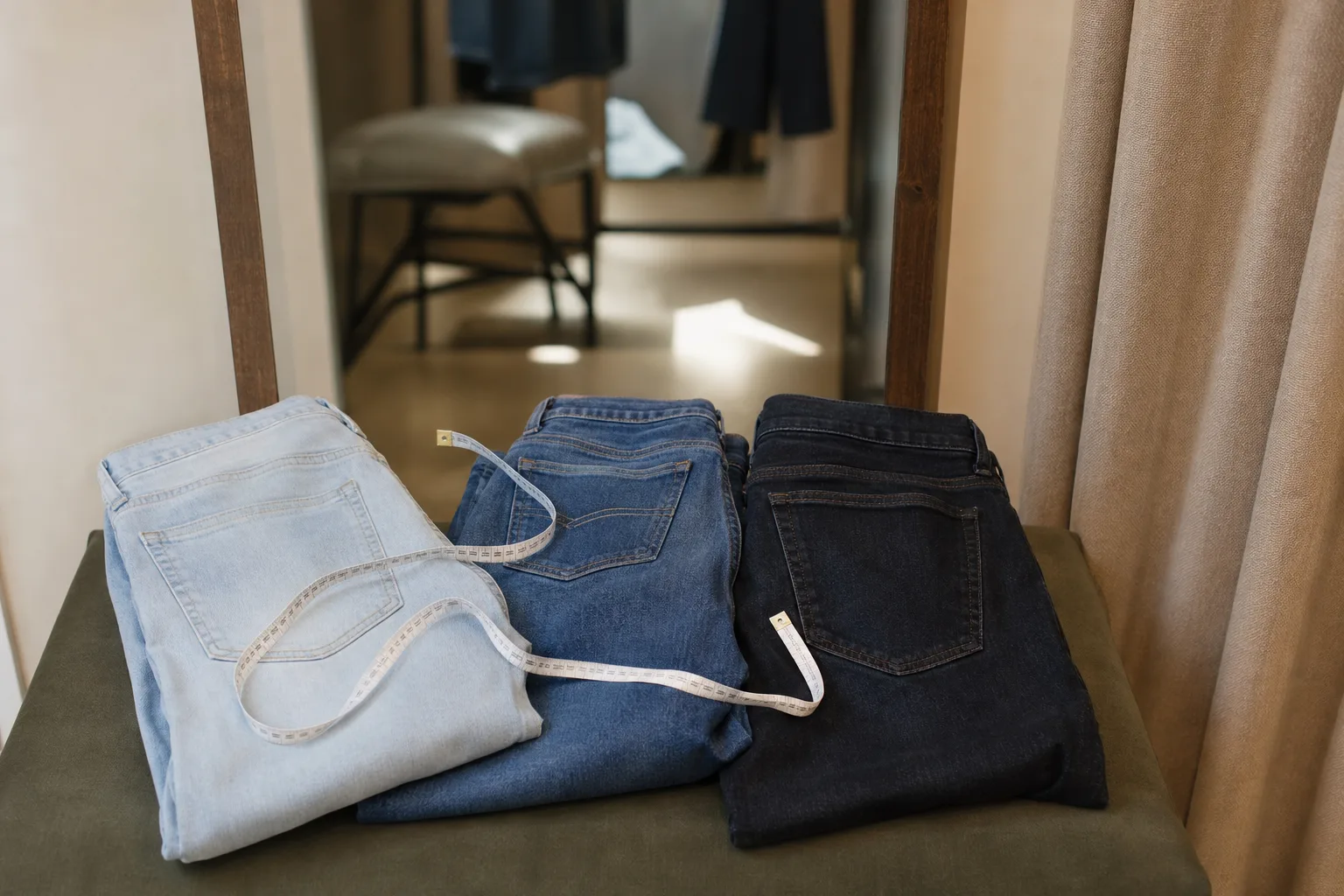
Sizes have changed a great deal over the decades, and the same number can mean very different measurements depending on the era and the brand. In vintage clothing, the size usually runs smaller than today's. So ignore the label and always try the garment on, or carry a note of your chest, waist and hip measurements, and a tape measure in your bag.