Akira Kurosawa: four films to start with
The Japanese director who taught half of Hollywood how to film rain, battles and doubt.
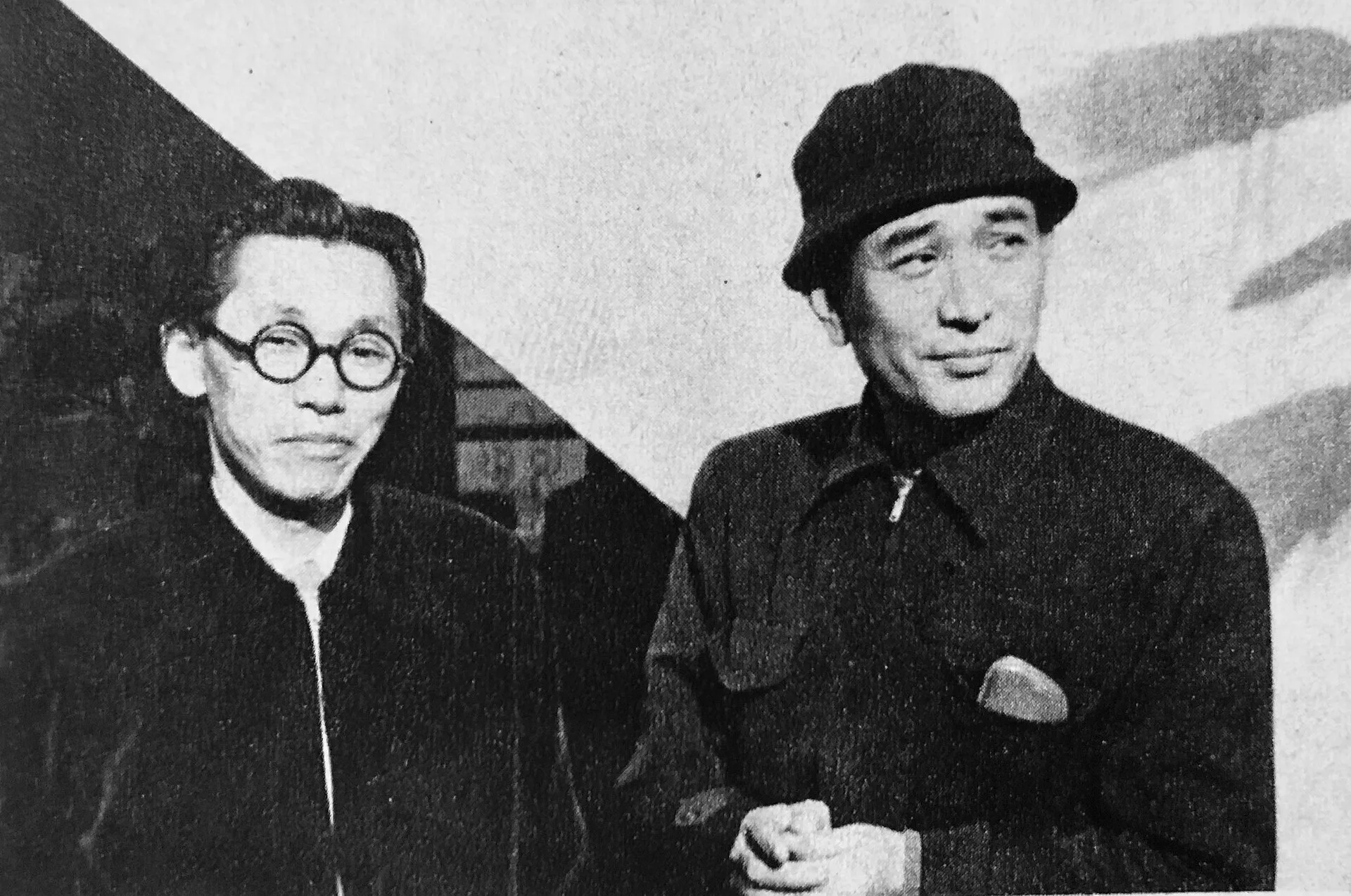
Few filmmakers have been as influential as Akira Kurosawa. His films inspired westerns, space sagas and courtroom thrillers, and they remain surprisingly easy to watch. These four make a good way in.
Kurosawa, born in Tokyo in 1910, trained as a painter before he entered a film studio as an assistant director, and it shows: he storyboarded many of his scenes as paintings and composed his shots with a painter's eye. Over five decades he made some thirty films, from postwar crime dramas to samurai epics. Sixteen of them starred Toshiro Mifune, one of the great actor-director partnerships in film history.
Rashomon (1950)
A crime in a forest told by four witnesses who do not agree. It won the Golden Lion at Venice in 1951 and opened Japanese cinema to the world. Its central idea, that each version of an event says more about the teller than the event, gave its name to the Rashomon effect.
The story comes from two tales by Ryūnosuke Akutagawa, and Mifune plays the bandit accused of the crime with almost animal energy. Look out for the light: Kurosawa and his cinematographer pointed the camera straight at the sun through the trees, something few dared to do at the time. It runs under 90 minutes, which makes it an easy first step.
Ikiru (1952)
A gray civil servant learns he has little time left and decides to do one useful thing: build a playground. It is Kurosawa's most intimate film.
Takashi Shimura, Kurosawa's other great regular actor, plays Kanji Watanabe, a man who has spent thirty years stamping papers without doing anything. The image of him on a swing in the snow, singing softly, is one of the most moving in Japanese cinema. The story worked so well that in 2022 it was remade in England as Living, with Bill Nighy and a screenplay by the novelist Kazuo Ishiguro.
Kurosawa filmed weather as if it were a character: rain, wind and mud always have something to say.
Seven Samurai (1954)
Farmers hire seven warriors to defend their village. It runs more than three hours and not a minute is wasted. The Magnificent Seven moved it to the West in 1960.
Shimura is the calm leader, and Mifune the would-be samurai who is really a farmer's son. Kurosawa filmed the action with several cameras at once and long lenses, a method that let him cut the battles together with a rhythm action cinema still copies. The final battle, in mud and pouring rain, is the clearest proof of how he used the weather. Above all, the film is a story about class: the warriors and the farmers need each other, and never quite trust each other.
Ran (1985)
King Lear carried to feudal Japan, with battles in color that look like paintings in motion. Kurosawa shot it at 75.
In his version, Lear's daughters become three sons, and Tatsuya Nakadai plays the old lord Hidetora, who divides his domain and loses everything. It was one of the most expensive productions in the history of Japanese cinema at the time. Each army has its own color, which turns the battle scenes into great moving canvases, and Emi Wada's costumes won the Oscar for costume design.
One tip: start with Seven Samurai and save Ran for a big screen.
If you want more
After these four, there is plenty to choose from. Throne of Blood (1957) moves Macbeth to a misty castle; Yojimbo (1961) is a dark comedy about a wandering samurai who plays two gangs against each other; High and Low (1963) is a police thriller about a kidnapping that splits neatly in two halves. And Red Beard (1965), the story of a doctor and his young assistant, was the last collaboration with Mifune.
Why he still matters
Kurosawa was a bridge between two traditions. He adapted Shakespeare and Dostoevsky to feudal Japan and was in turn adapted by Hollywood: The Magnificent Seven is a version of Seven Samurai, and A Fistful of Dollars copies Yojimbo. George Lucas acknowledged the debt Star Wars owes to The Hidden Fortress. Watching him today means discovering where many images you already knew come from.
In Japan he was sometimes criticized for being too Western; in the West he was seen as the face of Japanese cinema. Both views miss what matters most: his films are about ordinary people facing impossible choices, and that travels anywhere. In 1990 Hollywood gave him an honorary Oscar for his whole career. His last film, Madadayo, came out in 1993, and he died in 1998.