The Golden Age of Mexican cinema, explained
For two decades, Mexico was the great star factory of Spanish-language film. How it began, and how to watch it today.
Between the mid-1930s and the late 1950s, Mexico produced the most-watched films in the Spanish-speaking world. The period is known as the Golden Age, and its faces are still recognizable eighty years later.
For two decades, audiences from Buenos Aires to Madrid learned Mexican songs, slang and landscapes at the movies. By 1950, Mexico had one of the largest film industries in the world, and its stars were as famous across Latin America as any Hollywood name.
Why it happened
The Second World War cut production in Hollywood and Europe, and Mexico filled the gap with its own studios, state support and a star system: María Félix, Dolores del Río, Pedro Infante, Jorge Negrete, Cantinflas.
The starting signal came a little earlier, in 1936, with Allá en el Rancho Grande, by Fernando de Fuentes. That ranch comedy full of songs was a huge box-office hit across the continent and established a formula, the comedia ranchera, that would be repeated for years. Then politics did the rest: Mexico joined the Allies in 1942, and the United States, which controlled film stock and equipment, favored it over Argentina, its main Spanish-language rival, which had stayed neutral. New studios such as Churubusco, opened in the mid-1940s, turned out dozens of films a year.
A look of its own
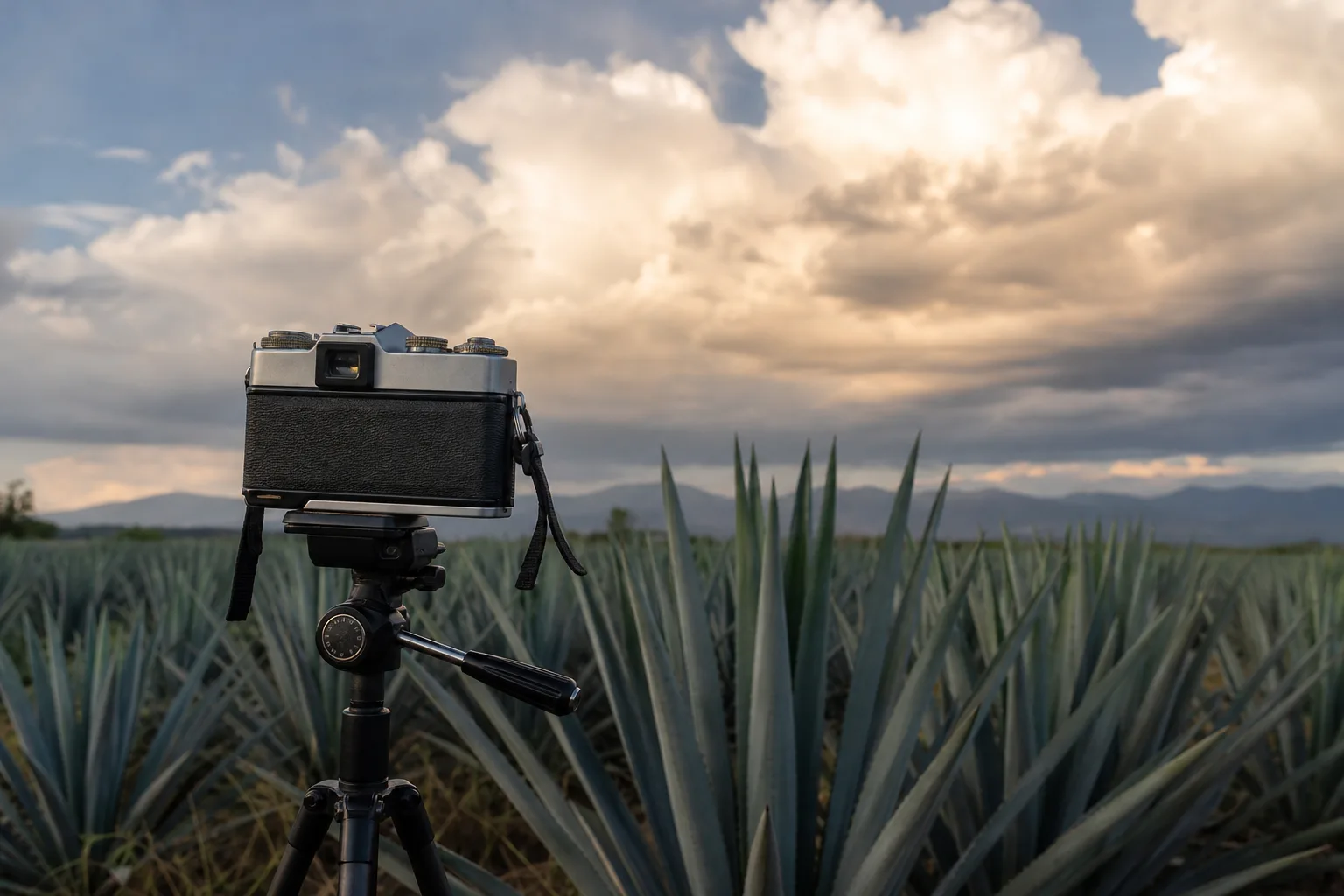
Director Emilio "el Indio" Fernández and cinematographer Gabriel Figueroa created an unmistakable visual style: huge skies, dramatic clouds, agave plants and backlit faces. María Candelaria (1943) won one of the top prizes at the first Cannes Film Festival, in 1946.
Figueroa had learned his trade in Hollywood with Gregg Toland, the cinematographer of Citizen Kane, and his first film as director of photography was precisely Allá en el Rancho Grande. He used filters to darken the sky and make the clouds stand out, and composed his frames with the monumental sense of the muralists Diego Rivera and José Clemente Orozco. Later he worked with John Huston and Luis Buñuel, which shows how far his reputation had spread.
Figueroa's skies did for the Mexican landscape what the western did for Monument Valley.
Where to start
Nosotros los pobres (1948) shows urban melodrama and Pedro Infante at his peak. Enamorada (1946) pairs María Félix with el Indio Fernández. And Los olvidados (1950), by Luis Buñuel, shows the other side: a hard look at childhood on the edges of the capital, now listed in UNESCO's Memory of the World register.
For comedy, try Ahí está el detalle (1940), the film that made Cantinflas a star, with a courtroom scene in which his talking in circles leaves everyone dizzy. And María Candelaria itself, with Dolores del Río and Pedro Armendáriz, is the best introduction to the Fernández and Figueroa style. Many of these films can be found restored on streaming platforms and in film archive screenings, such as those of Mexico's Cineteca Nacional and the UNAM film archive.
The stars
The golden age was also a star system. María Félix embodied the proud, untamable woman; Pedro Infante and Jorge Negrete, the singing charro; Dolores del Río came back from Hollywood to work with Emilio "El Indio" Fernández; and Cantinflas turned his way of talking without saying anything into a Spanish verb, cantinflear. Their films were seen across Latin America and Spain, and for decades fixed the image of Mexico abroad.
María Félix earned her nickname, La Doña, from Doña Bárbara (1943), in which she played a ruthless landowner. Pedro Infante was the people's idol: a trained carpenter who sang, acted and flew planes, he made more than fifty films. Negrete, who had studied opera singing, was the more formal and elegant charro, and his rivalry with Infante, real or staged, filled theaters.
How it ended
There is no single date for the end, but there are signs. Jorge Negrete died in 1953, and Pedro Infante in a plane crash in 1957; millions of people mourned him. At the same time, Hollywood recovered its markets after the war, television reached Mexican homes, and the industry kept repeating formulas that no longer surprised anyone. By the end of the 1950s, the factory was still producing, but the gold had worn off.
Its legacy remains. The charro, the urban melodrama and the faces of Félix and Infante are still part of how Mexico imagines itself, and the reruns on television and the restorations keep finding new audiences. Watching these films today is also a way of understanding where much of popular Latin American culture comes from.