Arabica or robusta: what the coffee bag is telling you
Almost all the coffee in the world comes from two plants. How they differ in taste, caffeine and price, and what else on the label is worth reading.
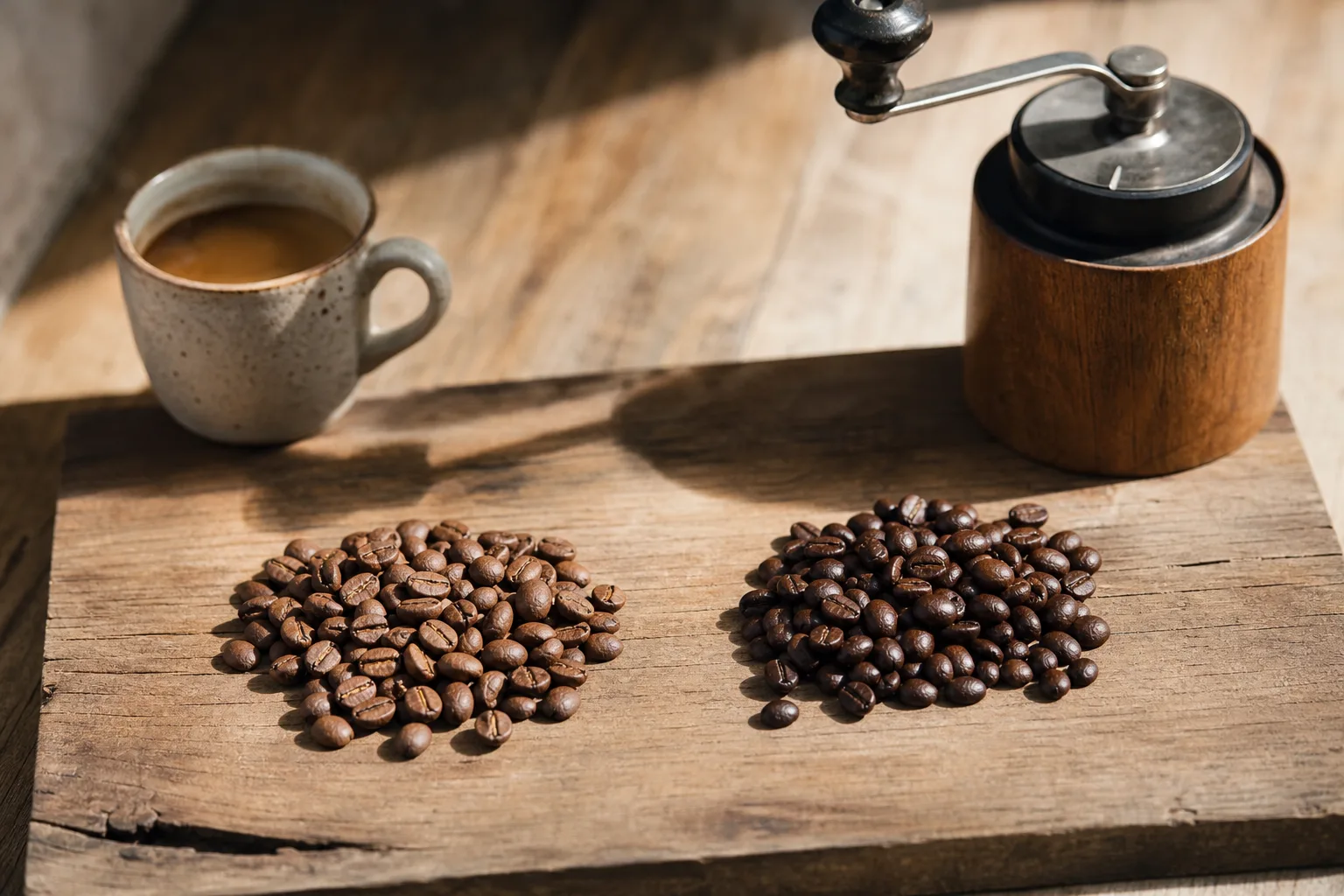
There are more than a hundred species of coffee plant, but almost everything we drink comes from just two: arabica and robusta. Knowing the difference explains a lot about why one coffee tastes sweet and bright and another bitter and strong, why their prices are so far apart, and why climate change worries coffee growers so much. It also turns the label on a bag of coffee from marketing into useful information.
This guide explains where coffee comes from, how the two great species differ, what happens between the farm and your cup, and how to read the rest of the label.
A seed inside a cherry
Coffee beans are not beans at all. They are the seeds of a fruit, usually called a coffee cherry, which grows on shrubs or small trees. Each cherry normally contains two seeds facing each other, which is why one side of a coffee bean is flat. Occasionally a cherry produces a single round seed, known as a peaberry, which some roasters sell separately.
Coffee grows in the tropics, in a band around the world sometimes called the coffee belt, between the Tropic of Cancer and the Tropic of Capricorn. Brazil, Vietnam, Colombia, Indonesia, Ethiopia and Honduras are among the largest producers, along with many countries in Central America, East Africa and Asia. In Mexico, coffee is grown mainly in the southern states of Chiapas, Veracruz, Oaxaca and Puebla, mostly by small farmers.
How coffee spread around the world
Coffee's origins lie in the forests of Ethiopia, where wild coffee plants still grow. A popular legend tells of a goatherd named Kaldi who noticed his goats dancing after eating the red cherries, but the story was first written down centuries later and is almost certainly invented.
What is documented is that by the 15th century coffee was being drunk in Yemen, where Sufi communities used it to stay awake during night-time devotions. From there it spread to Mecca, Cairo and Istanbul, where coffeehouses became places to talk, read, play games and discuss politics, sometimes to the alarm of the authorities. In the 17th century coffee reached Europe: coffeehouses opened in Venice, Oxford, London, Paris and Vienna, and became centres of business, news and debate.
European powers then took coffee plants to their colonies. The Dutch grew it in Java, the French in the Caribbean, and in the 18th century coffee reached Brazil, which became the world's largest producer in the 19th century and still is today. Much of this expansion depended on enslaved labour, a history that shaped the economies of entire regions.
Two plants, two climates
Arabica (Coffea arabica) originated in the highlands of southwestern Ethiopia. It grows best at altitude, often between 1,000 and 2,000 metres, in mild climates with cool nights, and it is delicate: sensitive to heat, frost and diseases such as coffee leaf rust, a fungus that has devastated plantations in Central America. It makes up roughly 60 percent of world production.
Robusta is the common name of Coffea canephora, native to the lowland forests of central and western Africa. As the name suggests, it is tougher. It grows at lower altitudes and in hotter climates, resists pests and disease better and produces more coffee per plant. Vietnam is the largest robusta producer; Brazil grows both, and its robusta is often sold under the name conilon.
Interestingly, arabica is itself the result of a natural cross between robusta and another wild species, Coffea eugenioides, which happened in East Africa long before humans began farming coffee. That is why the two species are closely related, yet so different in the cup.
How they taste
1. **Arabica** tends to be sweeter and more acidic, with aromas that can range from fruit and flowers to chocolate, caramel and nuts, depending on the variety, where it grows and how it is processed. Arabica beans contain more sugars and lipids, which contribute to sweetness and aroma.
2. **Robusta** is more bitter and earthy, with less acidity and a heavier body. It produces a thick, lasting **crema** on espresso, which is why many Italian blends include a share of it.
3. **Caffeine**: robusta contains roughly twice as much caffeine as arabica. Caffeine is naturally bitter and also acts as a defence against insects, which is one reason robusta is more resistant.
4. **Appearance**: arabica beans are usually larger and oval, with a curved central crease; robusta beans are smaller and rounder, with a straighter crease.
"100% arabica" is a promise about the plant, not about quality. A bad arabica can still be a bad coffee.
Why robusta is cheaper
Robusta is easier and cheaper to grow, so it dominates instant coffee and supermarket blends. Arabica and robusta are traded on different international markets, in New York and London respectively, and their prices move separately. In recent years, poor harvests caused by droughts and frosts in Brazil and Vietnam have pushed prices for both to record highs, which is why the cost of a bag of coffee has risen so sharply in many countries.
But quality varies within both species. Specialty growers now produce carefully processed robustas, sometimes called fine robustas, that are sold on their own and praised for their chocolate and spice notes. Meanwhile, a poorly grown or badly stored arabica can be dull, flat and woody.
The other coffees
Arabica and robusta are not alone. Liberica, a species with large, irregular beans and a smoky, fruity flavour, is grown in parts of Southeast Asia, especially the Philippines and Malaysia. Excelsa, now often classified as a variety of liberica, is used in some blends for its tart, fruity character. Scientists are also studying rare wild species such as Coffea stenophylla, a West African coffee that was rediscovered in Sierra Leone in recent years and that can tolerate higher temperatures while tasting surprisingly similar to arabica. Such species may become important as the climate changes.
Coffee and climate change
Coffee is particularly vulnerable to a warming world. Arabica needs a narrow range of temperatures, and studies have warned that the area suitable for growing it could shrink significantly by the middle of the century unless farms move to higher ground or new varieties are developed. Higher temperatures also help pests and diseases spread. Plant breeders are working on hybrids that combine the flavour of arabica with the resilience of robusta and other species, and many farmers are planting shade trees to protect their crops and the soil.
Price is a human question as well. Most of the world's coffee is grown by millions of smallholder farmers, and studies of the coffee value chain have repeatedly found that only a small share of what consumers pay reaches the people who grow it. When world prices fall, many farmers sell below their costs; when they rise, much of the gain can be absorbed by traders and roasters. Direct trade relationships, cooperatives and certification schemes all try, in different ways, to give growers a fairer and more stable income.
From farm to roaster
Between the tree and the bag, coffee goes through several steps.
5. **Harvesting**: cherries are picked by hand, often several times as they ripen, or stripped by machine on large flat farms such as those in parts of Brazil.
6. **Processing**: the seeds are separated from the fruit. In the **washed** method, the skin and pulp are removed and the beans are fermented and washed before drying; these coffees tend to taste cleaner and brighter. In the **natural** method, the whole cherry is dried in the sun before the seeds are removed; these coffees taste fruitier and heavier. **Honey** processing, popular in Costa Rica, sits in between, leaving some of the sticky fruit on the bean as it dries.
7. **Drying and milling**: the beans, now called **green coffee**, are dried, hulled, sorted and exported in sacks.
8. **Roasting**: heat transforms the green beans, developing hundreds of aromatic compounds and the brown colour we recognise. Light roasts keep more of the bean's original character and acidity; dark roasts taste more of the roasting itself, with smoky and bitter notes.
What to look for on the bag
9. **Roast date**, not just a best-before date. Coffee is at its best in the weeks after roasting, and loses aroma quickly once ground.
10. **Species**: "100% arabica", a blend with robusta, or, increasingly, a named fine robusta.
11. **Origin**: a single country, region or even a farm usually means more traceable and distinctive coffee than an anonymous blend. Many specialty bags name the variety, such as Bourbon, Typica, Caturra or Geisha.
12. **Altitude**: higher-grown arabica tends to develop more slowly and taste more complex.
13. **Process**: washed, natural or honey.
14. **Roast level**: light, medium or dark, sometimes with a recommendation for espresso or filter.
15. **Certifications**: labels such as Fairtrade, organic or Rainforest Alliance indicate standards for farmers' pay, farming methods or environmental practices. They do not guarantee flavour, but they say something about how the coffee was produced.
16. **Torrefacto**: common in Spain and some other countries, it means part of the coffee was roasted with sugar, which coats the beans and makes the coffee darker and more bitter. A bag labelled as a "mezcla" usually combines normal roasted coffee with torrefacto.
Decaf, instant and capsules
Decaffeinated coffee has most of its caffeine removed while the beans are still green. The first commercial process was developed by the German coffee merchant Ludwig Roselius in Bremen at the beginning of the 20th century, and his company, Kaffee HAG, sold decaf from 1906. Today, methods include water processes, carbon dioxide and solvents that are removed before roasting. Good decaf can taste very close to regular coffee.
Instant coffee is brewed coffee that has been dried into powder or granules, usually by spray drying or freeze drying. Because cost matters most, it is generally made largely from robusta. Capsules and pods vary enormously, from cheap blends to single-origin arabicas, and the label is the only way to know which.
Getting the best from your beans
Even the best bag of coffee can be ruined at home, and a modest one can taste much better with a little care.
17. **Grind fresh**: ground coffee loses much of its aroma within minutes to hours. A simple burr grinder, which crushes the beans evenly, makes a bigger difference than an expensive machine.
18. **Match the grind to the method**: very fine for espresso, fine to medium for moka pots and drip filters, coarse for the French press and cold brew. Too fine, and the coffee tastes bitter and harsh; too coarse, and it tastes thin and sour.
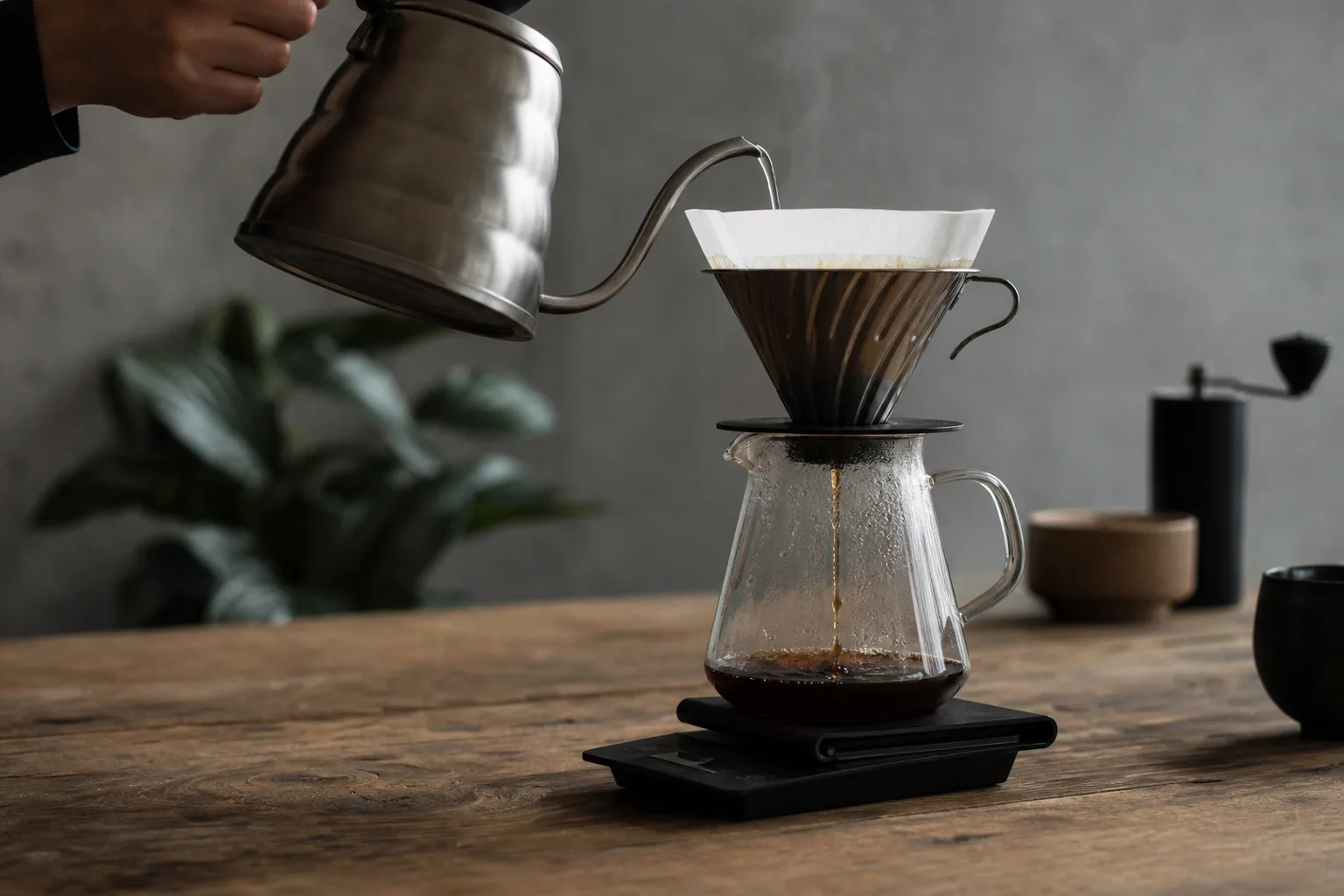
19. **Use the right ratio**: a common starting point for filter coffee is around 60 grams of coffee per litre of water, adjusted to taste.
20. **Mind the water**: water just off the boil, roughly 92 to 96 degrees Celsius, extracts flavour well without scorching it. Very hard or chlorinated tap water can dull the taste; filtered water often helps.
21. **Store it well**: keep beans in an airtight container, in a cool, dark cupboard. The fridge is a poor place, because coffee absorbs moisture and smells. Buy amounts you will finish within a few weeks.
22. **Clean your equipment**: old coffee oils turn rancid and make every cup taste stale. Rinse filters, pots and machines regularly, and descale them according to the instructions.
These small habits matter more for arabica, whose delicate aromas fade fastest, but they improve every coffee.
Coffee cultures
How coffee is drunk varies as much as how it is grown. Italy gave the world espresso and the cappuccino. In Spain, a café con leche at breakfast and a cortado after lunch are daily rituals, and torrefacto blends remain popular. In Mexico, café de olla is brewed in a clay pot with cinnamon and piloncillo, unrefined cane sugar. Germany, one of the largest coffee-drinking countries in Europe, has a strong filter-coffee tradition, helped by an invention from Dresden: in 1908, Melitta Bentz patented a paper coffee filter, founding a company that still bears her name. In Ethiopia, the coffee ceremony, in which beans are roasted, ground and brewed in front of guests, remains a central part of hospitality.
A simple test at home
Buy a small bag of each, or a pure arabica and a blend with robusta, and make them the same way. Taste them side by side, without milk first. Notice the acidity, the bitterness, the body and the aftertaste. Then try the same coffees with milk, where robusta's strength often holds up better. Within a few sips you will know which you prefer, and you will be able to read any coffee label from then on, not as a list of buzzwords but as a description of a plant, a place and the people who grew it.