Bach's cello suites and the boy who found them
For almost two centuries they were thought of as mere exercises. Pau Casals turned them into one of the summits of music.
Review · AlbumBach: Cello Suites (Pau Casals)★★★★★
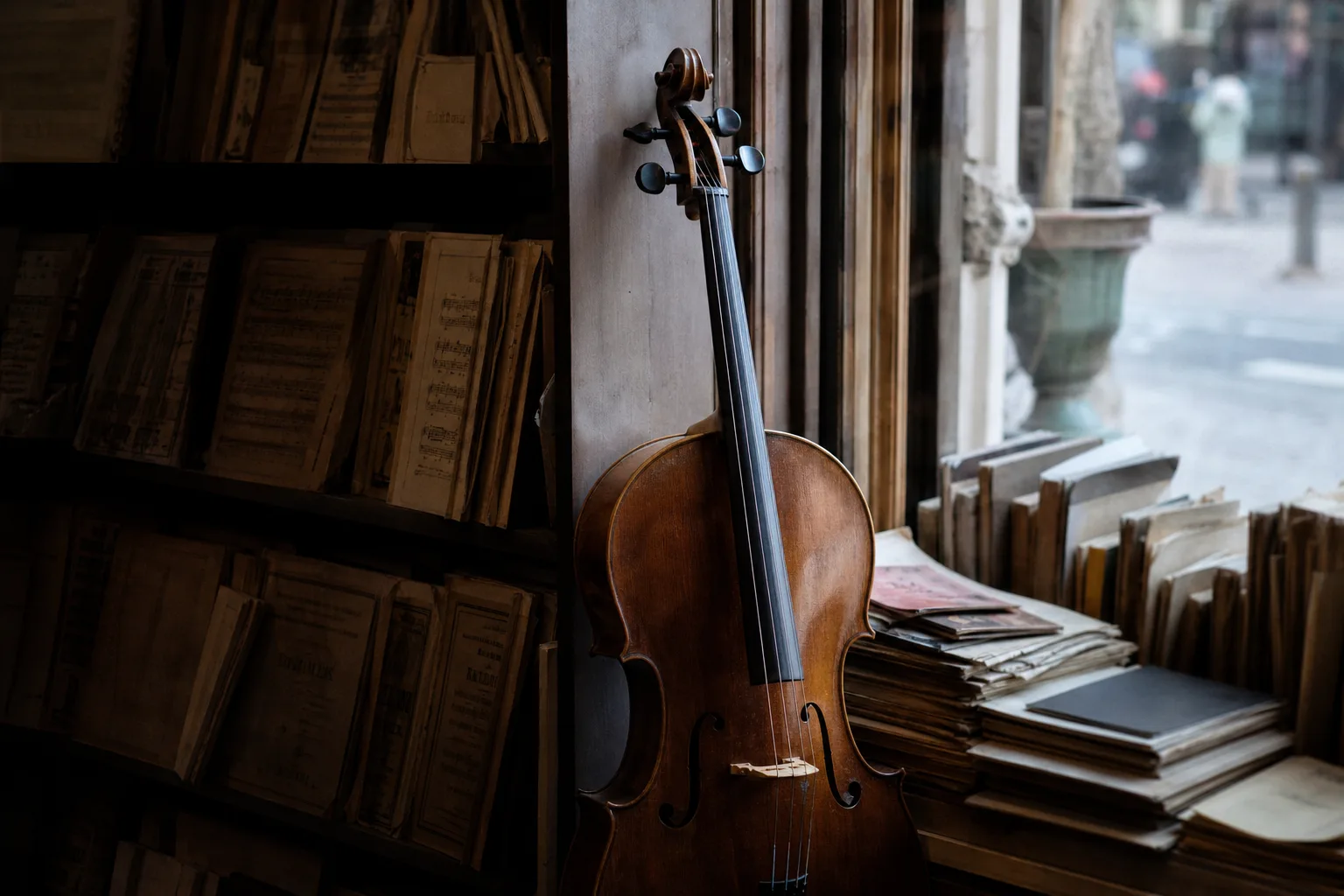
In 1890, a thirteen-year-old cello student walked with his father into a secondhand music shop near the port of Barcelona. Among the scores he found an old edition of Johann Sebastian Bach's Six Suites for Solo Cello. The boy's name was Pau Casals.
Casals told the story many times, and he always described it as the great discovery of his life. He had no idea that such music existed. He took the score home, and from that day on, he said, he played Bach every day.
A forgotten work
Bach composed the suites around 1720. The original manuscript has not survived; we know the work through copies, including one by his wife, Anna Magdalena. For a long time they were rarely played and treated as technical studies.
At the time, Bach was music director at the court of Prince Leopold in Köthen, a small German principality where he wrote much of his instrumental music, including the sonatas and partitas for solo violin. The surviving copies differ in details of bowing and articulation, so every cellist has to decide how to play passages that Bach left open. That is part of why no two recordings sound alike.
Twelve years of waiting
Casals studied them daily for more than a decade before daring to play a whole one in public. He recorded them between 1936 and 1939, and that recording changed their fate: they have been the core of the repertoire ever since.
The recording sessions, in London and Paris, took place as the Spanish Civil War tore his country apart. After Franco's victory, Casals went into exile in Prades, a French village near the border, and refused for years to perform in countries that recognized the dictatorship. The suites he had rescued became, in a way, the voice of an exile.
A single instrument, unaccompanied, and yet you hear several voices at once. That is the miracle.
What they are like
Each suite has a prelude and five dances. The prelude of the first, in G major, is one of the most recognizable melodies in classical music.
The dances follow the court fashion of the time: an allemande, a courante, a sarabande, a pair of lighter dances (minuets, bourrées or gavottes, depending on the suite) and a closing gigue. The cello rarely plays more than one note at a time, but Bach writes so that the ear fills in the harmony and hears a bass line and a melody at once. The fifth suite asks the cellist to retune the highest string, and the sixth was written for an instrument with five strings, which makes it the hardest to play on a modern cello.
To listen
Casals' historic recording, any of Yo-Yo Ma's three, or Mstislav Rostropovich's. Each performer plays them differently, and all of them are true.
Ma recorded the complete suites in 1983, again in the 1990s and a third time in 2018, and the change between them is a lesson in how an interpretation matures. Rostropovich waited until he was in his sixties: he recorded them in 1991 in the basilica of Vézelay, in Burgundy, and two years earlier had played them in front of the Berlin Wall, in the days after it fell.
The verdict
Five stars. Casals's recording, made between 1936 and 1939, sounds old, with the hiss of its time, and still conveys an emotion few modern versions match. For a first encounter, the prelude to Suite No. 1 is enough: two and a half minutes almost everyone has heard without knowing what it was. Afterwards, compare with recent versions, such as Yo-Yo Ma's.
Then let yourself be guided by curiosity. Listen to the sarabande of the fifth suite, slow and bare, and the gigue of the third, which sounds almost like a folk dance. There are also versions on the viola, the guitar and even the marimba. A work that was once considered an exercise turned out to have room for everyone.