Cusco and Machu Picchu, without the rush
The old Inca capital asks you to arrive slowly: first the altitude, then the Sacred Valley and, at the end, the citadel. A full guide to tickets, circuits, trains and a seven-day plan.
Culturera may earn a commission if you buy through the links on this page. As an Amazon Associate I earn from qualifying purchases. The selection is ours alone.
The best way to visit Machu Picchu is to leave it for the end. Give the trip seven days: sleep the first nights in the Sacred Valley, which is lower than Cusco, then spend two or three days in the city, and go up to the citadel when your body has adjusted. Buy the entry ticket first, on Peru's official platform, because it fixes the date, the hour and the route; then book the train around it.
The most common mistake on a trip to Machu Picchu is trying to get there too fast. Cusco, the former capital of the Inca empire, sits about 3,400 meters above sea level, and your body needs a day or two to adjust. The good news is that the city, a World Heritage site since 1983, is worth the time.
Most visitors fly in from Lima, which is at sea level, and land in thin air within an hour and a half. Headaches, shortness of breath and poor sleep on the first night are normal. What helps is a gentle plan: little effort on day one, short walks, plenty of water, and an itinerary built so that every stage takes you a little lower.
Where a guide or organized transport makes the trip easier, we link tours on GetYourGuide. We have not taken these tours: they are chosen for what they cover, and most of this route can be done on your own.
What should you know before you book anything?
Five things have changed in the last two years, and old advice no longer applies.
Tickets are sold on a new official platform. Since 2024, entry to Machu Picchu is sold by Peru's Ministry of Culture on its own site, Tuboleto. Each ticket carries your name and passport number, a date, an entry hour and a route.
You no longer wander freely. The citadel is visited along three circuits, divided into ten routes, in one direction only. Your ticket is valid for one route. Choosing it is the most important decision of the trip, and we explain it below.
There is a daily cap. In 2026 the limit is 4,500 visitors a day, raised to 5,600 on the busiest dates: January 1, Easter, the whole stretch from June 19 to November 2, and the last days of December. For the dry season, the popular routes sell out months ahead.
The visit is timed. A standard ticket allows about two and a half hours inside, and you cannot re-enter once you leave. The only toilets are outside the gate.
The new airport is not open. The international airport under construction at Chinchero, in the Sacred Valley, is years behind schedule, and Peru's government does not expect it to operate before the end of the decade. You will land at Cusco's small city airport, almost always on a flight from Lima.
How many days do you need?
Seven is comfortable, five is the realistic minimum, and anything under four turns the trip into a race against a headache. This is the plan this guide follows.
Day 1. Land in Cusco and go straight down to the Sacred Valley, about an hour and a half by road. Rest.
Day 2. Ollantaytambo, on foot: the fortress and the town.
Day 3. Pisac, Moray and the Maras salt pans.
Day 4. Train to Aguas Calientes in the morning; a quiet afternoon in the town below the citadel.
Day 5. Machu Picchu early, and the train back; sleep in Cusco.
Day 6. Cusco's center, on foot: the Plaza de Armas, the Qorikancha, San Blas.
Day 7. Sacsayhuamán and the sites above the city, and San Pedro market.
With five days, drop day 3 and day 7. With nine or ten, add one of the high-altitude day trips at the end, when your lungs are ready for it.
How do you deal with the altitude?
Slowly. Altitude sickness, called soroche in the Andes, has nothing to do with age or fitness: marathon runners get it and grandparents do not, and nobody knows in advance. It usually shows up a few hours after landing as a headache, tiredness, a queasy stomach and a broken night's sleep, and it passes in a day or two.
The rules are few. Do very little on the first day. Drink water all the time. Eat lightly and skip alcohol for the first 48 hours. Climb stairs like an old person. Sleep lower if you can: that is the whole logic of starting in the Sacred Valley. Some travelers take medication to prevent it; that is a conversation to have with your doctor before the trip, not in a Cusco pharmacy. And if the symptoms get worse instead of better, with breathlessness at rest, confusion or a wet cough, go down and see a doctor. Cusco has clinics that treat visitors for this every day.
It helps to know the numbers. Cusco: about 3,400 meters. Ollantaytambo: about 2,800. Aguas Calientes: about 2,000. Machu Picchu itself: about 2,400, a full kilometer lower than Cusco. The citadel is the easy part.
Acclimatize on foot
In the center, Inca walls of perfectly fitted stone serve as foundations for colonial churches and mansions. The Plaza de Armas, with its cathedral, is the starting point; from there you climb to San Blas, a neighborhood of steep streets and craft workshops. Walk slowly, drink water, and try coca tea.
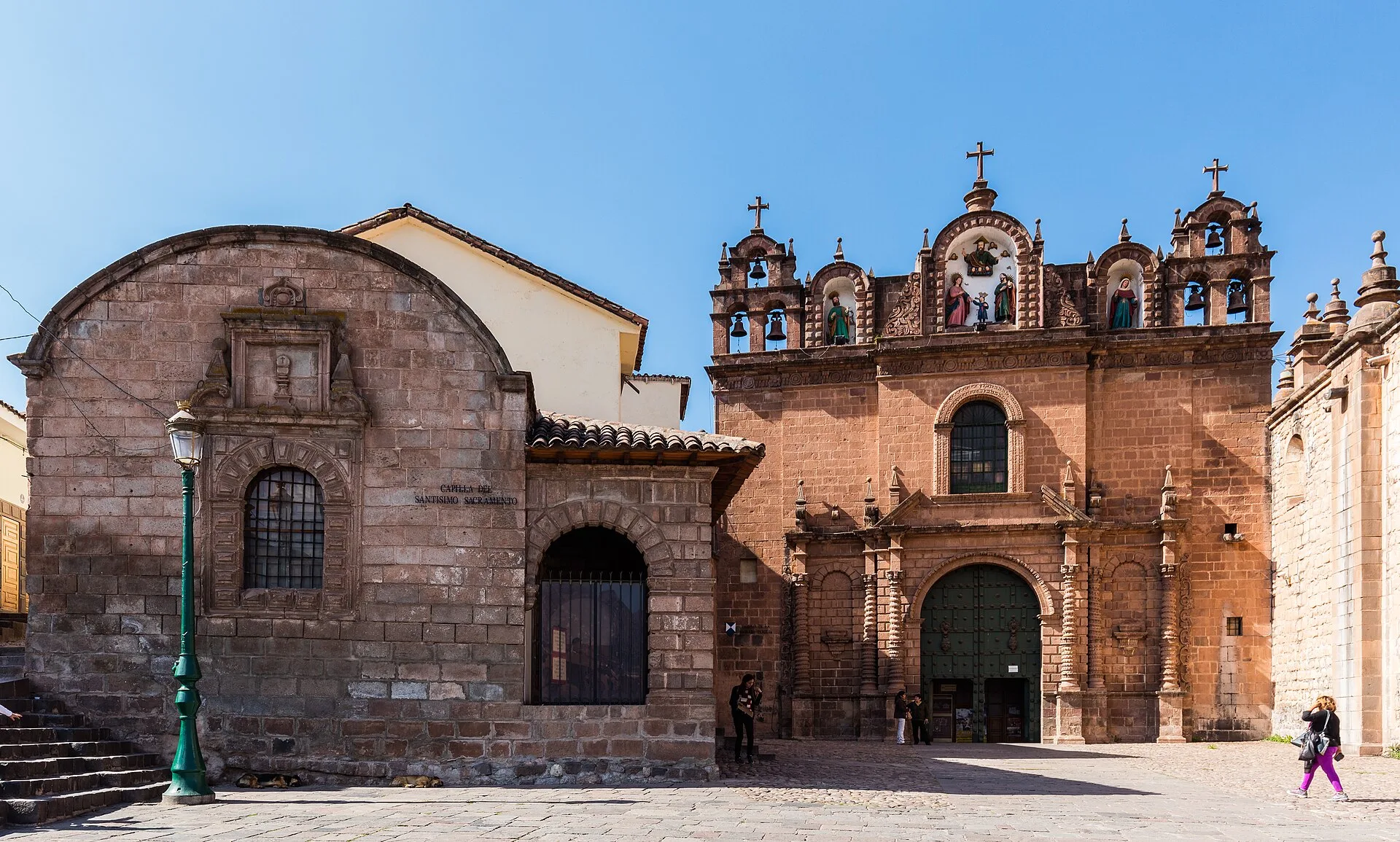
On the way, stop on Hatun Rumiyoc street to look for the famous twelve-angled stone, cut so precisely that it locks into its neighbors without mortar. A few blocks away is the Qorikancha, the Incas' main temple, dedicated to the Sun. After the conquest the Dominicans built the church and convent of Santo Domingo on top of it, so today you walk through Inca walls inside a colonial cloister. Few places explain Cusco as clearly: two worlds, one literally resting on the other.
The Spanish chroniclers wrote that the temple's walls were covered with sheets of gold, which were stripped within months of the conquest. The stonework outlasted both empires: when a strong earthquake hit Cusco in 1950, much of the colonial convent collapsed and the Inca walls beneath it stood.
Inside the cathedral, look for the Last Supper painted by the local artist Marcos Zapata in the 18th century: on the table, in front of Christ, the main dish is a roast guinea pig. It is the clearest example of the Cusco School, in which Indigenous painters took European religious subjects and filled them with Andean birds, fruit and food. The cathedral charges its own entry fee.
Two small museums are worth an hour each on a slow day. The Inka Museum, behind the cathedral, has the city's best collection of ceramics, textiles and wooden drinking cups. The Casa Concha holds the objects that Hiram Bingham took from Machu Picchu to Yale University, which returned them to Peru a century later.
If you want the history explained as you go, and transport up the hill included, a half-day guided circuit such as this city tour with Sacsayhuamán and Q'enqo joins the center with the sites of the next section. Save it for your second day in the city, not your first.
Above the city
On the hill above the center stands Sacsayhuamán, a complex of zigzagging walls made of enormous stones, some taller than a person. It sits a few hundred meters higher than the Plaza de Armas, so save it for your second or third day. Every June 24 it hosts Inti Raymi, the festival of the Sun, which brings the city its biggest crowds of the year.
The largest blocks weigh well over a hundred tons, and they were moved without wheels or iron tools. Nobody is sure how. What remains is perhaps a fifth of the original: after the conquest, the Spanish used the complex as a quarry for the churches below. From the top, the view takes in the whole red-tiled city.
Further along the same road are three smaller sites that complete the visit: Q'enqo, a rock outcrop carved with channels and an underground altar; Puka Pukara, a small red fort; and Tambomachay, where spring water still runs through Inca stone fountains. You can walk between them, downhill if you take a taxi to the last one first.
Sacsayhuamán, Pisac, Ollantaytambo and several other sites around Cusco are covered by the boleto turístico, a combined ticket valid for several days. The Qorikancha and Machu Picchu are sold separately.
The numbers for 2026: the full boleto turístico costs 130 soles, about US$38, covers 16 sites and museums and is valid for ten days. There are also partial tickets at 70 soles, valid for one or two days, for a single group of sites. You cannot buy entry to these places one by one, so almost everyone following this guide needs the full ticket. It is sold at the official office in the center and at the gate of the main sites, and is paid in soles.
The Sacred Valley
Between Cusco and Machu Picchu lies the Sacred Valley of the Incas. Pisac has farming terraces and a well-known market; Ollantaytambo keeps its Inca street plan and a stone fortress. The train to Aguas Calientes, the town below the citadel, leaves from here.
The valley is also the smartest place to sleep at first. Ollantaytambo sits at about 2,800 meters, roughly 600 meters lower than Cusco, so many travelers go straight down from the airport, spend two or three nights in the valley, and only then return to the city. Nearby are two easy detours: Moray, a set of circular terraces that look like an amphitheater sunk into the ground, and the Maras salt pans, thousands of small pools on a hillside that have been worked since before the Incas.
Ollantaytambo deserves a full day. Its streets, water channels and stone doorways have been lived in without interruption since the 15th century, which makes it the best surviving example of an Inca town. Above it rise the terraces of the fortress, where in 1537 the troops of Manco Inca beat back a Spanish cavalry force, one of the few victories of the resistance. Climb early, before the day-trip buses arrive around midday, and look across the valley at the storehouses built high on the opposite cliff, where the cold wind preserved the grain.
Pisac is two visits in one. The ruins are far above the town, a long ridge of terraces, temples and tombs cut into the cliff; take a taxi up and walk down if your knees allow. The market in the square below sells crafts every day and is at its largest on Sundays.
Moray was probably an agricultural laboratory: each level of its circular terraces has a slightly different temperature, which would have let the Incas test crops at different simulated altitudes. The Maras salt pans are not part of the boleto turístico; the families who own them charge a small separate fee. Chinchero, on the high road back to Cusco, has a colonial church built on Inca foundations and weaving cooperatives that show how alpaca wool is dyed with plants and insects. It is higher than Cusco, so leave it for late in the trip.
Getting around the valley without a car is easy but slow: shared vans called colectivos link the towns for a few soles, and taxis can be hired by the day. If you would rather see it in one go, with a guide and transport from Cusco, a full-day circuit such as this Sacred Valley tour of Pisac, Ollantaytambo, Moray and the salt pans covers the same ground. It is a long day, and it makes more sense once you have acclimatized.
Machu Picchu is not the start of the trip but its end. Everything you see before helps you understand it.
How do you get to Machu Picchu?
There is no road. Everyone arrives by train, on foot, or by a combination of the two, at Aguas Calientes, the town at the bottom of the mountain, which is officially called Machu Picchu Pueblo.
By train. Two companies, PeruRail and Inca Rail, run trains along the Urubamba river. From Ollantaytambo the ride takes about an hour and a half; from the stations near Cusco, about three and a half to four hours, and those services do not run all year. In the rainy months, the first part of the journey from Cusco is often covered by bus. Prices vary with the hour and the class of carriage, and the cheapest seats go first. Luggage on board is limited to a small bag, so leave your suitcase at your hotel in Cusco or the valley.
The last stretch. From Aguas Calientes, buses climb the switchback road to the gate in 25 to 30 minutes. In 2026 the round trip costs US$24 for foreign adults, or US$12 one way. Lines for the first buses of the morning start before dawn. You can also walk up a steep stone stairway through the forest: about two hours of climbing, some 400 vertical meters, free.
The cheap way. Vans leave Cusco for a hydroelectric station at the end of the road, six to seven hours away, and from there you walk about ten kilometers along the railway to Aguas Calientes. It costs a fraction of the train and takes a full day each way. The road is narrow and prone to landslides in the rainy season.
Should you sleep in Aguas Calientes? Yes, if you can. A night in town lets you enter in the first hours, when the light is soft and the day-trippers from Cusco have not arrived. A same-day return from Cusco is possible, and it means a 4:00 start and a late return.
Which Machu Picchu ticket should you buy?
For a first visit, Circuit 2, the classic route. It is the only one that combines the upper terraces, where the postcard photo is taken, with a walk through the heart of the city: the Temple of the Sun, the main square and the sacred rock. It also sells out first.
Circuit 1 is the panoramic one: it stays on the upper terraces, for the view and the photo, and does not go down into the buildings. Some of its routes include a longer walk, to Machu Picchu Mountain or the Sun Gate, where the Inca Trail arrives. Circuit 3 crosses the lower part of the city, among temples and royal houses, without the high viewpoint, and it is the gentlest on the legs. Its routes include the climb to Huayna Picchu, the steep peak behind the ruins, which has very limited places.
The prices in 2026 for foreign adults: 152 soles, about US$45, for a standard route, and 211 soles for the routes that add a mountain. A separate fee of 11 soles for the nature reserve has also been announced; check on the official platform whether it is charged on your date. Students and under-18s pay about half with valid ID.
How to buy. Go to the Ministry of Culture's platform, choose the route and the hour, and pay by card. Enter your passport number exactly: it is checked at the gate against the document, which you must carry. If the date you want is sold out online, about 1,000 tickets a day are held back for sale in person at the cultural center in Aguas Calientes, for the following day; lines are long, and you take the routes that are left. Agencies and resellers such as GetYourGuide also sell the Machu Picchu entry ticket for a markup; it is a real option when the official site rejects a foreign card, which happens.
A guide is not strictly required by the current rules, but the site has no signs or explanations, and without one you will see walls. Guides wait at the gate and in Aguas Calientes, and can be shared among a small group.
The citadel
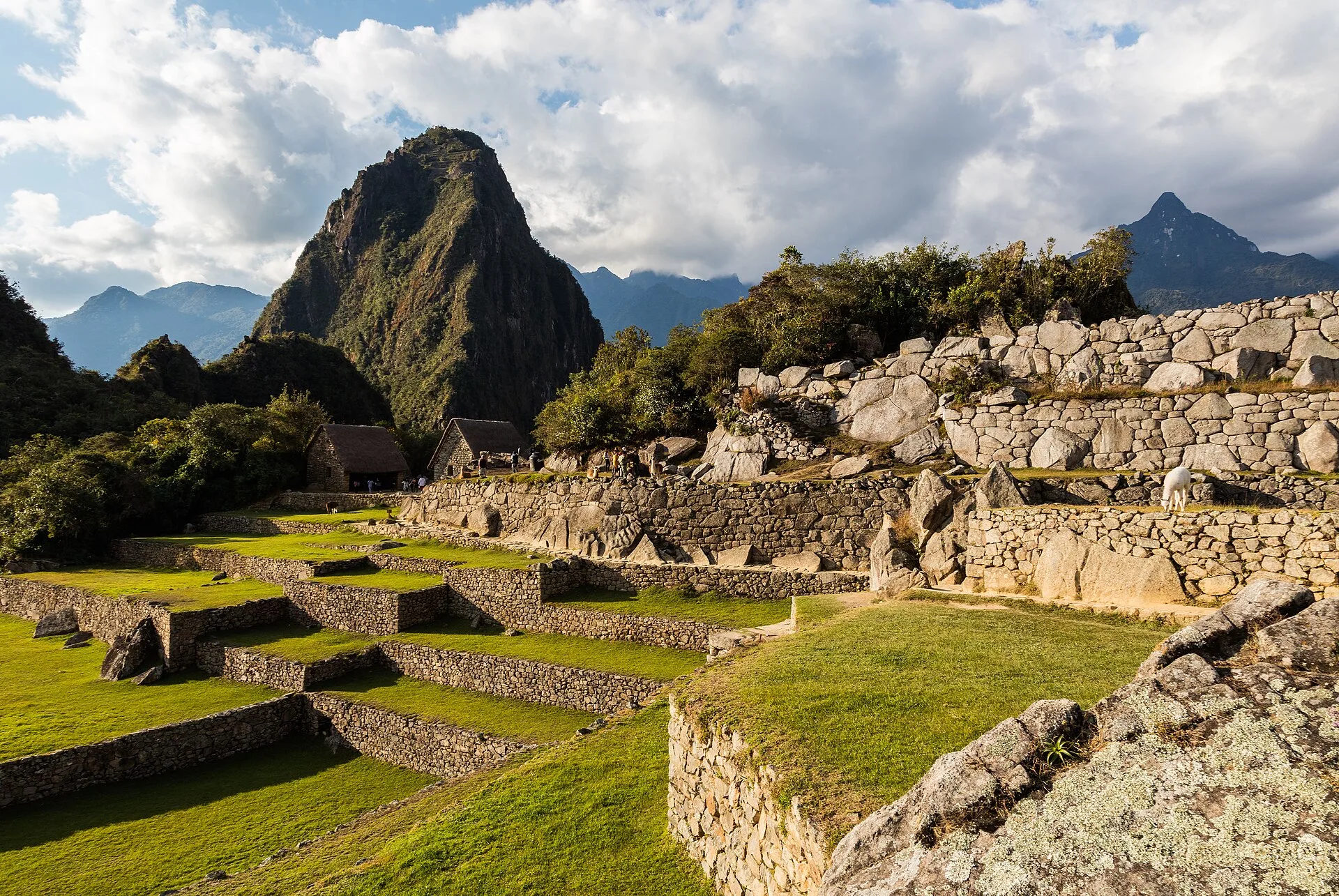
Machu Picchu was built in the 15th century and is attributed to the Inca ruler Pachacútec. It stayed off international maps until 1911, when Hiram Bingham brought it to the world's attention. Tickets are timed and limited, so buy them well in advance.
Bingham did not find it alone or empty: local farmers guided him up the mountain, and a few families were working the terraces at the time. What he did was photograph it and publicize it, and the world's interest has not faded since. Inside, visits follow fixed circuits, and Huayna Picchu, the peak in the background of every postcard, needs its own ticket.
Most archaeologists now think it was a royal estate, a mountain retreat for the emperor and his court, home to perhaps 750 people and abandoned around the time of the Spanish conquest. The Spanish never found it, which is why it was not torn down. What to look for: the Temple of the Sun, a curved wall built over a natural rock, with a window aligned to the June solstice sunrise; the Intihuatana, a carved stone pillar whose name means "the hitching post of the sun"; the Temple of the Three Windows; and the Temple of the Condor, where a rock outcrop becomes the wings of the bird.
Some practical rules. Large backpacks, tripods, drones, food and umbrellas are not allowed inside; bring a rain jacket instead. Walking sticks are for those who need them and must have rubber tips. Carry water in a reusable bottle, sunscreen and insect repellent: the small biting flies of the cloud forest are relentless. Mornings often begin in cloud that lifts by nine or ten; do not despair if you see nothing at first.
If you prefer to have the whole day arranged from Cusco, with train, bus, entry and guide in one booking, you can check dates for a full-day group tour here.
Should you walk the Inca Trail?
If you would rather arrive on foot, there is the Inca Trail, which also requires a permit and a booking. Either way, the first sight of the terraces among the clouds repays the effort.
The classic trail covers about 43 kilometers in four days and reaches more than 4,200 meters at Dead Woman's Pass, its highest point. Only about 500 permits are issued per day, including guides and porters, and the trail closes every February for maintenance. It is not for your first week at altitude.
In practice, those 500 permits leave room for about 200 trekkers a day. You cannot walk it independently: permits are sold only through licensed agencies, in your name and with your passport number, and they cannot be transferred or changed. For May to September, book six months ahead or more. A package such as this four-day Inca Trail to Machu Picchu includes the permit, guide, porters, meals and tents; compare what each agency says about group size and porter conditions before you choose.
There are alternatives. The short Inca Trail covers the last section in one long day and also needs a permit. The Salkantay trek, five days around a 6,000-meter glacier peak, needs no permit, crosses a pass at about 4,600 meters and ends by train or on foot at Aguas Calientes. The Lares trek is lower on scenery and richer in villages and weavers.
Which day trips are worth the altitude?
Two have become famous in the last decade, and both go far higher than Cusco. Do them at the end of the trip, never at the beginning.
Rainbow Mountain, or Vinicunca, is a ridge striped in red, ocher and turquoise by its minerals, at just over 5,000 meters. It is about three hours by road from Cusco, followed by a walk of an hour and a half uphill in very thin air. Go on a clear day in the dry season: under snow or cloud, the colors disappear. The neighboring Palccoyo ridge has similar colors, a shorter and flatter walk, and far fewer people.
Humantay Lake is a turquoise lagoon under a glacier at about 4,200 meters, at the start of the Salkantay route. The drive takes around three hours, and the walk up, steep and short, about an hour and a half. Organized trips such as this Humantay Lake day tour with breakfast and lunch leave Cusco around 4:00 and are back by late afternoon.
When to go
The dry season runs roughly from May to September: clear skies, cold nights and the most visitors. From November to March it rains often, especially in the afternoon, and the landscape turns very green. April and October are a good compromise. Whatever the month, pack layers: in a single day you can go from strong sun to wind and drizzle.
Two dates change everything. June is the month of festivals in Cusco, with Inti Raymi on the 24th: wonderful to see, and the most expensive and crowded weeks of the year. February is the wettest month; the Inca Trail is closed, though Machu Picchu itself stays open, and trains can be disrupted by landslides. Nights in June and July fall below freezing in Cusco, and few budget rooms have heating: ask before you book.
What to eat
Andean cooking helps with the altitude. Coca tea, an infusion of the leaves, is offered on arrival at almost every place to stay. At San Pedro market you can try hearty soups, choclo (giant-kernel corn) with cheese, and freshly made fruit juices. For the first few days, eat lightly and avoid alcohol: digestion is slower at 3,400 meters.
Once you feel better, try the local dishes: rocoto relleno, a stuffed hot pepper from the south of Peru; cuy, roast guinea pig, a traditional festive dish in the Andes; and the hundreds of potato varieties that turn up in almost every meal. After a week of slow walking, Machu Picchu feels less like a box to tick and more like the last chapter of a long story.
A few more names for the menu. Chiri uchu is Cusco's cold festival platter, served in June. Chicha morada is a sweet, non-alcoholic drink made from purple corn; chicha de jora is the fermented corn beer of the Andes, sold in village houses that hang a red flag on a pole outside. Quinoa soup is the best lunch on a cold day. One caution: coca tea is legal and ordinary in Peru, but the leaves are illegal in most other countries, so do not pack them as a souvenir. And drink bottled or filtered water.
Where should you stay?
In the Sacred Valley, Ollantaytambo is the practical choice: the station is within walking distance, and the town empties at night. Urubamba, in the middle of the valley, has the larger hotels with gardens.
In Cusco, stay within a few blocks of the Plaza de Armas to do everything on foot. San Blas is the prettiest neighborhood and the steepest: with luggage and little oxygen, those last hundred steps count. The streets around the San Pedro market are cheaper and flatter.
In Aguas Calientes, one night is enough. The town is small, built for the visitors who pass through, and its only real attraction besides the citadel is the hot springs that give it its name. Choose a room away from the railway line, which runs down the middle of the main street.
What mistakes should you avoid?
Booking the train before the entry ticket. The entry is the scarce part. Buy it first.
Bringing a different passport. The document you show at the gate must be the one on the ticket. If you renew your passport after buying, carry both, or a copy of the old one.
Climbing on day one. Sacsayhuamán, Rainbow Mountain and Humantay are for later. On the first day, a chair in a sunny square is an achievement.
Leaving no margin. Strikes and landslides close the railway a few days every year. Do not schedule Machu Picchu the day before your international flight.
Paying in dollars everywhere. Soles get better prices in markets, taxis and small restaurants. There are cash machines around the Plaza de Armas; carry small bills and coins.
Taking photos of people as if they were scenery. The women in traditional dress with lambs and alpacas in the center pose for a tip. Ask, and pay.
Forgetting the sun. At this altitude you burn in half an hour, even under cloud. Hat, sunscreen and lip balm, every day.
Quick answers
How much is the Machu Picchu ticket in 2026? For foreign adults, 152 soles for a standard route and 211 soles for routes with a mountain, bought on the Ministry of Culture's official platform.
Which circuit is best? Circuit 2, the classic route, for a first visit: it includes the upper viewpoint and the main buildings.
How long can you stay inside? About two and a half hours with a standard ticket, with no re-entry.
How high is Cusco? About 3,400 meters. Machu Picchu is lower, at about 2,400.
Do you need a guide? It is not strictly required, and it is strongly worth having: there are no explanatory signs inside.
How much is the bus to the citadel? US$24 round trip for foreign adults in 2026, from Aguas Calientes.
When is the Inca Trail closed? Every February. The citadel stays open all year.
How far ahead should you book? For June to August, three to four months for the entry ticket and six or more for the Inca Trail.
Prices and rules in this guide were checked in November 2026. They change often in Peru, so confirm them on the official platforms before you pay for anything.