Fado: the song of Lisbon
A voice, a pear-shaped guitar and a word that is hard to translate: saudade.
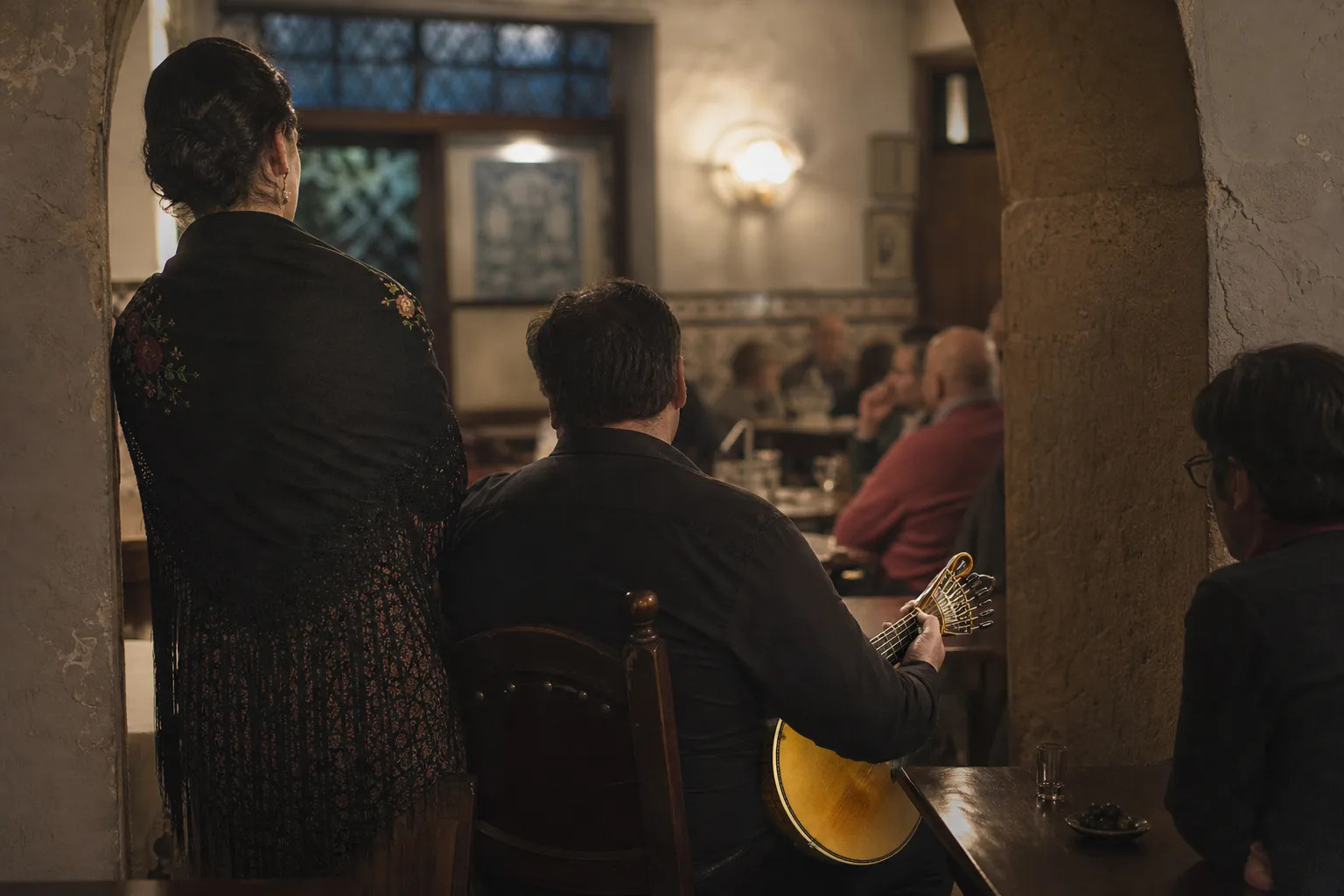
Fado is the urban music of Lisbon. It was born in the 19th century in working-class districts such as Alfama and Mouraria, among sailors, taverns and humble houses, and UNESCO declared it intangible heritage in 2011.
The elements
A fado needs very little: a voice, a Portuguese guitar — twelve strings, pear-shaped, with a metallic, trembling sound — and a classical guitar, which the Portuguese call a viola. The singers, fadistas, usually dress in black; the women wear a shawl.
Saudade
The lyrics speak of the sea, of absence, of fate. The key word is saudade: a longing for something or someone missing, mixed with the pleasure of remembering. Fado comes from the Latin fatum, fate.
When a fado begins, the house falls silent. "Silence, fado is about to be sung" is almost a law.
The queen
Amália Rodrigues (1920–1999) took fado to theaters around the world and sang the great Portuguese poets. After her death, Portugal declared three days of mourning.
Today
Mariza, Ana Moura and Carminho have renewed the genre. In Lisbon you hear it in casas de fado; Coimbra has another tradition, tied to the university and sung only by men.
Where to hear it
In Lisbon, fado is heard in the casas de fado of Alfama, Mouraria and Bairro Alto. Custom demands absolute silence during the singing: the lights go down, service stops and nobody talks. Coimbra has another tradition, tied to its university, sung only by men in black capes. Fado has been on UNESCO's list of Intangible Cultural Heritage since 2011.