Gaffer, best boy, Foley: who does what in the end credits
The credits at the end of a film list hundreds of names and some very odd job titles. A guide to the people who actually make a movie.
The film ends, the lights stay low, and a long scroll of names begins: hundreds of them, sometimes thousands, under job titles that sound like a secret language. Gaffer. Best boy. Key grip. Foley artist. Most people leave before the end. But the credits are a map of how a film is made, and once you can read them, they tell a story of their own.
This guide walks through the end credits department by department, explains the strangest titles and covers a few of the rules and traditions hidden in that scrolling text.
Why credits got so long
In the early decades of Hollywood, films usually opened with a few title cards naming the stars, the director, the writer and a handful of department heads, and ended simply with "The End". Most crew members were never credited at all. Over time, unions and guilds negotiated for recognition, and by the 1970s the long end crawl, scrolling names after the story ends, had become standard.
Visual effects made credits grow again. A modern blockbuster can involve several effects companies on different continents, each with hundreds of artists, and some big productions now have end credits that run for around ten minutes. Every name represents someone who spent weeks, months or years on the film.
Above and below the line
The film industry divides its people into two groups, a distinction that comes from the way budgets were traditionally laid out on paper.
1. **Above the line**: the creative leaders who shape the film and usually negotiate individual deals, such as the producers, director, writers and principal cast.
2. **Below the line**: the technical and craft crew who make the film physically happen, from camera and lighting to costumes, construction and catering.
The opening credits, when a film has them, usually focus on the first group. The end credits are where the second group finally appears.
Running the production
3. **Producer**: finds the project, raises the money, hires the key people and protects the film from start to finish. An **executive producer** is often someone who helped finance or package the film, while a **line producer** manages the budget and the day-to-day logistics.
4. **Unit production manager**: watches costs, schedules and contracts on the ground.
5. **First assistant director**: despite the title, not a trainee director. The 1st AD runs the set, keeps the schedule, coordinates departments and calls out the familiar commands before each take. The **second AD** prepares the daily call sheet that tells everyone when and where to be.
6. **Script supervisor**: tracks every take and keeps **continuity**, making sure that a glass is just as full, a collar just as crooked and an actor's hand in the same place from one shot to the next.
7. **Location manager**: finds the places where the film is shot and negotiates permission to use them.
Camera
8. **Director of photography**, or cinematographer: designs the look of the film together with the director, deciding on cameras, lenses, framing and, crucially, lighting.
9. **Camera operator**: physically operates the camera on many productions, while the cinematographer supervises the image.
10. **First assistant camera**, or **focus puller**: keeps the image sharp as actors and camera move, often by turning the focus ring remotely, a job that requires remarkable precision.
11. **Second assistant camera**, or **clapper loader**: handles the slate, the clapperboard that marks each take with the scene number so that picture and sound can be synchronised later.
12. **DIT**, digital imaging technician: on digital productions, manages the camera files, checks the image and safeguards the footage.
Gaffers, best boys and grips
Here is where the titles become mysterious.
13. **Gaffer**: the head of the electrical department, also called the **chief lighting technician**. The gaffer turns the cinematographer's ideas about light into a practical plan: which lamps, where, at what intensity. The origin of the word is debated. Some trace it to an old English term for a foreman or an older man; others link it to the long pole, or gaff, once used to adjust lights hung high above theatre and studio stages.
14. **Best boy**: the gaffer's right hand, handling crew, equipment and paperwork. A best boy can be a woman, and many are; the title has simply stuck. The origin is uncertain, and the term may come from older trades such as sailing and whaling, where a skipper would ask for his best boys.
15. **Electricians**: the lighting crew who rig and run the lamps and cables, nicknamed "sparks" in English-speaking crews.
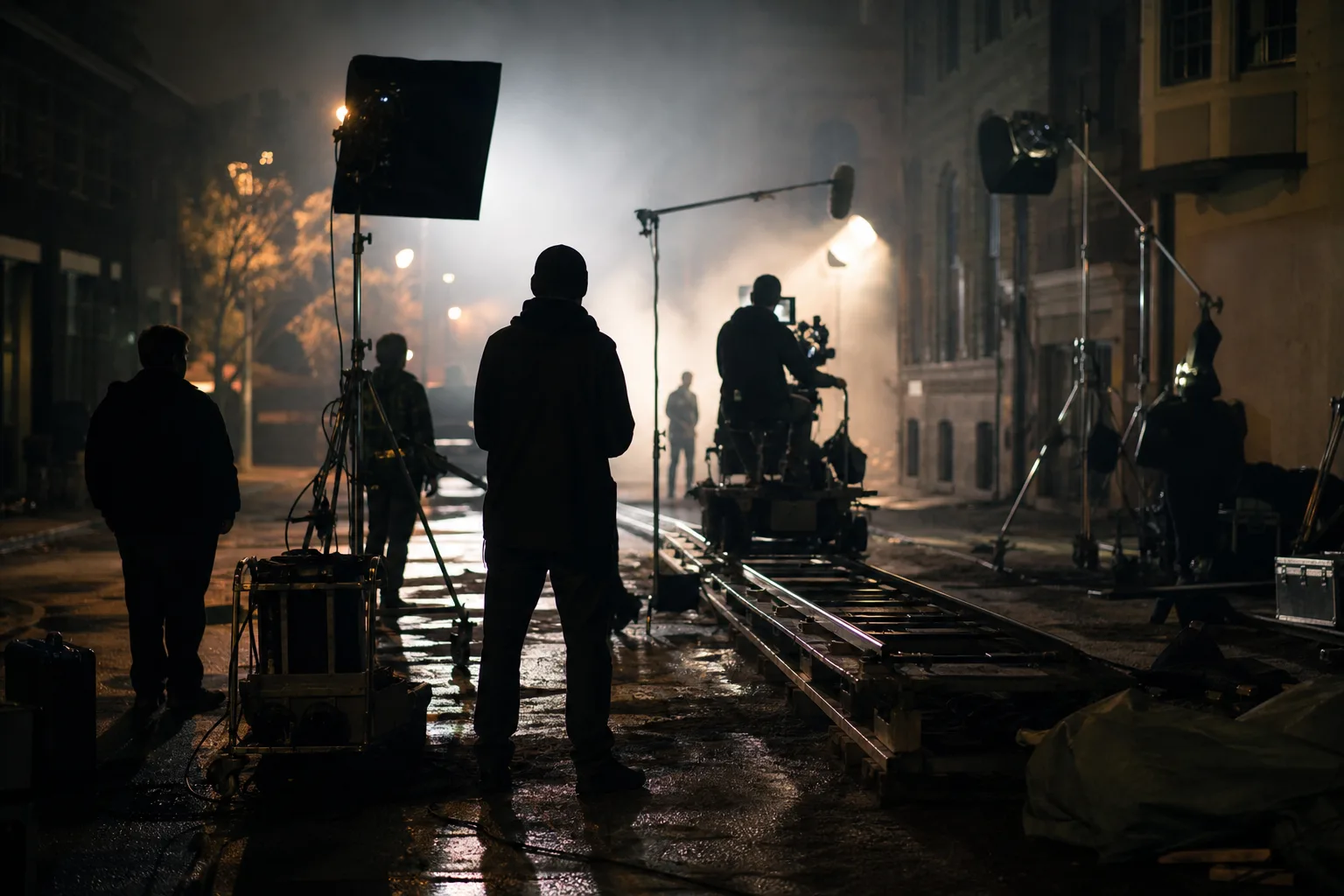
16. **Key grip**: the head of the grip department. Grips handle the non-electrical equipment that supports the camera and shapes the light: tripods, cranes, dollies, the tracks that dollies run on, and the frames, flags and fabrics that block or soften light.
17. **Dolly grip**: pushes the dolly, the wheeled platform that carries the camera, with smooth, perfectly timed movements so that the shot feels effortless.
Grips and electricians work side by side: in broad terms, if it plugs in, it belongs to the electricians; if it holds, moves or blocks something, it belongs to the grips. Grips also have a best boy grip.
The credits are not a list of names. They are the instruction manual of a film, written backwards.
Design, costume and makeup
18. **Production designer**: creates the overall visual world, from sets to colour palette.
19. **Art director**: manages the art department and turns the designer's plans into drawings and builds.
20. **Set decorator**: furnishes the sets with everything that makes them feel lived in, from curtains to books on a shelf.
21. **Prop master**: in charge of the objects that actors handle, such as phones, weapons, letters and food.
22. **Construction coordinator**: leads the carpenters, painters and plasterers who build the sets.
23. **Costume designer**: designs or sources every garment, working with **costumers** and **wardrobe** staff who maintain the clothes and dress the actors each day.
24. **Hair and makeup**: from everyday looks to **prosthetics**, the special effects makeup that can age an actor by forty years or turn them into a creature.
Sound: on set and after
25. **Production sound mixer**: records dialogue during filming.
26. **Boom operator**: holds the long pole with the microphone just outside the frame, following actors without casting a shadow.
After filming, a whole team works on sound in post-production.
27. **Supervising sound editor**: leads the creation of the film's soundtrack, apart from the music.
28. **Dialogue editor**: cleans and assembles the recorded dialogue.
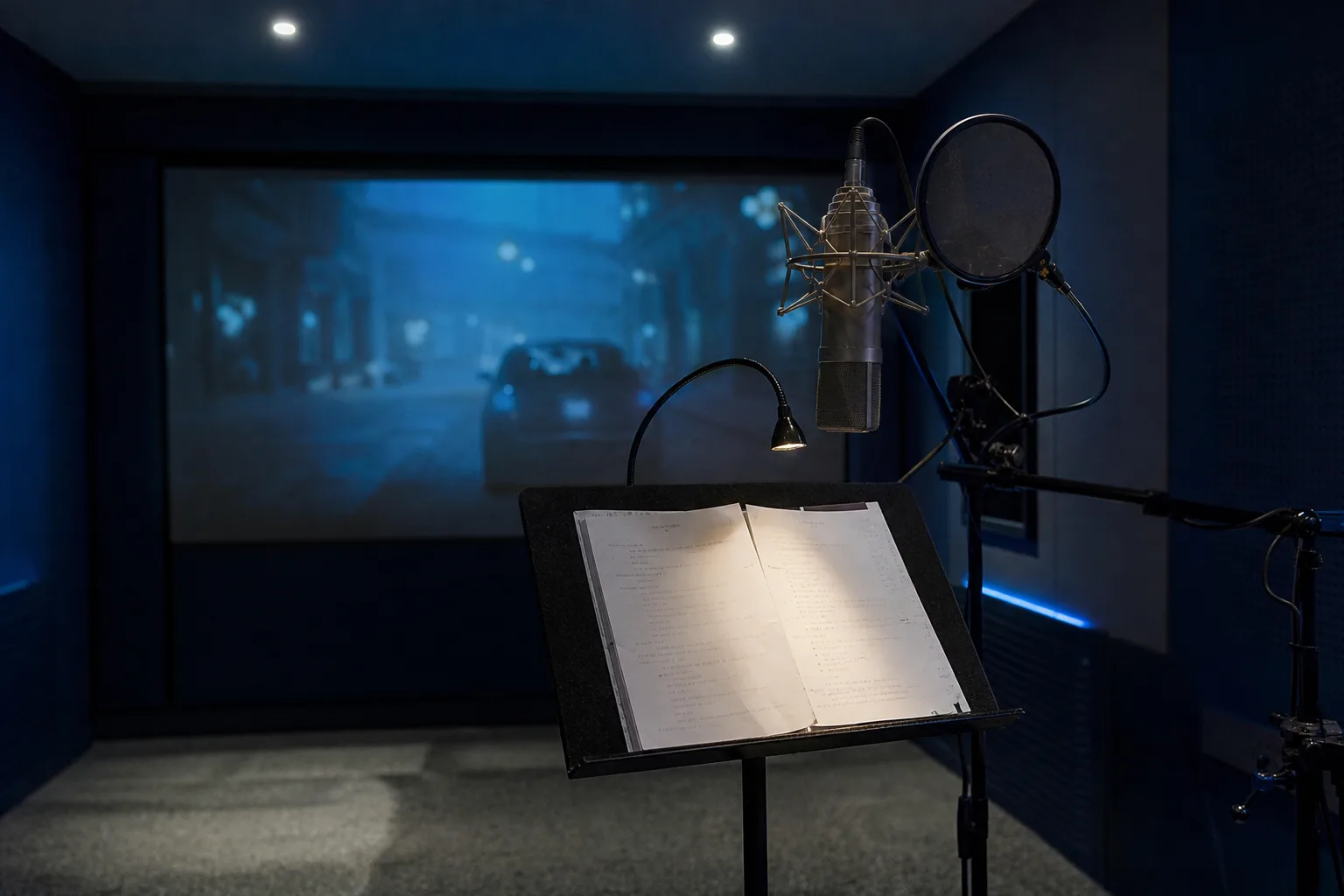
29. **ADR**, automated dialogue replacement: actors re-record lines in a studio when the original sound is unusable or a line has changed.
30. **Foley artists**: recreate everyday sounds in sync with the image, such as footsteps, rustling clothes, a cup set on a table or a punch. They are named after **Jack Foley**, who developed the technique at Universal Studios from the late 1920s. Foley studios are filled with strange objects, from shoes of every kind to gravel pits, old doors and vegetables that sound remarkably like breaking bones.
31. **Re-recording mixer**: balances dialogue, effects and music into the final mix you hear in the cinema.
Editing, colour and effects
32. **Editor**: assembles the footage into the film, working closely with the director, often for many months. Assistant editors organise the enormous amount of material shot.
33. **Colourist**: adjusts the colour and contrast of every shot to create a consistent mood.
34. **VFX supervisor**: oversees visual effects on set and in post-production.
35. **Compositors, animators and modellers**: the visual effects artists who build digital creatures, cities, explosions and crowds, or remove wires, signs and anything else that should not be in the shot.
Stunts, safety and wellbeing
36. **Stunt coordinator**: designs and supervises action scenes so they look dangerous without being so.
37. **Stunt performers and doubles**: take the falls, crashes and fights.
38. **Intimacy coordinator**: a role that became common in the late 2010s, choreographing intimate scenes and making sure that actors have agreed to what is filmed.
39. **Medics, safety officers and animal wranglers**: keep people and animals safe. On many American productions, a statement that no animals were harmed refers to monitoring by an animal welfare organisation.
The people who keep everyone going
40. **Catering**: serves the main meals on location.
41. **Craft services**: in American usage, the team that keeps snacks and drinks available all day, a small detail that makes long shoots bearable.
42. **Drivers and transport**: move cast, crew and equipment between locations.
43. **Production accountants**, **assistants** and **runners**: handle the money, the paperwork and the hundreds of small errands that keep a shoot moving.
One shot, many hands
To see how these roles fit together, imagine a single shot: an actor walks down a hallway at night, opens a door and stops in surprise.
Weeks earlier, the location manager found the building and the production designer chose the wallpaper. That morning, the set decorator hung the pictures and the prop master placed the key in the actor's pocket. The cinematographer decided that the hallway should be lit by a single lamp, and the gaffer's team rigged it, while the grips built a frame of black fabric to stop light from spilling where it should not. The dolly grip rehearsed pushing the camera backwards at exactly the actor's walking pace, while the focus puller marked the floor so the actor's face would stay sharp.
Hair and makeup checked the actor one last time, and the costume team smoothed the jacket. The boom operator found a position where the microphone would catch every breath without appearing in the frame. The script supervisor noted which hand opened the door. Then the 1st AD called for quiet, the second assistant camera clapped the slate, and the director called "action".
The shot lasts eight seconds on screen. Months later, an editor will choose the best take, a Foley artist will record new footsteps on a wooden floor, a colourist will make the night look colder, and a re-recording mixer will decide how loudly the door creaks. Every one of those people is in the credits.
Credits around the world
The basic structure of credits is similar everywhere, but local details vary. European films often list the public funding bodies, regional film funds and television channels that helped finance them, because many productions depend on that support. International co-productions may credit teams in several countries, each with its own producers. In some countries, credits must include certain legal notices, such as a classification number or a mention of the national film registry.
Job titles also travel unevenly. Many crews around the world use English titles such as gaffer, grip and best boy on international shoots, while their own national credits may use local terms for the same jobs.
Rules hidden in the credits
Credits are not just thank-you notes. In many countries, especially the United States, they are governed by union and guild agreements.
44. **Writing credits** follow rules set by the Writers Guild of America. An ampersand, as in "Smith & Jones", means the two writers worked as a team; the word "and" means they worked separately, for example one rewriting the other. "Story by" and "Screenplay by" distinguish who created the story from who wrote the script.
45. **Alan Smithee**: from the late 1960s until 2000, the Directors Guild of America allowed directors who could prove they had lost control of a film to use this invented name instead of their own.
46. **Order and size**: the position and size of a star's name can be part of their contract.
47. **Production babies**: some studios, including Pixar, list the children born to crew members during the making of a film.
Why it is worth staying
Since Iron Man in 2008, Marvel films have made post-credits scenes famous, though the idea is older: Ferris Bueller's Day Off surprised audiences with one in 1986. But there are better reasons to stay. The credits list the music used, the locations, the cities that hosted the shoot and dedications to people who died during production. Sometimes they include jokes, drawings or out-takes.
If you want to go further, online film databases list the full crew of most films, often with each person's earlier work. Following a cinematographer, an editor or a composer from film to film is one of the best ways to understand how much they shape what we see and hear, and it often leads to discoveries you would never have found by following only the stars.
Next time, stay a few minutes. Look for the gaffer, the Foley artists and the dolly grip, and remember that every one of those names helped create the two hours you just watched. Once you know what they do, the film looks different: you start noticing the light, the footsteps and the camera moves that someone worked hard to make invisible.