How to check whether a viral image is real
A shark on a flooded motorway, a pope in a designer coat. Five checks that take two minutes and save you from sharing a fake.
In March 2023, millions of people saw a photograph of Pope Francis in a huge white puffer jacket. It looked perfect. It had been made in minutes with an artificial intelligence program by a man in Chicago. Many of those who shared it never learned that it was false.
Fake images are not new, but making them has become easy. Checking them is easier than most people think.
1. Stop before sharing
The most useful check is not technical. Images that provoke a strong reaction, such as anger, tenderness or surprise, are precisely the ones made to be shared without thinking. If a picture seems too perfect for the story it tells, wait two minutes.
2. Search for the image itself
A reverse image search tells you where else a picture has appeared. On a phone, press and hold the image and choose the search option, or use tools such as Google Lens or TinEye.
This catches the most common trick, which does not involve artificial intelligence at all: a real photo with a false caption. The shark swimming on a flooded motorway has been "photographed" in every hurricane for more than a decade. A search shows it immediately.
The most common fake is not an invented image. It is a real photo with the wrong caption.
3. Look for the source
Who published it first? A news agency, an official account or an anonymous profile created last month? If something important has really happened, several reliable media outlets will have it within minutes. If the only source is a screenshot, be suspicious.
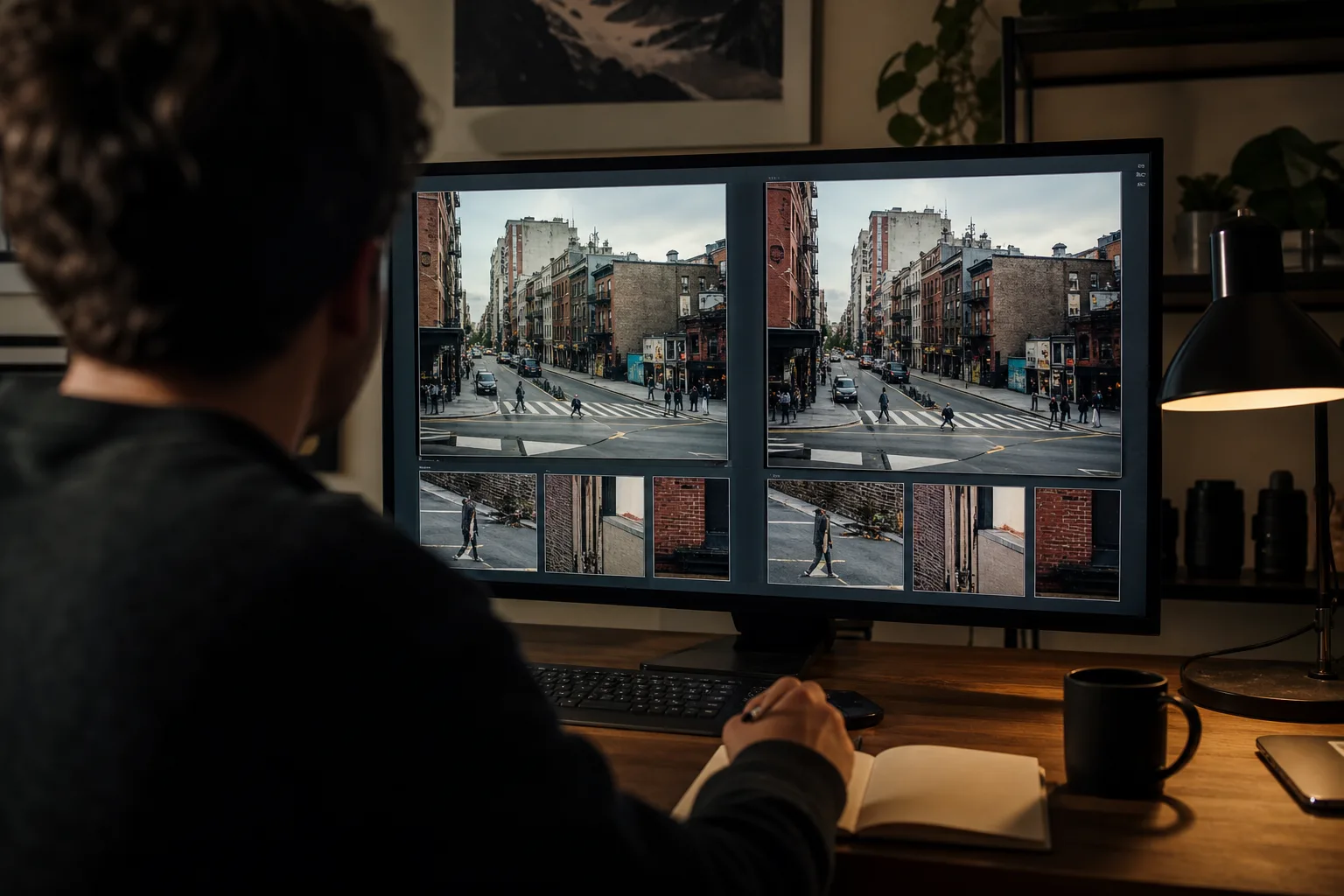
4. Look closely
Images generated by artificial intelligence improve every month, and the old advice about counting fingers no longer works reliably. Some details still help.
1. **Text** in the background: signs and labels are often nonsense.
2. **Hands, teeth, ears and jewelry**, especially on people in the background.
3. **Surfaces** that are too smooth, and lighting that is too cinematic.
4. **Logic**: shadows pointing in different directions, a chair with five legs, glasses that melt into a face.
Finding no errors does not prove an image is real.
5. Ask the professionals
Fact-checking organizations spend their days on this. News agencies such as AFP and Reuters have verification teams, and there are specialist outlets in most countries, such as Snopes in the United States, Maldita.es in Spain and Correctiv in Germany. Searching for a description of the image plus the word "fake" often gives the answer in seconds.
What is coming
Cameras, phones and editing programs are beginning to attach content credentials, a kind of digital label that records where an image came from and how it was edited. Some platforms also mark content made with artificial intelligence. The labels help, but they can be removed, so the habit is still what counts: stop, search, check the source.