Why the internet keeps asking you to click on traffic lights
Wavy letters, blurry house numbers, buses and crosswalks: the tests that ask if you are human have a history, a business model and a problem.
You want to buy a ticket, log into an account or post a comment, and a box asks you to select every square with a traffic light. Then a bicycle. Then a crosswalk, a bus, a fire hydrant, a set of stairs. These tests are called CAPTCHAs, and they are one of the strangest daily rituals of the internet: billions of people, every day, proving to a machine that they are not machines.
This guide explains where CAPTCHAs came from, how your answers helped digitise books and train software, why the tests keep changing, what is wrong with them, and how to deal with them safely.
A test to tell people from programs
The name is an acronym: Completely Automated Public Turing test to tell Computers and Humans Apart. It refers to the British mathematician Alan Turing, who in 1950 proposed his famous "imitation game", a test of whether a machine could convincingly pass for a human in conversation. A CAPTCHA turns that idea around: it is a test, set by a machine, that humans are supposed to pass and machines to fail.
The problem it solves is real. Automated programs called bots can do in seconds what would take a person hours: create thousands of fake accounts, post spam in comment sections, try stolen passwords on login pages, buy up concert tickets to resell at higher prices, or scrape entire websites. A test that is easy for people and hard for software acts as a gate.
The first wavy letters
The first tests appeared in the late 1990s. In 1997, the search engine AltaVista used distorted text to stop programs from automatically submitting web addresses to its index. Around 2000, Yahoo struggled with bots that joined its chat rooms to advertise and collect users' details, and turned to researchers at Carnegie Mellon University in the United States. A team including Luis von Ahn, a young Guatemalan computer scientist, and his supervisor Manuel Blum developed tests based on distorted words, and in 2003 they published the paper that formally coined the term CAPTCHA.
The idea was simple: show something that people find easy and computers find hard. At the time, software was poor at reading letters that were warped, overlapping or covered with lines, while humans could usually make them out.
Your answers did some work
Von Ahn later calculated that people around the world were typing around 200 million CAPTCHAs a day, each taking a few seconds. Together, that added up to hundreds of thousands of hours of human effort every day, spent on a task that produced nothing. He wondered whether it could be put to use.
In 2007, he and colleagues launched reCAPTCHA. Instead of random letters, it showed two words: one that the system already knew, to check that you were human, and one from an old scanned book or newspaper that optical character recognition software had failed to read. By typing the unknown word, users helped digitise texts, including the archives of The New York Times. Google bought reCAPTCHA in 2009 and used it to help with its book-scanning project, and later to read house numbers photographed by its Street View cars.
Von Ahn went on to apply the same idea of harnessing small contributions from many people to language learning, co-founding the app Duolingo.
Every time you proved you were human, you were also working for free.
From letters to pictures
Computers eventually learned to read distorted text better than people. In 2014, Google researchers reported that their software could solve even the hardest distorted-text CAPTCHAs with more than 99 percent accuracy. The old tests had stopped working.
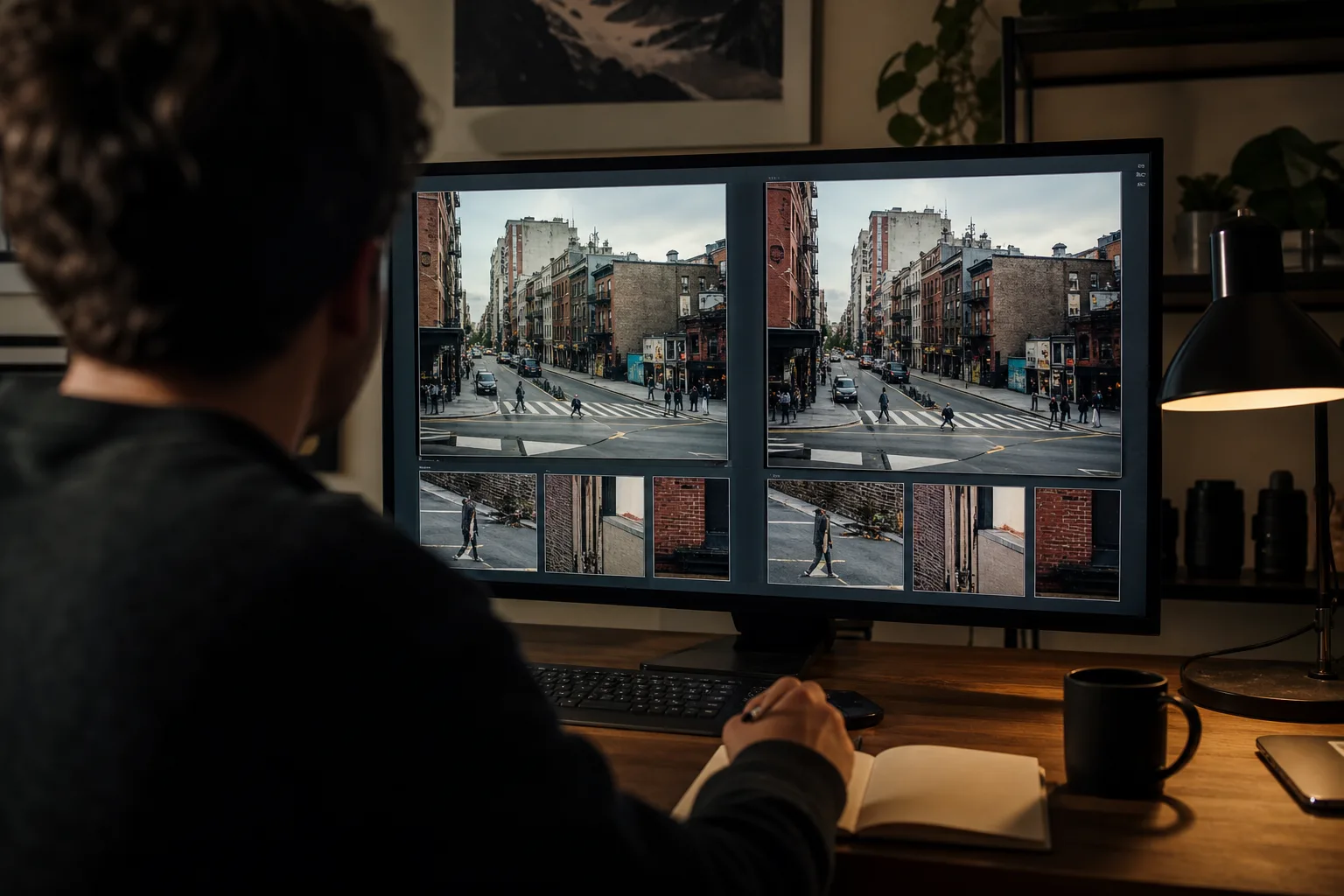
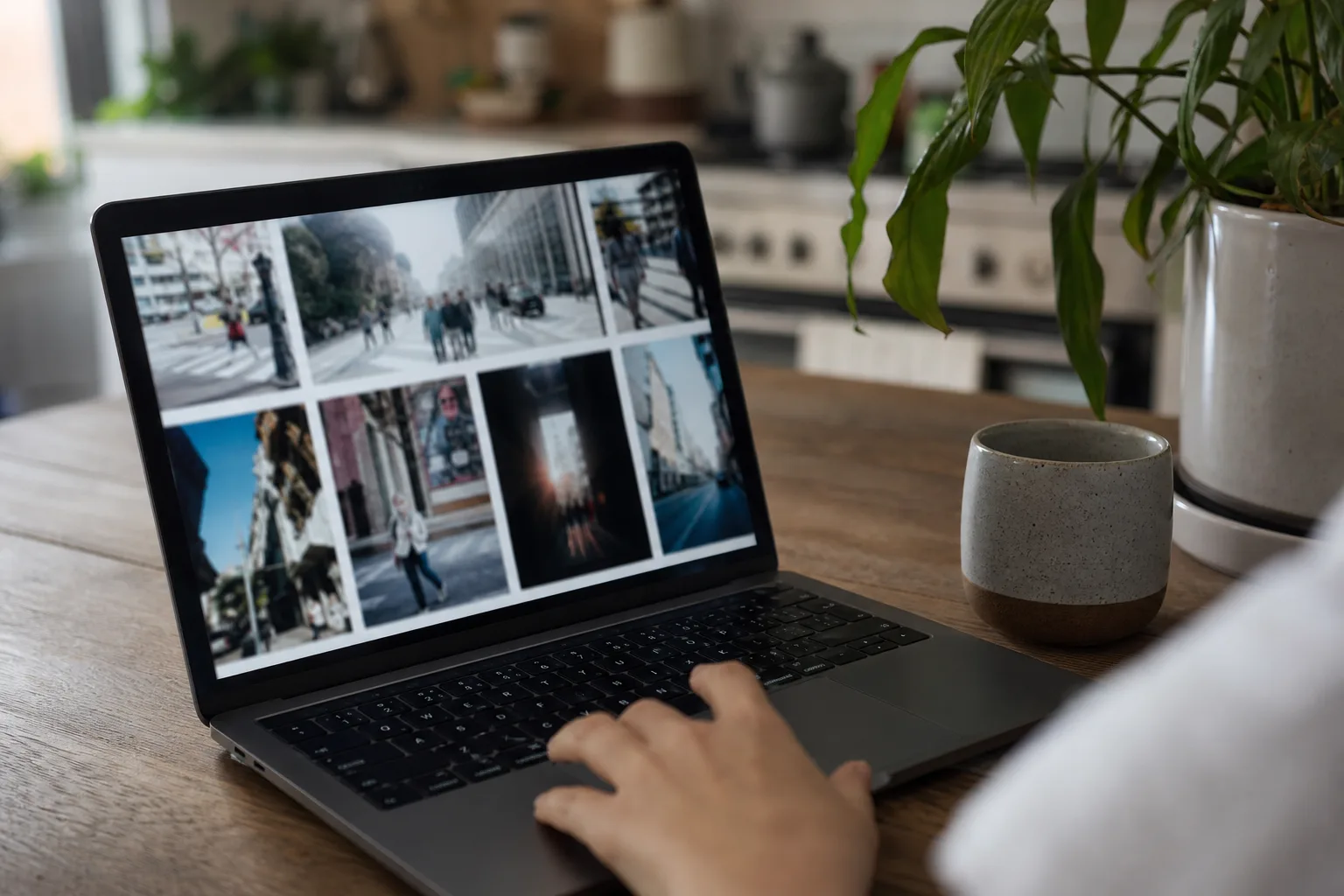
So the tests changed. In December 2014, Google introduced the "I'm not a robot" checkbox. When you click it, the system examines signals in the background, such as how your mouse moves, details of your browser and device, and your history with Google's services. If it is confident you are human, it lets you through. If it is unsure, it shows a puzzle, and this is where the famous image grids of traffic lights, buses, storefronts and crosswalks come from. Many of those images come from street photography, and the answers have been widely understood to help train image-recognition systems, including those used for mapping.
In 2018, Google released a version that works invisibly, giving each visitor a score in the background, from likely human to likely bot, without asking anything. The website decides what to do with that score: let the user in, ask for extra verification or block the request.
The competitors
Google is not the only provider. hCaptcha, launched in the late 2010s, offered website owners a privacy-focused alternative and, at one point, paid them for the image labelling their visitors performed. In 2020 the internet infrastructure company Cloudflare, which protects a large share of the world's websites, switched to hCaptcha, and in 2022 it launched its own system, Turnstile, designed to verify visitors without showing puzzles in most cases. The messages that say a site is "checking your browser" or "verifying you are human" for a few seconds often come from systems like these.
Why it feels harder than it used to
Bots are now very good at recognising images too. A 2023 study by researchers at the University of California, Irvine, found that bots could solve many common CAPTCHAs faster and more accurately than the humans tested. That creates an awkward situation: the remaining puzzles are often aimed at what is still slightly hard for machines, or are designed mainly to slow everyone down and make large-scale attacks more expensive.
Some bot operators do not even bother with software. CAPTCHA farms employ people, often in low-wage countries, to solve puzzles in real time for a tiny fee per answer, forwarding the solutions to bots. When OpenAI tested an early version of its GPT-4 model before release in 2023, its report described the model persuading a human worker on a freelancing site to solve a CAPTCHA for it by claiming to have a visual impairment, an example widely cited in debates about AI.
If you use a VPN, block cookies or browse in private mode, you will often see more challenges, because the system has less information to trust you with. The same happens if many people share your internet address, as in offices, universities or mobile networks.
The defences you never see
CAPTCHAs are the visible part of a much larger set of defences, and websites usually try other methods first, precisely because puzzles annoy people.
1. **Rate limits**: a site can restrict how many attempts can come from one address in a given time, so that a bot trying thousands of passwords is slowed to a crawl.
2. **Honeypots**: some forms include a hidden field that people never see and therefore leave empty. Simple bots fill in every field they find, revealing themselves.
3. **Timing**: a person needs a few seconds to fill in a form; a script can do it in milliseconds. Submissions that arrive impossibly fast can be treated as suspicious.
4. **Verification by email or phone**: confirming an address or number makes mass account creation more expensive, although it also costs privacy.
5. **Reputation**: networks and addresses with a history of abuse face more checks than ordinary home connections.
Only when these signals are uncertain does the visitor see a challenge. That is why two people visiting the same page at the same moment can have completely different experiences: one passes straight through, the other is asked to find motorcycles.
The problems
6. **Accessibility**: image and text puzzles are a barrier for blind and partially sighted people, and audio alternatives are often distorted and hard to understand, especially for people with hearing or cognitive disabilities. The W3C, the body that sets web standards, has long published guidance warning about the inaccessibility of CAPTCHAs and recommending alternatives.
7. **Privacy**: invisible checks work by observing your behaviour and device, which raises questions about what is collected, how long it is kept and who can use it. European data protection authorities and courts have examined such tools under the GDPR.
8. **Unpaid labour**: millions of hours of human attention have gone into labelling images, often without users knowing.
9. **Frustration**: failed puzzles, endless loops of new grids and ambiguous questions, such as whether the pole counts as part of the traffic light, cost time and drive people away. Studies of online shopping have found that difficult challenges can make customers abandon purchases.
10. **Language and culture**: images based on American streets, with yellow school buses and fire hydrants, can be confusing for people elsewhere in the world.
Bots, tickets and the law
CAPTCHAs are only one weapon in a wider fight against automated abuse. Ticket sales are a famous battleground, because bots can buy large numbers of seats in seconds for resale at much higher prices. In 2016 the United States passed the BOTS Act, which makes it illegal to use software to get around ticket-purchasing limits. Several European countries have also passed laws against ticket touting. Ticket sellers combine CAPTCHAs with virtual queues, identity checks and purchase limits, and the problem has still not been solved.
What comes next
Newer systems try to avoid puzzles altogether. Some check the browser silently, looking at hundreds of technical signals. Others rely on private access tokens, a technology supported by Apple since 2022, in which your phone or computer, having already verified that it is a real device used by a real person, vouches for you to a website without revealing who you are. Some services use passkeys and two-factor authentication to make fake accounts harder to create in the first place.
Governments are working on related tools. Under a 2024 regulation, every country in the European Union must offer its citizens a digital identity wallet by the end of 2026, an app that can prove facts about a person, such as being over 18, without handing over a full identity document. Supporters hope such tools could one day replace some checks; privacy advocates warn that proving you are human must never require proving exactly who you are.
At the same time, the arrival of AI agents, programs that browse websites and complete tasks on behalf of users, raises a new question. If a person asks software to book a table or buy a ticket for them, is that a bot to be blocked or a customer to be served? Websites and standards bodies are only beginning to work out the answer.
Beware of fake CAPTCHAs
Because people are used to clicking through verification boxes without thinking, criminals imitate them. Two tricks are common:
11. **Fake checks that ask you to run a command**: a page claims you must press a combination of keys, paste something into a command box and press Enter to prove you are human. A real CAPTCHA will never ask you to do this; it is a way to make you install malicious software yourself.
12. **"Click Allow to confirm you are not a robot"**: some sites use a fake verification to get you to accept browser notifications, which they then use to flood you with spam and scam advertising.
If a "verification" asks for anything beyond clicking images, ticking a box or typing a few characters, close the page.
How to make CAPTCHAs less painful
13. **Ask for a new one**: if a puzzle is impossible, look for the button to get a new one rather than guessing.
14. **Try the audio option** if images are hard to see, or the reverse.
15. **Do not overthink the edges**: for most image grids, select the squares that clearly contain the object; the systems tolerate small differences.
16. **Check your setup**: if you see endless challenges, a VPN, aggressive privacy extensions or an out-of-date browser may be the reason. Turning one off for a trusted site can help.
17. **Report accessibility problems**: if a site blocks you, contact it. Many organisations only change when users tell them that their verification is excluding people.
The traffic lights will probably not disappear soon, but more and more often you will be checked without noticing. Behind every grid of blurry photos is an arms race between the people who build websites and those who try to exploit them, and, unknowingly, the millions of ordinary users who have spent a few seconds of their day helping both sides.