Impressionism: the insult that named a movement
In 1874, a group of rejected painters put on their own exhibition. A critic mocked a Monet canvas and christened them by accident.
On April 15, 1874, thirty artists opened an independent exhibition in the former studio of the photographer Nadar, in Paris. They were tired of the official Salon rejecting their work. Among them were Monet, Renoir, Degas, Pissarro, Sisley and Berthe Morisot.
The scandalous picture
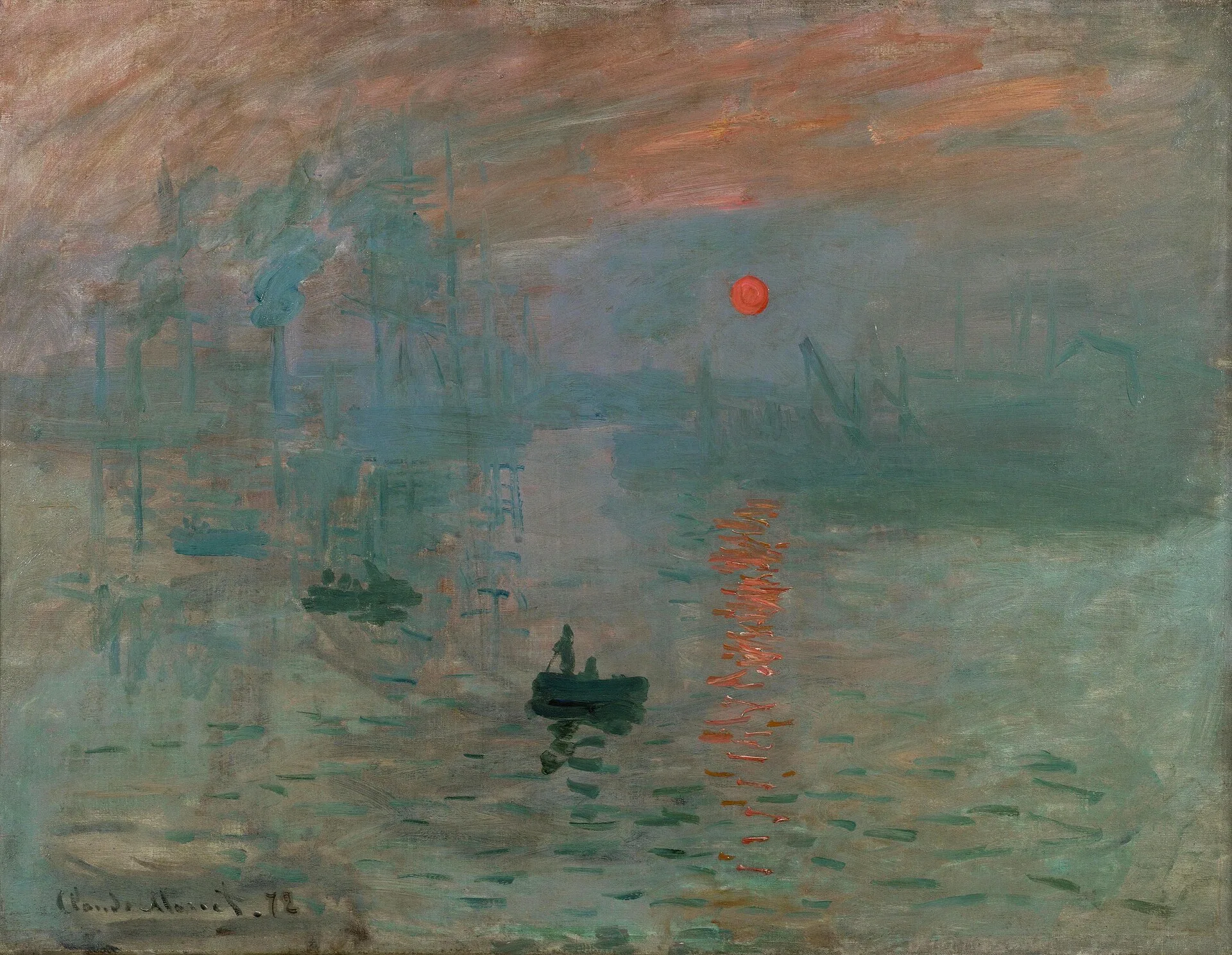
Claude Monet hung a view of the port of Le Havre at dawn, painted in 1872 with quick strokes: blue mist, barely suggested boats and an orange sun. He titled it Impression, Sunrise.
The insult
The critic Louis Leroy mockingly headed his review "The Exhibition of the Impressionists": the thing, he wrote, was less finished than wallpaper. The painters adopted the name.
What looked like a sketch to the critic was exactly the idea: to paint the light of an instant before it changes.
What they had in common
They painted outdoors, thanks to newly invented paint tubes. They used pure, unmixed colors and blue or violet shadows instead of black. They chose modern subjects: train stations, cafés, regattas.
What came next
There were eight Impressionist exhibitions, until 1886. Monet took the idea to the extreme in his series: the same cathedral or the same water lilies at different hours.
Where to see it
Impression, Sunrise is at the Musée Marmottan Monet in Paris; the Musée d'Orsay holds the largest collection of the movement.
The women painters
The group was not only a men's affair. Berthe Morisot took part in almost every Impressionist exhibition and painted domestic life with brushwork as free as anyone's. The American Mary Cassatt, a friend of Degas, specialized in scenes of mothers and children and helped persuade collectors in her own country to buy Impressionism when France was still laughing at it.