The GIF: a 1987 file format that refuses to die
It is older than the web, it only has 256 colors and nobody agrees how to pronounce it. The unlikely story of the internet's favorite moving picture.
You reply with a celebrity rolling their eyes, and the conversation understands you perfectly. That little loop is a GIF, and the technology behind it is older than the World Wide Web.
Born in 1987
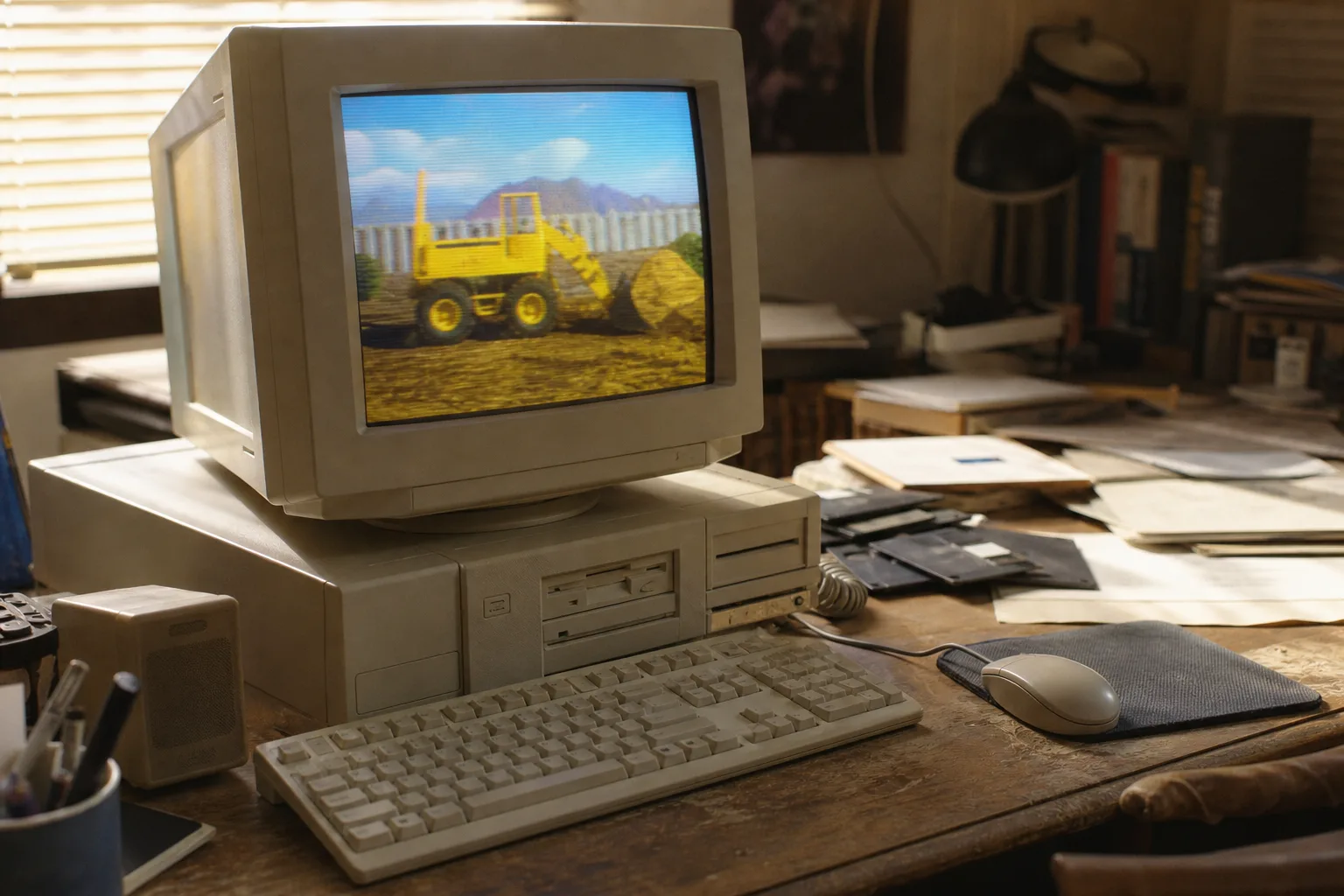
The GIF, short for Graphics Interchange Format, was created in 1987 by a team led by the engineer Steve Wilhite at CompuServe, one of the first online services in the United States. Connections were painfully slow, and the company needed a way to send color images that would take up little space and work on any computer.
The format has a hard limit of 256 colors per image. That is why GIFs look grainy next to a modern photo, and it is also part of their charm.
The feature that saved it
The format could hold several images in one file and show them one after another. In the mid-1990s, the Netscape browser added the ability to repeat them endlessly. The loop was born.
The first websites filled with flames, spinning envelopes and little workers with shovels announcing that a page was "under construction".
A GIF is a silent film that lasts three seconds and never ends.
The patent war
In the 1990s, the company that owned the patent on the GIF's compression method announced that it would charge for its use. Programmers responded by creating a free alternative for still images, PNG, which is still everywhere today. The patents expired in the 2000s, and by then the GIF had been declared dead more than once.
The second life
Social networks brought it back. On blogs and forums around 2010, people began using short loops from films and series to answer one another: the reaction GIF. It said what an emoji could not, with the exact face of the exact actor. In 2012, Oxford's American dictionaries chose "GIF" as word of the year, as a verb.
Phone keyboards then added a GIF search button, and sending one became as easy as sending a sticker.
A secret
Most of the "GIFs" you send today are not GIF files. Platforms quietly convert them into small videos, which weigh much less and look better. The name survived the format.
So how do you say it?
With a hard G, as in "gift", say most people and most dictionaries, which accept both forms. With a soft G, like "jif", said its creator. Wilhite settled the matter in 2013 when he received an award for his invention, with a five-word speech shown, of course, as a GIF. Nobody paid any attention.