Walking: the exercise that doesn't feel like exercise
You don't need ten thousand steps or to buy anything. What is known about the simplest, most underrated habit.

Walking has no monthly fee, needs no special clothes and can start today. Maybe that is why it is hard to take seriously.
Where ten thousand steps came from
The figure was not born in a laboratory. In 1965, a Japanese company launched a pedometer called manpo-kei, "ten-thousand-step meter." The number was round and sold well.
What studies say
Later research suggests the benefits start much earlier: in older people, mortality drops clearly from about four thousand steps a day, and improvement continues up to seven or eight thousand. More steps do no harm; the curve simply flattens.
What the WHO recommends
Between 150 and 300 minutes a week of moderate activity. Brisk walking — you can talk but not sing — counts. That is about thirty minutes a day, five days a week.
The best walk is the one that fits your day: walking to work counts too.
For the mind
Walking clears the head. A Stanford University experiment found people came up with more creative ideas while walking than sitting. It is no accident that so many writers and philosophers were great walkers.
How to start
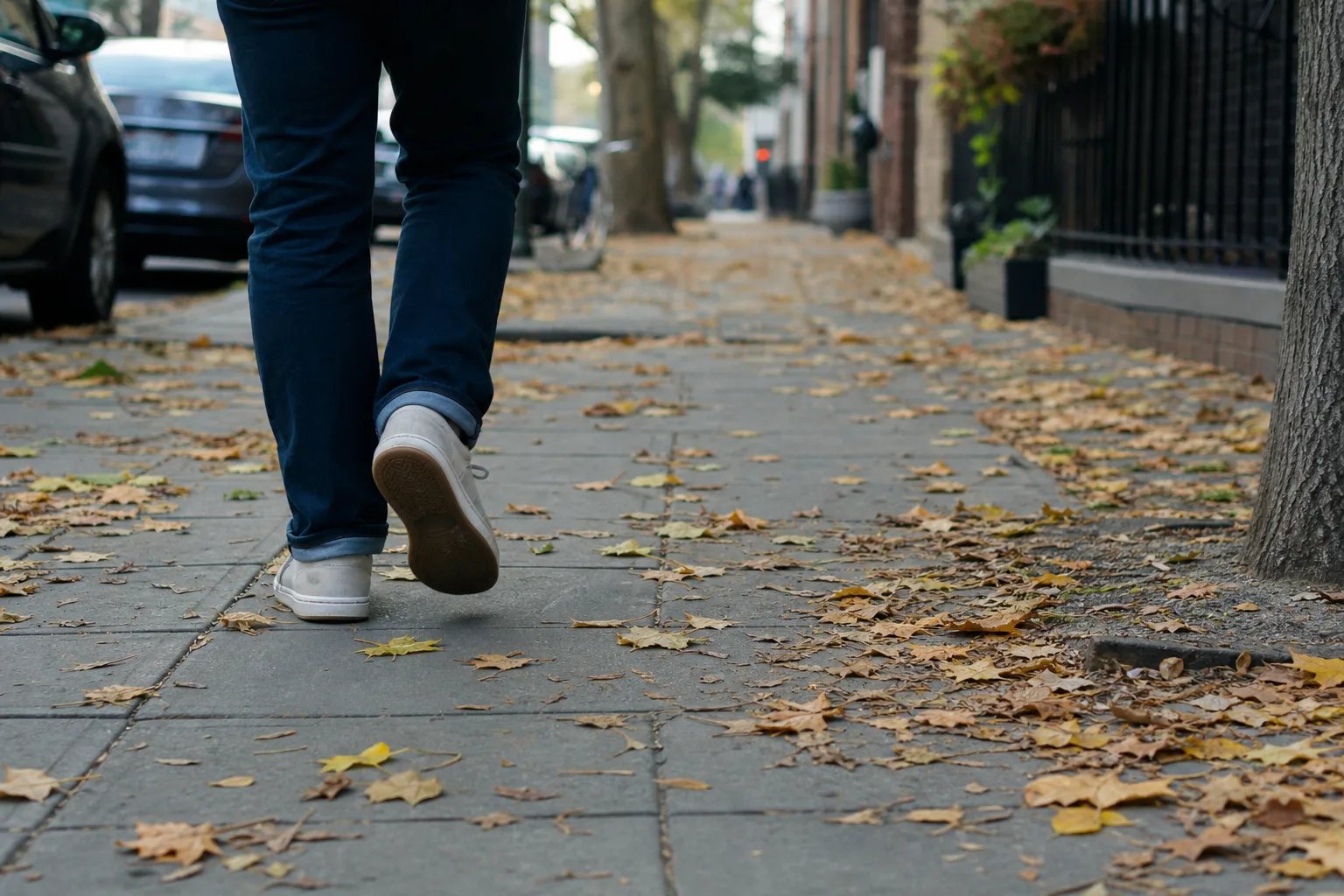
Ten minutes after lunch. Get off one stop early. Meet someone for a walk instead of sitting down. Wear comfortable shoes.
One rule
Don't measure everything. Some walks are just walks.
Walking with others
Walking also has a social advantage: it is one of the few forms of exercise that let you talk. Arranging to walk with a friend, a neighbor or a colleague turns the stroll into an appointment, and appointments are harder to cancel than resolutions. Many cities organize free walking groups. And for difficult conversations, walking side by side tends to be easier than talking face to face.