Hokusai's 'Great Wave': what Japan's most copied image hides
Three boats, a tiny mountain and a blue that came from Europe. The story of a print that fits on one sheet.
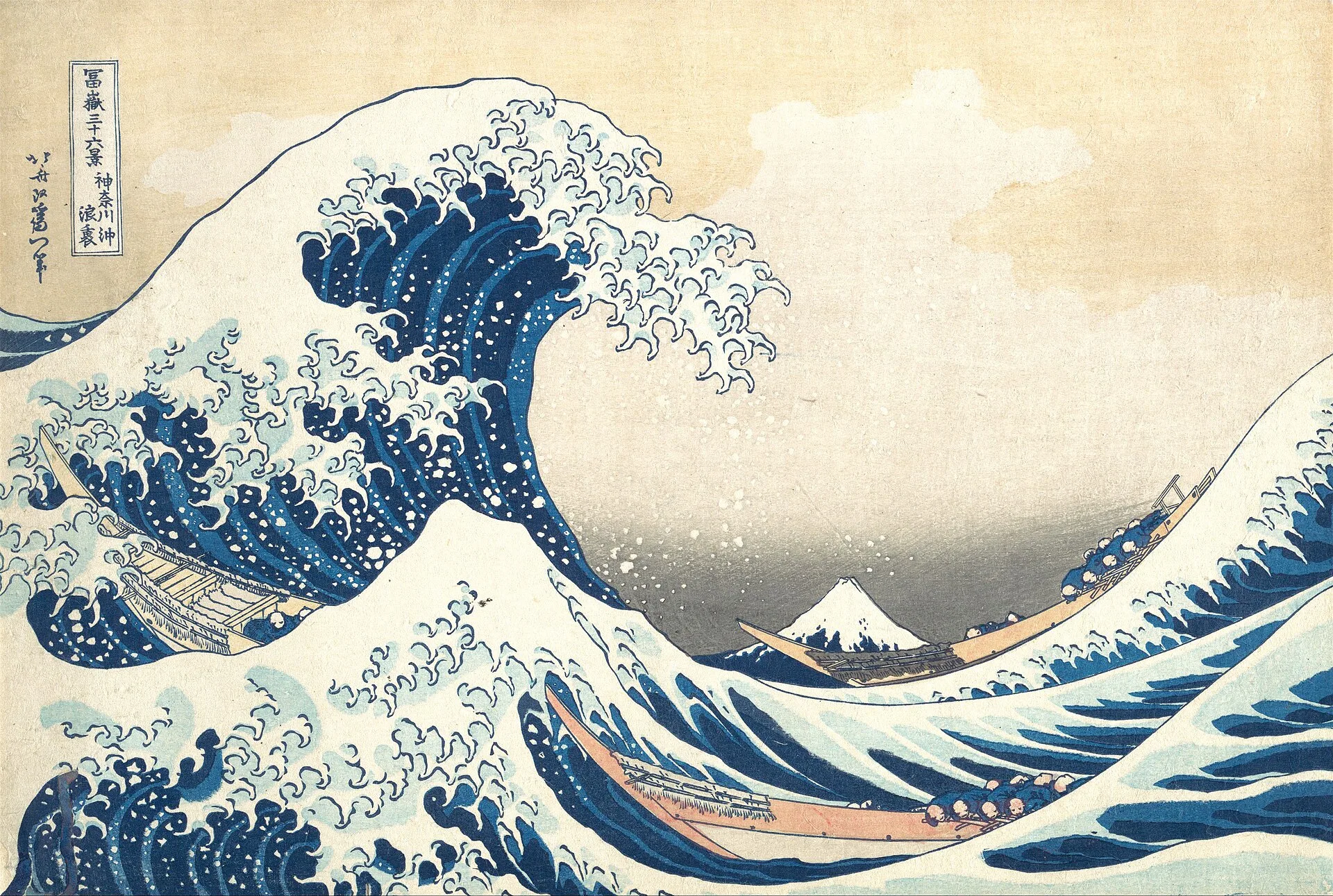
The Great Wave off Kanagawa is on T-shirts, emojis and murals. The original is a sheet of paper about 25 by 37 centimeters, printed around 1831, when its creator, Katsushika Hokusai, was about seventy.
It is not a painting
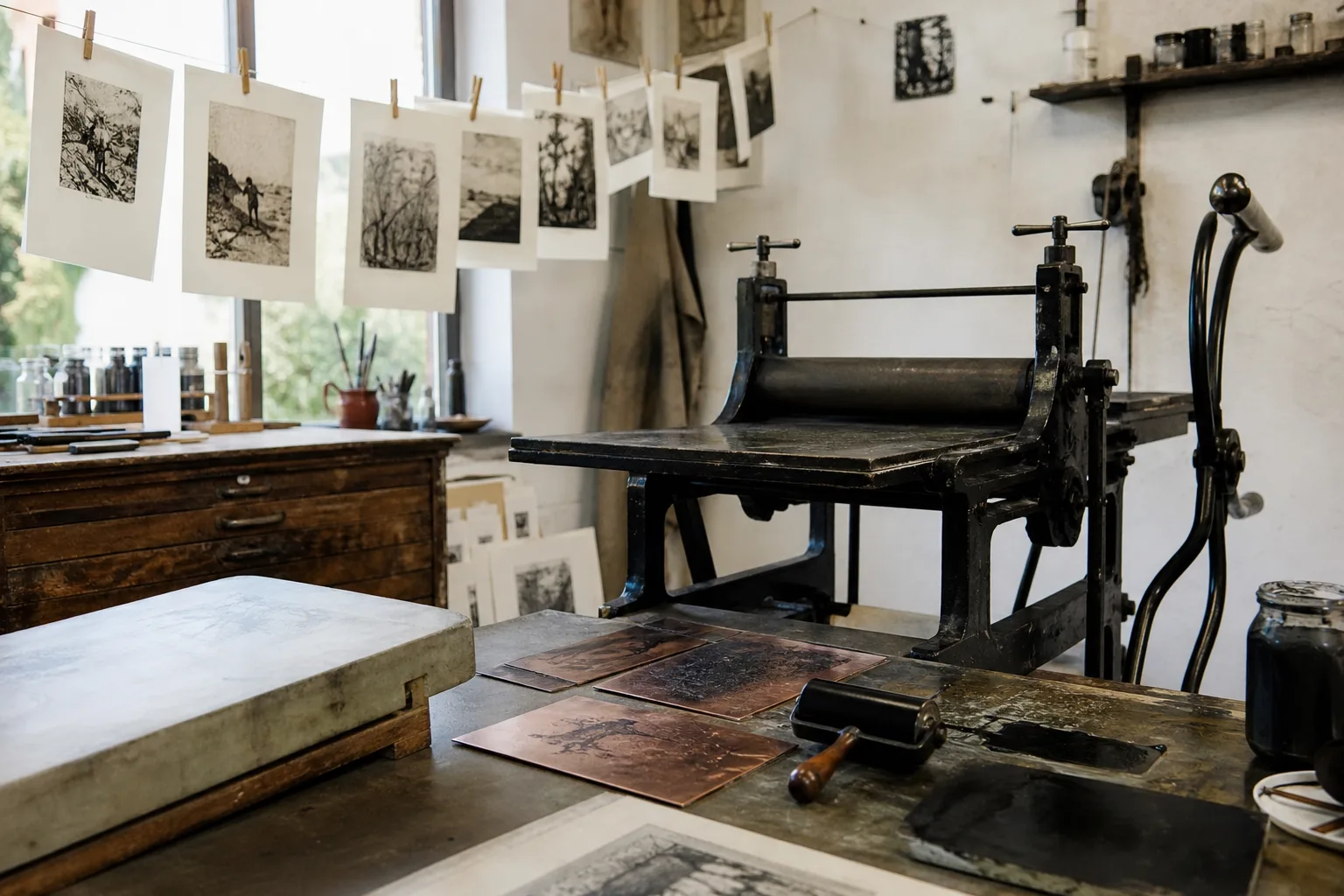
It is a woodblock print: a drawing carved into wooden blocks, one per color, and printed by hand. Thousands of copies of the first edition were printed and sold cheaply. Around a hundred survive.
The protagonist is at the back
The print belongs to the series Thirty-six Views of Mount Fuji. The sacred mountain appears small, under the curve of the wave, as if about to be swallowed. In the three boats, the rowers crouch.
The wave has seemed about to fall for almost two hundred years. That frozen instant is the whole picture.
A foreign blue
The dominant color is Prussian blue, a synthetic pigment imported from Europe that had only just reached Japan. Hokusai also used Western perspective. Decades later the journey reversed: Monet, Van Gogh and Debussy were fascinated by Japanese prints.
The artist
Hokusai changed his name more than thirty times and said that nothing he made before seventy was worth anything.
Where to see it
Because it is fragile, it is rarely on display. The British Museum, the Metropolitan and several Tokyo museums hold copies.
Its influence
When Japan opened to trade in the 1850s, its prints reached Europe and dazzled artists. Monet collected them, Van Gogh copied them in oil and Debussy put the Great Wave on the cover of the score of La mer. The craze was called Japonisme. Today the image is on T-shirts, murals and even an emoji: few works of art have traveled so far.