How to combine colors when you dress (without learning theory)
A wheel, three schemes and a rule of proportion. The basics for leaving black behind without looking like a costume.
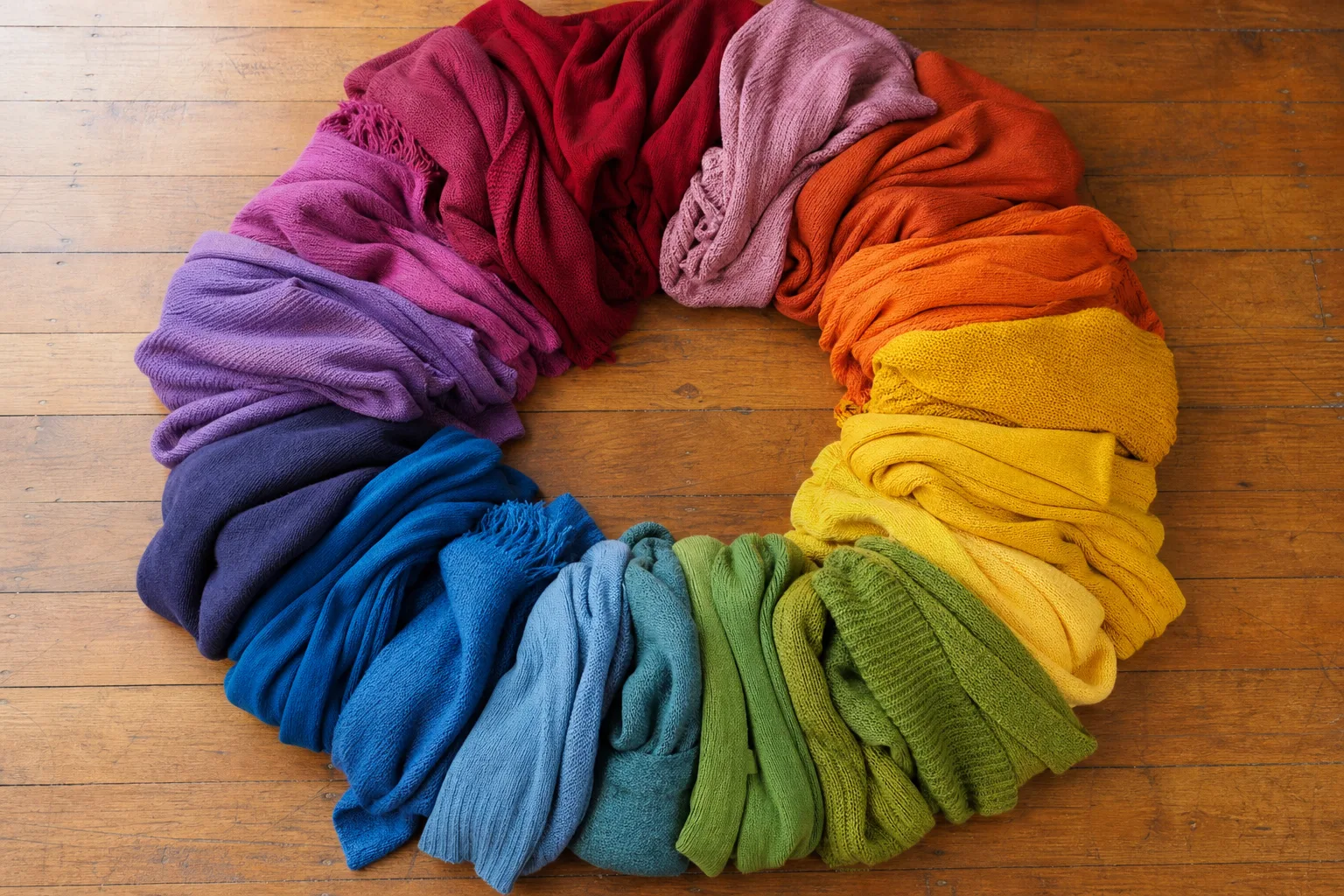
Many people dress in black, gray and navy not out of taste but for fear of getting it wrong. Combining colors is easier than it seems once you grasp three ideas.
The color wheel
Picture the colors on a wheel: red, orange, yellow, green, blue, violet. Each one's position relative to the others tells you how they get along.
Three schemes that work
Monochrome: different shades of one color, from light to dark. Sky blue with navy, for example. It is the easiest and the most elegant.
Analogous: neighbors on the wheel. Green with blue; orange with brick red. Harmony guaranteed.
Complementary: opposites. Blue with orange, violet with yellow, green with red. High contrast: best if one dominates and the other is a detail.
A useful rule: 60% a main color, 30% a secondary one and 10% an accent.
Neutrals
Black, white, gray, beige, navy, khaki and denim too. They go with everything and with each other. They make a base for introducing a single bright color.
Tricks
Start with accessories: a scarf, socks, a bag. Repeat the accent color in two places, so it looks intentional. Mix textures when you wear a single color. And look at nature: colors that live together in a landscape almost never fail together.
And your skin
Hold the garment up to your face in natural light. If it brightens you, it is your color; if it dulls you, keep it for trousers.
Prints
Mixing prints looks hard, but there is a trick. Choose two that share at least one color and differ in scale: a fine stripe with a large floral, a small check with a bold polka dot. Stripes work almost like a neutral and go with everything. If in doubt, separate the prints with a plain piece, or start with accessories: a scarf is a rehearsal without risk.