How to host a dinner at home without suffering
A dish that cooks itself, an unpretentious table and one rule: the host has to enjoy it too.
Having people over for dinner feels like a chore because of one wrong idea: that you have to impress. You don't. People remember the conversation and the mood, almost never the menu.
1. Cook something you already know
It is no night for experiments. Choose a dish that has turned out well at least twice.
2. Let the oven or the pot do the work
The best dishes for guests are finished before the doorbell rings: a stew, a roast, a lasagna, a curry. Avoid anything that keeps you at the stove at the last minute.
3. One effort only
One careful main course. The rest, simple: a good salad, bread, cheese. Dessert can be fruit, ice cream or chocolate.
If the host is nervous, everyone notices. If the host is sitting down and laughing, nobody checks whether the rice was overcooked.
4. Ask first
Allergies, intolerances, vegetarians. A message two days ahead avoids awkward moments.
5. The table
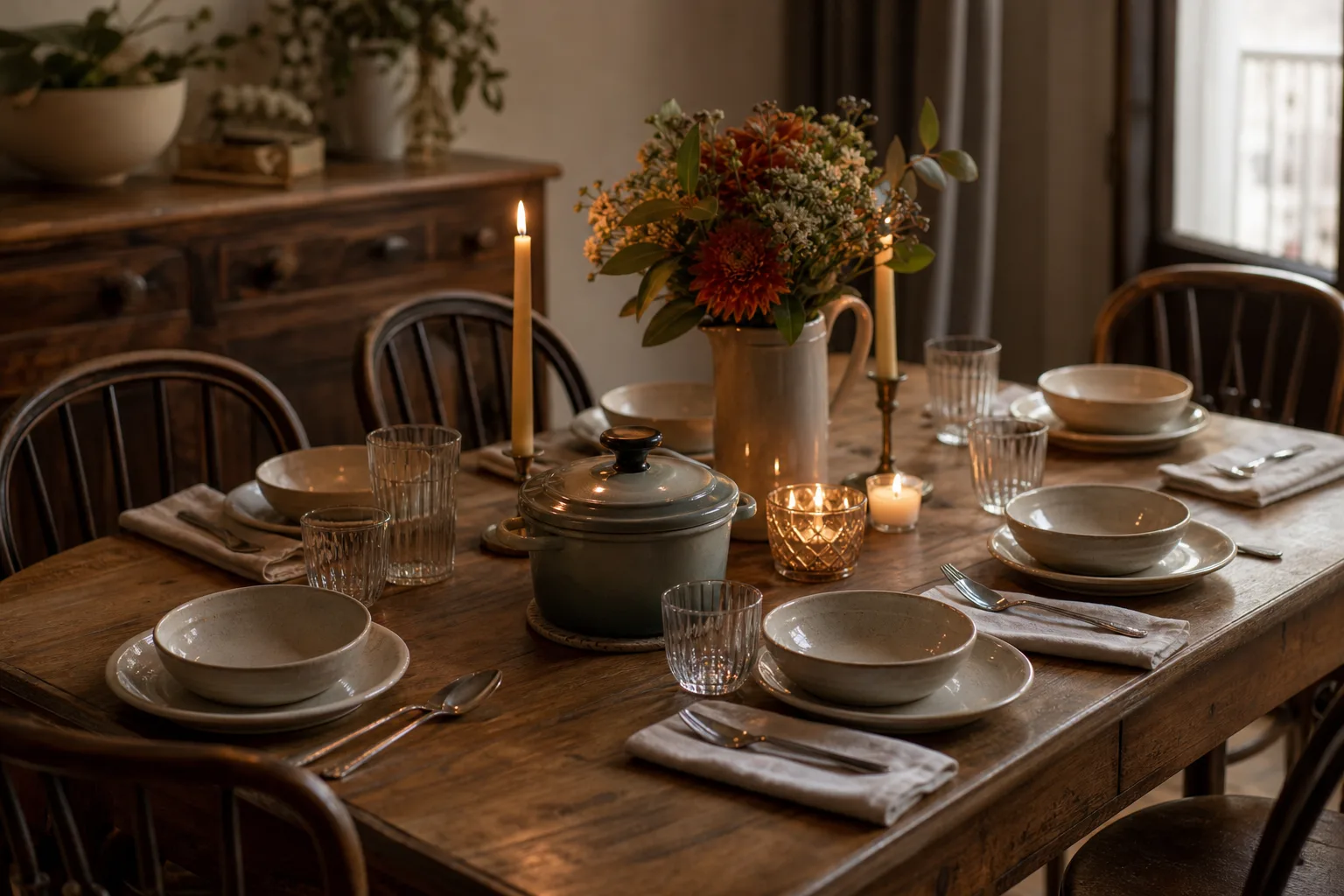
Plates, glasses and napkins, even if they don't match. Candles or low light. A jug of water that is always full. Nothing else.
6. Accept help
If they ask what to bring, say something specific: the wine, dessert, the bread.
7. Leave the dishes
Don't wash up while guests are there. Lingering at the table is the best part of the night.
A fail-safe menu
Hummus and vegetables to nibble, roast chicken with lemon and potatoes, green salad and ice cream with something crunchy on top.
The conversation
The food is the excuse; what people remember is how they felt. Introduce those who do not know each other with more than a name — a shared interest is enough — and seat together people who might get along. If the talk flags, an open question works better than current affairs: "What is the best trip you have ever taken?" And if a guest is quiet, give them a job: opening the wine is taking part, too.