Mariachi: what instruments make it up and where it comes from
From rural western Mexico to the world's stages, the story of a sound that is also a symbol.
Mariachi is probably the most recognizable sound of Mexico. UNESCO added it to its intangible heritage list in 2011, as string music, song and trumpet.
The origin
It was born in the west of the country — Jalisco, Nayarit, Colima, Michoacán — as rural string music. The first groups had no trumpets or charro suits: they played sones at parties and weddings.
The instruments
A modern mariachi brings together violins, trumpets, guitar and two instruments of its own. The vihuela is small, with a rounded back, and keeps the rhythm with bright strumming. The guitarrón, huge and big-bellied, plays the bass. Together they create a pulse you recognize at once.
Without the guitarrón there is no mariachi: it is the heart nobody watches and everyone feels.
The transformation
In the 1930s, radio and Golden Age cinema carried mariachi to the capital. Trumpets were added, the charro suit was adopted, and singers like Jorge Negrete and Pedro Infante turned it into a national emblem. Mariachi Vargas de Tecalitlán, founded in 1897, set the style.
Where to hear it
In Mexico City's Plaza Garibaldi, at Guadalajara's International Mariachi Festival or at any family party where someone asks for "El son de la negra."
The suit and the songbook
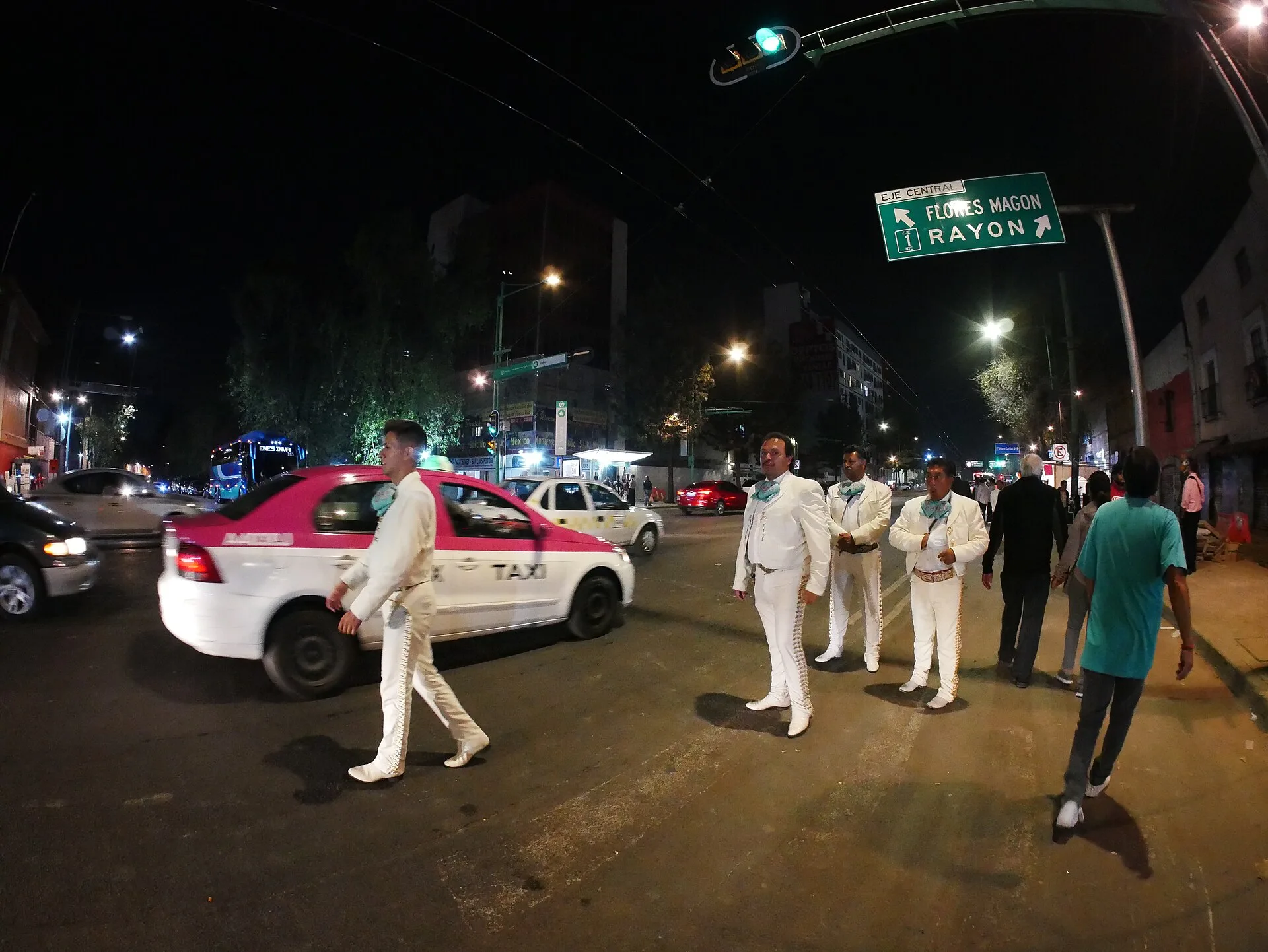
The charro suit, with its silver buttons and wide-brimmed hat, came to mariachi in the 20th century and is now inseparable from it. The repertoire is more varied than it seems: sones from Jalisco, rancheras, corridos, boleros and huapangos. And some songs are never missing, such as Las mañanitas on birthdays or Cielito lindo when everyone needs to sing together.