Mate: the unwritten rules of a round
Who pours, why you don't move the straw and when to say 'thanks'. A short manual for the drink of the River Plate.
In Argentina, Uruguay, Paraguay and southern Brazil, mate is much more than an infusion: it is a way of being with others. It is made with the dried leaves of yerba mate, a tree native to the Paraná forest that the Guaraní people already drank.
The elements
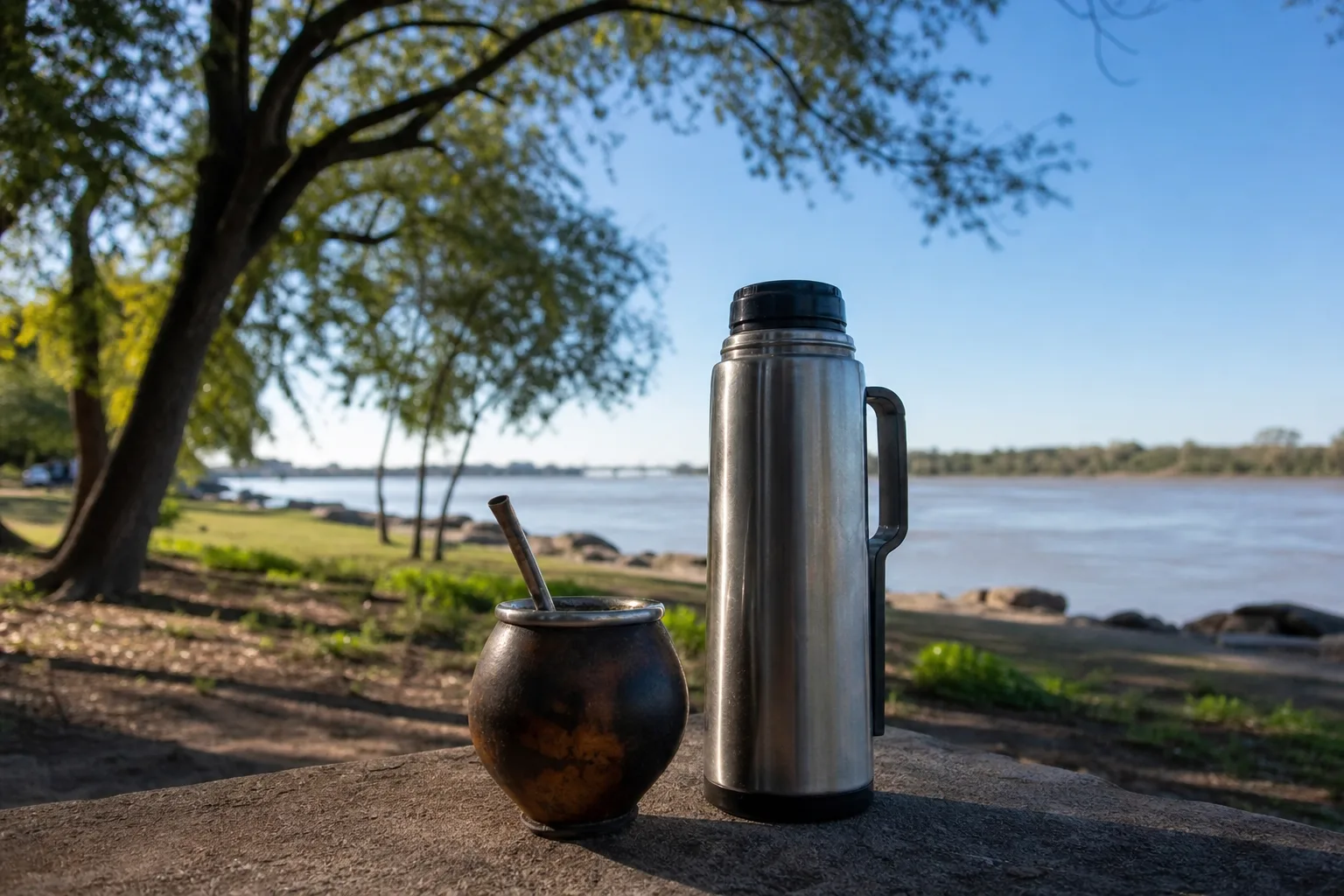
The mate is also the vessel, traditionally a gourd. The bombilla is the metal straw with a filter. The yerba fills about three quarters of the gourd. And the water goes in a thermos, hot but not boiling: between 70 and 80°C (160–175°F). Boiling water burns the leaves and turns them bitter.
The round
One person, the cebador, prepares and serves. They drink the first one, which is the strongest. Then they refill the gourd and pass it to each person in turn. Each drinks it all and hands it back.
Saying "thanks" when you return the mate means "no more for me." If you want to keep going, hand it back in silence.
What not to do
Move the straw: it clogs the filter and offends the cebador. Hold the gourd too long: "it's not a microphone." Blow into it.
Variants
Bitter or sweet, depending on the household. In Paraguay it is drunk cold, with herbs, and called tereré. In Uruguay it is common to see people walking with the thermos under their arm.
To start
A mild yerba, water at 75°C and someone to share it with.
Curing the gourd
A new calabash gourd is cured before use. Fill it with used, damp yerba, let it rest for a day and then scrape the inside with a spoon to remove the soft residue. That seals the gourd and stops it from tasting bitter. After each use, empty it and leave it to dry upright and uncovered: damp is its only enemy.