Sorolla, the painter who caught the Mediterranean light
Valencia beaches, white dresses and a sun that seems to wet the canvas. Why his paintings still feel warm.
Joaquín Sorolla (1863–1923) was born in Valencia, orphaned at two and became the most famous Spanish painter of his day. His subject was always the same: light.
Painting in the sun
Sorolla planted his easel in the sand of Malvarrosa beach and painted fast, in full sun, on huge canvases. Children coming out of the water, fisherwomen, oxen hauling boats, swelling sails.
The white that is not white
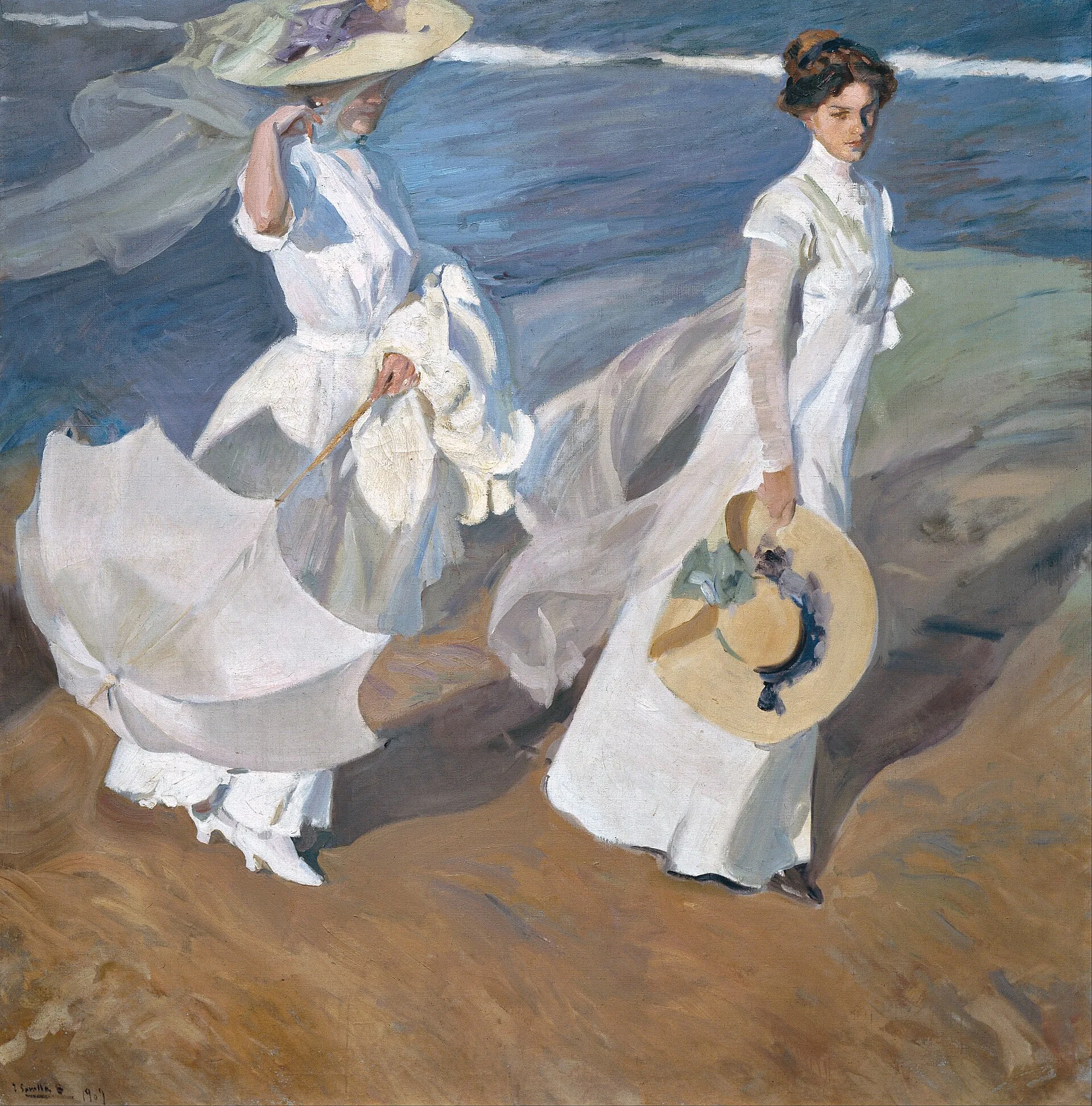
His best-known work, Walk on the Beach (1909), shows his wife, Clotilde, and his daughter María strolling by the sea. The white dresses are made of blues, mauves, pinks and yellows: Sorolla knew that light tints everything it touches.
Nobody has painted better the feeling of having to squint.
American success
In 1909 he exhibited at the Hispanic Society in New York: some 160,000 people came in a month. Out of it came his largest commission, Vision of Spain, fourteen monumental panels on the country's regions that occupied him from 1913 to 1919 and left him exhausted.
Where to see him
The Sorolla Museum in Madrid occupies the house and garden the painter designed for his family; it is one of the most pleasant museums in the city. In Valencia, the Museum of Fine Arts holds another important part of his work.
The other Sorolla
It was not all beaches. In 1911, the Hispanic Society in New York commissioned him to decorate its library, and Sorolla spent almost eight years on fourteen huge panels with scenes from the regions of Spain: the Vision of Spain. He traveled the country painting from life, and the effort wore him out. He suffered a stroke in 1920, while painting in his garden, and never picked up his brushes again.