Tango: from Gardel to Piazzolla in four steps
Born on the edges of the River Plate, it conquered Paris and reinvented itself in the fifties. A guide to listening.
Tango emerged in the late 19th century in the port neighborhoods of Buenos Aires and Montevideo, where European immigrants, Afro-descendants and locals mixed. UNESCO declared it intangible heritage of humanity in 2009, at the proposal of Argentina and Uruguay.
The instrument
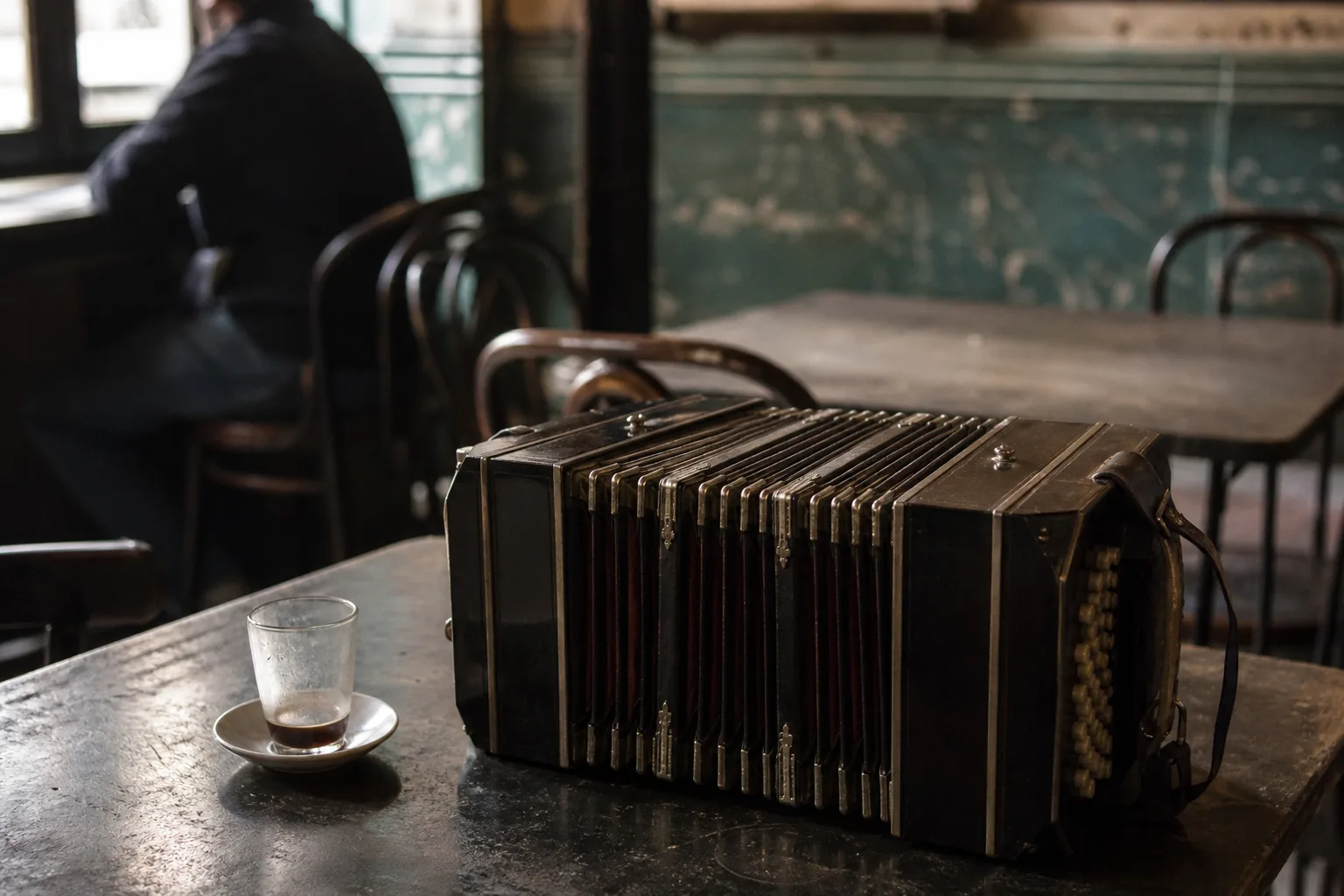
The sound of tango is the bandoneon, a relative of the accordion invented in Germany. Its bellows breathe, complain and cut phrases short.
The voice
Carlos Gardel turned tango into song. In 1917 he recorded "Mi noche triste" and set the model for sung tango. He died in a plane crash in Medellín in 1935; in Buenos Aires people still say he sings better every day.
The orchestra
In the 1940s, the golden age, the orchestras of Aníbal Troilo, Osvaldo Pugliese and Juan D'Arienzo filled the dance halls. Each has a different pulse, and dancers recognize them within two bars.
Piazzolla was insulted for changing tango. Today it is hard to imagine it without him.
The break
Astor Piazzolla studied in Paris, brought in jazz and classical music and created nuevo tango, made more for listening than dancing. "Adiós Nonino" (1959) and "Libertango" (1974) are the best way in.
The dance
Tango is also a dance of close embrace and improvisation: there is no fixed choreography, one partner proposes and the other answers. It is danced at milongas, dance halls with their own rules. The invitation is made with a look and a nod, the cabeceo; pieces are grouped in sets of three or four, separated by a musical interlude; and on the floor everyone moves counterclockwise.