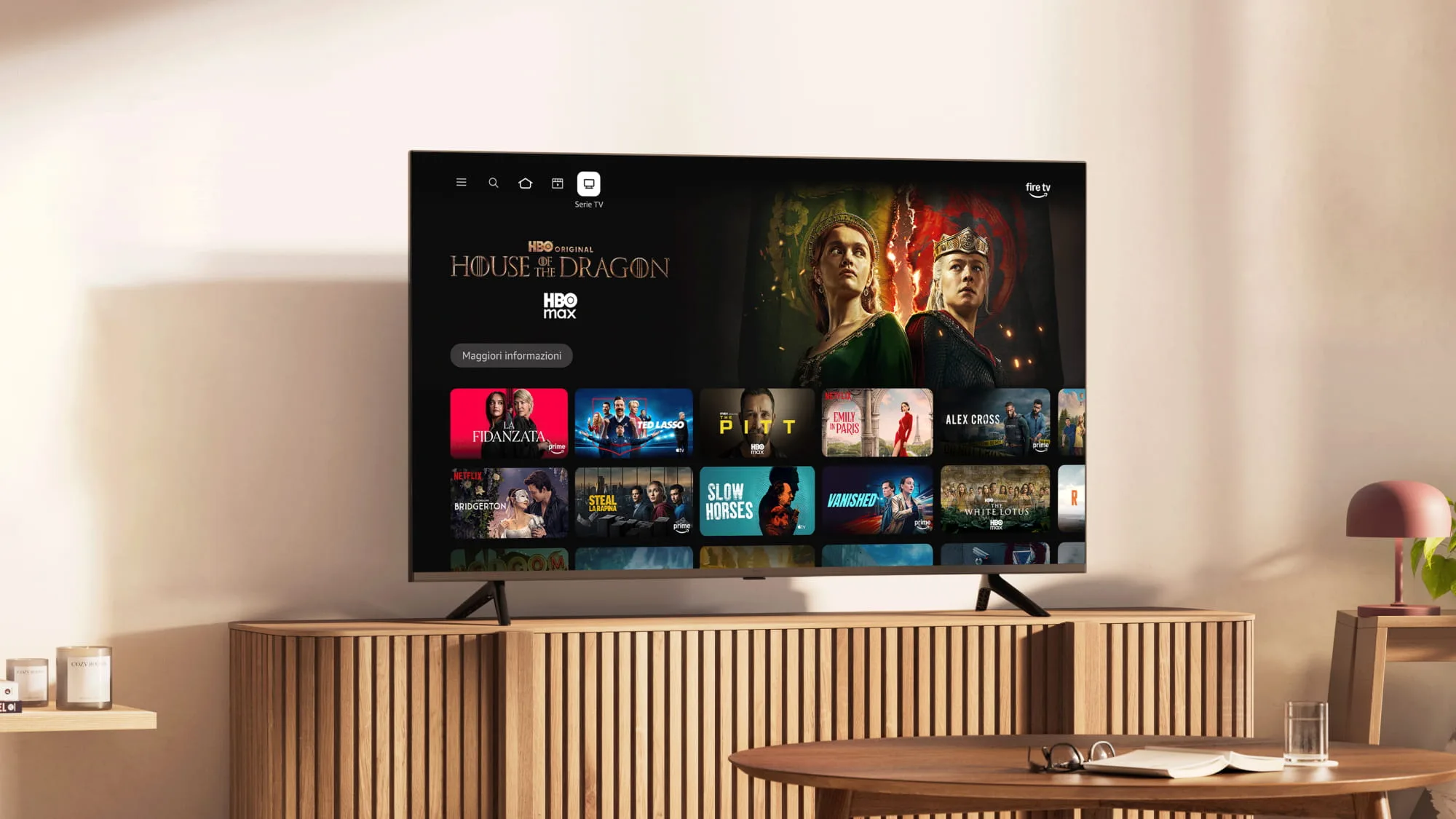
All at once or one a week: how streaming release schedules work
Some shows drop a whole season in one night, others make you wait seven days. Why streamers choose one or the other, and what it changes for viewers.

On a Friday morning, a whole season of a series appears on your screen, ten episodes waiting to be watched in a single weekend. On another platform, a show you are following releases one new episode every Wednesday, and you have to wait seven days to find out what happens next. Both strategies are deliberate. Behind them lies a long debate about how people watch, talk about and pay for television.
This guide explains where each model comes from, why platforms choose one or the other, the hybrid formulas that now dominate, and what each approach means for viewers, writers and the shows themselves.
How television used to work
For most of its history, television was weekly by necessity. A broadcaster had a schedule, a grid of hours to fill, and each series had its slot: the same day, the same time, once a week. American network seasons usually ran from September to May, with around 22 episodes, breaks over the holidays and repeats in summer. If you missed an episode, you waited for the repeat or asked a friend what happened.
Not everything was weekly. Soap operas and telenovelas were broadcast every weekday, building habits around lunch or the evening meal. In Germany, daily soaps such as Gute Zeiten, schlechte Zeiten, on air since 1992, made the daily episode a ritual. In Mexico and across Latin America, telenovelas told stories of a hundred episodes or more, Monday to Friday, until a final chapter that whole countries watched together.
Viewers found ways to binge long before streaming. Cable channels ran marathons of a single series for a whole day; a famous example is the American channel Syfy's tradition of showing The Twilight Zone back to back around New Year. In the 2000s, DVD box sets let people watch entire seasons of The Sopranos, 24 or Lost in a few nights, and many viewers discovered that they enjoyed television that way.
The day Netflix released everything
On 1 February 2013, Netflix released all 13 episodes of the first season of House of Cards at once. It was not the first show ever released in full online, but it was the first big-budget drama made to be consumed that way, and it changed the industry's vocabulary. The model became known as the binge release, and binge-watch was named word of the year by the Collins dictionary in 2015.
The reasoning was simple. Netflix did not have a broadcast schedule to fill and did not sell advertising at the time. It wanted subscribers to feel that the service respected their time and let them watch as much as they wanted, whenever they wanted. A whole season available at once was the clearest possible demonstration of that promise.
Weekly television makes you wait for the story. Binge television makes the story wait for you.
Why platforms went back to weekly
When Disney+ launched in November 2019, its flagship series The Mandalorian came out one episode at a time, every week. HBO kept releasing its big series weekly on its streaming service, as it always had on cable. Apple TV+ typically releases the first two or three episodes of a show together and then one per week. Gradually, weekly releases became the norm for many services. There were several reasons.
1. **Subscriptions**: if a whole season is available on day one, a viewer can subscribe for one month, watch everything and cancel. If the season runs for eight or ten weeks, the subscriber has to stay for two or three months. The industry calls cancellations **churn**, and weekly releases reduce it.
2. **Conversation**: a weekly show is discussed for weeks, with theories, reaction videos, podcasts and articles after each episode. A binge show often generates an intense burst of attention that fades in days.
3. **Discovery**: word of mouth needs time. A series that builds slowly, as people tell their friends, benefits from a long run.
4. **Spoilers**: when everyone watches at the same pace, it is easier to avoid having the ending ruined. With a binge release, the fastest viewers reach the finale on the first night.
HBO's Game of Thrones, Succession, The Last of Us and House of the Dragon are often cited as examples of weekly shows that became events, with each Sunday night episode dominating social media until the next one arrived.
Why some still release everything at once
The binge model has not disappeared. It suits some shows and some business strategies.
5. **Momentum**: a story built around suspense can be irresistible when the next episode starts automatically a few seconds after the last one ends.
6. **Global launches**: releasing everything at the same moment around the world makes a series a global event on a single weekend, and gives the platform a clear first result to measure.
7. **Viewer preference**: many people simply prefer to watch at their own pace and resent being made to wait.
8. **Limited series and comedies**: short seasons, or shows where episodes stand alone, lose little from being released together.
Netflix built tools that encourage the habit. Autoplay starts the next episode with a short countdown. A Skip Intro button, introduced in 2017, lets you jump past the opening titles. Writers have adapted too: cliffhangers at the end of each episode matter more when the next one is just a click away.
The hybrids
Today the most common pattern sits somewhere in the middle.
9. **The premiere batch**: two or three episodes on launch day, so viewers can settle into the story, then one a week. Amazon used this for the second season of *The Boys* in 2020, and some fans who expected the whole season protested loudly before the series went on to break viewing records for the platform.
10. **The split season**: Netflix divided the fourth season of *Stranger Things* into two volumes in 2022, released about five weeks apart. *Ozark* and *Bridgerton* have used similar splits. The platform keeps the binge experience but extends the conversation and the subscription.
11. **Weekly batches**: reality and competition shows often release a few episodes at a time across several weeks, so that the final eliminations or reunions arrive as a live event.
12. **Simulcast**: many anime series are streamed weekly worldwide shortly after their broadcast in Japan, so international fans can watch at the same time as Japanese audiences.
What release models do to stories
The choice is not just about marketing. It changes how stories are written.
A weekly episode has to work on its own. It needs a satisfying shape, a reason to exist, and something to talk about until the next one arrives. Many classic weekly dramas mix a story of the week with longer plots that run across the season.
A binge season can behave more like a long film cut into chapters. Some writers enjoy the freedom: they can let a story breathe and trust viewers to remember details from the previous hour. Critics, however, sometimes complain about the "ten-hour movie", seasons where individual episodes have no shape of their own and the middle sags because the creators assumed viewers would keep going anyway.
The best episodes, however they are released, are the ones you would still remember if you watched only that one.
How platforms measure a launch
Release strategy and measurement are closely linked. For years, streaming services kept their viewing figures secret. That changed gradually. Netflix began publishing weekly Top 10 lists in 2021, and in 2023 it switched to a measure it calls views: the total hours watched divided by the running time of the season or film. In the United States, the ratings company Nielsen also publishes streaming charts based on minutes watched on television sets.
These numbers favour different release models in different ways. A binge release can produce an enormous first weekend, because dedicated fans watch everything at once. A weekly show starts smaller but can grow over its run, as new viewers catch up on earlier episodes. Comparing the two directly is tricky, which is why platforms often highlight whichever figure flatters their strategy.
What platforms watch most closely, though, is not always published: how many people finish a season, how many new subscribers a series attracts, and how many people stay subscribed afterwards. A show that brings in new customers who then stick around is worth far more to a service than one that is watched by people who would have stayed anyway.
Choosing the date
The day a series arrives is chosen as carefully as the rhythm of its episodes. Platforms avoid releasing two of their own big shows in the same week, and they watch rivals' calendars to avoid head-on collisions. Holidays matter: long weekends and the end-of-year break are prized slots, because people have time to watch. Awards matter too. In the United States, series must air within an eligibility window, from 1 June to 31 May, to compete for the Emmys, so many prestige dramas land in spring, when they will still be fresh in voters' minds.
Some services have their own traditions. Many Netflix originals arrive on a Thursday or Friday, just before the weekend. Weekly shows on other platforms tend to settle on a fixed day, so that viewers learn when to look for the next episode.
Release time matters too
Streaming platforms usually release new seasons at a fixed hour worldwide. Netflix, for example, typically launches its original series at midnight Pacific time in the United States, which means early morning in Europe and late night or early morning across Latin America. Weekly shows on other platforms tend to drop on the same day and at the same hour every week, recreating the old appointment with the television set in a new form.
For viewers outside the United States, this global timing is one of the clearest changes of the streaming era. A generation ago, an American series might reach Spain, Mexico or Germany months or even years after its original broadcast, dubbed for the local market. Today, the same episode is often available everywhere on the same day, with subtitles and frequently with dubbing.
Every show ends up a binge show
There is one more twist. Whatever the release model, every series eventually becomes complete. Once a weekly show has finished its run, it sits in the catalogue with every episode available, and the viewers who discover it a year later will watch it at whatever speed they like. Much of a platform's viewing comes from this long tail: older seasons, finished series and familiar comedies watched again and again. The release schedule shapes the first weeks of a show's life; the catalogue shapes the rest.
Which is better?
There is no single answer, and research on viewing habits suggests that both models serve different needs. Binge releases favour viewers who like to immerse themselves in a story and platforms that want a big launch. Weekly releases favour shared conversation, long-term attention and subscriber retention.
It also depends on the show. A tense thriller with cliffhangers may feel natural to binge; a dense drama with many characters may gain from a week of reflection between episodes; a comedy can work either way. Several showrunners have said that the weekly rhythm gives audiences time to theorise, which turns a series into a shared game.
How to choose your own rhythm
Whatever the platform decides, you can still set your own pace.
13. **Wait and binge**: if a weekly show frustrates you, let a few episodes accumulate, or wait until the season ends, and then watch it all at once. Just mute keywords on social media to avoid spoilers.
14. **Slow down a binge**: nothing forces you to watch a full season in two days. Turning off autoplay, which most services allow in their settings, makes it easier to stop at the end of an episode.
15. **Watch with others**: some of the pleasure of weekly television comes from discussing it. Agreeing a pace with friends or family recreates that, even for a series released all at once.
16. **Check the calendar**: platforms publish release dates in advance. Knowing whether a season ends in a week or in two months helps you decide whether to subscribe now or later.
The appointment that never quite went away
Streaming was supposed to end the age of schedules. Instead, the industry discovered that waiting has value: anticipation builds audiences, keeps people subscribed and gives a series time to become part of everyday conversation. The modern streaming calendar, with its premiere batches, split seasons and weekly drops, is in many ways a return to the oldest habit of television, adapted for an audience that also likes to press play as many times as it wants.