What a TV pilot is, and why most never become a series
Every show starts with one test episode. Most of them are never broadcast. How the pilot works, and how streaming changed it.
Every television series you have ever loved began as a single episode that had to convince a room full of executives to pay for more. That episode is the pilot. It is a strange object: part story, part sales pitch, part experiment. Most pilots fail, many are never broadcast, and some of the most famous shows on television were nearly cancelled before they began.
This guide explains what a pilot is, how the traditional system works, why so few pilots become series, and how streaming has changed the rules.
What a pilot is
A pilot is the first episode of a proposed series, made so that the people who pay for television can see whether the idea works on screen. A written script can describe a world, but it cannot show chemistry between actors, the rhythm of the jokes or whether a mystery feels gripping. A pilot answers those questions with real footage.
The word comes from the idea of a trial run, like a pilot scheme in business or government: a small test before a large commitment. In television it took hold in the United States in the 1950s and 1960s, when the three big networks needed a way to choose among hundreds of proposals each year.
Usually, the pilot is also the episode that viewers see first if the show goes ahead. But not always. Some pilots are reshot, cut, rewritten or recast so thoroughly that the version broadcast to the public is very different from the one that sold the series.
The job a pilot has to do
A pilot carries more weight than any other episode. In around 45 minutes for a drama, or 22 for a sitcom, it has to:
1. **Introduce the world**: where we are, what the rules are, what kind of story this is.
2. **Introduce the characters**: who we follow, what they want, and why we should care.
3. **Set the tone**: whether this is a comedy, a thriller, a melodrama or something in between.
4. **Show the engine**: the mechanism that will generate stories week after week, season after season.
That last point is the one executives worry about most. A brilliant pilot that cannot be repeated is a film, not a series. A hospital drama has an engine, because new patients arrive every day. A police procedural has an engine, because there is always another case. A story about a single event that ends in the first hour does not.
A pilot has to tell a complete story and promise a hundred more. It is the hardest episode a writer will ever make.
Writers often distinguish between two kinds of pilot. A premise pilot shows how everything begins: the new job, the arrival in town, the discovery that changes a life. A non-premise pilot drops us into a world that is already running and feels like an ordinary episode. Premise pilots are easier to follow but can feel slow, because so much time goes into setting up; non-premise pilots show what the series will really be like week to week, but risk confusing the audience.
Pilot season
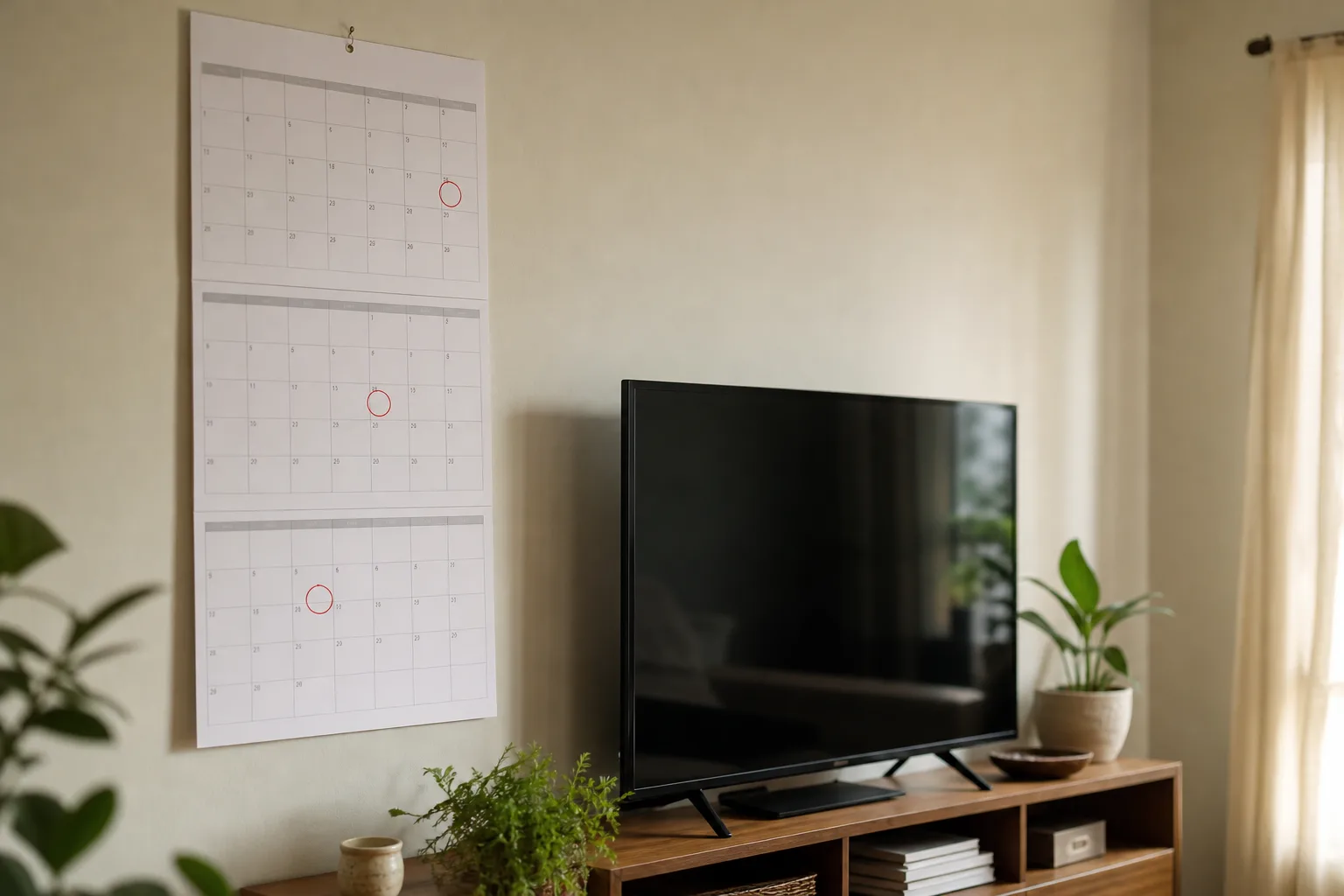
For decades, American broadcast television followed a rigid calendar known as pilot season.
5. **Late summer and autumn**: writers and producers pitch ideas. Networks buy many of them as scripts.
6. **January**: networks read the scripts and order a smaller number to be filmed as pilots.
7. **February to April**: a frantic rush of casting and shooting. Actors audition for several pilots at once, and directors, crews and studio space are in short supply.
8. **May**: networks decide which pilots become series and present their new schedules to advertisers at events in New York known as the **upfronts**, because advertisers buy much of their airtime up front, months before the season starts.
9. **September**: the new shows premiere.
The numbers explain why the system is so brutal. A network may hear hundreds of pitches in a year, buy a large share of them as scripts, film only a few dozen as pilots and order just a handful to series. Of the shows that do make it to air, many are cancelled within their first season. For writers and actors, a pilot that is not picked up is a normal part of a career, not a disaster.
Actors face a particular gamble. Before a pilot is shot, the main cast usually signs a contract that commits them to the series for several years if it is picked up. An actor who books a pilot in March may spend the spring not knowing whether the next six or seven years of their life are already decided, or whether they will be auditioning again in a few weeks.
Why most pilots fail
A pilot can be rejected for reasons that have little to do with quality.
10. **The schedule is full**: a network may have room for only two new comedies, and five good ones.
11. **It is too similar**: another show on the same channel, or a rival's, covers the same ground.
12. **The chemistry is off**: actors who looked right on paper do not spark on screen.
13. **It tested badly**: networks have long shown pilots to test audiences, sometimes asking them to turn a dial up or down as they watch to register what they like and dislike.
14. **The engine is unclear**: executives cannot picture episode twelve.
15. **The money changed**: a new executive arrives, the budget shrinks or the network changes its strategy.
Many unsold pilots are simply never shown. They sit in archives, occasionally leaking online or turning up as curiosities. Some were broadcast as one-off television films in summer, when networks had airtime to fill.
Famous pilots that almost did not work
Some of the best-known series had difficult starts.
Star Trek: NBC rejected the first pilot, The Cage, made in 1965, reportedly finding it too cerebral. In an unusual move, the network ordered a second pilot, Where No Man Has Gone Before, with a largely new cast led by William Shatner as Captain Kirk. That one sold the series. The complete original pilot was not broadcast in full until 1988.
Seinfeld: the pilot, called The Seinfeld Chronicles, aired in 1989 and tested poorly. NBC ordered only four more episodes, one of the smallest orders in network history. The show went on to become one of the most successful sitcoms ever made.
The Big Bang Theory: the first pilot, never broadcast, featured a different female lead and a darker tone. CBS asked for changes, the character of Penny was created and a second pilot was made. That version launched a series that ran for twelve seasons.
Game of Thrones: the first pilot was considered a failure by the people who made it. Much of it was reshot, with a new director for parts of the episode and two leading roles recast: Emilia Clarke replaced the actor originally cast as Daenerys Targaryen, and Michelle Fairley replaced the original Catelyn Stark. HBO still ordered the series, and the rest is history.
Not every pilot is a full episode
The industry has several variations.
16. **Full pilot**: a complete episode, made to broadcast standard.
17. **Presentation**: a shorter, cheaper version, sometimes just key scenes, made to show the concept without the full cost.
18. **Backdoor pilot**: an episode of an existing series that introduces new characters who could carry a spin-off. *NCIS*, for example, was introduced through a two-part story in the legal drama *JAG* in 2003. If the spin-off is not ordered, the episode still works as part of the original show.
19. **Straight-to-series order**: the network or platform commits to a full season without a pilot at all, usually because it trusts the creators or wants to secure a valuable project before a rival does.
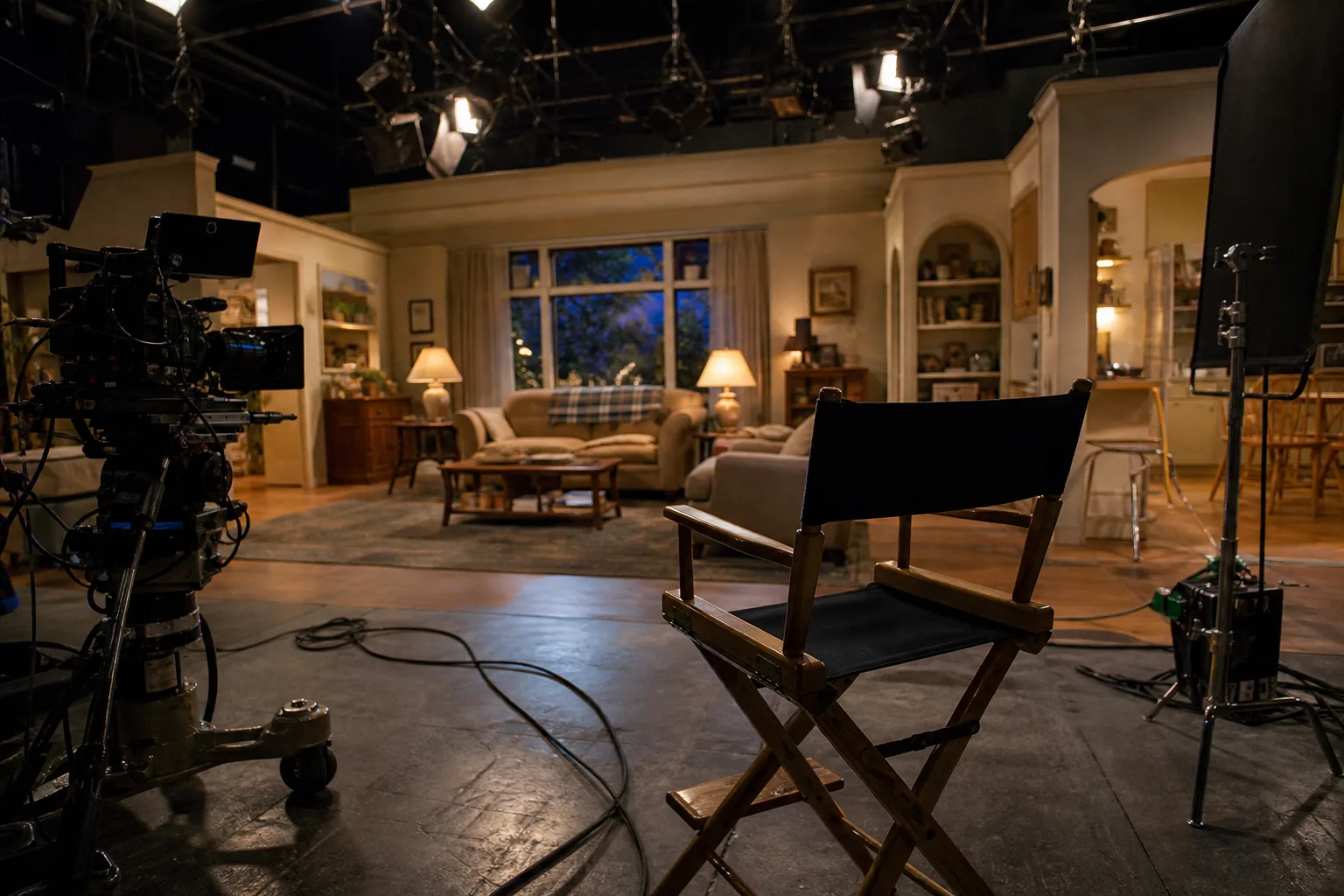
Pilots are also expensive. Sets have to be built from nothing, the cast has to be found and the look of the show has to be invented. A drama pilot often costs considerably more than a regular episode. The two-part pilot of Lost, broadcast in 2004, was reported to have cost more than ten million dollars, an enormous sum for television at the time.
The pilot script as a calling card
Long before anything is filmed, the pilot exists as a script, and that script has a life of its own. In the American industry, writers often write a spec pilot, an original pilot script that nobody has ordered, to show what they can do. Even if it never gets made, a strong spec can win the writer an agent, a meeting or a job on the staff of another series. Several well-known scripts circulated around Hollywood for years as admired reading samples before, or without ever, reaching the screen.
Writing a pilot script is its own craft. The writer has to introduce a large cast without making the opening pages feel like a list of names, plant mysteries without confusing the reader, and leave room for a director and actors to bring the material to life. Executives read many scripts every week, so the first pages matter enormously: if the world and the main character are not clear early, the script may never be finished.
Alongside the script, writers often prepare a series bible, a document that describes the characters, the setting, the tone and the stories planned for the first season and beyond. The bible answers the question that the pilot alone cannot: what happens next? A pilot with no bible behind it can look like a good idea with nowhere to go.
How streaming changed the game
When Netflix commissioned House of Cards, which premiered in 2013, it ordered two full seasons without a pilot. That deal sent a message to writers and agents: a platform could promise a whole story, not just a trial episode. Many streaming services now order shows straight to series, especially limited series and projects with famous names attached.
Amazon tried a different experiment. From 2013, it released pilots to the public and asked viewers to watch, rate and review them, using the reaction to help decide which ones to develop further. Several of its early series, including Transparent and Bosch, came through that process. The idea attracted attention, although the company later moved toward more conventional development.
The traditional pilot season has weakened. Networks now develop shows all year, cable channels and streaming platforms follow their own calendars, and the disruption of 2020, when productions stopped during the pandemic, accelerated the change. But the pilot has not disappeared. When the money is large and the idea is risky, someone still wants to see it on screen before writing the cheque.
Pilots outside the United States
The pilot system is above all an American creation, shaped by networks that need to fill a schedule every autumn. In much of Europe and Latin America, broadcasters and platforms more often commission a series directly from scripts, a creator's track record and a production company's plan. British television, especially for comedy, has a long tradition of making pilots, and many comedies began on radio before moving to the screen. Telenovelas in Latin America are generally commissioned as complete stories, with a defined number of episodes, rather than through a test episode.
Even where pilots are rare, the principle is the same: someone has to be persuaded, and the first episode has to do the persuading.
How to watch a pilot
Once you know what a pilot is trying to do, watching one becomes more interesting. Ask yourself a few questions:
20. **What is the engine?** Can you imagine the stories that will fill the next ten episodes?
21. **Who is the audience surrogate?** Many pilots follow a newcomer, a character who knows as little as we do, so that the world can be explained naturally.
22. **What has been left out?** Good pilots hold back information to make you come back.
23. **Does the last scene ask a question?** The final minutes are usually designed to make you press play on episode two.
Then watch the second or third episode. Often, the show finds its true voice only after the pilot, once the writers have seen the actors at work and the pressure of selling the idea is over. Many viewers give up too early on series that become great a few episodes later.
A ritual that survives
Pilots are a costly, imperfect way to choose stories. They reward ideas that are easy to explain and sometimes punish ones that need time to grow. Yet they remain one of the most important filters in television. Every show you watch tonight survived that test, or found a way around it. Somewhere, in an archive, there are hundreds of others that did not, each one a world that existed for a single episode and then went quiet.