All teas come from the same plant
Green, black, white or oolong: the difference is not the bush but what is done to the leaf. A guide, with temperatures.
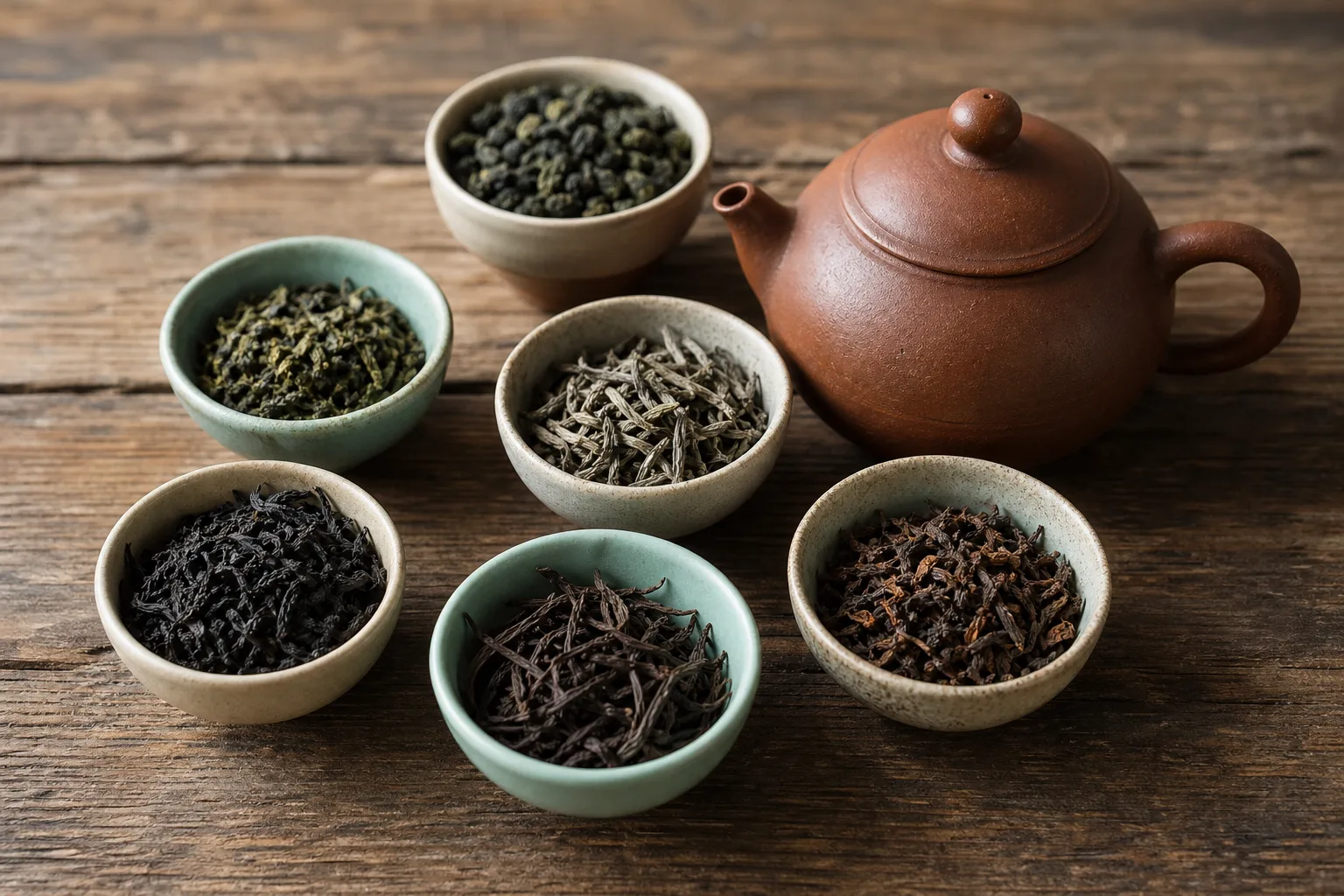
Green, black, white and oolong tea come from a single species: *Camellia sinensis*. What changes is the processing, above all how much the leaf is allowed to oxidize after picking, just as an apple browns in the air.
White
Buds and young leaves, simply withered and dried. Delicate, sweet flavor. Water at 75–80°C (170–175°F), 3–4 minutes.
Green
The leaf is heated right away — steamed in Japan, pan-fired in China — to stop oxidation. Fresh, vegetal. 70–80°C, 2–3 minutes. Boiling water makes it bitter.
Oolong
Partial oxidation, between green and black. It can be floral or roasted. 85–95°C, 3–4 minutes. Good for several infusions.
Black
Full oxidation. It is the tea of English breakfast, Darjeeling or Assam. 95–100°C, 3–5 minutes. It stands up to milk.
Pu-erh
Fermented and aged tea from Yunnan. Earthy and deep.
Most bitter teas are not bad: they were made with water too hot or left too long.
What is not tea
Chamomile, mint, rooibos and linden are infusions of other plants and contain no caffeine.
To start
Buy loose leaf in small amounts, keep it in an opaque tin and use about two grams per cup.
How to brew it
Two variables decide almost everything: water temperature and time. Black tea takes freshly boiled water and three to five minutes. Green and white teas want cooler water, around 70 to 80 degrees Celsius, and a couple of minutes: if they turn bitter, it is almost always because the water was too hot. A trick without a thermometer: let boiled water stand for a couple of minutes before pouring.