Artemisia Gentileschi, the painter who did not ask permission
She was the first woman admitted to Florence's academy of drawing and painted heroines who do not wait to be rescued.
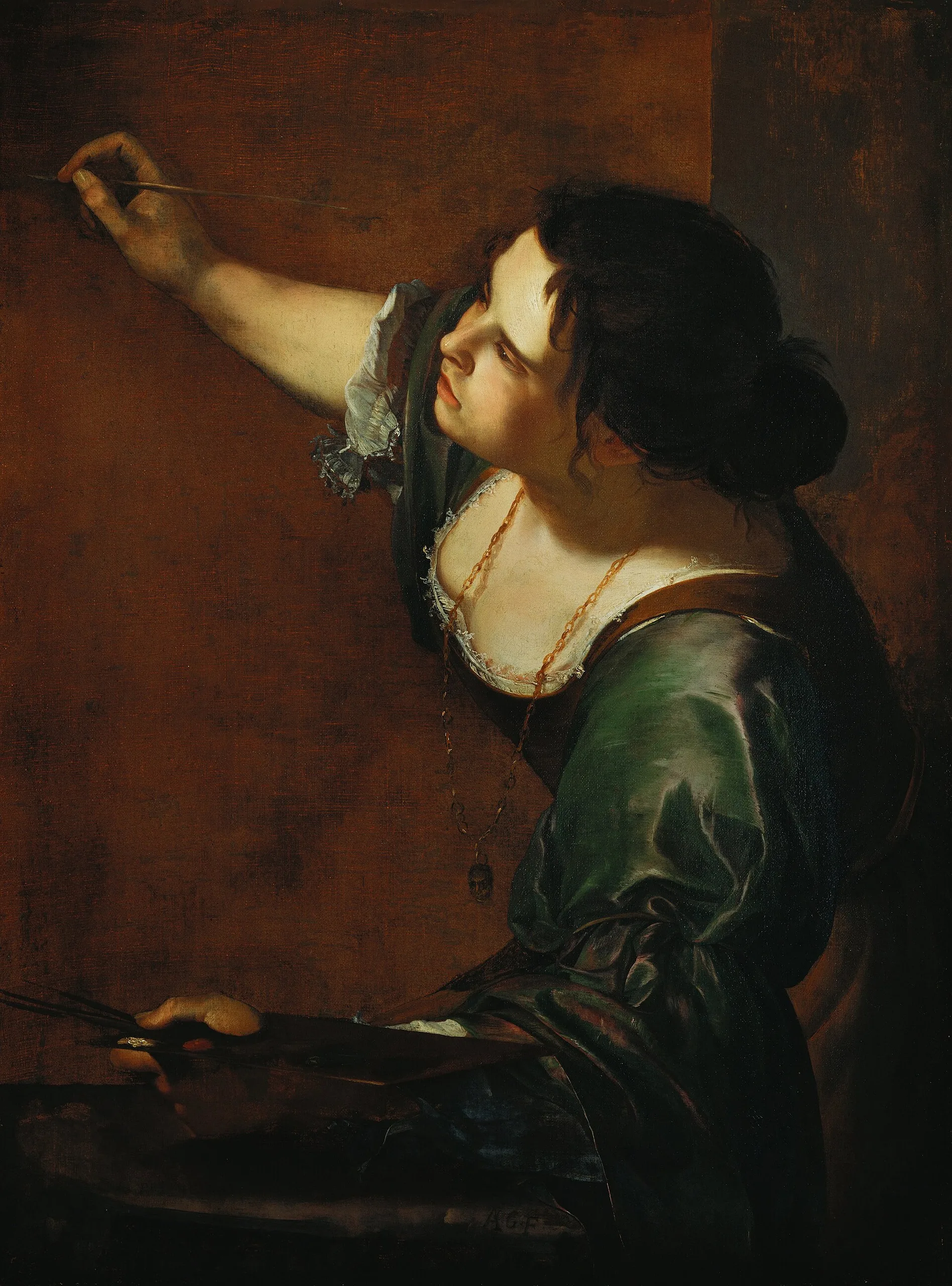
Artemisia Gentileschi was born in Rome in 1593, daughter of the painter Orazio Gentileschi, a follower of Caravaggio. She learned in her father's workshop, because women were not allowed to study at academies or draw nude models.
The trial
At seventeen she was raped by Agostino Tassi, a painter who worked with her father. Orazio pressed charges. During the 1612 trial, Artemisia was tortured to test whether she was telling the truth. Tassi was convicted but barely served his sentence.
Florence
Artemisia married and settled in Florence, where she worked for the Medici, knew Galileo and, in 1616, became the first woman admitted to the Accademia delle Arti del Disegno.
Judith
She painted several times the biblical story of Judith, the widow who beheads the general Holofernes to save her people. In her Uffizi version, from about 1620, Judith and her maid hold the man down with tensed arms, concentrated, like people doing a difficult job.
Her heroines have strength in their arms. In the painting of her time, that was quite a statement.
A career
She lived by her work in Rome, Venice, Naples and London, and ran her own workshop. "You will find the spirit of Caesar in the soul of a woman," she wrote to a client.
The rediscovery
Forgotten for centuries, she is now the subject of major exhibitions at leading museums.
Where to see her
Her works are scattered across Europe and the United States. In Florence, the Uffizi holds her best-known Judith; in Naples, the Capodimonte Museum has the first version. The National Gallery in London bought a self-portrait of her as Saint Catherine in 2018 and later devoted a major exhibition to her. And the British Royal Collection has the Self-Portrait as the Allegory of Painting, perhaps her most emphatic image.