'Las Meninas': five things to look at in Velázquez's painting
A mirror, an open door and a painter looking at us: keys to the most discussed work in the Prado Museum.
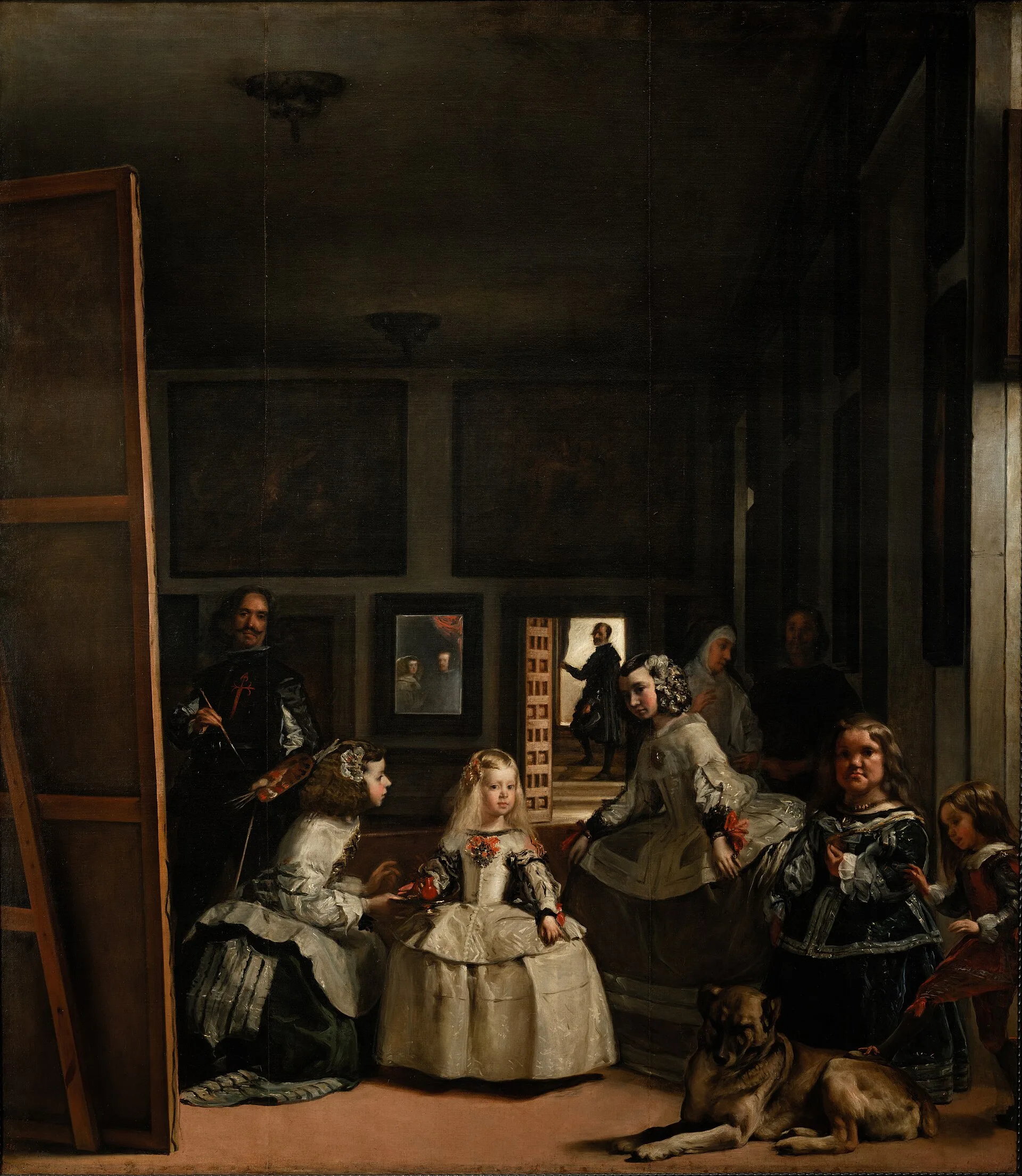
Diego Velázquez painted Las Meninas in 1656, in the Alcázar of Madrid. It stands more than three meters tall and has spent almost four centuries asking the same question: who is looking at whom?
1. The princess
In the center is Margaret Theresa, aged five, daughter of Philip IV. Around her are two ladies-in-waiting — the meninas — two court dwarfs and a sleepy dog.
2. The painter
On the left, Velázquez portrays himself before a huge canvas of which we see only the back. We will never know what he is painting.
3. The mirror
At the back, a mirror reflects the king and queen, Philip IV and Mariana of Austria. If they are in the mirror, they are standing where we are: outside the picture, looking.
Velázquez puts us in the monarchs' place. Since then, nobody has looked at a painting in so much company.
4. The door
Next to the mirror, a man pauses on a lit staircase. It is the painting's single vanishing point, and our gaze goes to him inevitably.
5. The brushwork
Up close, the dresses are loose smudges. From a distance, they are silk. That trick anticipates Impressionism by two centuries.
And the cross
The red cross of the Order of Santiago on Velázquez's chest was added later: he was made a knight in 1659.
Where to see it
Las Meninas has not left the Prado Museum since it opened, except when it was evacuated during the Spanish Civil War. It hangs at the center of Room 12, surrounded by other Velázquez portraits. It stands more than three meters tall, so it is worth looking at it first from a distance and then moving closer. And in Barcelona, the Picasso Museum holds the 58 versions Picasso painted of the picture in 1957.