'The Night Watch' is not at night: six facts about the most famous Rembrandt
A group portrait that became an action scene, was trimmed and is now being restored in public view.
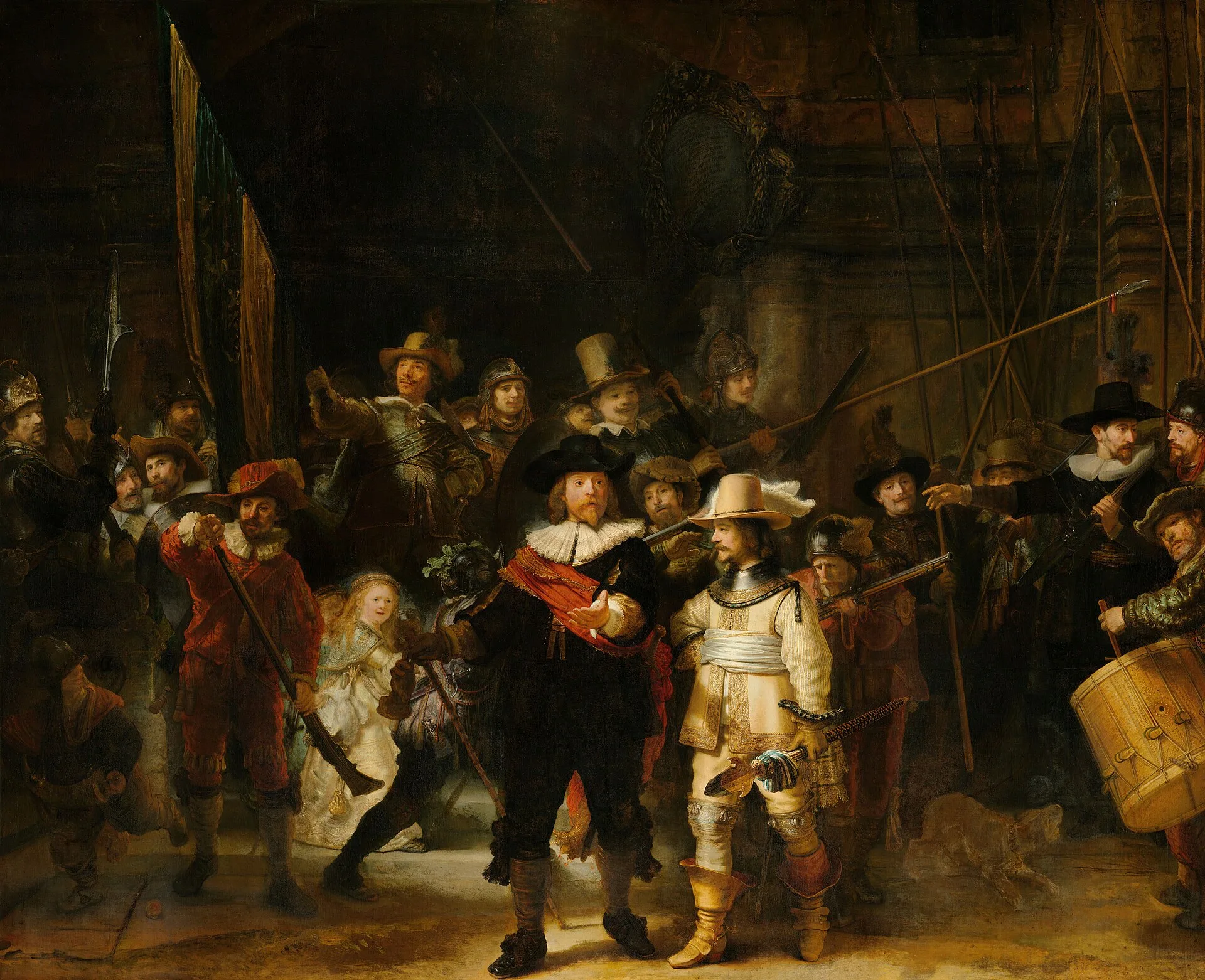
In 1642, Rembrandt van Rijn delivered to Amsterdam's militia of arquebusiers a group portrait like none seen before.
Its real title is long and administrative: Militia Company of District II under the Command of Captain Frans Banninck Cocq. It was made to hang in the Kloveniersdoelen, the militia's headquarters, alongside other group portraits by other painters. Almost four centuries later it is one of the most visited paintings in the world, and it has a few surprises in store.
1. It is not night
The title is an 18th-century nickname. The varnish had darkened so much that the scene looked nocturnal. When it was cleaned in the 1940s, daylight appeared.
The name stuck anyway, and no one now expects the museum to change it. What the painting does have is strong contrast: Rembrandt lit some figures as if a spotlight fell on them and left others in deep shadow, a theatrical use of light that helped the nickname seem plausible.
2. The sitters split the bill
Eighteen militiamen paid to appear, according to their position in the picture. The custom was to paint them in a row, like a team photo. Rembrandt set them in motion: Captain Frans Banninck Cocq gives the order to march.
Beside the captain, dressed in black with a red sash, walks his lieutenant, Willem van Ruytenburch, in bright yellow, and the shadow of the captain's hand falls on his coat. Around them, men load their muskets, a drummer beats the rhythm and a dog barks. Not everyone got a good spot: some of those who paid are barely visible behind others. Their names were later added on a shield painted on the wall in the background.
3. The girl
Among the men, a brightly lit girl carries a dead chicken hanging from her waist. The claws were the company's emblem: she is a symbolic mascot.
The arquebusiers were called kloveniers, and the claw, klauw in Dutch, was a play on that name. The girl, dressed in gold, is also one of the brightest points in the picture, as if Rembrandt wanted to make sure no one missed the emblem.
Rembrandt turned a bureaucratic commission into a scene from the theater.
4. It was trimmed
In 1715, to fit a wall in the town hall, strips were cut from all four sides. Two figures were lost.
The biggest cut was on the left, about 60 centimeters. We know what was there thanks to a smaller 17th-century copy attributed to Gerrit Lundens, which belongs to the National Gallery in London. In 2021 the museum used it, with the help of artificial intelligence, to reconstruct the missing strips and displayed them temporarily around the original: for a few months the painting could be seen at its full size again.
5. It has been attacked
Three times in the 20th century: with knives in 1911 and 1975, and with acid in 1990.
The 1975 attack was the most serious, with several deep cuts, and the restoration that followed took months. In 1990 a guard managed to throw water on the acid quickly, and the damage was limited to the varnish. Before that, during the Second World War, the canvas was taken off its stretcher, rolled up and hidden outside Amsterdam to protect it from the bombing.
6. It is being restored in public
Since 2019, the Rijksmuseum has been studying and restoring it inside a glass chamber, in view of visitors. It measures 3.63 by 4.37 meters.
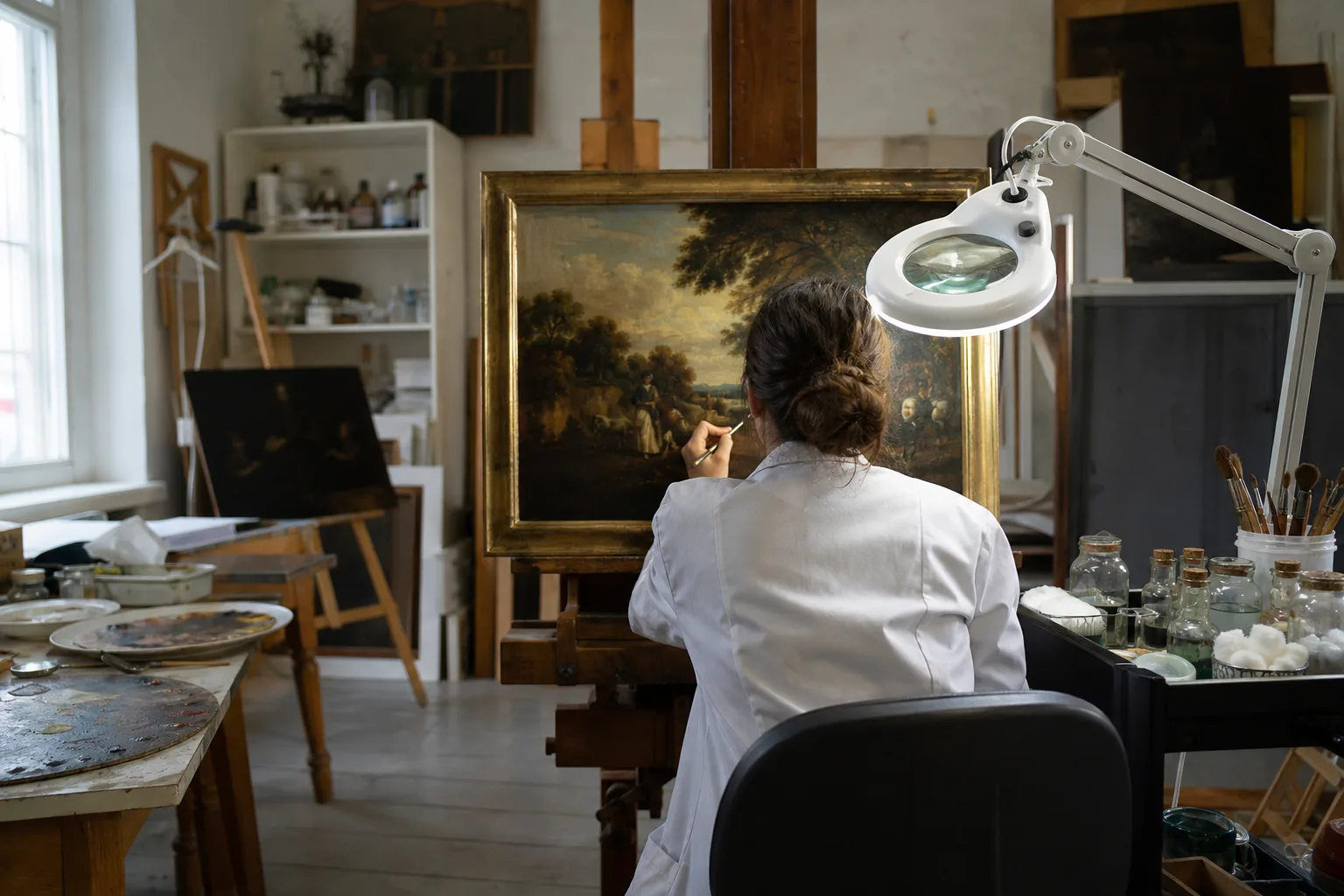
The project, known as Operation Night Watch, began with years of scanning and analysis, and since November 2024 the restorers have been removing the old layers of varnish, a slow job done centimeter by centimeter. Visitors can watch the work in the gallery itself, and the museum regularly publishes updates on what the team finds.
How to see it
The Night Watch is the heart of the Rijksmuseum in Amsterdam: the building was designed so that the main gallery leads straight to it. The room fills up from mid-morning, so it is best to go first thing or at the end of the day. On the way, the Gallery of Honour gathers other Rembrandts and the museum's four Vermeers. And the Rijksmuseum's website has an ultra-high-resolution image for exploring it at leisure.