Goya's Black Paintings: fourteen works for one house
Deaf, ill and disillusioned, Goya covered the walls of his home with images nobody had commissioned.
In 1819, Francisco de Goya bought a country house on the banks of the Manzanares, outside Madrid. Neighbors called it the Quinta del Sordo, the Deaf Man's Villa, after a previous owner; Goya, deaf since 1793, was 73. Between 1820 and 1823 he painted fourteen scenes directly onto the plaster of two rooms. He never titled them or showed them.
What is in them
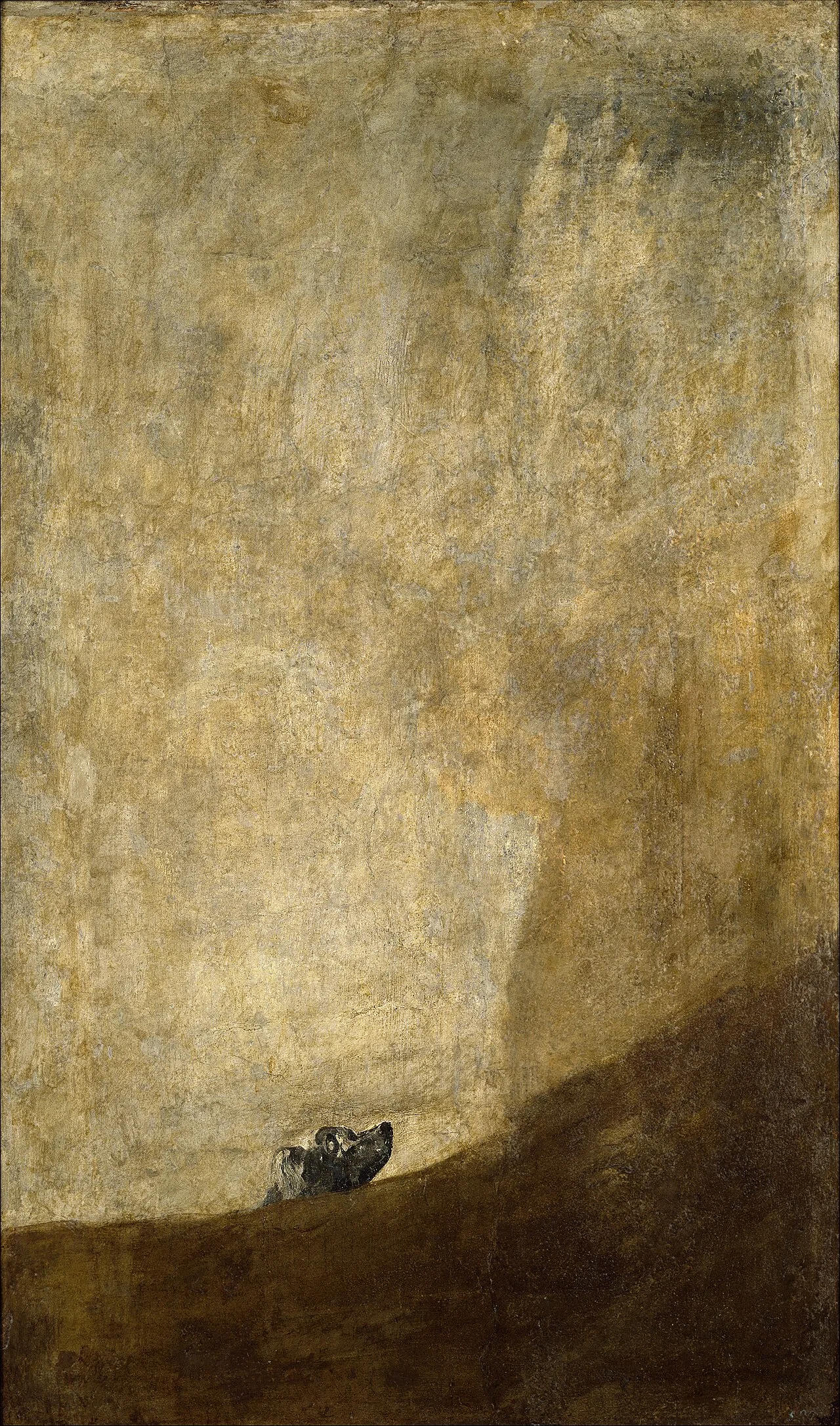
A god devouring his son. Two men beating each other with clubs, sunk to their knees. A procession of contorted faces. A witches' sabbath. And a dog of which we see only the head, looking up into empty space.
Nobody commissioned these paintings and nobody was meant to see them. That may be why they are the freest in history.
Why they are so modern
Goya abandons precise drawing and paints in blotches, with a palette knife and a range of blacks, ochres and earths. The Dog is almost an abstract picture. Expressionism and much of 20th-century art come out of these walls.
How they reached the Prado
Goya went into exile in Bordeaux in 1824. Half a century later, the paintings were stripped from the walls and transferred to canvas, with inevitable damage. Since 1889 they have been shown at the Prado Museum, in a room of their own.
One tip
Walk into the room and give yourself time. At first they overwhelm; then they hypnotize.
Goya before the Black Paintings
To grasp the shock, it helps to remember where he came from. Goya had been the fashionable court painter: tapestry cartoons of picnics and games, portraits of kings and duchesses. An illness left him deaf in 1793, and the war against Napoleon showed him the worst of human nature, which he drew in The Disasters of War. The Black Paintings are the end of that road: he made them for himself, with no commission and no audience.