Day of the Dead: what each element of the altar means
November 2 has passed, but the tradition is best understood unhurried. A guide to an altar that welcomes those who come back to visit.
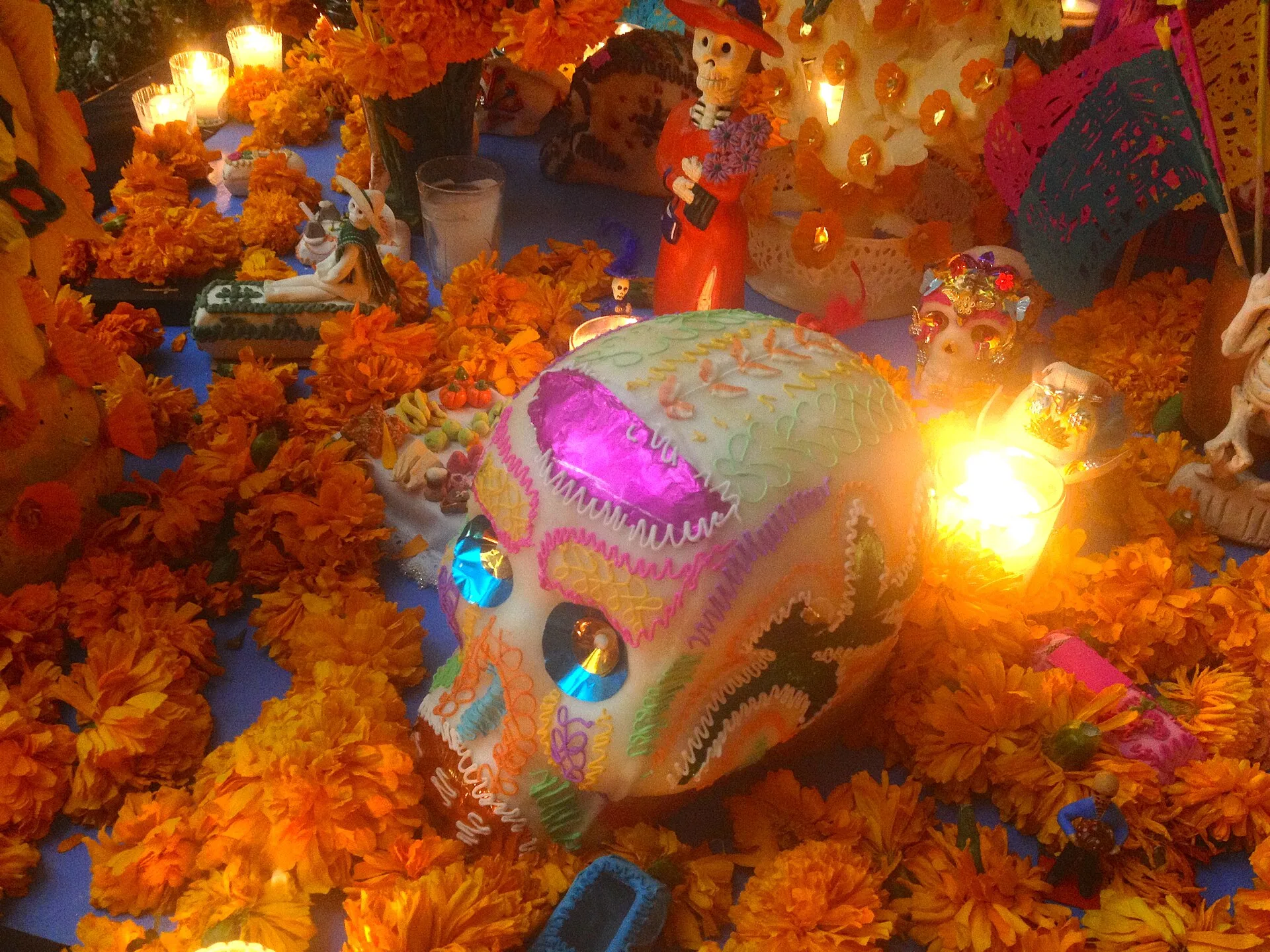
Every year, between November 1 and 2, millions of Mexican families set up an ofrenda, an altar at home, to welcome their dead. It is not a sad rite: it is a visit. UNESCO recognizes the Indigenous festivity dedicated to the dead as intangible heritage of humanity.
The flowers
Cempasúchil, the Mexican marigold, bright orange, marks the way. Its petals are scattered from the door to the altar so the scent guides the souls.
Water and salt
A glass of water quenches thirst after the journey. Salt purifies and keeps the body from spoiling on the way.
Candles and copal
Each candle stands for a soul and lights the return. The smoke of copal, an aromatic resin of pre-Hispanic origin, cleanses the place.
The altar is not set up to mourn the dead, but to give them dinner.
The food
You serve what each person liked: mole, tamales, fruit, a shot of mezcal. Pan de muerto, round and topped with strips that evoke bones, is essential. Sugar skulls carry names written on the forehead.
Portraits and paper
The photographs show who is expected. Papel picado, cut-paper banners that move in the air, announces that they have arrived.
The levels
Altars usually have two, three or seven steps, representing the planes between earth and the beyond.
Where to see it
In Mexico, altars go up in homes, schools, squares and offices from late October. The cemeteries of Mixquic, south of Mexico City, and of the island of Janitzio, on Lake Pátzcuaro, fill with candles on the night of November 1 to 2. UNESCO recognized the festivity as Intangible Cultural Heritage. If you visit a graveyard, remember that for families it is an intimate gathering: ask before taking photographs.